Kirjojen hintavertailu. Mukana 12 595 353 kirjaa ja 12 kauppaa.

Kirjailija

Charles Patrick Ewing

Kirjat ja teokset yhdessä paikassa: 8 kirjaa, julkaisuja vuosilta 1997-2014, suosituimpien joukossa When Children Kill. Vertaile teosten hintoja ja tarkista saatavuus suomalaisista kirjakaupoista.

8 kirjaa

Kirjojen julkaisuhaarukka 1997-2014.

Preventing the Sexual Victimization of Children

Preventing the Sexual Victimization of Children

Charles Patrick Ewing

Oxford University Press Inc
2014
sidottu
Sexual exploitation of children is a major social problem in the United States and around the world. Depending upon how such exploitation is defined and measured, divergent estimates indicate that in the U.S. between 3 and 37 percent of males, and between 8 and 71 percent of females are sexually abused in some manner during childhood or adolescence. In response, governments have passed strict laws, entered into international treaties, and established large bureaucracies aimed at curbing child sexual abuse. Preventing the Sexual Victimization of Children is the first book to critically evaluate national and international efforts to reduce child sexual abuse (CSA) and ameliorate its effects. Until now, input from social science and mental health experts has been accepted for the most part uncritically, as have the programs and laws that have been developed in reliance upon that advice. Here Dr. Ewing utilizes empirical data, policy considerations, cost-benefit analyses, psychological theory, legal reasoning, and common sense to undertake the often difficult and sometimes controversial task of distinguishing prevention strategies that are likely to prevent CSA from those that are not. He concludes that the most expensive preventive strategies-such as sex offender registration, enhancing criminal penalties for such offenders, and civilly confining them-are not effective in preventing CSA and may actually increase its likelihood. However, he also concludes that many other strategies are or could be effective in preventing CSA, such as minimizing opportunities for such abuse, risk education, teaching children to protect themselves, encouraging bystander intervention, limiting the cultural sexualization of children, improving the investigation and prosecution of CSA allegations, using technology to stop child pornography and to rescue its victims, changing the culture in child-serving organizations, and more. This volume will be a unique and critical resource for lawyers, researchers, psychologists, social workers, public policy officials, students, and child advocates interested in preventing child sexual abuse.
Justice Perverted

Justice Perverted

Charles Patrick Ewing

Oxford University Press Inc
2011
sidottu
Over the past quarter century Congress, state legislatures and the courts have radically reshaped America's laws dealing with sex offenders in an effort to reduce the prevalence of sex offenses. Most convicted sex offenders must now register with the authorities, who then make information about them available to the public. Possession of child pornography has been made an extremely serious crime often punishable by prison sentences that dwarf those meted out to child molesters, rapists, robbers, and even killers. Federal law now imposes a minimum sentence of ten years in prison for those convicted of using the internet to attempt to lure minors for sex. And the federal government and 20 states have "sexually violent predator" laws that allow the indefinite civil commitment of convicted sex offenders to secure institutions for treatment after they have served their full criminal sentences. All of these changes in sex offender law, as well as numerous others, have been based at least in part on input from psychology, psychiatry and the social sciences. Moreover, enforcement and administration of many of these laws relies to a large extent on the efforts of mental health professionals. However, many questions about this involvement remain largely unanswered. Are these laws supported by empirical evidence, or even by well-reasoned psychological theories? Do these laws actually work? Are mental health professionals capable of reliably determining an offender's future behavior, and how best to manage it? Finally, are experts capable of providing effective treatment for sex offenders -- i.e., treatment that actually reduces the likelihood that an identified sex offender will re-offend? In Justice Perverted, Charles Patrick Ewing poses these difficult questions and others that few in either law or psychology have asked, much less tried to answer. Drawing on research from across the social and behavioral sciences, he weighs the evidence for the spectrum of sex offense laws, to occasionally surprising results. A rational look at an intensely emotional subject, Justice Perverted is an essential book for anyone interested in the science behind public practice.
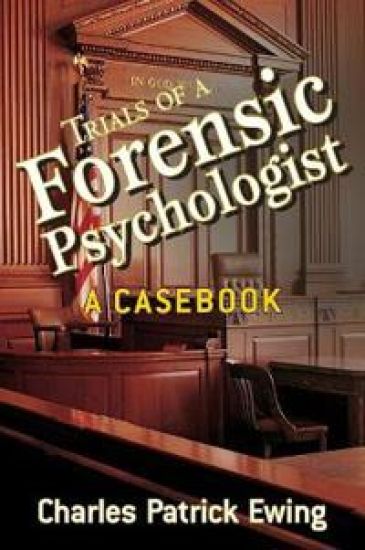
Trials of a Forensic Psychologist

Trials of a Forensic Psychologist

Charles Patrick Ewing

John Wiley Sons Inc
2008
nidottu
A fascinating collection of ten high-profile cases illustrating the controversial, often contentious-yet essential-role of forensic psychology in the American justice system Written by psychologist and lawyer Charles Patrick Ewing, one of the country's leading experts on forensic psychology, Trials of a Forensic Psychologist: A Casebook is a scholarly, thought-provoking collection of cases from the author's three decades of professional experience. Bringing to life the psychological and legal details of each case as well as the personal stories involved, this volume insightfully covers those issues facing forensic psychologists, including: Ability to Waive Miranda RightsCoerced ConfessionsThe Insanity DefenseMalingeringBattered Woman SyndromeEvaluating Allegations of Child Sexual AbuseThe Implications of Extreme Emotional Disturbance Informative, compelling, and educational, each of the ten cases presented in Trials of a Forensic Psychologist: A Casebook offers a rare glimpse at the work of forensic psychologists, how forensic psychologists are examined in court, the ways in which their expertise is used by the legal system, and the contributions they make to the system's ultimate goal of doing justice.
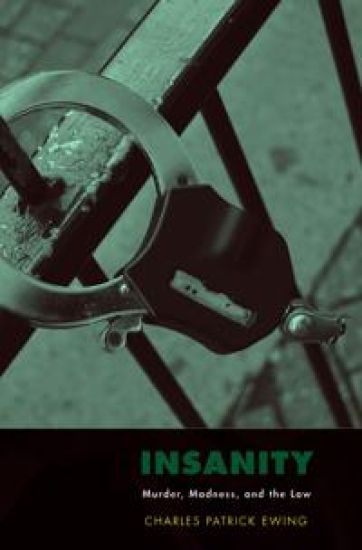
Insanity

Insanity

Charles Patrick Ewing

Oxford University Press Inc
2008
sidottu
The insanity defense is one of the oldest fixtures of the Anglo-American legal tradition. Though it is available to people charged with virtually any crime, and is often employed without controversy, homicide defendants who raise the insanity defense are often viewed by the public and even the legal system as trying to get away with murder. Often it seems that legal result of an insanity defense is unpredictable, and is determined not by the defendants mental state, but by their lawyers and psychologists influence. From the thousands of murder cases in which defendants have claimed insanity, Doctor Ewing has chosen ten of the most influential and widely varied. Some were successful in their insanity plea, while others were rejected. Some of the defendants remain household names years after the fact, like Jack Ruby, while others were never nationally publicized. Regardless of the circumstances, each case considered here was extremely controversial, hotly contested, and relied heavily on lengthy testimony by expert psychologists and psychiatrists. Several of them played a major role in shaping the criminal justice system as we know it today. In this book, Ewing skillfully conveys the psychological and legal drama of each case, while providing important and fresh professional insights. For the legal or psychological professional, as well as the interested reader, Insanity will take you into the minds of some of the most incomprehensible murderers of our age.
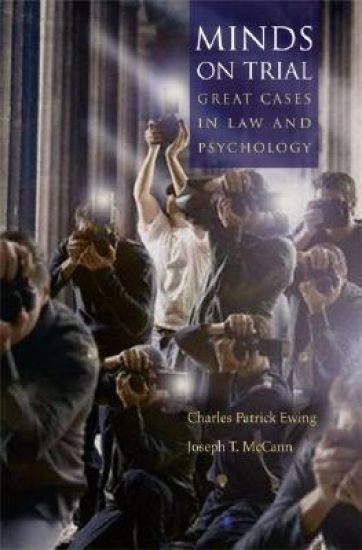
Minds on Trial

Minds on Trial

Charles Patrick Ewing; Joseph T. McCann

Oxford University Press Inc
2006
sidottu
Everyday, in courtrooms everywhere, people's lives are touched and shaped by judgments and verdicts influenced by the testimony of psychologists and other mental health experts. This casebook details 20 high-profile court cases that turned, at least in part, on the expertise of forensic psychologists and psychiatrists and involved such psychological issues as insanity, criminal profiling, capital punishment, competence to stand trial, infanticide, domestic violence, false confessions, and psychological autopsies. The defendents in these cases range from household names such as Woodly Allen, Mike Tyson, Patty Hearst, and Jeffrey Dahmer to others whose brief brush with infamy has long been forgotten. But regardless of their notoriety or celebrity status, each of these carefully selected cases teaches important lessons about the role that psychology and the other behavioral sciences play in our legal system.
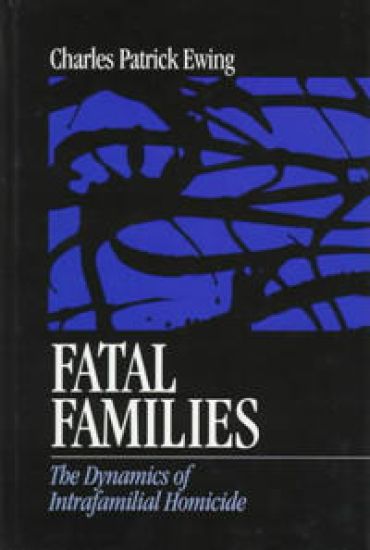
Fatal Families

Fatal Families

Charles Patrick Ewing

SAGE Publications Inc
1997
sidottu
For most Americansùregardless of where they liveùthe risk of being murdered is much greater in their own homes than on any main street on which they are ever likely to walk. Every year, nearly half of the more than 20,0000 homicide victims are related to or acquainted with their killers. Alcohol abuse, mental illness, and criminality figure largely in intrafamilial homicide. But, whatever the scenario behind the murder, murder within families is the most chilling and frightening of all crimes. Fatal Families examines the nature, causes, and consequences of family homicide in modern American society. Using a case study approach, author Charles Patrick Ewing explores the social, cultural, and psychological forces that lead people to kill members of their own families. Drawing on his professional background in both law and psychology, he points the way to measures that can be taken to halt the steady pace of murder within families. Examining a horrifying but necessary topic, Fatal Families will be vitally important to professionals and students in family studies, criminology, interpersonal violence, psychology, social work, and urban studies.
Fatal Families

Fatal Families

Charles Patrick Ewing

SAGE Publications Inc
1997
nidottu
For most Americansùregardless of where they liveùthe risk of being murdered is much greater in their own homes than on any main street on which they are ever likely to walk. Every year, nearly half of the more than 20,0000 homicide victims are related to or acquainted with their killers. Alcohol abuse, mental illness, and criminality figure largely in intrafamilial homicide. But, whatever the scenario behind the murder, murder within families is the most chilling and frightening of all crimes. Fatal Families examines the nature, causes, and consequences of family homicide in modern American society. Using a case study approach, author Charles Patrick Ewing explores the social, cultural, and psychological forces that lead people to kill members of their own families. Drawing on his professional background in both law and psychology, he points the way to measures that can be taken to halt the steady pace of murder within families. Examining a horrifying but necessary topic, Fatal Families will be vitally important to professionals and students in family studies, criminology, interpersonal violence, psychology, social work, and urban studies.