Kirjojen hintavertailu. Mukana 12 459 402 kirjaa ja 12 kauppaa.
Kirjailija
Charles R. Green
Kirjat ja teokset yhdessä paikassa: 7 kirjaa, julkaisuja vuosilta 2006-2020, suosituimpien joukossa Re-envisioning Education & Democracy. Vertaile teosten hintoja ja tarkista saatavuus suomalaisista kirjakaupoista.
This book has been considered by academicians and scholars of great significance and value to literature. This forms a part of the knowledge base for future generations. So that the book is never forgotten we have represented this book in a print format as the same form as it was originally first published. Hence any marks or annotations seen are left intentionally to preserve its true nature.
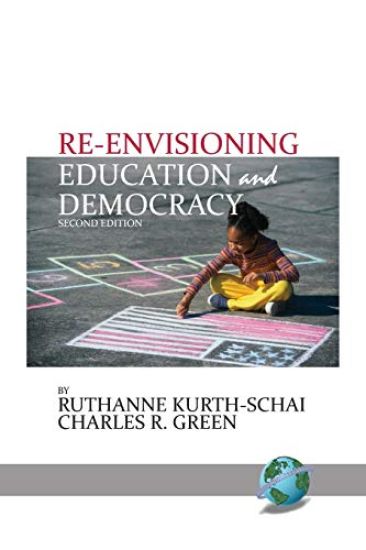
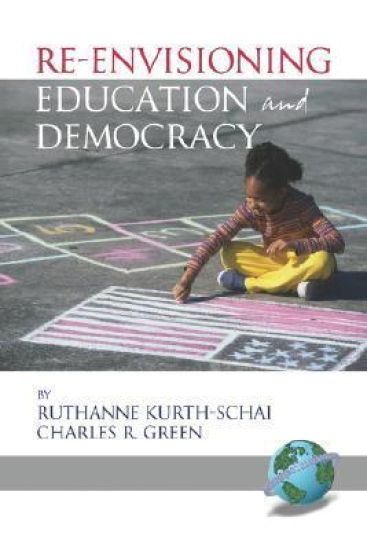
The future of public education and democracy is at risk. Powerful forces are eroding commitment to public schools and weakening democratic resolve. Yet even in deeply troubling times, it is possible to broaden social imagination and empower effective advocacy for systemic progressive reform. Re-envisioning Education and Democracy explores challenges and opportunities for restructuring public education to establish and sustain more broadly inclusive, deeply democratic, and effectively transforming approaches to social inquiry and civic participation.Re-envisioning Education and Democracy adopts a non-traditional format to extend social awareness and imagination. Within each chapter, one episode of an evolving strategic narrative traces the life cycle of a systemic reform initiative. This is followed by an exploratory essay that draws from theory, research, criticism, and practice to prompt consideration of focal issues. Woven through each chapter is a poetically framed meditative stream informed by varied historical and cultural conceptions of oracles. A developmental sequence of social learning strategies (exploratory democratic practices), accompanied by thematic bibliographic references, are included to model democratic teaching and learning applicable in classroom and community settings.
The future of public education and democracy is at risk. Powerful forces are eroding commitment to public schools and weakening democratic resolve. Yet even in deeply troubling times, it is possible to broaden social imagination and empower effective advocacy for systemic progressive reform. Re-envisioning Education and Democracy explores challenges and opportunities for restructuring public education to establish and sustain more broadly inclusive, deeply democratic, and effectively transforming approaches to social inquiry and civic participation.Re-envisioning Education and Democracy adopts a non-traditional format to extend social awareness and imagination. Within each chapter, one episode of an evolving strategic narrative traces the life cycle of a systemic reform initiative. This is followed by an exploratory essay that draws from theory, research, criticism, and practice to prompt consideration of focal issues. Woven through each chapter is a poetically framed meditative stream informed by varied historical and cultural conceptions of oracles. A developmental sequence of social learning strategies (exploratory democratic practices), accompanied by thematic bibliographic references, are included to model democratic teaching and learning applicable in classroom and community settings.
The fate of public education and therefore the future of our democracy is at risk. Powerful forces are eroding commitment to public schools and weakening democratic resolve. Yet even in deeply troubling times, it is possible to broaden social imagination and empower efforts toward systemic progressive reform. This book is an invitation for widespread participation in a complex process—re-envisioning education and democracy. To reenvision—to envision and then envision again—is to join with others in imagining new possibilities and bringing these into existence. Re-envisioning is a radically social process. Although distinct and varied individual contributions are required, transformative visions cannot be advanced through the agency of one charismatic person, or bound by one influential perspective. The process of re-envisioning, like all forms of democratic living and learning, draws energy and insight when connection and communion are sustained across dimensions of difference. Re-envisioning is an intensely creative and exploratory process. It is not accomplished through careful construction of “best laid plans” aimed at attaining certainty and control. Re-envisioning is instead experienced and evolved by preparing for, and then acting on, informed and strategic glimpses. These brief and fleeting impressions—multimodal and multi-sensory, incomplete and ambiguous, always in motion—offer potentials, but no definitive answers. Re-envisioning is a profoundly ethical and aesthetic process, centered in prospects for social justice, compassion, reform, and renewal. Social movements are rarely motivated by commitments to narrow objectives aimed at solving specific problems. Across time and cultures we are drawn to persons and processes, to ideas and images, that call us back to remember our highest principles, and move us forward to respond with acts of integrity and grace. Recurrent themes of beauty and power—here mirrored in chapter titles—inspire, guide, and liberate collective vision and principled action. Re-envisioning, although accessible to all, remains largely undeveloped and underutilized. Our collective ability to realize progressive aspirations for education and democracy can be significantly enhanced by integrating the process of re-envisioning with other, more familiar, educational and political reform strategies.
The fate of public education and therefore the future of our democracy is at risk. Powerful forces are eroding commitment to public schools and weakening democratic resolve. Yet even in deeply troubling times, it is possible to broaden social imagination and empower efforts toward systemic progressive reform. This book is an invitation for widespread participation in a complex process—re-envisioning education and democracy. To reenvision—to envision and then envision again—is to join with others in imagining new possibilities and bringing these into existence. Re-envisioning is a radically social process. Although distinct and varied individual contributions are required, transformative visions cannot be advanced through the agency of one charismatic person, or bound by one influential perspective. The process of re-envisioning, like all forms of democratic living and learning, draws energy and insight when connection and communion are sustained across dimensions of difference. Re-envisioning is an intensely creative and exploratory process. It is not accomplished through careful construction of “best laid plans” aimed at attaining certainty and control. Re-envisioning is instead experienced and evolved by preparing for, and then acting on, informed and strategic glimpses. These brief and fleeting impressions—multimodal and multi-sensory, incomplete and ambiguous, always in motion—offer potentials, but no definitive answers. Re-envisioning is a profoundly ethical and aesthetic process, centered in prospects for social justice, compassion, reform, and renewal. Social movements are rarely motivated by commitments to narrow objectives aimed at solving specific problems. Across time and cultures we are drawn to persons and processes, to ideas and images, that call us back to remember our highest principles, and move us forward to respond with acts of integrity and grace. Recurrent themes of beauty and power—here mirrored in chapter titles—inspire, guide, and liberate collective vision and principled action. Re-envisioning, although accessible to all, remains largely undeveloped and underutilized. Our collective ability to realize progressive aspirations for education and democracy can be significantly enhanced by integrating the process of re-envisioning with other, more familiar, educational and political reform strategies.