Kirjojen hintavertailu. Mukana 12 595 353 kirjaa ja 12 kauppaa.

Kirjailija

Charles R. Shrader

Kirjat ja teokset yhdessä paikassa: 9 kirjaa, julkaisuja vuosilta 1992-2015, suosituimpien joukossa History of Operations Research in the United States Army, V. 2, 1961-1973. Vertaile teosten hintoja ja tarkista saatavuus suomalaisista kirjakaupoista.

Mukana myös kirjoitusasut: Charles R Shrader

9 kirjaa

Kirjojen julkaisuhaarukka 1992-2015.

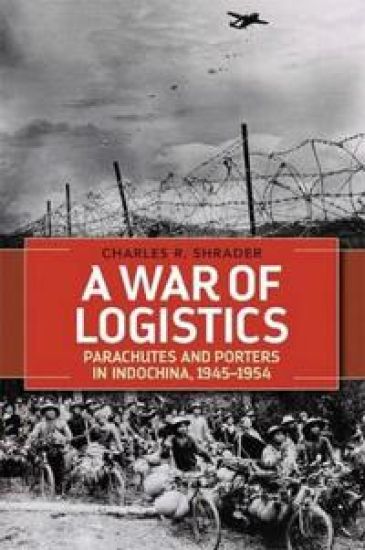
A War of Logistics

A War of Logistics

Charles R. Shrader

The University Press of Kentucky
2015
sidottu
Following the French reoccupation of Indochina at the end of World War II, the pro-Communist Vietnamese nationalists, or Viet Minh, launched a grassroots insurgency that erupted into a full-fledged war in 1949. After nearly ten years of savage combat, the western world was stunned when Viet Minh forces decisively defeated the French Union army at the battle of Dien Bien Phu in May 1954. Logistics dominated every aspect of the First Indochina War, dictating the objectives, the organization of forces, the timing and duration of the operations, and even the final outcome.In A War of Logistics, Charles R. Shrader meticulously examines both French Union and Viet Minh logistical units during the period of active conventional warfare, as well as external support provided to the French by the United States and to the Vietnamese by China. Although the Vietnamese had few advantages over their opponents, their military leaders brilliantly employed a highly committed network of soldiers and civilians, outfitted to accommodate the challenging terrain on which they fought.Drawing on extensive research such as declassified intelligence documents, the reports of French participants, and accounts by Viet Minh leaders, including Vo Nguyen Giap and Ho Chi Minh, A War of Logistics provides in-depth coverage of the often-ignored but critically important topic of logistics in modern military campaigns.
Of Duty Well and Faithfully Done

Of Duty Well and Faithfully Done

Clayton R. Newell; Charles R. Shrader; Edward M. Coffman

University of Nebraska Press
2011
sidottu
On the eve of the Civil War, the Regular Army of the United States was small, dispersed, untrained for large-scale operations, and woefully unprepared to suppress the rebellion of the secessionist states. Although the Regular Army expanded significantly during the war, reaching nearly sixty-seven thousand men, it was necessary to form an enormous army of state volunteers that overshadowed the Regulars and bore most of the combat burden. Nevertheless, the Regular Army played several critically important roles, notably providing leaders and exemplars for the Volunteers and managing the administration and logistics of the entire Union Army. In this first comprehensive study of the Regular Army in the Civil War, Clayton R. Newell and Charles R. Shrader focus primarily on the organizational history of the Regular Army and how it changed as an institution during the war, to emerge afterward as a reorganized and permanently expanded force. The eminent, award-winning military historian Edward M. Coffman provides a foreword.
History of Operations Research in the United States Army, V. 2, 1961-1973
NOTE: NO FURTHER DISCOUNT FOR THIS PRINT PRODUCT--OVERSTOCK SALE -- Significantly reduced list price This second of three volumes on the history of operations research identifies, describes, and evaluates the ideas, people, organizations, and events that influenced the development of ORSA in the Army from the inauguration of President Kennedy in 1961 to the withdrawal of U.S.T The last official campaign of the UnitedStates Army in Vietnam ended on 28January 1973. By that date most Armycombat units and advisers had been withdrawn fromSouth Vietnam, leaving only a small contingent ofcombat support and combat service support troopswho were soon redeployed to the United States. Thusended one of the most eventful eras in U.S. militaryhistory. Indeed, the period from 1961 to 1973 wasa tumultuous era in world history, an era marked byworldwide political upheaval, growing distrust ofgovernment, and alienation of the young from the hitherto accepted standards and values of political, economic, social, and cultural behavior. The 1960sand early 1970s were also a time of great growth andchange in the Army analytical community, a time inwhich Army operations research and systems analysis(ORSA) managers and analysts faced a numberof difficult challenges. The McNamara revolutionin defense management emphasized quantitativemethods and systematic analysis, and the evergrowing complexities of structuring military forces forthe future as well as the problems of fighting a longwar in Southeast Asia summoned a maximum effortfrom Army analysts. The use of ORSA techniquesexpanded into new areas, such as management andforce planning. The reliance on one or two primaryArmy ORSA contractors was abandoned in favor of awider range of private contractors and greater relianceon in-house Army ORSA organizations that grewsubstantially. The increased demand for trained ORSAmanagers and analysts prompted a number of studiesthat focused on the Army s need for systematic analysisand ORSA personnel. As a result, a professionalprogram for the selection, training, and utilization ofArmy officer ORSA specialists was introduced, andmeasures were taken to improve the preparation andutilization of the Army s civilian analysts as well. Theuse of ORSA methods became a generally acceptedpart of the research and development and combatdevelopment processes, and Army ORSA analystsparticipated in the major studies of the day, particularlythose dealing with the two most prominent military issues of the 1960s, counterinsurgency and airmobility, and applied their skills to solve the practical problemsencountered in the war against the Communists inSoutheast Asia.forces from Vietnam in 1973. Related products: History of Operations Research in the United States Army, V. I: 1942-62 -- Print Paperback format --can be found here: https: //bookstore.gpo.gov/products/sku/008-029-00433-0 History of Operations Research in the United States Army, V. 3, 1973-1995 --Print Paperback format -- can be found here: https: //bookstore.gpo.gov/products/sku/008-029-00473-9"
The Muslim-Croat Civil War in Bosnia

The Muslim-Croat Civil War in Bosnia

Charles R. Shrader

Texas A M University Press
2003
sidottu
In this volume, Charles R. Shrader offers a military history of a crucial conflict in Bosnia between two former allies. When the Bosnian Serbs and their Serbian allies attacked Bosnia-Herzegovina in March 1992 the Bosnian Croats and Muslims collaborated to defend themselves. As Serbian pressure increased and it became clear that the West would not intervene, the two allies began to stake out their own claims. Drawing from cases presented before the International Criminal Tribunal for the former Yugoslavia, Shrader describes the organization and tactical doctrine of the Croatian Defence Forces and the Muslim-led Army of Bosnia-Herzegovina. He analyses the strengths and weaknesses of the two sides in such fields as communications, training and logistics. In a conclusion which some may find uncomfortable, Shrader argues that far from being the attackers, the Bosnian Croats in Central Bosnia were clearly out numbered, outgunned and on the defensive.
The Withered Vine

The Withered Vine

Charles R. Shrader

Praeger Publishers Inc
1999
sidottu
An explanation of the failure of the Communist insurgency in Greece between 1945 and 1949, this study provides a striking lesson in what happens to an armed revolutionary movement when it lacks adequate manpower and logistical resources, and is divided against itself on such basic matters as foreign policy and the employment of its military capabilities. During the period of 1945-1949, the Greek Communist Party was split into competing factions, each with its own idea of which course the rebellion should take. The Stalinist faction, led by Secretary-General Nikos Zachariades, was pitted against the more pragmatic nationalist wing led by the commander of the Greek Democratic Army, Markos Vafiades. Shrader provides a detailed examination of the logistical aspects of the war, particularly the impact of political decisions and the aid provided to the Greek Communists by outside supporters on logistics and operations. At each successive stage of the conflict, Zachariades outmaneuvered his rivals and imposed policies that both reduced the resources available to the Communist-led insurgents and sought to turn an effective guerrilla force into a conventional army employing conventional operational methods. The decisions taken by the Greek Communist Party under Zachariades' leadership alienated both the domestic supporters of the Communist rebellion and its key external supporters, such as Marshal Tito of Yugoslavia. Ultimately, the conventionally organized Greek Democratic Army proved unable to sustain itself logistically, and it was defeated in August 1949 by the constantly improving Greek National forces aided by the United States.
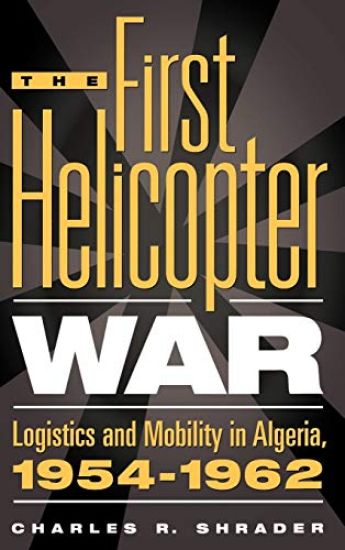
The First Helicopter War

The First Helicopter War

Charles R. Shrader

Praeger Publishers Inc
1999
sidottu
Using recently released French official documents and a variety of other sources, this study explains how the French Army, so recently defeated by the Viet Minh insurgents in Indochina, was able to successfully defeat the Algerian nationalist rebels on the battlefield, while nevertheless losing the war at the conference table. This French success, between 1954 and 1962, was due in large part to the superior logistical system of the French Army and the use of the helicopter to enhance French operational mobility. French counter-mobility measures, particularly the construction of heavily defended interdiction zones on the eastern and western borders of Algeria, proved highly effective against the rebels. Such methods essentially cut off the rebel forces from their bases and from sources of supply located outside Algeria, and consequently strangled and destroyed the rebel forces within Algeria. No other work on the Algerian War focuses upon the role of logistics in the outcome of the conflict. The detailed statistical data and comprehensive description and analysis of the logistical organizations and methods of both the French and the nationalist rebels are supplemented by excellent maps. This study also provides useful insights into the nature of the wars of national liberation and counter-insurgency doctrines that dominated military affairs in the mid-20th century.
Communist Logistics in the Korean War

Communist Logistics in the Korean War

Charles R. Shrader

Praeger Publishers Inc
1995
sidottu
This book describes the logistical systems and requirements of the North Korean People's Army and Chinese Communist forces during the Korean War. The author examines the performance of the Communist logistical system from June 1950 to July 1953, explaining the failure of the United Nations air interdiction campaign in terms of the constant improvement of Communist logistical capabilities. The author concludes that the United Nations air force damaged, but was unable to destroy, the Communist distribution system. The North Koreans and Chinese Communists were able to supply their front line units sufficiently to enable them to conduct a strong static defense, which prevented a United Nations victory, and in the last months of the war, to mount strong, sustained offensive actions.
U.S. Military Logistics, 1607-1991

U.S. Military Logistics, 1607-1991

Charles R. Shrader

Greenwood Press
1992
sidottu
This research guide consists of an annotated bibliography of selected published items concentrating on military logistics in America from the colonial era to the present. This unique comprehensive reference is designed for libraries and scholars interested in American military history and for the use of academics and professionals at military service schools, staff colleges, and senior service colleges, with an interest in logistical doctrine and the logistical support of military operations. A narrative introduction includes a concise discussion of the major themes, of American military logistics. A subsequent section notes the top 50 works in the field of military logistics history. Chapter 1 notes unpublished and published government documments dealing with military logistics, and manuscript collections of interest, The core bibliographical section consists of seven topical chapters (Science of Logistics, General, Quartermaster, Transportation, Subsistence, Ordnance, and Procurement-Mobilization) comprising 1996 entries representing the most significant books, dissertations, and articles in English on the topic of military logistics. The core chapters are organized chronologically with an introductory section comprising works covering more than one period.