Kirjojen hintavertailu. Mukana 12 390 323 kirjaa ja 12 kauppaa.

Kirjailija

Charles Rosen

Kirjat ja teokset yhdessä paikassa: 16 kirjaa, julkaisuja vuosilta 1988-2020, suosituimpien joukossa Arnold Shoenberg. Vertaile teosten hintoja ja tarkista saatavuus suomalaisista kirjakaupoista.

16 kirjaa

Kirjojen julkaisuhaarukka 1988-2020.

Arnold Shoenberg

Arnold Shoenberg

Charles Rosen

University of Chicago Press
1996
nidottu
In this lucid, revealing book, award-winning pianist and scholar Charles Rosen sheds light on the elusive music of Arnold Schoenberg and his challenge to conventional musical forms. Rosen argues that Schoenberg's music, with its atonality and dissonance, possesses a rare balance of form and emotion, making it, according to Rosen, the most expressive music ever written. Concise and accessible, this book will appeal to fans, non-fans, and scholars of Schoenberg, and to those who have yet to be introduced to the works of one of the greatest composers of the twentieth century. Arnold Schoenberg is one of the most brilliant monographs ever to be published on any composer, let alone the most difficult master of the present age. . . . Indispensable to anyone seeking to understand the crucial musical ideas of the first three decades.--Robert Craft, New York Review of BooksWhat Mr. Rosen does far better than one could reasonably expect in so concise a book is not only elucidate Schoenberg's composing techniques and artistic philosophy but to place them in history.--Donal Henahan, New York Times Book ReviewFor the novice and the knowledgeable, Mr. Rosen's book is very important reading, either as an introduction to the master or as a stimulus to rethinking our opinions of him. Mr. Rosen's accomplishment is enviable.--Joel Sachs, Musical Quarterly
The Joy of Playing, the Joy of Thinking

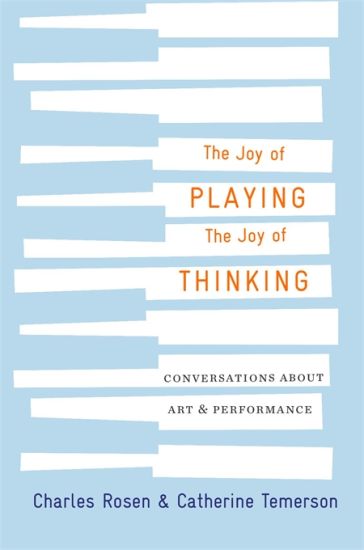
The Joy of Playing, the Joy of Thinking

Charles Rosen; Catherine Temerson; Israel Rosenfield

The Belknap Press
2020
sidottu
Brilliant, practical, and humorous conversations with one of the twentieth-century’s greatest musicologists on art, culture, and the physical pain of playing a difficult passage until one attains its rewards.Throughout his life, Charles Rosen combined formidable intelligence with immense skill as a concert pianist. He began studying at Juilliard at age seven and went on to inspire a generation of scholars to combine history, aesthetics, and score analysis in what became known as “new musicology.”The Joy of Playing, the Joy of Thinking presents a master class for music lovers. In interviews originally conducted and published in French, Rosen’s friend Catherine Temerson asks carefully crafted questions to elicit his insights on the evolution of music—not to mention painting, theater, science, and modernism. Rosen touches on the usefulness of aesthetic reflection, the pleasure of overcoming stage fright, and the drama of conquering a technically difficult passage. He tells vivid stories about composers from Chopin and Wagner to Stravinsky and Elliott Carter. In Temerson’s questions and Rosen’s responses arise conundrums both practical and metaphysical. Is it possible to understand a work without analyzing it? Does music exist if it isn’t played?Throughout, Rosen returns to the theme of sensuality, arguing that if one does not possess a physical craving to play an instrument, then one should choose another pursuit. Rosen takes readers to the heart of the musical matter. “Music is a way of instructing the soul, making it more sensitive,” he says, “but it is useful only insofar as it is pleasurable. This pleasure is manifest to anyone who experiences music as an inexorable need of body and mind.”
Beethoven's Piano Sonatas

Beethoven's Piano Sonatas

Charles Rosen

Yale University Press
2020
pokkari
Beethoven’s piano sonatas form one of the most important collections of works in the whole history of music. Spanning several decades of his life as a composer, the sonatas soon came to be seen as the first body of substantial serious works for piano suited to performance in large concert halls seating hundreds of people. In this comprehensive and authoritative guide, Charles Rosen places the works in context and provides an understanding of the formal principles involved in interpreting and performing this unique repertoire, covering such aspects as sonata form, phrasing, and tempo, as well as the use of pedal and trills. In the second part of his book, he looks at the sonatas individually, from the earliest works of the 1790s through the sonatas of Beethoven’s youthful popularity of the early 1800s, the subsequent years of mastery, the years of stress (1812–1817), and the last three sonatas of the 1820s. Composed as much for private music-making as public recital, Beethoven’s sonatas have long formed a bridge between the worlds of the salon and the concert hall. For today’s audience, Rosen has written a guide that brings out the gravity, passion, and humor of these works and will enrich the appreciation of a wide range of readers, whether listeners, amateur musicians, or professional pianists. The book includes a link to recordings of Rosen performing extracts from several of the sonatas, illustrating points made in the text.
Arnold Schoenberg

Arnold Schoenberg

Charles Rosen

Princeton University Press
2018
sidottu
This book traces the evolution of Arnold Schoenberg's twelve-tone method for a nonspecialist audience. Charles Rosen analyzes Schoenberg's expressionist beginnings and how they relate in theory, performance, and musical experience to the subsequent system of atonality" set forth in the music of Berg, Webem, and Schoenberg himself. Originally published in 1981. The Princeton Legacy Library uses the latest print-on-demand technology to again make available previously out-of-print books from the distinguished backlist of Princeton University Press. These paperback editions preserve the original texts of these important books while presenting them in durable paperback editions. The goal of the Princeton Legacy Library is to vastly increase access to the rich scholarly heritage found in the thousands of books published by Princeton University Press since its founding in 1905.
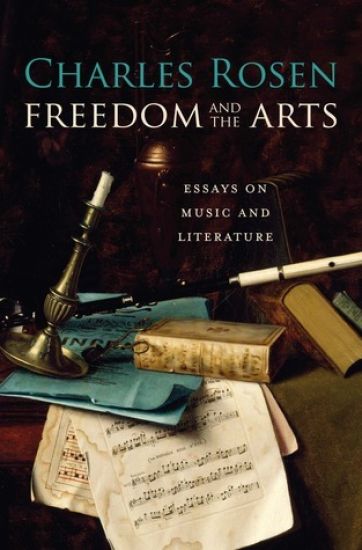
Freedom and the Arts

Freedom and the Arts

Charles Rosen

Harvard University Press
2012
sidottu
Is there a moment in history when a work receives its ideal interpretation? Or is negotiation always required to preserve the past and accommodate the present? The freedom of interpretation, Charles Rosen suggests in these sparkling explorations of music and literature, exists in a delicate balance with fidelity to the identity of the original work.Rosen cautions us to avoid doctrinaire extremes when approaching art of the past. To understand Shakespeare only as an Elizabethan or Jacobean theatergoer would understand him, or to modernize his plays with no sense of what they bring from his age, deforms the work, making it less ambiguous and inherently less interesting. For a work to remain alive, it must change character over time while preserving a valid witness to its earliest state. When twentieth-century scholars transformed Mozart’s bland, idealized nineteenth-century image into that of a modern revolutionary expressionist, they paradoxically restored the reputation he had among his eighteenth-century contemporaries. Mozart became once again a complex innovator, challenging to perform and to understand.Drawing on a variety of critical methods, Rosen maintains that listening or reading with intensity—for pleasure—is the one activity indispensable for full appreciation. It allows us to experience multiple possibilities in literature and music, and to avoid recognizing only the revolutionary elements of artistic production. By reviving the sense that works of art have intrinsic merits that bring pleasure, we justify their continuing existence.
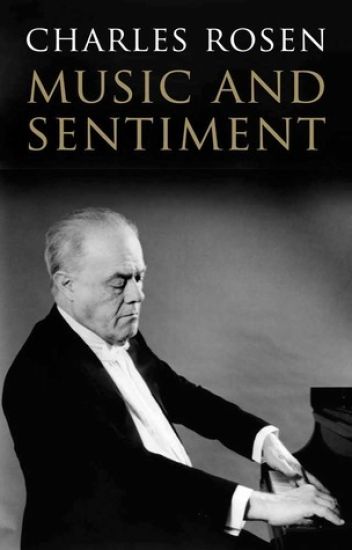
Music and Sentiment

Music and Sentiment

Charles Rosen

Yale University Press
2011
pokkari
Acclaimed pianist and writer Charles Rosen explores music’s profound ability to convey emotion through sound How does a work of music stir the senses, creating feelings of joy, sadness, elation, or nostalgia? Though sentiment and emotion play a vital role in the composition, performance, and appreciation of music, rarely have these elements been fully observed. In this succinct and penetrating book, Charles Rosen draws upon more than a half century as a performer and critic to reveal how composers from Bach to Berg have used sound to represent and communicate emotion in mystifyingly beautiful ways.Through a range of musical examples, Rosen details the array of stylistic devices and techniques used to represent or convey sentiment. This is not, however, a listener’s guide to any “correct” response to a particular piece. Instead, Rosen provides the tools and terms with which to appreciate this central aspect of musical aesthetics, and indeed explores the phenomenon of contradictory sentiments embodied in a single motif or melody. Taking examples from Chopin, Schumann, Wagner, and Liszt, he traces the use of radically changing intensities in the Romantic works of the nineteenth century and devotes an entire chapter to the key of C minor. He identifies a “unity of sentiment” in Baroque music and goes on to contrast it with the “obsessive sentiments” of later composers including Puccini, Strauss, and Stravinsky. A profound and moving work, Music and Sentiment is an invitation to a greater appreciation of the crafts of composition and performance.
The Frontiers of Meaning

The Frontiers of Meaning

Charles Rosen

Kahn Averill
2006
nidottu
What does it mean to understand music? What, if anything, does music mean? Composers, performers, listeners, and academics may answer these questions differently, but what sense of music do they share? When music seems unfamiliar or unlike anything we have heard before, we may say that we don't "like" it. How is taking pleasure from music related to understanding it? This book explores these and other issues as they arise in various musical contexts. Performers' interpretations may be filled with errors, after all, that then become part of a tradition; a composer's work may be variously assessed by his or her contemporaries - an account of how Beethoven's reputation was established so early is included - and how musical analysis can mislead as well as enhance understanding of a composition. Originally the content of three lectures given in Rome in 1993 - "The Frontiers of Nonsense", "How To Become Immortal" and "Explaining the Obvious" - this work offers a study of music, as text, as performance, and as listening experience.
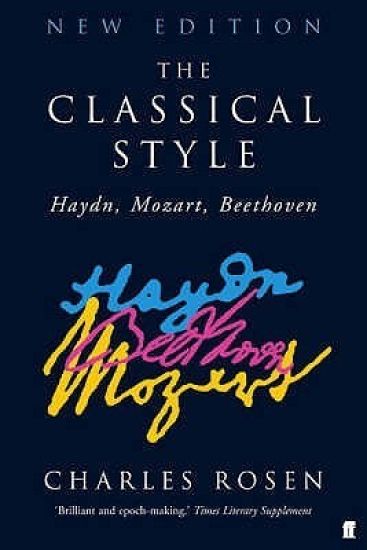
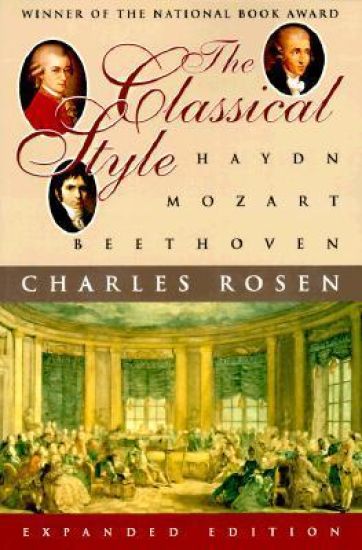
The Classical Style

The Classical Style

Charles Rosen

Faber Faber
2005
nidottu
'Brilliant and epoch-making.' Times Literary SupplementThe Classical Style is an established classic which has remained in print since its first publication in 1971. With his experience as a world-class pianist as well as as teacher at Harvard and Oxford, Charles Rosen produced the definitive survey of the language of the music of the classical period. In the book, Rosen concentrates on the three major figures of the time - Haydn, Mozart and Beethoven - because 'it is in terms of their achievements that the musical vernacular can best be defined'.In this expanded edition, Rosen follows the development of each composer's best known genres: for Haydn, the symphony and string quartet; for Mozart, the concerto, string quintet and comic opera; for Beethoven, the piano sonata. In addition, the author ranges widely through the material of classical music which falls outside these categories. 'The word "masterpiece" should be used rarely if at all. But it applies to The Classical Style . . . this book sets new standards for the application of language to music.' George Steiner
Piano Notes

Piano Notes

Charles Rosen

Penguin Books Ltd
2004
pokkari
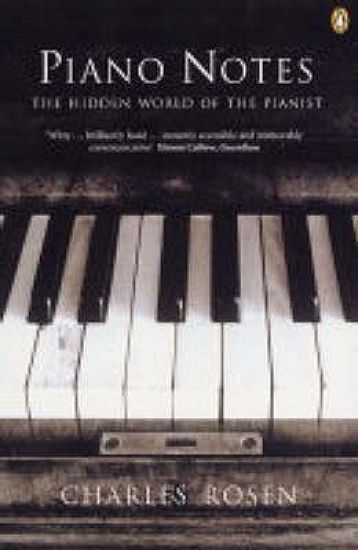
In this eloquent, intimate exploration of the delights and demands of the piano, world-renowned concert pianist and music writer Charles Rosen draws on a lifetime's wisdom to consider every aspect of the instrument: from what makes a beautiful sound to suffering from stage fright, from the physical challenges of playing to tales of great musicians, including Vladimir Horowitz's recording tricks, Rachmaninov's hands and why Artur Rubenstein applied hairspray to the keys. Gracefully blending anecdote, history, expertise and memoir, Piano Notes will enchant anyone with a passion for music.
Piano Notes

Piano Notes

Charles Rosen

The Free Press
2004
pokkari
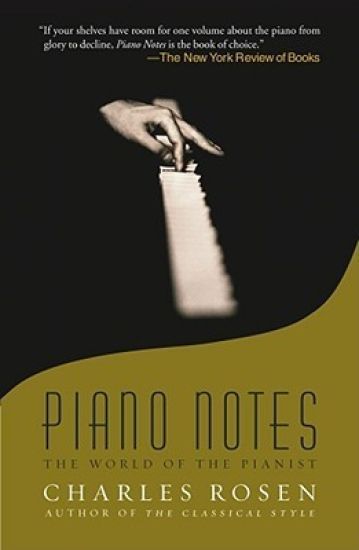
Written by a renowned concert pianist and National Book Award-winning author of The Classical Style, a probing, uniquely written exploration of the piano reveals how the musical instrument transformed western music and forces pianists to stretch themselves in order to master it. Reprint.
Critical Entertainments

Critical Entertainments

Charles Rosen

Harvard University Press
2001
nidottu
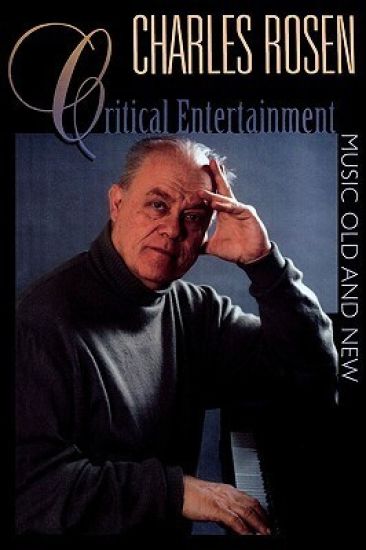
An extraordinarily gifted musician and writer, Charles Rosen is a peerless commentator on the history and performance of music. Critical Entertainments brings together many of the essays that have established him as one of the most influential and eloquent voices in the field of music in our time.These essays cover a broad range of musical forms, historical periods, and issues—from Bach through Brahms to Carter and Schoenberg, from contrapuntal keyboard music to opera, from performance practices to music history as a discipline. They revisit Rosen’s favorite subjects and pursue some less familiar paths. They court controversy (with strong opinions about performance on historical instruments, the so-called New Musicology, and the alleged “death” of classical music) and offer enlightenment on subjects as diverse as music dictionaries and the aesthetics of stage fright. All are unified by Rosen’s abiding concerns and incomparable style. In sum, Critical Entertainments is a treasury of the vast learning, wit, and insight that we have come to expect from this remarkable writer. It will delight all music lovers.
Romantic Poets, Critics, and Other Madmen

Romantic Poets, Critics, and Other Madmen

Charles Rosen

Harvard University Press
2000
nidottu
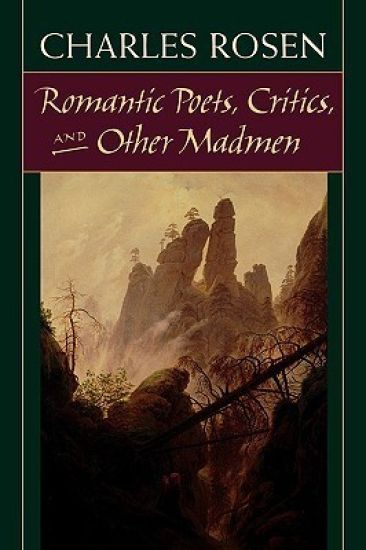
Few can match Charles Rosen's cultivation and discernment, whether as pianist, music historian, or critic. Here he gives us a performance of literary criticism as high art, a critical conjuring of the Romantic period by way of some of its central texts."What is the real business of the critic?" Rosen asks of George Bernard Shaw in one of his essays. It is a question he answers throughout this collection as he demonstrates and analyzes various critical approaches. In writing about the Romantic poets Lord Byron, William Wordsworth, William Cowper, and Friedrich Hölderlin, he examines the kind of criticism which attempts to uncover concealed code. He investigates the relationship between Romantic aesthetic theory and artworks, and explores the way Romantic art criticism has been practiced by critics from Friedrich Schlegel to Walter Benjamin. In essays on Honoré de Balzac, Robert Schumann, Gustave Flaubert, and others, he highlights the intersections between Romantic art and music; the artist's separation of life and artistic representations of it; and the significance of the established text.With an apt comparison or a startling juxtaposition, Rosen opens whole worlds of insight, as in his linking of Caspar David Friedrich's landscape painting and Schumann's music, or in his review of the theory and musicology of Heinrich Schenker alongside the work of Roman Jakobson.Throughout this volume we hear the voice of a shrewd aesthetic interpreter, performing the critic's task even as he redefines it in his sparkling fashion.
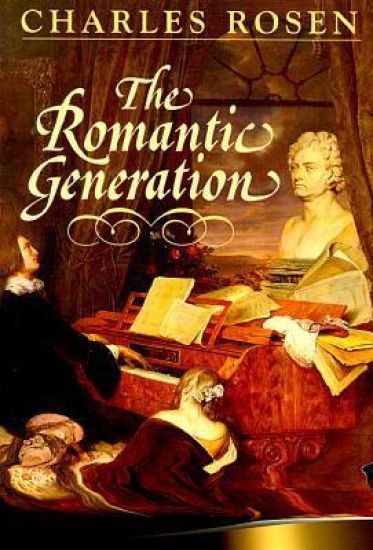
The Romantic Generation

The Romantic Generation

Charles Rosen

Harvard University Press
1998
nidottu
What Charles Rosen's celebrated book The Classical Style did for music of the Classical period, this new, much-awaited volume brilliantly does for the Romantic era. An exhilarating exploration of the musical language, forms, and styles of the Romantic period, it captures the spirit that enlivened a generation of composers and musicians, and in doing so it conveys the very sense of Romantic music. In readings uniquely informed by his performing experience, Rosen offers consistently acute and thoroughly engaging analyses of works by Schubert, Schumann, Mendelssohn, Bellini, Liszt, and Berlioz, and he presents a new view of Chopin as a master of polyphony and large-scale form. He adeptly integrates his observations on the music with reflections on the art, literature, drama, and philosophy of the time, and thus shows us the major figures of Romantic music within their intellectual and cultural context.Rosen covers a remarkably broad range of music history and considers the importance to nineteenth-century music of other cultural developments: the art of landscape, a changed approach to the sacred, the literary fragment as a Romantic art form. He sheds new light on the musical sensibilities of each composer, studies the important genres from nocturnes and songs to symphonies and operas, explains musical principles such as the relation between a musical idea and its realization in sound and the interplay between music and text, and traces the origins of musical ideas prevalent in the Romantic period. Rich with striking descriptions and telling analogies, Rosen's overview of Romantic music is an accomplishment without parallel in the literature, a consummate performance by a master pianist and music historian.
Classical Style: Haydn, Mozart, Beethoven (Expanded)
This outstanding book treating the three most beloved composers of the Vienna School is basic to any study of Classical-era music. Drawing on his rich experience and intimate familiarity with the works of these giants, Charles Rosen presents his keen insights in clear and persuasive language. For this expanded edition, now available in paperback for the first time, Rosen has provided a new, 64-page chapter on the later years of Beethoven and the musical conventions he inherited from Haydn and Mozart. The author has also written an extensive new preface in which he responds to other writers who have commented on his ideas.
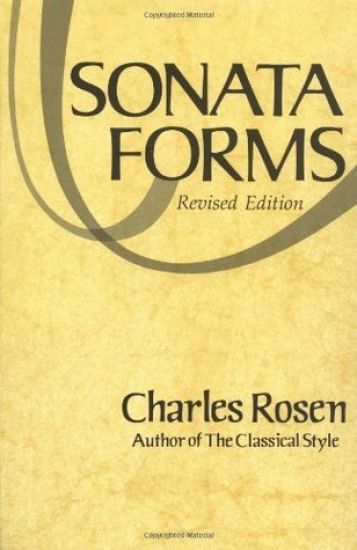
Sonata Forms

Sonata Forms

Charles Rosen

WW Norton Co
1988
nidottu
Charles Rosen says of sonata form: "[It] is not a definite form like a minuet, a da capo aria, or a French overture; it is, like the fugue, a way of writing, a feeling for proportion, direction, and texture rather than a pattern."