Kirjojen hintavertailu. Mukana 12 595 353 kirjaa ja 12 kauppaa.

Kirjailija

Charles Sides

Kirjat ja teokset yhdessä paikassa: 15 kirjaa, julkaisuja vuosilta 2005-2017, suosituimpien joukossa Internships. Vertaile teosten hintoja ja tarkista saatavuus suomalaisista kirjakaupoista.

15 kirjaa

Kirjojen julkaisuhaarukka 2005-2017.

Large Type Edition

Large Type Edition

Timothy Giles; Charles Sides

Routledge
2017
nidottu
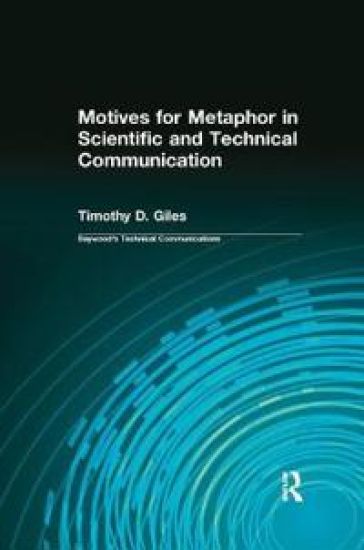
Examination of the work of scientific icons-Newton, Descartes, and others-reveals the metaphors and analogies that directed their research and explain their discoveries. Today, scientists tend to balk at the idea of their writing as rhetorical, much less metaphorical. How did this schism over metaphor occur in the scientific community? To establish that scientists should use metaphors to explain science to the public and need to be conscious of how metaphor can be useful to their research, this book examines the controversy over cloning and the lack of a metaphor to explain it to a public fearful of science's power.The disjunction between metaphor and science is traced to the dispensation of the Solar System Analogy in favor of a mathematical model. Arguing that mathematics is metaphorical, the author supports the idea of all language as metaphorical-unlike many rhetoricians and philosophers of science who have proclaimed all language as metaphorical but have allowed a distinction between a metaphorical use of language and a literal use.For technical communication pedagogy, the implications of this study suggest foregrounding metaphor in textbooks and in the classroom. Though many technical communication textbooks recommend metaphor as a rhetorical strategy, some advise avoiding it, and those that recommend it usually do so in a paragraph or two, with little direction for students on how to recognize metaphors or to how use them. This book provides the impetus for a change in the pedagogical approach to metaphor as a rhetorical tool with epistemological significance.
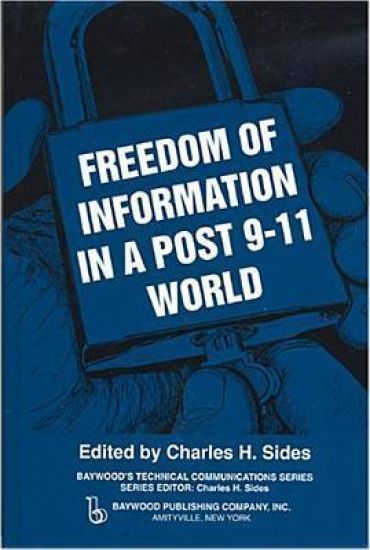
Freedom of Information in a Post 9-11 World
"Freedom of Information in a Post 9-11 World" is, to date, the first international scholarly examination of the impact of the terrorist attack on the United States in terms of how it may alter academic and corporate research, as well as the sharing of information generated by that research, by international colleagues in technological fields. The collection of essays brings together a widely varied panel of communications experts from different backgrounds and cultures to focus their expertise on the ramifications of this world-changing event. Drawing upon the related but separate disciplines of law, interpersonal communication, semiotics, rhetoric, management, information sciences, and education, the collection adds new insight to the potential future challenges high-tech professionals and academics will face in a global community that now seems much less communal than it did prior to September 11, 2001.
Internships

Internships

Charles Sides; Ann Mrvica

Routledge
2017
nidottu
"Internships: Theory and Practice" focuses on the history, theory, value, design, administration, and evaluation of professional internships as an educational experience for college students. Internships are guided, pre-professional experiences that combine academic and professional components as a managed transition to professional careers. Touted by many as an educational innovation for the 21st century, internships (or experiential learning, or apprenticeships, as they once were called) have been a staple of professional preparation for centuries, dating back at least to the earliest documentation in the Middle Ages and no doubt far beyond that.Charles Sides and Ann Mrvica trace this history through primary sources to explore the development of internship experiences over the past 800 years, create an introduction to the topic of internships, and provide a foundation for modern college-corporation partnerships in professional education and training. The authors present specific guidelines and discussions on issues important to corporations, in terms of providing for internship experiences; issues important to colleges, in terms of designing and evaluating internships; and issues important to students, in terms of participating in and learning from internships.
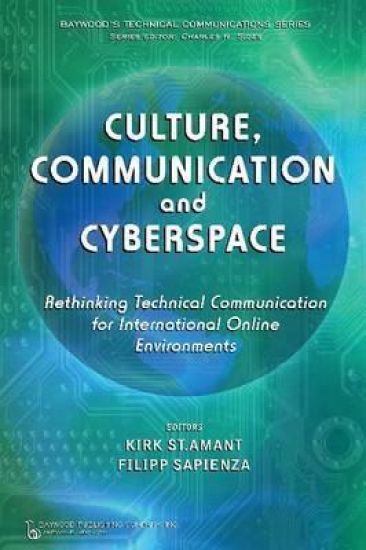
Culture, Communication and Cyberspace

Culture, Communication and Cyberspace

Kirk St. Amant; Filipp Sapienza; Charles Sides

Routledge
2017
nidottu
The increasingly global nature of the World Wide Web presents new challenges and opportunities for technical communicators who must develop content for clients or colleagues from other cultures and in other nations. As international online access grows, technical communicators will encounter a range of challenges related to culture and communication in cyberspace. These challenges include how to design content and develop services for online distribution to a culturally diverse audience of users; how to address cultural and linguistic factors effectively when collaborating with international colleagues and clients via online media; and how to develop effective online teaching and training practices and materials for use in learning environments comprised of culturally diverse groups of students. The contributors to Culture, Communication and Cyberspace examine these challenges through chapters that explore the different aspects of international online communication. The contributing authors use a range of methodologies to review a variety of topics related to culture and communication in cyberspace. In so doing, the authors also examine how business trends, such as international outsourcing, content management, and the use of open source software (OSS), are affecting and could change practices in the field of technical communication as related to online cross-cultural interactions.
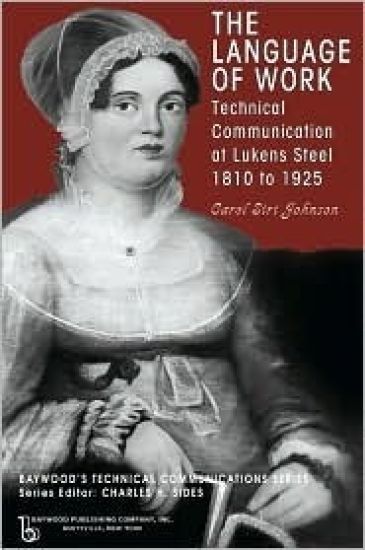
The Language of Work

The Language of Work

Carol Siri Johnson; Charles Sides

Routledge
2016
nidottu
Lukens Steel was an extraordinary business that spanned two centuries of American history. The firm rolled the first boiler plate in 1818 and operated the largest rolling mills in America in 1890, 1903, and 1918, Later it worked on the Manhattan Project and built the steel beams for the base of the World Trade Center. The company stayed in the family for 188 years, and they kept the majority of their business papers."The Language of Work" traces the evolution of written forms of communication at Lukens Steel from 1810 to 1925. As standards for iron and steel emerged and industrial processes became more complex, foremen, mechanics, and managers began to use drawing and writing to solve problems, transfer ideas, and develop new technology. This shift in communication methods - from 'prediscursive' (oral) communication to 'chirographic' (written) communication - occurred as technology became more complex and knowledge had to span space and time.This richly illustrated volume begins with a theoretical overview linking technical communication to literature and describing the historical context. The analysis is separated into four time periods: 1810 to 1870, when little writing was used; 1870-1900, when Lukens Steel began to use record keeping to track product from furnace, through production, to the shipping dock; 1900-1915, when written and drawn communication spread throughout the plant and literacy became more common on the factory floor; and 1915-1925, when stenographer typists took over the majority of the written work. Over time, writing - and literacy - became an essential part of the industrial process.
Exploding Technical Communication

Exploding Technical Communication

Remley Dirk; Charles Sides

Baywood Publishing Company Inc
2014
nidottu
Within the framework of New Literacy Studies, Dirk Remley presents a historical study of how technical communication practices at a World War II arsenal sponsored literacy within the community in which it operated from 1940 to 1960 and contemporary implications of similar forms of sponsorship. The Training within Industry (TWI) methods developed by the U.S. government and industry at that time included multimodal literate practices, particularly combinations of visual, oral, experiential, and print-linguistic text. Analyses reveal a hierarchy in which print-linguistic literacies were generally esteemed at the workplace and in the community. This literacy hierarchy contributed to a catastrophic accident that killed 11 people, prompting changes in the approach to designing certain training documents. This book links technical communication, especially the multimodal forms of representation commonly found in technical communication and instructional materials, to the concept of literacy sponsorship. The TWI methods used in training and system improvement during World War II are currently applied in business and industry as part of the "lean operating" and "continuous improvement" philosophies. These methods have also become part of the experiential learning philosophy favored in academia. Remley includes examples of current applications of multimodal forms of technical communication similar to those used at the arsenal as well as new media-related applications related to training and instruction. He also discusses their implications for literacy sponsorship. This book provides useful information for technical communication and literacy scholars and educators as well as practical case studies for business leaders, consultants, and practitioners. Intended Audience: Scholars in technical communication and literacy/writing studies; scholars in business (especially management and organizational analysis) and business communication consultants; scholars in history and sociology.
Exploding Technical Communication

Exploding Technical Communication

Remley Dirk; Charles Sides

Baywood Publishing Company Inc
2014
sidottu
Within the framework of New Literacy Studies, Dirk Remley presents a historical study of how technical communication practices at a World War II arsenal sponsored literacy within the community in which it operated from 1940 to 1960 and contemporary implications of similar forms of sponsorship. The Training within Industry (TWI) methods developed by the U.S. government and industry at that time included multimodal literate practices, particularly combinations of visual, oral, experiential, and print-linguistic text. Analyses reveal a hierarchy in which print-linguistic literacies were generally esteemed at the workplace and in the community. This literacy hierarchy contributed to a catastrophic accident that killed 11 people, prompting changes in the approach to designing certain training documents. This book links technical communication, especially the multimodal forms of representation commonly found in technical communication and instructional materials, to the concept of literacy sponsorship. The TWI methods used in training and system improvement during World War II are currently applied in business and industry as part of the "lean operating" and "continuous improvement" philosophies. These methods have also become part of the experiential learning philosophy favored in academia. Remley includes examples of current applications of multimodal forms of technical communication similar to those used at the arsenal as well as new media-related applications related to training and instruction. He also discusses their implications for literacy sponsorship. This book provides useful information for technical communication and literacy scholars and educators as well as practical case studies for business leaders, consultants, and practitioners. Intended Audience: Scholars in technical communication and literacy/writing studies; scholars in business (especially management and organizational analysis) and business communication consultants; scholars in history and sociology.
Envisioning Collaboration

Envisioning Collaboration

Geoffrey Cross; Charles Sides

Baywood Publishing Company Inc
2011
sidottu
The dissemination of desktop publishing and web authoring software has allowed nearly everyone in industrialized countries to combine verbal and visual symbols into text. Serious multimodal projects often demand extensive teamwork, especially in the workplace. But how can collaboration engaging such different traditions of expression be conducted effectively? To address this question, Envisioning Collaboration traces the composing processes of expert graphic artists and writers preparing advertising campaigns to retain a vital national account. It examines the influences on individual and dyadic composing processes of what Csikszentmihalyi terms "the domain," in this case the disciplinary knowledge of advertising, and "the field," in this case the surrounding economic conditions and client, vendor, customer, and agency executive gatekeepers. Based on a 460-hour participant-observation and intensive computerized data analysis, Envisioning Collaboration is the first book to meticulously examine collaborative creative processes at an award-winning advertising agency, including audience analysis, branding, collaborative "moves," power and conflict management, uses of humor, degree of mindfulness, and effectiveness. The findings indicate the role of concepts in generating common texts by artists and writers, the role of the visual in individuals' composing, verbal-visual rhetorical elements in processes and products, and which verbal-visual techniques were most generative. Findings are related to pertinent research in technical and business writing, rhetoric and composition, and some key research in visual design, communication, advertising, neurolinguistics, management, and psychology. The book concludes with a pedagogical/training unit incorporating "gateway activities" for effective verbal-visual composition and collaboration.
Teaching Intercultural Rhetoric and Technical Communication

Teaching Intercultural Rhetoric and Technical Communication

Barry Thatcher; Kirk St. Amant; Charles Sides

Baywood Publishing Company Inc
2011
sidottu
In today's integrated global economy, technical communicators often collaborate in international production teams, work with experts in overseas subject matter, or coordinate documentation for the international release of products. Working effectively in such situations requires technical communicators to acquire a specialized knowledge of culture and communication. This book provides readers with the information needed to integrate aspects of intercultural communication into different educational settings.
Culture, Communication and Cyberspace

Culture, Communication and Cyberspace

Kirk St. Amant; Filipp Sapienza; Charles Sides

Baywood Publishing Company Inc
2011
sidottu
The increasingly global nature of the World Wide Web presents new challenges and opportunities for technical communicators who must develop content for clients or colleagues from other cultures and in other nations. As international online access grows, technical communicators will encounter a range of challenges related to culture and communication in cyberspace. These challenges include how to design content and develop services for online distribution to a culturally diverse audience of users; how to address cultural and linguistic factors effectively when collaborating with international colleagues and clients via online media; and how to develop effective online teaching and training practices and materials for use in learning environments comprised of culturally diverse groups of students. The contributors to Culture, Communication and Cyberspace examine these challenges through chapters that explore the different aspects of international online communication. The contributing authors use a range of methodologies to review a variety of topics related to culture and communication in cyberspace. In so doing, the authors also examine how business trends, such as international outsourcing, content management, and the use of open source software (OSS), are affecting and could change practices in the field of technical communication as related to online cross-cultural interactions.
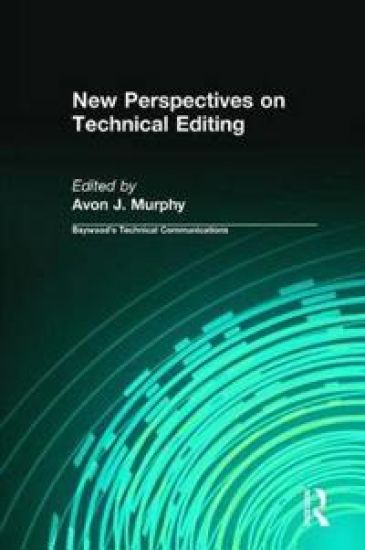
New Perspectives on Technical Editing

New Perspectives on Technical Editing

Avon Murphy; Charles Sides

Baywood Publishing Company Inc
2010
sidottu
New Perspectives on Technical Editing provides readers with a rich picture of a thriving discipline. Its 10 chapters are written by various experts in the field, each of whom looks at technical editing from a distinct vantage point, setting challenging questions and offering authoritative recommendations based on experience and research. Contributors examine significant approaches to the practice and teaching of technical editing: the recommended research methodologies, the not entirely straightforward history of technical editing, effective approaches to developing editing courses, the politics of editing within today's organizations, the definition and on-the-job work of copyediting, the power of electronic editing, the complex nature and best practices of science editing, and the nuts and bolts of successfully editing technical journals. Readers will find insights into background literature, trends, responsibilities, workflow, legal issues, ethics, tricks of the trade, unanticipated complications, business know-how, considerations of audience, interpersonal relations, and strategies for different media that they can apply in their own work and research. Each contributor provides substantive chapter references, and the book's annotated bibliography describes and evaluates 100 of the most influential and useful editing resources.
The Language of Work

The Language of Work

Carol Siri Johnson; Charles Sides

Baywood Publishing Company Inc
2008
sidottu
Lukens Steel was an extraordinary business that spanned two centuries of American history. The firm rolled the first boiler plate in 1818 and operated the largest rolling mills in America in 1890, 1903, and 1918, Later it worked on the Manhattan Project and built the steel beams for the base of the World Trade Center. The company stayed in the family for 188 years, and they kept the majority of their business papers."The Language of Work" traces the evolution of written forms of communication at Lukens Steel from 1810 to 1925. As standards for iron and steel emerged and industrial processes became more complex, foremen, mechanics, and managers began to use drawing and writing to solve problems, transfer ideas, and develop new technology. This shift in communication methods - from 'prediscursive' (oral) communication to 'chirographic' (written) communication - occurred as technology became more complex and knowledge had to span space and time.This richly illustrated volume begins with a theoretical overview linking technical communication to literature and describing the historical context. The analysis is separated into four time periods: 1810 to 1870, when little writing was used; 1870-1900, when Lukens Steel began to use record keeping to track product from furnace, through production, to the shipping dock; 1900-1915, when written and drawn communication spread throughout the plant and literacy became more common on the factory floor; and 1915-1925, when stenographer typists took over the majority of the written work. Over time, writing - and literacy - became an essential part of the industrial process.
Large Type Edition

Large Type Edition

Timothy Giles; Charles Sides

Baywood Publishing Company Inc
2008
sidottu
Examination of the work of scientific icons-Newton, Descartes, and others-reveals the metaphors and analogies that directed their research and explain their discoveries. Today, scientists tend to balk at the idea of their writing as rhetorical, much less metaphorical. How did this schism over metaphor occur in the scientific community? To establish that scientists should use metaphors to explain science to the public and need to be conscious of how metaphor can be useful to their research, this book examines the controversy over cloning and the lack of a metaphor to explain it to a public fearful of science's power.The disjunction between metaphor and science is traced to the dispensation of the Solar System Analogy in favor of a mathematical model. Arguing that mathematics is metaphorical, the author supports the idea of all language as metaphorical-unlike many rhetoricians and philosophers of science who have proclaimed all language as metaphorical but have allowed a distinction between a metaphorical use of language and a literal use.For technical communication pedagogy, the implications of this study suggest foregrounding metaphor in textbooks and in the classroom. Though many technical communication textbooks recommend metaphor as a rhetorical strategy, some advise avoiding it, and those that recommend it usually do so in a paragraph or two, with little direction for students on how to recognize metaphors or to how use them. This book provides the impetus for a change in the pedagogical approach to metaphor as a rhetorical tool with epistemological significance.
Internships

Internships

Charles Sides; Ann Mrvica

Baywood Publishing Company Inc
2007
sidottu
"Internships: Theory and Practice" focuses on the history, theory, value, design, administration, and evaluation of professional internships as an educational experience for college students. Internships are guided, pre-professional experiences that combine academic and professional components as a managed transition to professional careers. Touted by many as an educational innovation for the 21st century, internships (or experiential learning, or apprenticeships, as they once were called) have been a staple of professional preparation for centuries, dating back at least to the earliest documentation in the Middle Ages and no doubt far beyond that.Charles Sides and Ann Mrvica trace this history through primary sources to explore the development of internship experiences over the past 800 years, create an introduction to the topic of internships, and provide a foundation for modern college-corporation partnerships in professional education and training. The authors present specific guidelines and discussions on issues important to corporations, in terms of providing for internship experiences; issues important to colleges, in terms of designing and evaluating internships; and issues important to students, in terms of participating in and learning from internships.
Freedom of Information in a Post 9-11 World

Freedom of Information in a Post 9-11 World

Charles Sides

Baywood Publishing Company Inc
2005
sidottu
"Freedom of Information in a Post 9-11 World" is, to date, the first international scholarly examination of the impact of the terrorist attack on the United States in terms of how it may alter academic and corporate research, as well as the sharing of information generated by that research, by international colleagues in technological fields. The collection of essays brings together a widely varied panel of communications experts from different backgrounds and cultures to focus their expertise on the ramifications of this world-changing event. Drawing upon the related but separate disciplines of law, interpersonal communication, semiotics, rhetoric, management, information sciences, and education, the collection adds new insight to the potential future challenges high-tech professionals and academics will face in a global community that now seems much less communal than it did prior to September 11, 2001.