Kirjojen hintavertailu. Mukana 12 657 676 kirjaa ja 12 kauppaa.

Kirjailija

Charles Simic

Kirjat ja teokset yhdessä paikassa: 35 kirjaa, julkaisuja vuosilta 1982-2025, suosituimpien joukossa Conversations. Vertaile teosten hintoja ja tarkista saatavuus suomalaisista kirjakaupoista.

35 kirjaa

Kirjojen julkaisuhaarukka 1982-2025.

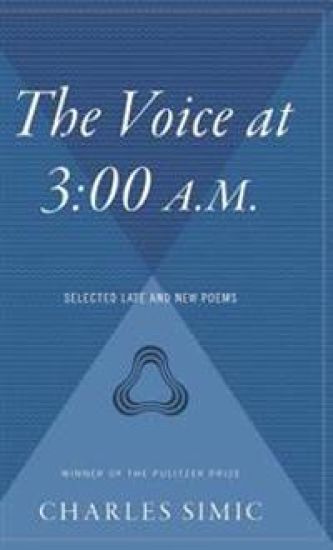
The Voice at 3: 00 A.M.: Selected Late and New Poems
Charles Simic has been widely celebrated for his brilliant poetic imagery; his social, political, and moral alertness; his uncanny ability to make the ordinary extraordinary; and not least, a sardonic humor all his own. Gathering much of his material from the seemingly mundane minutia of contemporary American culture, Simic matches meditations on spiritual concerns and the weight of history with a nimble wit, shifting effortlessly to moments of clear vision and intense poetic revelation. The poems in this collection--spanning two decades of his work--present a rich and varied survey of a remarkable lyrical journey.
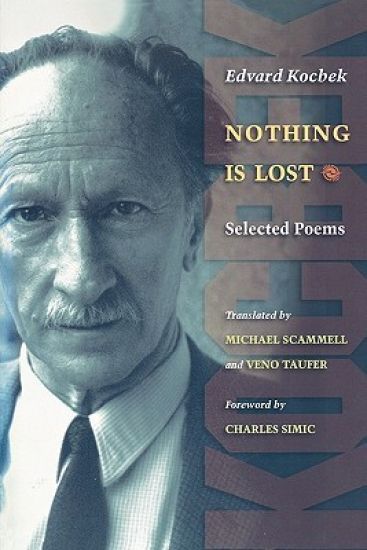
Nothing is Lost

Nothing is Lost

Edvard Kocbek; Charles Simic

Princeton University Press
2004
pokkari
This is the first comprehensive English-language collection of verse by the most celebrated Slovenian poet of modern times and one of Europe's most notable postwar poets, Edvard Kocbek (1904-1981). The selections introduce the reader to the full spectrum of Kocbek's long and distinguished career, starting with the pantheist and expressionist nature poems of his early period and continuing through the politically engaged poetry written during and after World War II, to the philosophical and metaphysical meditations of his fecund late period. Readers will be struck by the originality and freshness of Kocbek's sinewy and intense vision, rendered into fluid and idiomatic English by two experienced translators. The Slovenian texts appear on the facing pages. The opening stanza of "Moon with a Halo" The man beside me was killed. He had a mother who bore him and a father who made him toys, he had a brother and a playful uncle and a little girl with blond braids, he had a wooden cart and a wooden horse, a trunkful of colored dreams and a brook where he used to fish.
The Metaphysician in the Dark

The Metaphysician in the Dark

Charles Simic

The University of Michigan Press
2003
sidottu
Charles Simic's quicksilver imagination, his masterly way with words, and his unalloyed love of life and language alike inform every page of this wonderfully wide-ranging collection. Again and again, Simic takes up a subject and turns it this way and that, showing us what we haven't noticed before, inviting us to share an infectious delight that turns everything, in the end, into poetry. It's a gift that has won him a coveted MacArthur Fellowship, among many honors, but he wears his magic lightly.Often, he addresses poetry itself. Among the pieces here are appreciations of Mark Strand, James Merrill, John Ashbery, and James Tate, each evaluated with a keen eye tempered by a generous spirit. Other essays discuss Joseph Brodsky, Czeslaw Milosz, and Vasko Popa; to these writers he brings the understanding available only to those who can read them in the original. In considering Brodsky's translations, for instance, he offers insights regarding not only the poet himself but the very nature of language. Elsewhere, he peers into poetry's past and its future: as a vessel of memory, a witness to history, and a mirror of human experience.But perhaps the greatest pleasures afforded by The Metaphysician in the Dark, as he styles himself with a beguiling mix of modesty and irony, appear when Simic goes further afield. His look at the deadpan comedy of Buster Keaton is as revealing of the author as of the actor and his craft; his perusal of a Heironymous Bosch altarpiece captures both the painter's sense of apocalypse and a riotous joy in the piling of detail upon detail; his review of a book on Joseph Cornell examines how obsession becomes art. He is fluently familiar with subjects as diverse as Saul Bellow's novels and Aberlardo Morell's extraordinary camera obscura photographs. Yet when he takes the gloves off, as in two essays on the Serbia of Slobodan Milosevic, his outrage is as forceful as his pride is strong in his own Serbian heritage.Each of the two dozen essays here reflects a sophistication irresistible in its simplicity; taken together, they display a questing intelligence and a panorama of life and art.Charles Simic is an acclaimed poet, novelist, essayist and teacher. Winner of a MacArthur Fellowship and a Pulitzer Prize, he is the author of more than twenty volumes of poetry and six books of prose, as well as numerous translations. He is Distinguished University Professor of English at the University of New Hampshire, where he has taught since 1973.
The Metaphysician in the Dark

The Metaphysician in the Dark

Charles Simic

The University of Michigan Press
2003
nidottu
Charles Simic's quicksilver imagination, his masterly way with words, and his unalloyed love of life and language alike inform every page of this wonderfully wide-ranging collection. Again and again, Simic takes up a subject and turns it this way and that, showing us what we haven't noticed before, inviting us to share an infectious delight that turns everything, in the end, into poetry. It's a gift that has won him a coveted MacArthur Fellowship, among many honors, but he wears his magic lightly. Often, he addresses poetry itself. Among the pieces here are appreciations of Mark Strand, James Merrill, John Ashbery, and James Tate, each evaluated with a keen eye tempered by a generous spirit. Other essays discuss Joseph Brodsky, Czeslaw Milosz, and Vasko Popa; to these writers he brings the understanding available only to those who can read them in the original. In considering Brodsky's translations, for instance, he offers insights regarding not only the poet himself but the very nature of language. Elsewhere, he peers into poetry's past and its future: as a vessel of memory, a witness to history, and a mirror of human experience. But perhaps the greatest pleasures afforded by The Metaphysician in the Dark, as he styles himself with a beguiling mix of modesty and irony, appear when Simic goes further afield. His look at the deadpan comedy of Buster Keaton is as revealing of the author as of the actor and his craft; his perusal of a Heironymous Bosch altarpiece captures both the painter's sense of apocalypse and a riotous joy in the piling of detail upon detail; his review of a book on Joseph Cornell examines how obsession becomes art. He is fluently familiar with subjects as diverse as Saul Bellow's novels and Aberlardo Morell's extraordinary camera obscura photographs. Yet when he takes the gloves off, as in two essays on the Serbia of Slobodan Milosevic, his outrage is as forceful as his pride is strong in his own Serbian heritage. Each of the two dozen essays here reflects a sophistication irresistible in its simplicity; taken together, they display a questing intelligence and a panorama of life and art. Charles Simic is an acclaimed poet, novelist, essayist and teacher. Winner of a MacArthur Fellowship and a Pulitzer Prize, he is the author of more than twenty volumes of poetry and six books of prose, as well as numerous translations. He is Distinguished University Professor of English at the University of New Hampshire, where he has taught since 1973.
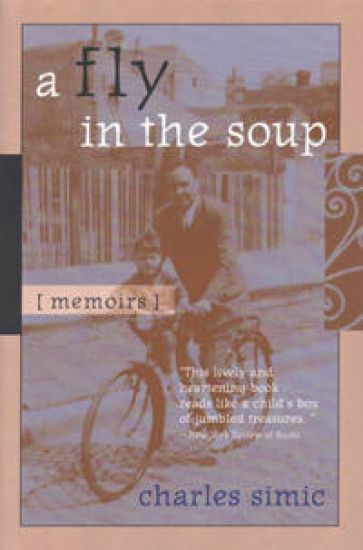
A Fly in the Soup

A Fly in the Soup

Charles Simic

The University of Michigan Press
2003
nidottu
A Fly in the Soup is a book of memoirs. Charles Simic was born in 1938 in Belgrade, Yugoslavia, and spent his childhood in a city bombed by the Nazis in 1941 and then by the Allies in 1944. He was jailed with his mother after the war for trying to flee what was by then a communist country. He managed to emigrate in 1953, first to Paris and then a year later to the United States. He lived in New York, completed his high school education in Chicago and began writing in English and publishing his first poems in 1959 when he was twenty-one years old.The book collects pieces written on such diverse subjects as memory, history, the bombing of cities, cuisine, philosophy, life in the army, movies, and growing up in wartime. Arranged chronologically, they make an unusual memoir of exile and refugee life, a collage of stories, anecdotes, meditations and poetic fragments from one of the most barbaric periods of the last century. This is a story of a young man whose travel agents were Hitler and Stalin--the autobiography of the early years of one of the most respected contemporary American poets.Charles Simic has published more than sixty books in the United States and abroad for which he has received a number of prestigious literary awards including the Pulitzer Prize for poetry and the MacArthur Fellowship.
Orphan Factory

Orphan Factory

Charles Simic

The University of Michigan Press
1997
nidottu
The poet explores his early life in Belgrade, his feelings about Serbia and Croatia, his days in New York, dreams, other poets, and books he never completed
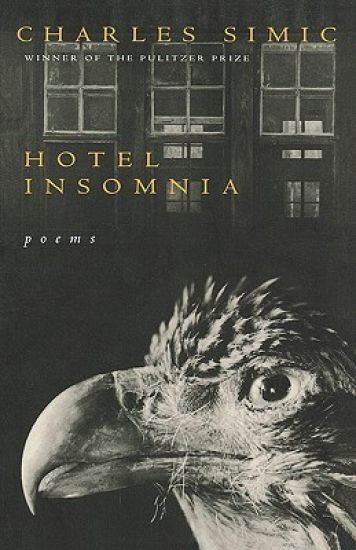
Hotel Insomnia: Poems

Hotel Insomnia: Poems

Charles Simic; Simic

Ecco Press
1992
nidottu
In this volume, Simic fills the wee hours of his poetry with angels and pigs, riddles and cemeteries. His is a rich, haunted world of East European memory and american present-a world of his own creation, one always full of luminous surprise. "Simic writes so simply that his words fall like drops of water, but they ripple outward to evoke an ominous and numinous world" (Washington Post Book World).
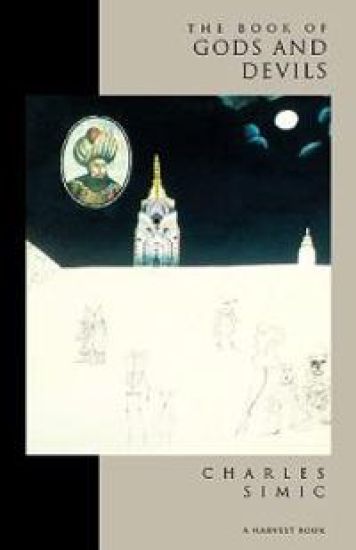
Book of Gods and Devils

Book of Gods and Devils

Charles Simic

Harcourt Brace International
1990
pokkari
Loneliness, loss, sadness, and mystery mark this wonderful volume of forty-nine poems by Charles Simic, winner of the 1990 Pulitzer Prize for Poetry and praised as one of the truly imaginative writers of our time by the Los Angeles Times."
Unending Blues

Unending Blues

Charles Simic

Mariner Books
1987
nidottu
Whether he draws for inspiration on American blues, Serbian folktales, or Greek myths, Simic's words have a way of their own. Each of these forty-four poems is a powerful mixture of concrete images. Each records the reality and myth of the world around us-and in us. "Short, perfectly shaped, Simic's poems float past like feathers, turning one way, then another" (Village Voice).