Kirjojen hintavertailu. Mukana 12 657 676 kirjaa ja 12 kauppaa.
Kirjailija
Charles Spence
Kirjat ja teokset yhdessä paikassa: 13 kirjaa, julkaisuja vuosilta 2008-2025, suosituimpien joukossa Gastrologik. Vertaile teosten hintoja ja tarkista saatavuus suomalaisista kirjakaupoista.
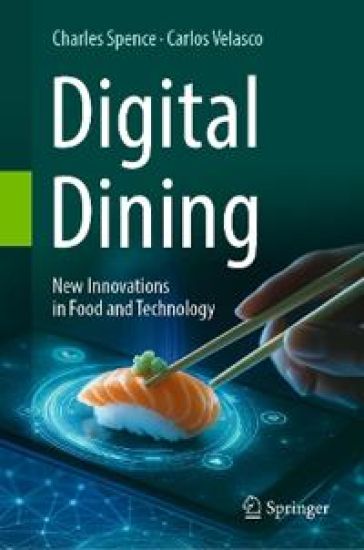
From the earliest stone tools to the latest AI-driven innovations, our relationship with food has always been shaped by technology. In “Digital dining: New innovations in food and technology”, Charles Spence and Carlos Velasco explore how emerging digital tools and technologies, such as smartphones, 3D printing, artificial intelligence, robots, and extended reality, are transforming the way we prepare, consume, and experience food. Diving into the intersections of tradition and innovation, culture and science, this book offers a thought-provoking journey through the world of gastrophysics and multisensory experience design. Will digital technology enrich our culinary experiences or erode the human touch? With insights from leading experts, real-world applications, and a critical lens on the ethical and cultural implications, this book invites readers to explore the tantalising possibilities and challenges of a rapidly changing food landscape. Whether you are a researcher, food enthusiast, a tech innovator, or a curious thinker, this book will provide you with a new lens to see, taste, and experience the future of food.
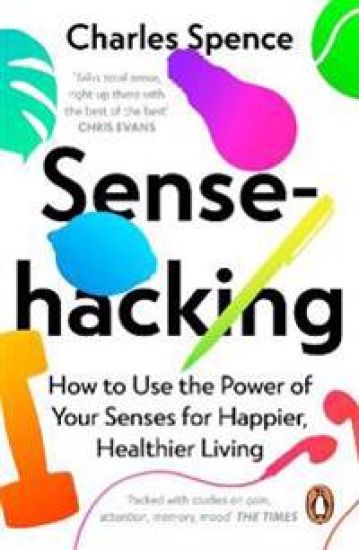
The world expert in multisensory perception on the remarkable ways we can use our senses to lead richer lives 'Talks total sense, lots of fun facts, right up there with the best of the best' Chris Evans'Packed with studies on pain, attention, memory, mood' The Times How can the furniture in your home affect your wellbeing? What colour clothing will help you play sport better? And what simple trick will calm you after a tense day at work? In this revelatory book, pioneering and entertaining Oxford professor Charles Spence shows how our senses change how we think and feel, and how by 'hacking' them we can reduce stress, become more productive and be happier.We like to think of ourselves as rational beings, and yet it's the scent of expensive face cream that removes wrinkles (temporarily), a room actually feels warmer if you use a warmer paint colour, and the noise of the crowd really does affect the referee's decision. Understanding how our senses interact can produce incredible results. This is popular science at its unbelievable best. 'Spence does for the senses what Marie Kondo does for homes' Avery Gilbert, author of What the Nose Knows 'Everything you need to know about how to cope with the hidden sensory overload of modern life, engagingly told' Robin Dunbar, author of How Many Friends Does One Person Need?
Cognitive neuroscientists have started to uncover the neural substrates, systems, and mechanisms enabling us to prioritize the processing of certain sensory information over other, currently less-relevant, inputs. However, there is still a large gap between the knowledge generated in the laboratory and its application to real-life problems of attention as when, for example, interface operators are multi-tasking. In this Element, laboratory studies on crossmodal attention (both behavioural/psychophysical and cognitive neuroscience) are situated within the applied context of driving. We contrast the often idiosyncratic conditions favoured by much of the laboratory research, typically using a few popular paradigms involving simplified experimental conditions, with the noisy, multisensory, real-world environments filled with complex, intrinsically-meaningful stimuli. By drawing attention to the differences between basic and applied studies in the context of driving, we highlight a number of important issues and neglected areas of research as far as the study of crossmodal attention is concerned.
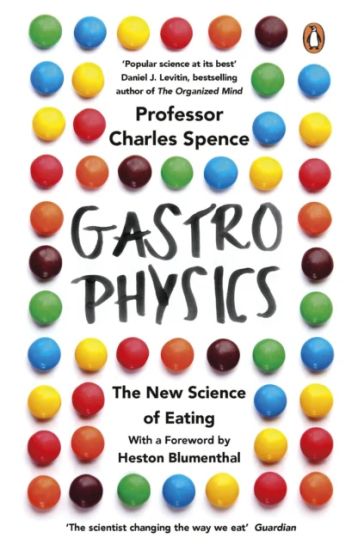
The science behind a good meal: all the sounds, sights, and tastes that make us like what we're eating--and want to eat more. Why do we consume 35 percent more food when eating with one other person, and 75 percent more when dining with three? How do we explain the fact that people who like strong coffee drink more of it under bright lighting? And why does green ketchup just not work? The answer is gastrophysics, the new area of sensory science pioneered by Oxford professor Charles Spence. Now he's stepping out of his lab to lift the lid on the entire eating experience--how the taste, the aroma, and our overall enjoyment of food are influenced by all of our senses, as well as by our mood and expectations. The pleasures of food lie mostly in the mind, not in the mouth. Get that straight and you can start to understand what really makes food enjoyable, stimulating, and, most important, memorable. Spence reveals in amusing detail the importance of all the "off the plate" elements of a meal: the weight of cutlery, the color of the plate, the background music, and much more. Whether we're dining alone or at a dinner party, on a plane or in front of the TV, he reveals how to understand what we're tasting and influence what others experience. This is accessible science at its best, fascinating to anyone in possession of an appetite. Crammed with discoveries about our everyday sensory lives, Gastrophysics is a book guaranteed to make you look at your plate in a whole new way.
A ground-breaking book by the world-leading expert in sensory science: Freakonomics for food'Popular science at its best' - Daniel Levitin Why do we consume 35% more food when eating with one more person, and 75% more when with three? Why are 27% of drinks bought on aeroplanes tomato juice?How are chefs and companies planning to transform our dining experiences, and what can we learn from their cutting-edge insights to make memorable meals at home? These are just some of the ingredients of Gastrophysics, in which the pioneering Oxford professor Charles Spence shows how our senses link up in the most extraordinary ways, and reveals the importance of all the 'off-the-plate' elements of a meal: the weight of cutlery, the placing on the plate, the background music and much more. Whether dining alone or at a dinner party, on a plane or in front of the TV, he reveals how to understand what we're tasting and influence what others experience. Mealtimes will genuinely never be the same again.'Truly accessible, entertaining and informative. On every page there are ideas to set you thinking and widen your horizons' - Heston Blumenthal, OBE'His delight in weird food facts is infectious...fascinating' - James McConnachie, Sunday Times'Gastrophysics is packed with such tasty factual morsels that could be served up at dinner parties. If Spence can percolate all these factual morsels to the mainstream, the benefits to all of us would be obvious' - Nick Curtis, Daily Telegraph'Spence allows people to appreciate the multisensory experience of eating' - New Yorker'The scientist changing the way we eat' - Guardian
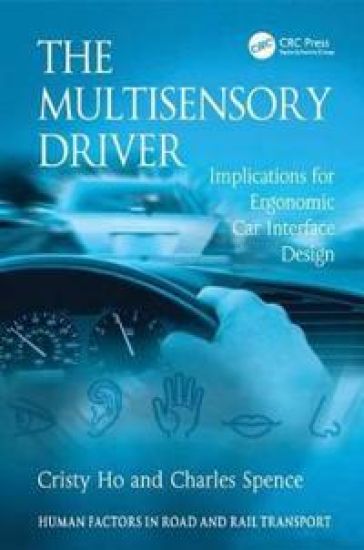
Driver inattention has been identified as one of the leading causes for car accidents. The problem of distraction while driving is likely to worsen, partly due to increasingly complex in-car technologies. However, intelligent transport systems are being developed to assist drivers and to ensure a safe road environment. One approach to the design of ergonomic automobile systems is to integrate our understanding of the human information processing systems into the design process. This book aims to further the design of ergonomic multisensory interfaces using research from the fast-growing field of cognitive neuroscience. It focuses on two aspects of driver information-processing in particular: multisensory interactions and the spatial distribution of attention in driving. The Multisensory Driver provides interface design guidelines together with a detailed review of current cognitive neuroscience and behavioural research in multisensory human perception, which will help the development of ergonomic interfaces. The discussion on spatial attention is particularly relevant for car interface designers, but it will also appeal to cognitive psychologists interested in spatial attention and the applications of these theoretical research findings. Giving a detailed description of a cohesive series of psychophysical experiments on multisensory warning signals, conducted in both laboratory and simulator settings, this book provides an approach for those in the engineering discipline who wish to test their systems with human observers.
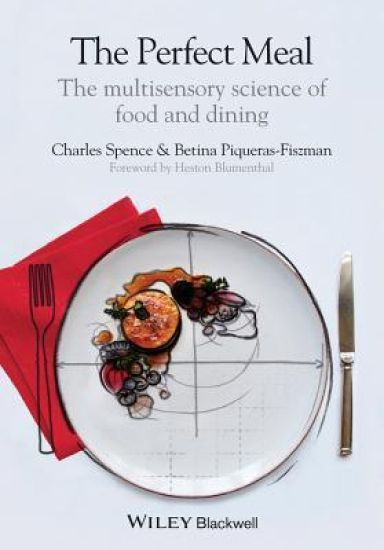
The authors of The Perfect Meal examine all of the elements that contribute to the diner?s experience of a meal (primarily at a restaurant) and investigate how each of the diner?s senses contributes to their overall multisensory experience. The principal focus of the book is not on flavor perception, but on all of the non-food and beverage factors that have been shown to influence the diner?s overall experience. Examples are: the colour of the plate (visual)the shape of the glass (visual/tactile)the names used to describe the dishes (cognitive)the background music playing inside the restaurant (aural) Novel approaches to understanding the diner?s experience in the restaurant setting are explored from the perspectives of decision neuroscience, marketing, design, and psychology. 2015 Popular Science Prose Award Winner.
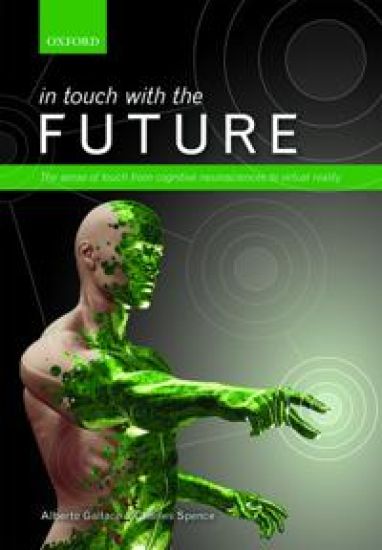
Out of all the human senses, touch is the one that is most often unappreciated, and undervalued. Yet, the surface of the human body, the skin, is actually one huge sheet of tactile receptors. It provides us with the means to connect with our surroundings. Despite the important role that vision plays in our everyday lives, it is the skin that constitutes both the oldest, and by far the largest of our sense organs. The skin protects our body from the external world and, at the same time, informs us about what occurs on its surface. In Touch With The Future explores the science of touch, bringing together the latest findings from cognitive neuroscience about the processing of tactile information in humans. The book provides a comprehensive overview of scientific knowledge regarding themes such as tactile memory, tactile awareness (consciousness), tactile attention, the role of touch in interpersonal and sexual interactions, and the neurological substrates of touch. It highlights the many ways in which our growing understanding of the world of touch can, and in some cases already are, being applied in the real world in everything from the development of virtual reality (VR) environments, tablet PCs, mobile phones, and even teledildonics - the ultimate frontier in terms of adult entertainment. In addition, the book shows how the cognitive neuroscience approach to the study of touch can be applied to help improve the design of many real-world applications/products as well as to many of our everyday experiences, such as those related to the appreciation of food, marketing, packaging design, the development of enhanced sensory substitution systems, art, and man-machine interfaces. Crucially, the authors makes a convincing argument for the view that one cannot really understand touch, especially not in a real-world context, without placing it in a multisensory context. That is, the senses interact to influence tactile perception in everything - from changing the feel of a surface or product by changing the sound it makes or the fragrance it has. For students and researchers in the brain sciences, this book presents a valuable and fascinating exploration into one of our least understood senses
Driver inattention has been identified as one of the leading causes for car accidents. The problem of distraction while driving is likely to worsen, partly due to increasingly complex in-car technologies. However, intelligent transport systems are being developed to assist drivers and to ensure a safe road environment. One approach to the design of ergonomic automobile systems is to integrate our understanding of the human information processing systems into the design process. This book aims to further the design of ergonomic multisensory interfaces using research from the fast-growing field of cognitive neuroscience. It focuses on two aspects of driver information-processing in particular: multisensory interactions and the spatial distribution of attention in driving. The Multisensory Driver provides interface design guidelines together with a detailed review of current cognitive neuroscience and behavioural research in multisensory human perception, which will help the development of ergonomic interfaces. The discussion on spatial attention is particularly relevant for car interface designers, but it will also appeal to cognitive psychologists interested in spatial attention and the applications of these theoretical research findings. Giving a detailed description of a cohesive series of psychophysical experiments on multisensory warning signals, conducted in both laboratory and simulator settings, this book provides an approach for those in the engineering discipline who wish to test their systems with human observers.