Kirjojen hintavertailu. Mukana 12 215 039 kirjaa ja 12 kauppaa.

Kirjailija

Charles Stephens

Kirjat ja teokset yhdessä paikassa: 2 kirjaa, julkaisuja vuosilta 2019-2021, suosituimpien joukossa Da Timothy Code. Vertaile teosten hintoja ja tarkista saatavuus suomalaisista kirjakaupoista.

2 kirjaa

Kirjojen julkaisuhaarukka 2019-2021.

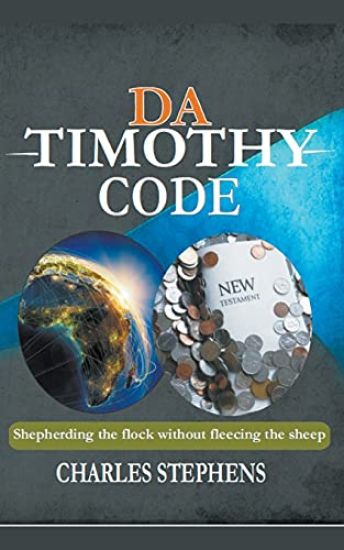
Da Timothy Code

Da Timothy Code

Charles Stephens

Mbokodo Publishers
2021
pokkari
The five main chapters are about East Africa, North Africa, West Africa, Central Africa and South Africa, in that order. The oldest bio's are from East Africa (e.g. Ethiopia, Nubia). Then from Egypt across to the Berbers (e.g. St Augustine was of Berber descent). Then to the Canary Islands and down/around the West Africa coast to Nigeria. Then the Bakongo kingdom and around to Mozambique and up the Zambezi into deep central Africa. Then finally South Africa, starting at the Cape and workingeast and north from there. It ends up in current events of 2021, with some leaders who are in the news. So it is very much a book of African hagiography. Short biographical sketches - some shorter than others, just honourable mention. But these roll out in a way that makes for a coherent narrative of church history all around the continent. The book also chases a theme, which is the subtitle: "Shepherding the flock without fleecing the sheep". Basically it asks the question "who moved the goalposts?" because 90 percent of the bio's over a 2000-year period are about church leaders who sacrificed so much - even their lives. Then since 1950, pastors have become rich -owning airplanes and launching universities. This concern is not answered dogmatically, rather it is probed. The extraordinary contradiction is noted, and the implied questions explored. The baseline that is used to illuminate this contrast is I Timothy chapter 3 (which I call " Timothy Code", a book title that tries to resonate with The Da Vinci Code). This theme is presented and wrapped up in a coherent way that ties all the biographicalsketches together. The structure is a collage - a mosaic. So that when you stand back and look at it, there is a message that makes all the pieces hang together.
ORANIA AND AZANIA

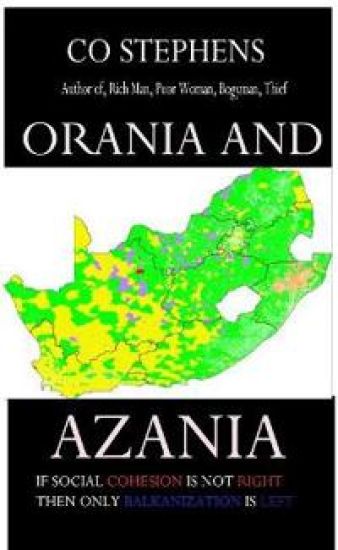
ORANIA AND AZANIA

CHARLES STEPHENS

Mbokodo Publishers
2019
pokkari
These two names have rarely been seen together.But most people can immediately see the distinction, and thus the emphasis of sighting them as a pair.Or is it citing them as a pair?They symbolize extremes."Orania" is rooted in Orange, as in the Orange Free State and before that William of Orange."Azania" shares the same deep African root as Tanzania which combined Tanganyika (once a German colony) with Zanzibar (which was partially settled by Arab traders long ago - probably Azania is a deep Arabic word).Africa has been criss-crossed by different migrations, languages and religions since time immemorial.South Africa is no exception.The book is about co-habitation.It explores first how two major migrations into the Cape (one by sea, the other by land) clashed and then tried to reconcile.Some people describe South Africa as a first world nation and a third world nation occupying the same space.The book is very balanced in its approach.It tries to insult or expose both sides equally.Then the book delves into psychological factors that may offer pathways to reconciliation?Bias is close to prejudice, and by knowing where such attitudes come from, there may still be hope for behaviour change?However, the book expresses worry that these two civilizations are polarizing rather than merging into one pathway - as the South African flag prophesied.The author does not want the Rainbow Nation to dis-integrate into balkanization.He is pro-Diversity, but he also points out that South Africa is not a "nation" per se.It is Union, not just of many nations but of different races, languages and civilizations too.It is very complex, unlike the typical composition of a nation-state.So he explores some historical solutions to such tensions.South Africa is not alone in this conundrum - think of India and Pakistan, Israel and Palestine, or Northern Ireland and Ireland, just to mention a few.The author is extremely well read, and to some extent the book is a collection of his writings about race relations over two decades.But these are neatly compiled into a compendium that is comprehensive and thought-provoking.Finally, the author testifies how these tensions play out in everyday life.His own stories are not pretty, in spite of his long-standing commitment to non-racialism.Once an anti-apartheid activist, he by no means takes the side with whites.Although he speaks highly of them - he remembers that the Dutch, the British and the Portuguese fought over their southern African colonies - because they also had very divergent views on just about everything - like religion, colonization and development.And he makes the distinction between Bantus migration from the north-east and the Ba baroa who are the only truly indigenous people on South Africa.The Khoisan remain marginalized by both blacks and whites.His own testimony of living and working in South Africa for 25 years bears witness to the on-going tensions that are entrenched in attitudes and in policies such as affirmative action.The book holds up a map of the 2019 election results to show the trending - a tendency towards "two-nation theory" or worse yet a Two-State Solution.This is a cautionary tale, written by an author who is longing for true reconciliation, not just rapprochement.