

Kirjailija
Charles Stewart
Kirjat ja teokset yhdessä paikassa: 27 kirjaa, julkaisuja vuosilta 1991-2025, suosituimpien joukossa Gaelic Kingdom in Scotland, its Origin and Church. Vertaile teosten hintoja ja tarkista saatavuus suomalaisista kirjakaupoista.
27 kirjaa
Kirjojen julkaisuhaarukka 1991-2025.



Jak istotny jest Internet jako srodek komunikacji politycznej
Charles Stewart
Wydawnictwo Nasza Wiedza
2025
pokkari
Qual é a importância da Internet como meio de comunicação política
Charles Stewart
Edicoes Nosso Conhecimento
2025
pokkari

Quanto è importante Internet come mezzo di comunicazione politica
Charles Stewart
Edizioni Sapienza
2025
pokkari

Wie bedeutend ist das Internet als Medium der politischen Kommunikation
Charles Stewart
Verlag Unser Wissen
2025
pokkari

Quelle est l'importance de l'Internet en tant que moyen de communication politique
Charles Stewart
Editions Notre Savoir
2025
nidottu
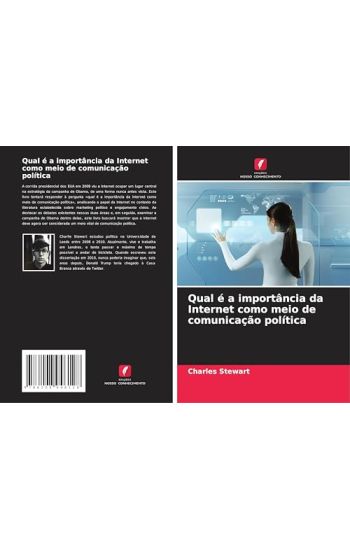
Lors de la campagne pr sidentielle am ricaine de 2008, l'Internet a occup une place centrale dans la strat gie de campagne d'Obama, comme jamais auparavant. Cet ouvrage tente de r pondre la question Quelle est l'importance d'Internet en tant que moyen de communication politique? en analysant le r le d'Internet dans le contexte des ouvrages existants sur le marketing politique et l'engagement civique. En mettant en vidence les d bats actuels dans ces deux domaines, puis en examinant la campagne d'Obama la lumi re de ces d bats, cet ouvrage cherche d montrer qu'Internet doit d sormais tre consid r comme un moyen de communication politique essentiel.

Follow a little boy and his dog through great adventures and try not to get into trouble
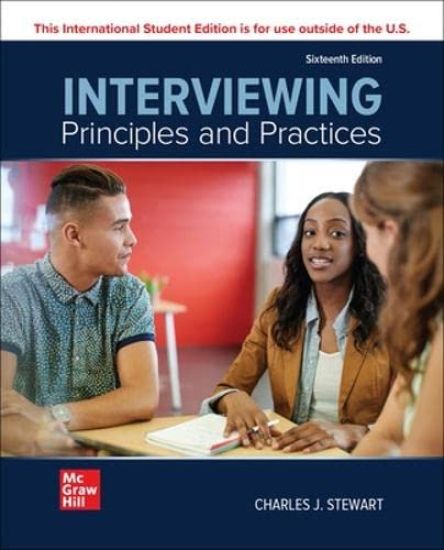
Interviewing: Principles and Practices, the most widely used text for the interviewing course, continues to reflect the growing sophistication with which interviewing is being approached, incorporating the ever-expanding body of research in all types of interview settings, recent communication theory, and the importance of equal opportunity laws on interviewing practices. It provides the most thorough treatment of the basics of interviewing, including the complex interpersonal communication process, types and uses of questions, and the structuring of interviews from opening to closing.

Letters of the Commodore Charles Stewart on the present crisis
Edward Everett; Charles Stewart; Joseph Holt
Hansebooks
2017
pokkari

Dreaming and Historical Consciousness in Island Greece
Charles Stewart
University of Chicago Press
2017
nidottu
On publication in 2012, Dreaming and Historical Consciousness in Island Greece quickly met wide acclaim as a gripping work that, according to the Times Literary Supplement, "offers a wholly new way of thinking about dreams in their social contexts." It tells an extraordinary story of spiritual fervor, prophecy, and the ghosts of the distant past coming alive in the present. This new affordable paperback brings it to the wider audience that it deserves. Charles Stewart tells the story of the inhabitants of K ronos, on the Greek island of Naxos, who, in the 1830s, began experiencing dreams in which the Virgin Mary instructed them to search for buried Christian icons nearby and build a church to house the ones they found. Miraculously, they dug and found several icons and human remains, and at night the ancient owners of them would speak to them in dreams. The inhabitants built the church and in the years since have experienced further waves of dreams and startling prophesies that shaped their understanding of the past and future and often put them at odds with state authorities. Today, K ronos is the site of one of the largest annual pilgrimages in the Mediterranean. Telling this fascinating story, Stewart draws on his long-term fieldwork and original historical sources to explore dreaming as a mediator of historical change, while widening the understanding of historical consciousness and history itself.

How Significant is the Internet as a Medium of Political Communication
Charles Stewart
Lap Lambert Academic Publishing
2016
nidottu
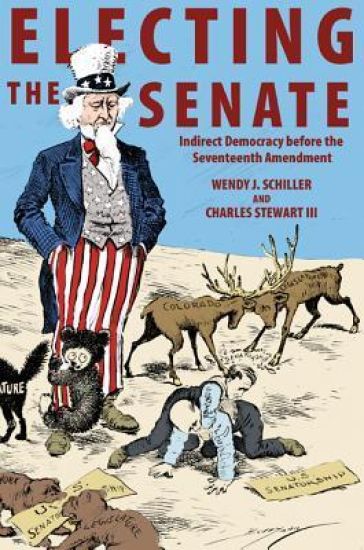
From 1789 to 1913, U.S. senators were not directly elected by the people--instead the Constitution mandated that they be chosen by state legislators. This radically changed in 1913, when the Seventeenth Amendment to the Constitution was ratified, giving the public a direct vote. Electing the Senate investigates the electoral connections among constituents, state legislators, political parties, and U.S. senators during the age of indirect elections. Wendy Schiller and Charles Stewart find that even though parties controlled the partisan affiliation of the winning candidate for Senate, they had much less control over the universe of candidates who competed for votes in Senate elections and the parties did not always succeed in resolving internal conflict among their rank and file. Party politics, money, and personal ambition dominated the election process, in a system originally designed to insulate the Senate from public pressure. Electing the Senate uses an original data set of all the roll call votes cast by state legislators for U.S. senators from 1871 to 1913 and all state legislators who served during this time. Newspaper and biographical accounts uncover vivid stories of the political maneuvering, corruption, and partisanship--played out by elite political actors, from elected officials, to party machine bosses, to wealthy business owners--that dominated the indirect Senate elections process. Electing the Senate raises important questions about the effectiveness of Constitutional reforms, such as the Seventeenth Amendment, that promised to produce a more responsive and accountable government.

From 1789 to 1913, U.S. senators were not directly elected by the people--instead the Constitution mandated that they be chosen by state legislators. This radically changed in 1913, when the Seventeenth Amendment to the Constitution was ratified, giving the public a direct vote. Electing the Senate investigates the electoral connections among constituents, state legislators, political parties, and U.S. senators during the age of indirect elections. Wendy Schiller and Charles Stewart find that even though parties controlled the partisan affiliation of the winning candidate for Senate, they had much less control over the universe of candidates who competed for votes in Senate elections and the parties did not always succeed in resolving internal conflict among their rank and file. Party politics, money, and personal ambition dominated the election process, in a system originally designed to insulate the Senate from public pressure. Electing the Senate uses an original data set of all the roll call votes cast by state legislators for U.S. senators from 1871 to 1913 and all state legislators who served during this time. Newspaper and biographical accounts uncover vivid stories of the political maneuvering, corruption, and partisanship--played out by elite political actors, from elected officials, to party machine bosses, to wealthy business owners--that dominated the indirect Senate elections process. Electing the Senate raises important questions about the effectiveness of Constitutional reforms, such as the Seventeenth Amendment, that promised to produce a more responsive and accountable government.

After a military career with the East India Company, Charles Stewart (1764–1837) focused his attention on the study of oriental languages. Following his return to England in 1806, he assumed the professorship of Arabic, Persian and Hindustani at the East India College in Hertfordshire. His scholarly achievements include an 1809 catalogue of the library of Tipu Sultan of Mysore, and this work, published in 1813, which formed the first serious study in English of the history of Bengal. The book is split into six sections. The first five cover the early Islamic conquests and dynasties from the ninth century onwards. The bulk of the book then covers the Mughal era and ensuing period of independent nawabs, providing also a detailed assessment of the events leading up to the Battle of Plassey in 1757 and the beginning of British dominance.
Fighting for the Speakership
Jeffery A. Jenkins; Charles Stewart
Princeton University Press
2012
pokkari
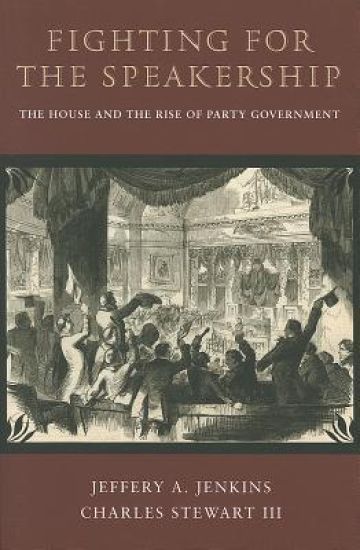
The Speaker of the House of Representatives is the most powerful partisan figure in the contemporary U.S. Congress. How this came to be, and how the majority party in the House has made control of the speakership a routine matter, is far from straightforward. Fighting for the Speakership provides a comprehensive history of how Speakers have been elected in the U.S. House since 1789, arguing that the organizational politics of these elections were critical to the construction of mass political parties in America and laid the groundwork for the role they play in setting the agenda of Congress today. Jeffery Jenkins and Charles Stewart show how the speakership began as a relatively weak office, and how votes for Speaker prior to the Civil War often favored regional interests over party loyalty. While struggle, contention, and deadlock over House organization were common in the antebellum era, such instability vanished with the outbreak of war, as the majority party became an "organizational cartel" capable of controlling with certainty the selection of the Speaker and other key House officers. This organizational cartel has survived Gilded Age partisan strife, Progressive Era challenge, and conservative coalition politics to guide speakership elections through the present day. Fighting for the Speakership reveals how struggles over House organization prior to the Civil War were among the most consequential turning points in American political history.
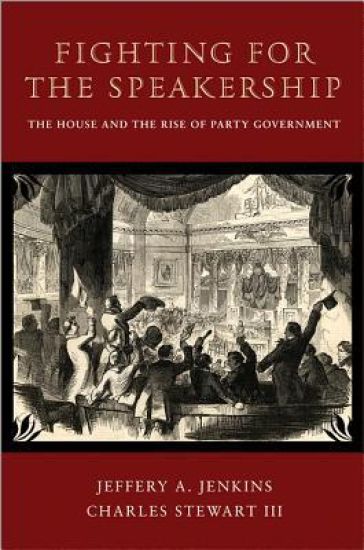
Fighting for the Speakership
Jeffery A. Jenkins; Charles Stewart
Princeton University Press
2012
sidottu
The Speaker of the House of Representatives is the most powerful partisan figure in the contemporary U.S. Congress. How this came to be, and how the majority party in the House has made control of the speakership a routine matter, is far from straightforward. Fighting for the Speakership provides a comprehensive history of how Speakers have been elected in the U.S. House since 1789, arguing that the organizational politics of these elections were critical to the construction of mass political parties in America and laid the groundwork for the role they play in setting the agenda of Congress today. Jeffery Jenkins and Charles Stewart show how the speakership began as a relatively weak office, and how votes for Speaker prior to the Civil War often favored regional interests over party loyalty. While struggle, contention, and deadlock over House organization were common in the antebellum era, such instability vanished with the outbreak of war, as the majority party became an "organizational cartel" capable of controlling with certainty the selection of the Speaker and other key House officers. This organizational cartel has survived Gilded Age partisan strife, Progressive Era challenge, and conservative coalition politics to guide speakership elections through the present day. Fighting for the Speakership reveals how struggles over House organization prior to the Civil War were among the most consequential turning points in American political history.

The Anvari Soheily Of Hussein Vaez Kashefy (1805)
Hussein Vaez Kashefy; Charles Stewart; Moolvy Hussein Aly
KESSINGER PUBLISHING, LLC
2010
sidottu

Letters Of Joseph Holt, Edward Everett, And Charles Stewart
Joseph Holt; Edward Everett; Charles Stewart
KESSINGER PUBLISHING, LLC
2010
sidottu