Kirjojen hintavertailu. Mukana 12 390 323 kirjaa ja 12 kauppaa.

Kirjailija

Charles Temple

Kirjat ja teokset yhdessä paikassa: 19 kirjaa, julkaisuja vuosilta 2002-2021, suosituimpien joukossa Writing and Language Arts, Teacher's Edition, Grade K. Vertaile teosten hintoja ja tarkista saatavuus suomalaisista kirjakaupoista.

19 kirjaa

Kirjojen julkaisuhaarukka 2002-2021.

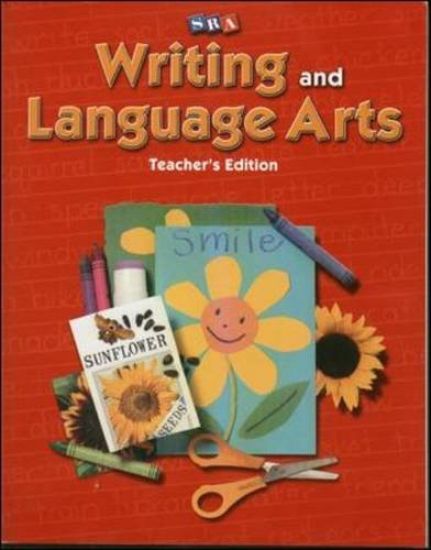
Writing and Language Arts, Teacher's Edition, Grade K

Writing and Language Arts, Teacher's Edition, Grade K

James Williams; Charles Temple; Jean Gillet

McGraw-Hill Professional
2002
nidottu
Help students develop powerful written communication skills with SRA Writing and Language Arts, a supplemental program designed for grades K-6. This stand-alone or supplemental program offers a teacher-directed and systematic style with explicit teaching philosophy while addressing skills that students need to improve writing and language arts proficiency test and standardized assessment scores.SRA Writing and Language Arts teaches students to write effectively in each of the fundamental forms of writing through step-by-step instruction and models. This distinctive program thoroughly covers the writing process from prewriting to publishing, the six traits of writing (ideas, organizations, word choice, sentence fluency, voice, and conventions), and language arts skills such as vocabulary, spelling, grammar, usage, and mechanics. SRA Writing and Language Arts teaches these specific skills simultaneously rather than in isolation to help students connect ideas and apply the skills in a writing context. Additionally, writing rubrics provide clear and specific vital feedback that targets areas for improvement. Systematic and explicit instruction, models, and practice in many forms of authentic writing prepare students to write in any situation, including proficiency tests. The incorporation of educational research and explicit teaching strategies shown to develop writing proficiency ensure that students get effective, efficient instructionAssessment rubrics focus on important writing elements and make assessment easy, effective, and instructional Lessons develop language arts skills, the writing process, and traits of writing together rather than in isolation, and both teaches and provides practice for both composition and language arts skillsEasily adapted to fit many types of language arts curriculum models, these comprehensive writing activities offer the flexibility teachers need to meet various language arts curriculum standards.
Writing and Language Arts, Writer's Workbook, Level K

Writing and Language Arts, Writer's Workbook, Level K

James Williams; Charles Temple; Jean Gillet

McGraw-Hill Professional
2002
nidottu
Help students develop powerful written communication skills with SRA Writing and Language Arts, a new supplemental program designed for grades K-6. This stand-alone or supplemental program offers a teacher-directed and systematic style with explicit teaching philosophy while addressing skills that students need to improve writing and language arts proficiency test and standardized assessment scores.SRA Writing and Language Arts teaches students to write effectively in each of the fundamental forms of writing through step-by-step instruction and models. This distinctive new program thoroughly covers the writing process from prewriting to publishing, the six traits of writing (ideas, organizations, word choice, sentence fluency, voice, and conventions), and language arts skills such as vocabulary, spelling, grammar, usage, and mechanics. SRA Writing and Language Arts teaches these specific skills simultaneously rather than in isolation to help students connect ideas and apply the skills in a writing context. Additionally, writing rubrics provide clear and specific vital feedback that targets areas for improvement. Systematic and explicit instruction, models, and practice in many forms of authentic writing prepare students to write in any situation, including proficiency tests. The incorporation of educational research and explicit teaching strategies shown to develop writing proficiency ensure that students get effective, efficient instructionAssessment rubrics focus on important writing elements and make assessment easy, effective, and instructional Lessons develop language arts skills, the writing process, and traits of writing together rather than in isolation, and both teaches and provides practice for both composition and language arts skillsEasily adapted to fit many types of language arts curriculum models, these comprehensive writing activities offer the flexibility teachers need to meet various language arts curriculum standards.
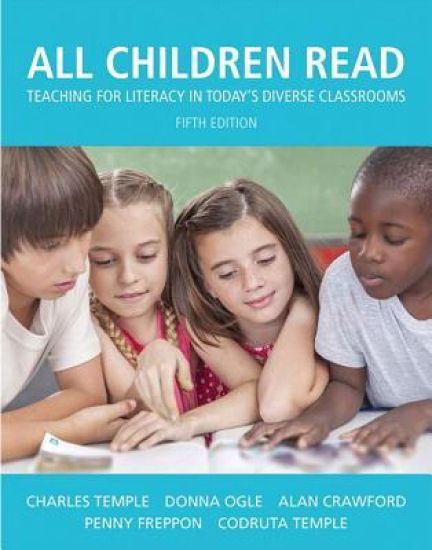
All Children Read

All Children Read

Charles Temple; Donna Ogle; Alan Crawford; Penny Freppon

Pearson
2021
nidottu
A practical and applied K-8 reading methods book with a focus on new literacies and developmental, cultural, and linguistic diversities. Written by one of the most dynamic author teams in the field of reading and literacy, All Children Read, Fifth Edition, continues to offer K-8 teachers the best practices for developing reading and writing in all students. As with earlier editions, six critical themes are interwoven throughout: the struggling reader; family/community literacy; new literacies; writing and reading connections; developmental, cultural, and linguistic diversity; and phonics/phonological awareness. The fifth edition further integrates Common Core State Standards and Response to Intervention (RTI), includes separate chapters on teaching reading fluency and vocabulary, emphasizes the teaching of English Learners, and equips teachers-in-training with the foundational knowledge they will need for their professional qualifying examinations. This focus on contemporary and critical learning prepares future teachers for the demands of helping all students succeed in the classroom. Also available with Revel Revel™ is Pearson’s newest way of delivering our respected content. Fully digital and highly engaging, Revel replaces the textbook and gives students everything they need for the course. Informed by extensive research on how people read, think, and learn, Revel is an interactive learning environment that enables students to read, practice, and study in one continuous experience—for less than the cost of a traditional textbook. Note: You are purchasing a standalone product; Revel does not come packaged with this content. Students, if interested in purchasing this title with Revel, ask your instructor to confirm the correct package ISBN and Course ID. Instructors, contact your Pearson representative for more information.If you would like to purchase both the physical text and Revel, search for: 0134995147 / 9780134995144 All Children Read: Teaching for Literacy in Today's Diverse Classrooms, with Revel -- Access Card Package Package consists of: 0134894650 / 9780134894652 All Children Read: Teaching for Literacy in Today's Diverse Classrooms0134515978 / 9780134515977 Revel All Children Read: Teaching for Literacy in Today's Diverse Classrooms -- Access Card
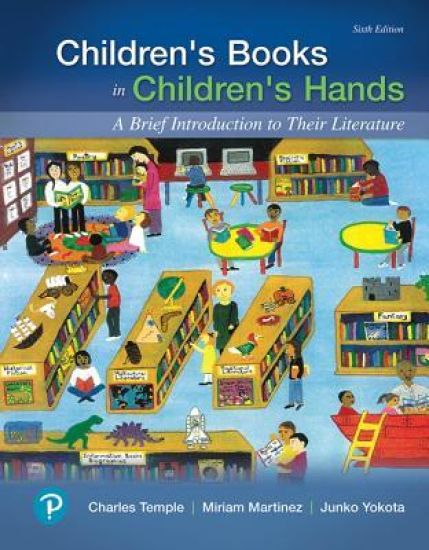
Children's Books in Children's Hands

Children's Books in Children's Hands

Charles Temple; Miriam Martinez; Junko Yokota

Pearson
2018
nidottu
Children’s Books in Children’s Hands: A Brief Introduction to Their Literature familiarizes current and future teachers with the best and most recent books for children. The renowned author team presents richly illustrated, practical ideas for sharing literature with children as a source of enjoyment and inspiration that will last them all their lives. This authoritative, captivating, and popular guide establishes a roadmap for understanding the world of children’s literature, including its writers, illustrators, editors, and critics, while also providing a strong emphasis on books from many cultural groups. The 6th Edition now includes full color illustrations and art, newer title annotations, new teaching ideas, coverage of shifting changes in genres, and thorough coverage of multicultural and international books.
Thinking and Learning through Children's Literature

Thinking and Learning through Children's Literature

Miriam G. Martinez; Junko Yokota; Charles Temple

Rowman Littlefield
2017
nidottu
Much of teachers’ attention these days is focused on having students read closely to ferret out the author’s intended meaning and the devices used to convey that meaning. But we cannot forget to guide students to have moving engagements with literature, because they need to make strong personal connections to books of merit if they are to become the next generation of readers: literate people with awareness of and concern for the diversity of human beings around them and in different times and places. Fortunately, guiding both students’ personal engagement with literature and their close reading to appreciate the author’s message and craft are not incompatible goals. This book enthusiastically and intelligently addresses both imperatives, first surveying what is gained when students are immersed in literature; then celebrating and explicating the main features of literature students need to understand to broaden their tastes and deepen their engagement, at the same time they meet external standards; then presenting a host of active methods for exploring all major genres of children’s books; and finally presenting suggestions for interdisciplinary teaching units grounded in literature. Created by noted leaders in the fields of children’s literature and literacy, the book is enlivened by recurring features such as suggested reading lists, issues for discussion, links to technology, and annotations of exemplary books.
Thinking and Learning through Children's Literature

Thinking and Learning through Children's Literature

Miriam G. Martinez; Junko Yokota; Charles Temple

Rowman Littlefield
2017
sidottu
Much of teachers’ attention these days is focused on having students read closely to ferret out the author’s intended meaning and the devices used to convey that meaning. But we cannot forget to guide students to have moving engagements with literature, because they need to make strong personal connections to books of merit if they are to become the next generation of readers: literate people with awareness of and concern for the diversity of human beings around them and in different times and places. Fortunately, guiding both students’ personal engagement with literature and their close reading to appreciate the author’s message and craft are not incompatible goals. This book enthusiastically and intelligently addresses both imperatives, first surveying what is gained when students are immersed in literature; then celebrating and explicating the main features of literature students need to understand to broaden their tastes and deepen their engagement, at the same time they meet external standards; then presenting a host of active methods for exploring all major genres of children’s books; and finally presenting suggestions for interdisciplinary teaching units grounded in literature. Created by noted leaders in the fields of children’s literature and literacy, the book is enlivened by recurring features such as suggested reading lists, issues for discussion, links to technology, and annotations of exemplary books.
Writing and Language Arts, Teacher's Edition, Grade 6

Writing and Language Arts, Teacher's Edition, Grade 6

James Williams; Charles Temple; Jean Gillet

McGraw-Hill Professional
2002
nidottu
Help students develop powerful written communication skills with SRA Writing and Language Arts, a supplemental program designed for grades K-6. This stand-alone or supplemental program offers a teacher-directed and systematic style with explicit teaching philosophy while addressing skills that students need to improve writing and language arts proficiency test and standardized assessment scores.SRA Writing and Language Arts teaches students to write effectively in each of the fundamental forms of writing through step-by-step instruction and models. This distinctive program thoroughly covers the writing process from prewriting to publishing, the six traits of writing (ideas, organizations, word choice, sentence fluency, voice, and conventions), and language arts skills such as vocabulary, spelling, grammar, usage, and mechanics. SRA Writing and Language Arts teaches these specific skills simultaneously rather than in isolation to help students connect ideas and apply the skills in a writing context. Additionally, writing rubrics provide clear and specific vital feedback that targets areas for improvement. Systematic and explicit instruction, models, and practice in many forms of authentic writing prepare students to write in any situation, including proficiency tests. The incorporation of educational research and explicit teaching strategies shown to develop writing proficiency ensure that students get effective, efficient instructionAssessment rubrics focus on important writing elements and make assessment easy, effective, and instructional Lessons develop language arts skills, the writing process, and traits of writing together rather than in isolation, and both teaches and provides practice for both composition and language arts skillsEasily adapted to fit many types of language arts curriculum models, these comprehensive writing activities offer the flexibility teachers need to meet various language arts curriculum standards.
Writing and Language Arts, Teacher's Edition, Grade 5

Writing and Language Arts, Teacher's Edition, Grade 5

James Williams; Charles Temple; Jean Gillet

McGraw-Hill Professional
2002
nidottu
Help students develop powerful written communication skills with SRA Writing and Language Arts, a supplemental program designed for grades K-6. This stand-alone or supplemental program offers a teacher-directed and systematic style with explicit teaching philosophy while addressing skills that students need to improve writing and language arts proficiency test and standardized assessment scores.SRA Writing and Language Arts teaches students to write effectively in each of the fundamental forms of writing through step-by-step instruction and models. This distinctive program thoroughly covers the writing process from prewriting to publishing, the six traits of writing (ideas, organizations, word choice, sentence fluency, voice, and conventions), and language arts skills such as vocabulary, spelling, grammar, usage, and mechanics. SRA Writing and Language Arts teaches these specific skills simultaneously rather than in isolation to help students connect ideas and apply the skills in a writing context. Additionally, writing rubrics provide clear and specific vital feedback that targets areas for improvement. Systematic and explicit instruction, models, and practice in many forms of authentic writing prepare students to write in any situation, including proficiency tests. The incorporation of educational research and explicit teaching strategies shown to develop writing proficiency ensure that students get effective, efficient instructionAssessment rubrics focus on important writing elements and make assessment easy, effective, and instructional Lessons develop language arts skills, the writing process, and traits of writing together rather than in isolation, and both teaches and provides practice for both composition and language arts skillsEasily adapted to fit many types of language arts curriculum models, these comprehensive writing activities offer the flexibility teachers need to meet various language arts curriculum standards. Teacher's Edition - The Teacher's Edition provides:Sound educational research-based instructional practicesAssessment rubrics to help evaluate student writing
Writing and Language Arts, Teacher's Edition, Grade 4

Writing and Language Arts, Teacher's Edition, Grade 4

James Williams; Charles Temple; Jean Gillet

McGraw-Hill Professional
2002
nidottu
Help students develop powerful written communication skills with SRA Writing and Language Arts, a supplemental program designed for grades K-6. This stand-alone or supplemental program offers a teacher-directed and systematic style with explicit teaching philosophy while addressing skills that students need to improve writing and language arts proficiency test and standardized assessment scores.SRA Writing and Language Arts teaches students to write effectively in each of the fundamental forms of writing through step-by-step instruction and models. This distinctive program thoroughly covers the writing process from prewriting to publishing, the six traits of writing (ideas, organizations, word choice, sentence fluency, voice, and conventions), and language arts skills such as vocabulary, spelling, grammar, usage, and mechanics. SRA Writing and Language Arts teaches these specific skills simultaneously rather than in isolation to help students connect ideas and apply the skills in a writing context. Additionally, writing rubrics provide clear and specific vital feedback that targets areas for improvement. Systematic and explicit instruction, models, and practice in many forms of authentic writing prepare students to write in any situation, including proficiency tests. The incorporation of educational research and explicit teaching strategies shown to develop writing proficiency ensure that students get effective, efficient instructionAssessment rubrics focus on important writing elements and make assessment easy, effective, and instructional Lessons develop language arts skills, the writing process, and traits of writing together rather than in isolation, and both teaches and provides practice for both composition and language arts skillsEasily adapted to fit many types of language arts curriculum models, these comprehensive writing activities offer the flexibility teachers need to meet various language arts curriculum standards.
Writing and Language Arts, Teacher's Edition, Grade 3

Writing and Language Arts, Teacher's Edition, Grade 3

James Williams; Charles Temple; Jean Gillet

McGraw-Hill Professional
2002
nidottu
Help students develop powerful written communication skills with SRA Writing and Language Arts, a supplemental program designed for grades K-6. This stand-alone or supplemental program offers a teacher-directed and systematic style with explicit teaching philosophy while addressing skills that students need to improve writing and language arts proficiency test and standardized assessment scores.SRA Writing and Language Arts teaches students to write effectively in each of the fundamental forms of writing through step-by-step instruction and models. This distinctive program thoroughly covers the writing process from prewriting to publishing, the six traits of writing (ideas, organizations, word choice, sentence fluency, voice, and conventions), and language arts skills such as vocabulary, spelling, grammar, usage, and mechanics. SRA Writing and Language Arts teaches these specific skills simultaneously rather than in isolation to help students connect ideas and apply the skills in a writing context. Additionally, writing rubrics provide clear and specific vital feedback that targets areas for improvement.Features: Systematic and explicit instruction, models, and practice in many forms of authentic writing prepare students to write in any situation, including proficiency tests. The incorporation of educational research and explicit teaching strategies shown to develop writing proficiency ensure that students get effective, efficient instructionAssessment rubrics focus on important writing elements and make assessment easy, effective, and instructional Lessons develop language arts skills, the writing process, and traits of writing together rather than in isolation, and both teaches and provides practice for both composition and language arts skillsEasily adapted to fit many types of language arts curriculum models, these comprehensive writing activities offer the flexibility teachers need to meet various language arts curriculum standards. Teacher's Edition - The Teacher's Edition provides:Sound educational research-based instructional practicesAssessment rubrics to help evaluate student writing
Writing and Language Arts, Teacher's Edition, Grade 2

Writing and Language Arts, Teacher's Edition, Grade 2

James Williams; Charles Temple; Jean Gillet

McGraw-Hill Professional
2002
nidottu
Help students develop powerful written communication skills with SRA Writing and Language Arts, a new supplemental program designed for grades K-6. This stand-alone or supplemental program offers a teacher-directed and systematic style with explicit teaching philosophy while addressing skills that students need to improve writing and language arts proficiency test and standardized assessment scores. SRA Writing and Language Arts teaches students to write effectively in each of the fundamental forms of writing through step-by-step instruction and models. This distinctive new program thoroughly covers the writing process from prewriting to publishing, the six traits of writing (ideas, organizations, word choice, sentence fluency, voice, and conventions), and language arts skills such as vocabulary, spelling, grammar, usage, and mechanics. SRA Writing and Language Arts teaches these specific skills simultaneously rather than in isolation to help students connect ideas and apply the skills in a writing context. Additionally, writing rubrics provide clear and specific vital feedback that targets areas for improvement. Systematic and explicit instruction, models, and practice in many forms of authentic writing prepare students to write in any situation, including proficiency tests. The incorporation of educational research and explicit teaching strategies shown to develop writing proficiency ensure that students get effective, efficient instruction Assessment rubrics focus on important writing elements and make assessment easy, effective, and instructional Lessons develop language arts skills, the writing process, and traits of writing together rather than in isolation, and both teaches and provides practice for both composition and language arts skills Easily adapted to fit many types of language arts curriculum models, these comprehensive writing activities offer the flexibility teachers need to meet various language arts curriculum standards.
Writing and Language Arts, Writer's Workbook, Grade 2

Writing and Language Arts, Writer's Workbook, Grade 2

James Williams; Charles Temple; Jean Gillet

McGraw-Hill Professional
2002
nidottu
Help students develop powerful written communication skills with SRA Writing and Language Arts, a supplemental program designed for grades K-6. This stand-alone or supplemental program offers a teacher-directed and systematic style with explicit teaching philosophy while addressing skills that students need to improve writing and language arts proficiency test and standardized assessment scores.SRA Writing and Language Arts teaches students to write effectively in each of the fundamental forms of writing through step-by-step instruction and models. This distinctive program thoroughly covers the writing process from prewriting to publishing, the six traits of writing (ideas, organizations, word choice, sentence fluency, voice, and conventions), and language arts skills such as vocabulary, spelling, grammar, usage, and mechanics. SRA Writing and Language Arts teaches these specific skills simultaneously rather than in isolation to help students connect ideas and apply the skills in a writing context. Additionally, writing rubrics provide clear and specific vital feedback that targets areas for improvement. Systematic and explicit instruction, models, and practice in many forms of authentic writing prepare students to write in any situation, including proficiency tests. The incorporation of educational research and explicit teaching strategies shown to develop writing proficiency ensure that students get effective, efficient instructionAssessment rubrics focus on important writing elements and make assessment easy, effective, and instructional Lessons develop language arts skills, the writing process, and traits of writing together rather than in isolation, and both teaches and provides practice for both composition and language arts skillsEasily adapted to fit many types of language arts curriculum models, these comprehensive writing activities offer the flexibility teachers need to meet various language arts curriculum standards.
Writing and Language Arts, Writer's Handbook, Grade 6

Writing and Language Arts, Writer's Handbook, Grade 6

James Williams; Charles Temple; Jean Gillet

McGraw-Hill Professional
2002
nidottu
Help students develop powerful written communication skills with SRA Writing and Language Arts, a supplemental program designed for grades K-6. This stand-alone or supplemental program offers a teacher-directed and systematic style with explicit teaching philosophy while addressing skills that students need to improve writing and language arts proficiency test and standardized assessment scores.SRA Writing and Language Arts teaches students to write effectively in each of the fundamental forms of writing through step-by-step instruction and models. This distinctive program thoroughly covers the writing process from prewriting to publishing, the six traits of writing (ideas, organizations, word choice, sentence fluency, voice, and conventions), and language arts skills such as vocabulary, spelling, grammar, usage, and mechanics. SRA Writing and Language Arts teaches these specific skills simultaneously rather than in isolation to help students connect ideas and apply the skills in a writing context. Additionally, writing rubrics provide clear and specific vital feedback that targets areas for improvement. Systematic and explicit instruction, models, and practice in many forms of authentic writing prepare students to write in any situation, including proficiency tests. The incorporation of educational research and explicit teaching strategies shown to develop writing proficiency ensure that students get effective, efficient instructionAssessment rubrics focus on important writing elements and make assessment easy, effective, and instructional Lessons develop language arts skills, the writing process, and traits of writing together rather than in isolation, and both teaches and provides practice for both composition and language arts skillsEasily adapted to fit many types of language arts curriculum models, these comprehensive writing activities offer the flexibility teachers need to meet various language arts curriculum standards.
Writing and Language Arts, Writer's Handbook, Grade 5

Writing and Language Arts, Writer's Handbook, Grade 5

James Williams; Charles Temple; Jean Gillet

McGraw-Hill Professional
2002
nidottu
Help students develop powerful written communication skills with SRA Writing and Language Arts, a supplemental program designed for grades K-6. This stand-alone or supplemental program offers a teacher-directed and systematic style with explicit teaching philosophy while addressing skills that students need to improve writing and language arts proficiency test and standardized assessment scores.SRA Writing and Language Arts teaches students to write effectively in each of the fundamental forms of writing through step-by-step instruction and models. This distinctive program thoroughly covers the writing process from prewriting to publishing, the six traits of writing (ideas, organizations, word choice, sentence fluency, voice, and conventions), and language arts skills such as vocabulary, spelling, grammar, usage, and mechanics. SRA Writing and Language Arts teaches these specific skills simultaneously rather than in isolation to help students connect ideas and apply the skills in a writing context. Additionally, writing rubrics provide clear and specific vital feedback that targets areas for improvement. Systematic and explicit instruction, models, and practice in many forms of authentic writing prepare students to write in any situation, including proficiency tests. The incorporation of educational research and explicit teaching strategies shown to develop writing proficiency ensure that students get effective, efficient instructionAssessment rubrics focus on important writing elements and make assessment easy, effective, and instructional Lessons develop language arts skills, the writing process, and traits of writing together rather than in isolation, and both teaches and provides practice for both composition and language arts skillsEasily adapted to fit many types of language arts curriculum models, these comprehensive writing activities offer the flexibility teachers need to meet various language arts curriculum standards.
Writing and Language Arts, Writer's Handbook, Grade 4

Writing and Language Arts, Writer's Handbook, Grade 4

James Williams; Charles Temple; Jean Gillet

McGraw-Hill Professional
2002
nidottu
Help students develop powerful written communication skills with SRA Writing and Language Arts, a supplemental program designed for grades K-6. This stand-alone or supplemental program offers a teacher-directed and systematic style with explicit teaching philosophy while addressing skills that students need to improve writing and language arts proficiency test and standardized assessment scores.SRA Writing and Language Arts teaches students to write effectively in each of the fundamental forms of writing through step-by-step instruction and models. This distinctive program thoroughly covers the writing process from prewriting to publishing, the six traits of writing (ideas, organizations, word choice, sentence fluency, voice, and conventions), and language arts skills such as vocabulary, spelling, grammar, usage, and mechanics. SRA Writing and Language Arts teaches these specific skills simultaneously rather than in isolation to help students connect ideas and apply the skills in a writing context. Additionally, writing rubrics provide clear and specific vital feedback that targets areas for improvement. Systematic and explicit instruction, models, and practice in many forms of authentic writing prepare students to write in any situation, including proficiency tests. The incorporation of educational research and explicit teaching strategies shown to develop writing proficiency ensure that students get effective, efficient instructionAssessment rubrics focus on important writing elements and make assessment easy, effective, and instructional Lessons develop language arts skills, the writing process, and traits of writing together rather than in isolation, and both teaches and provides practice for both composition and language arts skillsEasily adapted to fit many types of language arts curriculum models, these comprehensive writing activities offer the flexibility teachers need to meet various language arts curriculum standards.
Writing and Language Arts, Writer's Handbook, Grade 3

Writing and Language Arts, Writer's Handbook, Grade 3

James Williams; Charles Temple; Jean Gillet

McGraw-Hill Professional
2002
nidottu
Help students develop powerful written communication skills with SRA Writing and Language Arts, a supplemental program designed for grades K-6. This stand-alone or supplemental program offers a teacher-directed and systematic style with explicit teaching philosophy while addressing skills that students need to improve writing and language arts proficiency test and standardized assessment scores.SRA Writing and Language Arts teaches students to write effectively in each of the fundamental forms of writing through step-by-step instruction and models. This distinctive program thoroughly covers the writing process from prewriting to publishing, the six traits of writing (ideas, organizations, word choice, sentence fluency, voice, and conventions), and language arts skills such as vocabulary, spelling, grammar, usage, and mechanics. SRA Writing and Language Arts teaches these specific skills simultaneously rather than in isolation to help students connect ideas and apply the skills in a writing context. Additionally, writing rubrics provide clear and specific vital feedback that targets areas for improvement. Systematic and explicit instruction, models, and practice in many forms of authentic writing prepare students to write in any situation, including proficiency tests. The incorporation of educational research and explicit teaching strategies shown to develop writing proficiency ensure that students get effective, efficient instructionAssessment rubrics focus on important writing elements and make assessment easy, effective, and instructional Lessons develop language arts skills, the writing process, and traits of writing together rather than in isolation, and both teaches and provides practice for both composition and language arts skillsEasily adapted to fit many types of language arts curriculum models, these comprehensive writing activities offer the flexibility teachers need to meet various language arts curriculum standards. Writer's Handbook - Your students will find information quickly and easily with:Clear and concise explanations for key skills and conceptsModels of all forms of writing
Writing and Language Arts, Writer's Handbook, Grade 2

Writing and Language Arts, Writer's Handbook, Grade 2

James Williams; Charles Temple; Jean Gillet

McGraw-Hill Professional
2002
nidottu
Help students develop powerful written communication skills with SRA Writing and Language Arts, a supplemental program designed for grades K-6. This stand-alone or supplemental program offers a teacher-directed and systematic style with explicit teaching philosophy while addressing skills that students need to improve writing and language arts proficiency test and standardized assessment scores.SRA Writing and Language Arts teaches students to write effectively in each of the fundamental forms of writing through step-by-step instruction and models. This distinctive new program thoroughly covers the writing process from prewriting to publishing, the six traits of writing (ideas, organizations, word choice, sentence fluency, voice, and conventions), and language arts skills such as vocabulary, spelling, grammar, usage, and mechanics. SRA Writing and Language Arts teaches these specific skills simultaneously rather than in isolation to help students connect ideas and apply the skills in a writing context. Additionally, writing rubrics provide clear and specific vital feedback that targets areas for improvement. Systematic and explicit instruction, models, and practice in many forms of authentic writing prepare students to write in any situation, including proficiency tests. The incorporation of educational research and explicit teaching strategies shown to develop writing proficiency ensure that students get effective, efficient instructionAssessment rubrics focus on important writing elements and make assessment easy, effective, and instructional Lessons develop language arts skills, the writing process, and traits of writing together rather than in isolation, and both teaches and provides practice for both composition and language arts skillsEasily adapted to fit many types of language arts curriculum models, these comprehensive writing activities offer the flexibility teachers need to meet various language arts curriculum standards.