

Kirjailija
Charles Wilkinson
Kirjat ja teokset yhdessä paikassa: 21 kirjaa, julkaisuja vuosilta 2006-2026, suosituimpien joukossa Nightscript Volume 6. Vertaile teosten hintoja ja tarkista saatavuus suomalaisista kirjakaupoista.
21 kirjaa
Kirjojen julkaisuhaarukka 2006-2026.
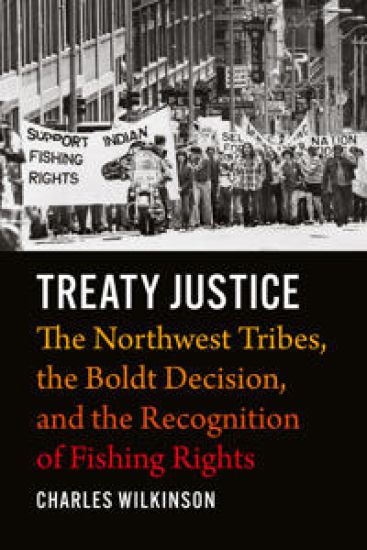
In 1974, Judge George Boldt issued a ruling that affirmed the fishing rights and tribal sovereignty of Native nations in Washington State. The Boldt Decision transformed Indigenous law and resource management across the United States and beyond. Like Brown v. Board of Education, the case also brought about far-reaching societal changes, reinforcing tribal sovereignty and remedying decades of injustice.Eminent legal historian and tribal advocate Charles Wilkinson tells the dramatic story of the Boldt Decision against the backdrop of salmon's central place in the cultures and economies of the Pacific Northwest. In the 1960s, Native people reasserted their fishing rights as delineated in nineteenth-century treaties. In response, state officials worked with non-Indian commercial and sport fishing interests to forcefully—and often violently—oppose Native actions. These "fish wars" spurred twenty tribes and the US government to file suit in federal court. Moved by the testimony of tribal leaders and other experts, Boldt pointedly waited until Lincoln's birthday to hand down a decision recognizing the tribes' right to half of the state's fish. The case's long aftermath led from the Supreme Court's affirmation of Boldt's opinion to collaborative management of the harvest of salmon and other marine resources.Expert and compelling, Treaty Justice weaves personalities and local detail into the definitive account of one of the twentieth century's most important civil rights cases.

Chthonic Matter Quarterly
Luciano Marano; Charles Wilkinson; Eygló Karlsdóttir
Independently Published
2023
pokkari

Dark Lane Head to Tales Issue 2 contains two tales for the discerning reader. 'The Warburton Submersible' is a brand new weird fiction from Charles Wilkinson. Flip the book around and you can read Matthew G. Rees snowbound strange tale, 'Saint D-'. The second in a series of collectible pocket books featured promising new writers and established names, Dark Lane Head to Tales Issue 2 will be a memorable read for anyone who likes their fiction a little on the strange side.



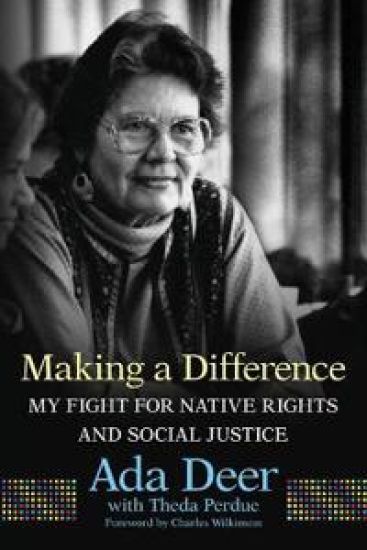
2019 National Native American Hall of Fame Inductee This stirring memoir is the story of Ada Deer, the first woman to serve as head of the Bureau of Indian Affairs. Deer begins, 'I was born a Menominee Indian. That is who I was born and how I have lived.' She proceeds to narrate the first eighty-three years of her life, which are characterized by her tireless campaigns to reverse the forced termination of the Menominee tribe and to ensure sovereignty and self-determination for all tribes. Deer grew up in poverty on the Menominee Reservation in Wisconsin, but with the encouragement of her mother and teachers, she earned degrees in social work from the University of Wisconsin - Madison and Columbia University. Armed with a first-rate education, an iron will, and a commitment to justice, she went from being a social worker in Minneapolis to leading the struggle for the restoration of the Menominees' tribal status and trust lands. Having accomplished that goal, she moved on to teach American Indian Studies at UW - Madison, to hold a fellowship at Harvard, to work for the Native American Rights Fund, to run unsuccessfully for Congress, and to serve as Assistant Secretary of the Interior for Indian Affairs in the Clinton administration. Now in her eighties, Deer remains as committed as ever to human rights, especially the rights of American Indians. A deeply personal story, written with humor and honesty, this book is a testimony to the ability of one individual to change the course of history through hard work, perseverance, and an unwavering commitment to social justice.
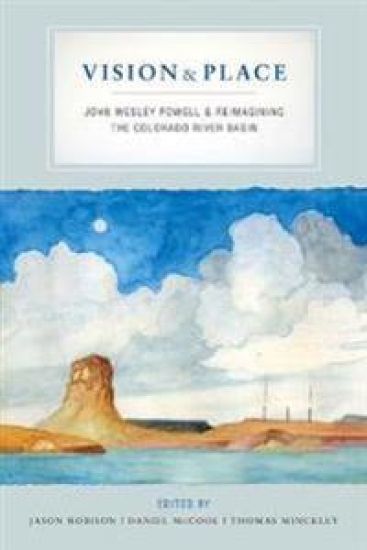
The Colorado River Basin’s importance cannot be overstated. Its living river system supplies water to roughly forty million people, contains Grand Canyon National Park, Bears Ears National Monument, and wide swaths of other public lands, and encompasses ancestral homelands of twenty-nine Native American tribes. John Wesley Powell, a one-armed Civil War veteran, explorer, scientist, and adept federal administrator, articulated a vision for Euro-American colonization of the “Arid Region” that has indelibly shaped the basin—a pattern that looms large not only in western history, but also in contemporary environmental and social policy. One hundred and fifty years after Powell’s epic 1869 Colorado River Exploring Expedition, this volume revisits Powell’s vision, examining its historical character and its relative influence on the Colorado River Basin’s cultural and physical landscape in modern times. In three parts, the volume unpacks Powell’s ideas on water, public lands, and Native Americans—ideas at once innovative, complex, and contradictory. With an eye toward climate change and a host of related challenges facing the basin, the volume turns to the future, reflecting on how—if at all—Powell’s legacy might inform our collective vision as we navigate a new “Great Unknown.”
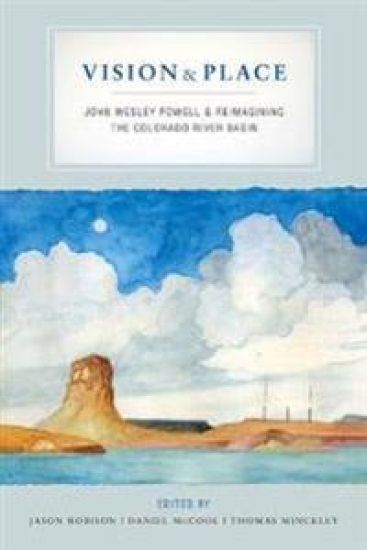
The Colorado River Basin’s importance cannot be overstated. Its living river system supplies water to roughly forty million people, contains Grand Canyon National Park, Bears Ears National Monument, and wide swaths of other public lands, and encompasses ancestral homelands of twenty-nine Native American tribes. John Wesley Powell, a one-armed Civil War veteran, explorer, scientist, and adept federal administrator, articulated a vision for Euro-American colonization of the “Arid Region” that has indelibly shaped the basin—a pattern that looms large not only in western history, but also in contemporary environmental and social policy. One hundred and fifty years after Powell’s epic 1869 Colorado River Exploring Expedition, this volume revisits Powell’s vision, examining its historical character and its relative influence on the Colorado River Basin’s cultural and physical landscape in modern times. In three parts, the volume unpacks Powell’s ideas on water, public lands, and Native Americans—ideas at once innovative, complex, and contradictory. With an eye toward climate change and a host of related challenges facing the basin, the volume turns to the future, reflecting on how—if at all—Powell’s legacy might inform our collective vision as we navigate a new “Great Unknown.”

Nightscript Volume 6
Charles Wilkinson; Christi Nogle; Dan Coxon
Independently Published
2020
pokkari

Charles Wilkinson’s The Glazier’s Choice is the first substantial gathering of work by a writer who has published two previous short collections of poetry. Many of these pieces, written over a ten-year period, are characterised by a powerful sense of place, a consistently lyrical voice and a preoccupation with the liminal, numinous and half hidden. Wilkinson’s often oblique narratives eschew the first person in favour of a verse that is open and various in its technical procedures, neither mainstream nor egregiously avant-garde. A melancholic strain is sometimes leavened by humour and playful use of form.
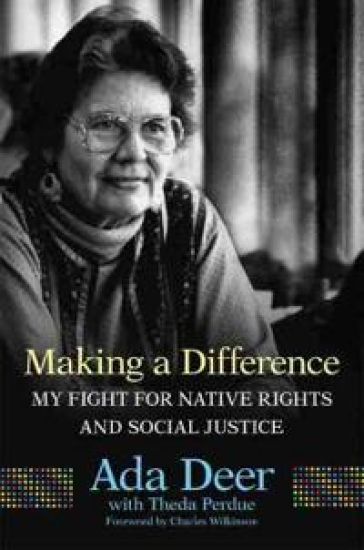
2019 National Native American Hall of Fame Inductee This stirring memoir is the story of Ada Deer, the first woman to serve as head of the Bureau of Indian Affairs. Deer begins, ""I was born a Menominee Indian. That is who I was born and how I have lived."" She proceeds to narrate the first eighty-three years of her life, which are characterized by her tireless campaigns to reverse the forced termination of the Menominee tribe and to ensure sovereignty and self-determination for all tribes. Deer grew up in poverty on the Menominee Reservation in Wisconsin, but with the encouragement of her mother and teachers, she earned degrees in social work from the University of Wisconsin-Madison and Columbia University. Armed with a first-rate education, an iron will, and a commitment to justice, she went from being a social worker in Minneapolis to leading the struggle for the restoration of the Menominees' tribal status and trust lands. Having accomplished that goal, she moved on to teach American Indian Studies at UW-Madison, to hold a fellowship at Harvard, to work for the Native American Rights Fund, to run unsuccessfully for Congress, and to serve as Assistant Secretary of the Interior for Indian Affairs in the Clinton administration. Now in her eighties, Deer remains as committed as ever to human rights, especially the rights of American Indians. A deeply personal story, written with humor and honesty, this book is a testimony to the ability of one individual to change the course of history through hard work, perseverance, and an unwavering commitment to social justice.

Theaker's Quarterly Fiction #56
Cam Rhys Lay; Charles Wilkinson
THEAKER'S PAPERBACK LIBRARY
2016
nidottu
Issue fifty-six of Theaker's Quarterly Fiction is two hundred and forty pages long, and features six stories of fantasy, horror and science fiction: "Concerning Strange Events at the Manor of Sir Hugh de Villiers, Valiant Knight" David Penn (transcribed from the Middle English), "Three Bodies" by Cam Rhys Lay, "The Christmas Cracker" by Rafe McGregor, "Mr Kitchell Says Thank You" by Charles Wilkinson, "The Cutting Room" by Chuck Von Nordheim, and "Gliese and the Walking Man" by Howard Watts. They are arranged roughly in chronological order, so fantasy fans should start at the beginning, and science fiction fans should start at the end. The wraparound cover is by Howard Watts, and the emergency editorial by Howard Phillips. The issue also includes over sixty pages of reviews. Writers, artists and other creators whose work is reviewed in this issue include: Adam Cozad, Alberto Giolitti, Angela Gorodischer, Charles Dixon, Chip Proser, Christian H jgaard, Christopher Markus, Craig Brewer, Craig Mazin, Dennis-Pierre Filippi, Dick Wood, Dirk Maggs, Ernie Chan, Evan Spiliotopoulos, Gabriel Rodriguez, Gary Kwapisz, Guy Davis, Jean-Florian Tello, Jeffrey Boam, Jerry Frissen, Joe Hill, Joe Phillips, John Connolly, Mateus Santolouco, Michael Alan Nelson, Mike Johnson, Naimi Mitchison, Nevio Zeccara, Nick Mamatas, Nicolas Wright, Nicole Kornher-Stace, Philippe Thirault, Simon Kinberg, Simon Kurt Unsworth, Stephen McFeely, Stephen Molnar, Steven Savile, Thomas Ligotti, and Tim Lebbon.

A Lawyer in Indian Country
Alvin J. Ziontz; Charles Wilkinson
University of Washington Press
2015
sidottu
In his memoir, Alvin Ziontz reflects on his more than thirty years representing Indian tribes, from a time when Indian law was little known through landmark battles that upheld tribal sovereignty. He discusses the growth and maturation of tribal government and the underlying tensions between Indian society and the non-Indian world. A Lawyer in Indian Country presents vignettes of reservation life and recounts some of the memorable legal cases that illustrate the challenges faced by individual Indians and tribes.As the senior attorney arguing U.S. v. Washington, Ziontz was a party to the historic 1974 Boldt decision that affirmed the Pacific Northwest tribes' treaty fishing rights, with ramifications for tribal rights nationwide. His work took him to reservations in Montana, Wyoming, and Minnesota, as well as Washington and Alaska, and he describes not only the work of a tribal attorney but also his personal entry into the life of Indian country.Ziontz continued to fight for tribal rights into the late 1990s, as the Makah tribe of Washington sought to resume its traditional whale hunts. Throughout his book, Ziontz traces his own path through this public history - one man's pursuit of a life built around the principles of integrity and justice.
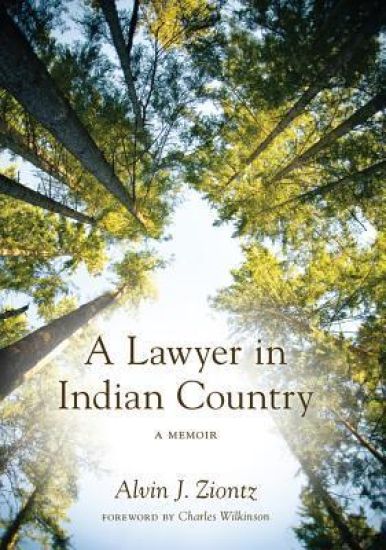
A Lawyer in Indian Country
Alvin J. Ziontz; Charles Wilkinson
University of Washington Press
2012
pokkari
In his memoir, Alvin Ziontz reflects on his more than thirty years representing Indian tribes, from a time when Indian law was little known through landmark battles that upheld tribal sovereignty. He discusses the growth and maturation of tribal government and the underlying tensions between Indian society and the non-Indian world. A Lawyer in Indian Country presents vignettes of reservation life and recounts some of the memorable legal cases that illustrate the challenges faced by individual Indians and tribes.As the senior attorney arguing U.S. v. Washington, Ziontz was a party to the historic 1974 Boldt decision that affirmed the Pacific Northwest tribes' treaty fishing rights, with ramifications for tribal rights nationwide. His work took him to reservations in Montana, Wyoming, and Minnesota, as well as Washington and Alaska, and he describes not only the work of a tribal attorney but also his personal entry into the life of Indian country.Ziontz continued to fight for tribal rights into the late 1990s, as the Makah tribe of Washington sought to resume its traditional whale hunts. Throughout his book, Ziontz traces his own path through this public history - one man's pursuit of a life built around the principles of integrity and justice.
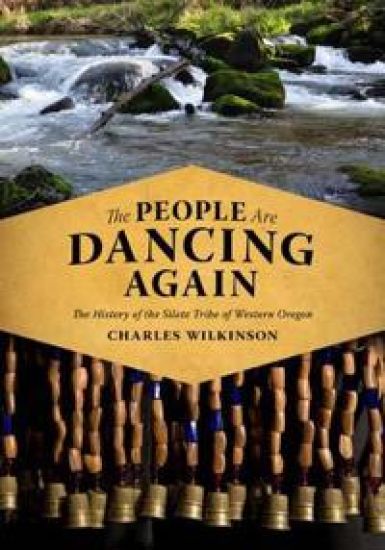
The history of the Siletz is in many ways the history of all Indian tribes in America: a story of heartache, perseverance, survival, and revival. It began in a resource-rich homeland thousands of years ago and today finds a vibrant, modern community with a deeply held commitment to tradition.The Confederated Tribes of Siletz Indians—twenty-seven tribes speaking at least ten languages—were brought together on the Oregon Coast through treaties with the federal government in 1853–55. For decades after, the Siletz people lost many traditional customs, saw their languages almost wiped out, and experienced poverty, killing diseases, and humiliation. Again and again, the federal government took great chunks of the magnificent, timber-rich tribal homeland, a reservation of 1.1 million acres reaching a full 100 miles north to south on the Oregon Coast. By 1956, the tribe had been "terminated" under the Western Oregon Indian Termination Act, selling off the remaining land, cutting off federal health and education benefits, and denying tribal status. Poverty worsened, and the sense of cultural loss deepened.The Siletz people refused to give in. In 1977, after years of work and appeals to Congress, they became the second tribe in the nation to have its federal status, its treaty rights, and its sovereignty restored. Hand-in-glove with this federal recognition of the tribe has come a recovery of some land--several hundred acres near Siletz and 9,000 acres of forest--and a profound cultural revival.This remarkable account, written by one of the nation's most respected experts in tribal law and history, is rich in Indian voices and grounded in extensive research that includes oral tradition and personal interviews. It is a book that not only provides a deep and beautifully written account of the history of the Siletz, but reaches beyond region and tribe to tell a story that will inform the way all of us think about the past.Watch the book trailer: https://www.youtube.com/watch?v=NEtAIGxp6pc

EnvironmentCharles Wilkinson views the history of the American West as being divided into three periods. The First West existed when only the American Indians occupied the land. The Second West began with the California Gold Rush and the rapid settlement of the region. The Third West began at the end of World War II when the American West experienced explosive growth that transformed the region from a largely rural environment to an urban environment. In this lecture, Wilkinson explores the question of whether the region is about to enter a new period, the Fourth West, when we finally do know what we have and what we have to lose. "