Kirjojen hintavertailu. Mukana 12 405 672 kirjaa ja 12 kauppaa.

Kirjailija

Charmian Brinson

Kirjat ja teokset yhdessä paikassa: 13 kirjaa, julkaisuja vuosilta 2009-2025, suosituimpien joukossa Working for the War Effort. Vertaile teosten hintoja ja tarkista saatavuus suomalaisista kirjakaupoista.

13 kirjaa

Kirjojen julkaisuhaarukka 2009-2025.

The Czech Refugee Trust Fund in Britain, 1938–1975

The Czech Refugee Trust Fund in Britain, 1938–1975

Charmian Brinson; Jana Buresova

VALLENTINE MITCHELL CO LTD
2025
nidottu
This book documents the role of the British-based Czech Refugee Trust Fund (CRTF) and its predecessor, the British Committee for Refugees from Czechoslovakia (BCRC). It provides insight into the political debates, controversies, and difficulties that impacted on the British and Czechoslovak governments as well as on the refugees from the Nazi invasions of 1938 and 1939. In addition to Czechs, those seeking to leave included political and/or racial antifascist German and Austrian refugees who had been sheltering there prior to the 1938 Munich Agreement. Spanning Fascist and Communist eras, the book draws upon archive materials and personal experiences of refugees, examines issues of internment and resettlement after WW2, and the BCRC/CRTF's dwindling resources with which to support the refugees. The CRTF was able to assist the next group of Czech refugees after the Communist coup in 1948, but not a third group who arrived in 1968 after the invasion by Warsaw Pact armies. The book critically evaluates the successes and failures of the BCRC/CRTF and concludes that, despite the many problems, the CRTF offered a unique service to refugees in its care in times of need.
Working for the War Effort

Working for the War Effort

Charmian Brinson; Richard Dove

Vallentine Mitchell Co Ltd
2021
nidottu
This book explores a facet of British propaganda during the Second World War that has previously hardly been addressed or considered: the apparent anomaly that much of Britain's wartime propaganda was prepared and delivered by foreigners, not least those officially designated as 'enemy aliens'. German-speaking refugees were involved in every aspect of British propaganda: for the Ministry of Information; the BBC and for the intelligence organisations such as Electra House, the Special Operations Executive and the Political Warfare Executive. They played a significant role in propaganda designed for the Home Front, for neutral and Allied countries, and in propaganda directed at the enemy, and were engaged in both 'white' and 'black' (i.e. covert) materials. The book considers the preparedness of the British authorities to avail themselves of the talents of the 'enemy aliens' and the eagerness of many of the refugees to contribute to the British war effort. They brought with them knowledge of every aspect of their home countries as well as their obvious linguistic skills, all of which could be usefully exploited for propaganda purposes. Refugee artists, writers, journalists, broadcast
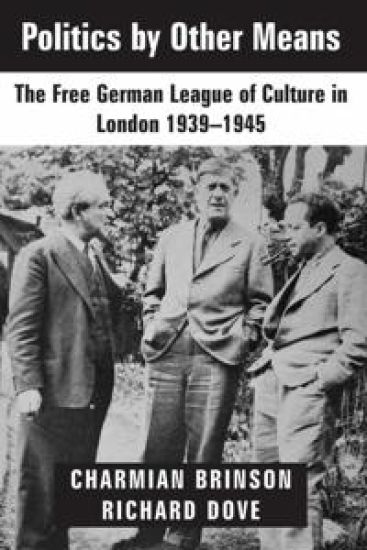
Politics by Other Means

Politics by Other Means

Charmian Brinson; Richard Dove

Vallentine Mitchell Co Ltd
2021
nidottu
Brinson and Dove trace the development and historical significance of the Free German League of Culture, the foremost organisation representing anti-Nazi German refugees in Britain during the years of the Second World War. During its lifetime (1939–46), the League held a regular programme of cultural events ranging from concerts and theatre performances to publications and art exhibitions, as well as a 'university in exile'. Because of the restrictions on refugees imposed by the British authorities, this cultural programme served very much as a surrogate for direct political activity: the continuation of politics by other means. The study concludes by tracing the fate of those who returned to a now-divided Germany and the post-war integration of those who remained into British arts and society. The book is based largely on primary sources, using documentary material held in Frankfurt and Berlin which historians have hitherto neglected, thus most of the content and findings are new. Though based on scholarly research, the book is written in a readable and accessible style.
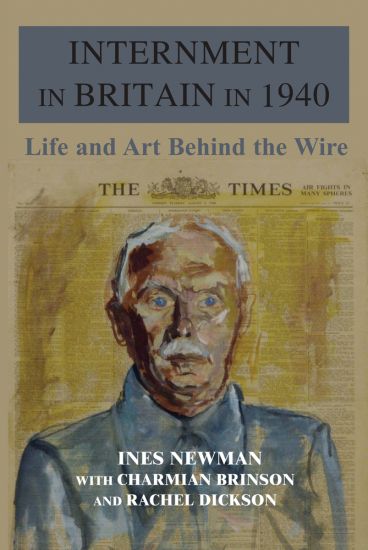
Internment in Britain in 1940

Internment in Britain in 1940

Ines Newman; Charmian Brinson; Rachel Dickson

Vallentine Mitchell Co Ltd
2020
sidottu
When the artist Hugo Dachinger asked to paint the portrait of diarist Wilhelm Hollitscher, a new friendship was born. Both men, refugees from the Nazis, were interned in the Huyton Internment Camp in 1940. However, they refused to let the experience daunt them, with Dachinger manufacturing his art materials from anything to hand and Hollitscher continuing his life-long habit of diary keeping. Hollitscher’s diary provides a vivid account of daily life in the camp along with wider political comment, while Dachinger staged exhibitions of his work in the camp entitled Behind the Wire. Both men found being interned as an ‘enemy alien’ traumatic, but were able to draw strength from the experience. The context is set by three chapters. Professor Charmian Brinson writes about the history of internment and Churchill’s shameful policy to ‘collar the lot,’ Rachel Dickson elucidates Dachinger’s work in the camp, and Ines Newman, the granddaughter of Wilhelm Hollitscher, provides a portrait of her grandfather’s background and life. The book reveals the true experience of life in captivity and is as relevant to today’s injustices as it is an account of unjust treatment in the past.
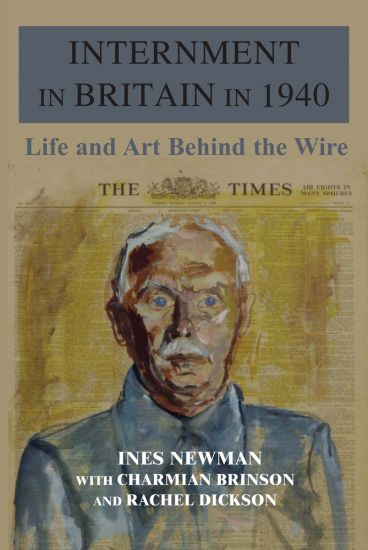
Internment in Britain in 1940

Internment in Britain in 1940

Ines Newman; Charmian Brinson; Rachel Dickson

Vallentine Mitchell Co Ltd
2020
nidottu
When the artist Hugo Dachinger asked to paint the portrait of diarist Wilhelm Hollitscher, a new friendship was born. Both men, refugees from the Nazis, were interned in the Huyton Internment Camp in 1940. However, they refused to let the experience daunt them, with Dachinger manufacturing his art materials from anything to hand and Hollitscher continuing his life-long habit of diary keeping. Hollitscher’s diary provides a vivid account of daily life in the camp along with wider political comment, while Dachinger staged exhibitions of his work in the camp entitled Behind the Wire. Both men found being interned as an ‘enemy alien’ traumatic, but were able to draw strength from the experience. The context is set by three chapters. Professor Charmian Brinson writes about the history of internment and Churchill’s shameful policy to ‘collar the lot,’ Rachel Dickson elucidates Dachinger’s work in the camp, and Ines Newman, the granddaughter of Wilhelm Hollitscher, provides a portrait of her grandfather’s background and life. The book reveals the true experience of life in captivity and is as relevant to today’s injustices as it is an account of unjust treatment in the past.
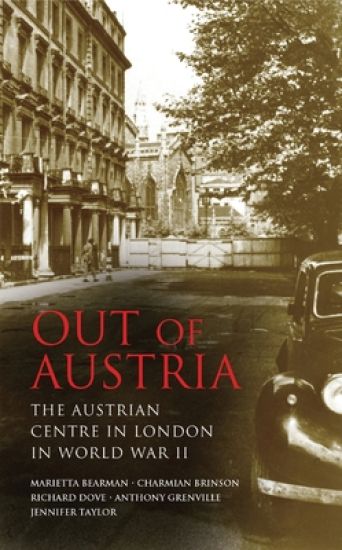
Out of Austria

Out of Austria

Marietta Bearman; Charmian Brinson; Richard Dove; Anthony Grenville; Jennifer Taylor

Bloomsbury Academic
2020
nidottu
The Austrian Centre was established in London in 1939 by Austrians seeking refuge from Nazi Germany, of whom 30,000 had reached Britain by the outbreak of World War II. It soon developed into a comprehensive social, cultural and political organisation with a theatre and a weekly newspaper of its own. A Communist-influenced organisation, it also followed a distinct political agenda. In the first book on the cultural and political life of Austrian refugees in Britain, Out of Austria assesses and evaluates the Austrian Centre's activities and achievements, while also examining the Austrians' often fraught relations with their British hosts. It gives a fascinating insight into such figures as Sigmund Freud, who became the Centre's Honorary President during his final months and the poet Erich Fried, then an unknown seventeen-year-old, and sheds light on the interaction of politics and culture against the background of exile in wartime Britain.
A Matter of Intelligence

A Matter of Intelligence

Charmian Brinson; Richard Dove

Manchester University Press
2015
nidottu
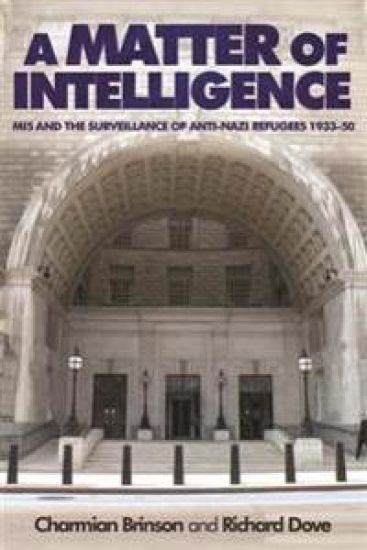
This is an unusual book, telling a story which has hitherto remained hidden from history: the surveillance by the British security service MI5 of anti-Nazi refugees who came to Britain fleeing political persecution in Germany and Austria. Based on the personal and organisational files that MI5 kept on political refugees during the 1930s and 1940s – which have only recently been released into the public domain – this study also fills a considerable gap in historical research. Telling a story of absorbing interest, which at times reads more like spy fiction, it is both a study of MI5 and of the political refugees themselves. The book will interest academics in the fields of history, politics, intelligence studies, Jewish studies, German studies and migration studies; but it is also accessible to the general reader interested in Britain before, during and after the Second World War.
Fleeing from the Fuhrer

Fleeing from the Fuhrer

Charmian Brinson; William Kaczynski

The History Press Ltd
2015
nidottu
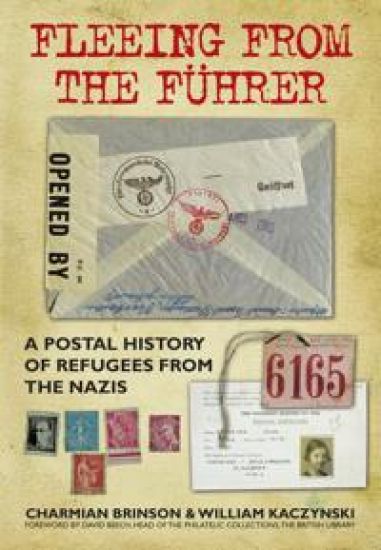
The exodus of men, women and children fleeing from the Nazi regime was one of the largest diasporas the world has ever seen. It sparked an international refugee crisis that changed society and continues to shape our culture and community today. The years between 1933 and 1945, the Nazi era in Germany, and the war years, 1939 to 1945, were a time of destruction, upheaval and misery throughout Europe and beyond. Displacement and death, whether in war or civilian life, became everyday experiences, for young and old alike. Families were torn apart by enforced emigration or deportation. Parents were separated from their children, husbands from wives, brothers from sisters. Interned in camps that spread across the globe from Shanghai to the United States of America to the Isle of Man, they became strangers in a foreign land and often the only link they had to their former lives were letters exchanged with friends and family. These scarce postal communications, therefore, assumed huge significance in the lives of both sender and receiver, one that is hard to imagine today in the age of instant communication. Fleeing from the Führer is an unusual collection of correspondence that shows the incredible nature of this worldwide emigration and the indomitable spirit of these refugees. Each postcard, envelope and item of ephemera tells its own unique story and is reproduced in full colour, making this a fascinating resource for anyone wanting to understand this poignant part of our international history.
A Matter of Intelligence

A Matter of Intelligence

Charmian Brinson; Richard Dove

Manchester University Press
2014
sidottu
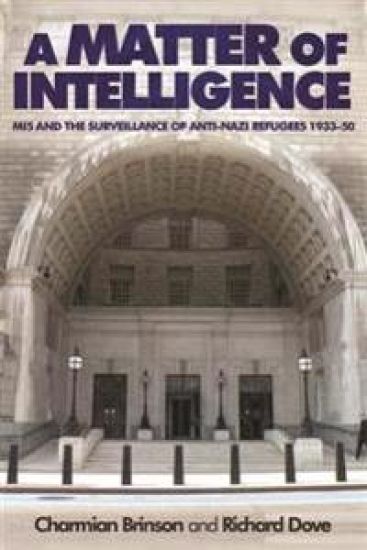
This is an unusual book, telling a story which has hitherto remained hidden from history: the surveillance by the British security service MI5 of anti-Nazi refugees who came to Britain fleeing political persecution in Germany and Austria. Based on the personal and organisational files that MI5 kept on political refugees during the 1930s and 1940s – which have only recently been released into the public domain – this study also fills a considerable gap in historical research. Telling a story of absorbing interest, which at times reads more like spy fiction, it is both a study of MI5 and of the political refugees themselves. The book will interest academics in the fields of history, politics, intelligence studies, Jewish studies, German studies and migration studies; but it is also accessible to the general reader interested in Britain before, during and after the Second World War.
Fleeing from the Fuhrer

Fleeing from the Fuhrer

Charmian Brinson; William Kaczynski

The History Press Ltd
2011
sidottu
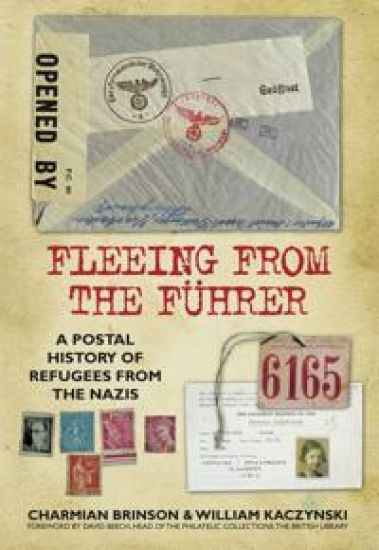
The Jewish flight from Nazi Germany was one of the largest diasporas the world has ever seen. It sparked an international refugee crisis that changed society and continues to shape our culture and community today. Imagine leaving everything you love behind you and being separated from your family and friends without knowing when or if you will ever see them again. The only lifeline these refugees had was short postcards and letters to let each other know they were still alive. Many of these were sent from internment camps which were established worldwide to deal with the overwhelming number of asylum seekers. Fleeing from the Führer is a unique collection of correspondence that shows the incredible nature of this worldwide emigration and the indomitable spirit of these Jewish refugees. Each postcard is reproduced in full colour, making this a fascinating resource for the general reader, as well as those interested in Jewish history or postal history.
His Majesty's Loyal Internee

His Majesty's Loyal Internee

Charmian Brinson; Anna Müller-Härlin; Julia Winckler

Vallentine Mitchell Co Ltd
2009
nidottu
In May and June 1940, when the war seemed to be going badly for Britain, thousands of German and Austrian refugees from Nazi oppression were rounded up and put into internment camps on the Isle of Man and elsewhere. Fred Uhlman, a Jewish refugee from Stuttgart, a lawyer and an artist, was one of them. Uhlman, who was deeply affected by the experience, set out to record it in word and image. This volume reproduces his original internment diary from 1940 alongside another version of the same text from 1979, compiled retrospectively. These texts are complemented by sixteen haunting drawings and linocuts that Uhlman produced during internment.The volume also contains the letters, highly moving personal documents, exchanged to and from the internment camp between Uhlman and his wife Diana; correspondence between Uhlman and his disapproving aristocratic father-in-law Lord Croft; and documents from the daily life of Hutchinson Camp, Douglas, Isle of Man, where Uhlman was held for seven months. Chapters on Uhlman's biography and on his artistic and literary output set his writings and drawings within the wider context of his life and work.In addition, a chapter outlining the internment crisis of 1940 also sets out to recreate the extraordinary cultural and intellectual life that the internees managed to make for themselves in Hutchinson Camp, in particular the activities of the sizeable group of artists, such as Kurt Schwitters, who happened to find themselves there.