Kirjojen hintavertailu. Mukana 12 595 353 kirjaa ja 12 kauppaa.

Kirjailija

Charvaka Duvvury

Kirjat ja teokset yhdessä paikassa: 4 kirjaa, julkaisuja vuosilta 1994-2026, suosituimpien joukossa High Current ESD. Vertaile teosten hintoja ja tarkista saatavuus suomalaisista kirjakaupoista.

4 kirjaa

Kirjojen julkaisuhaarukka 1994-2026.

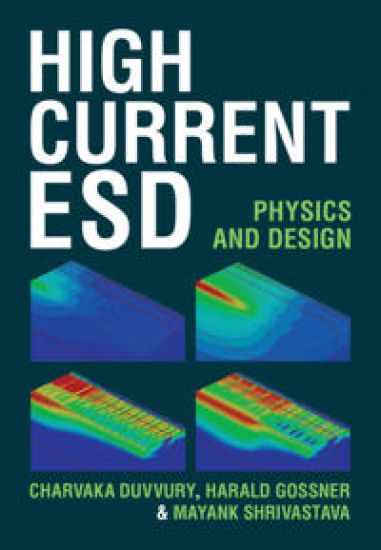
High Current ESD

High Current ESD

Charvaka Duvvury; Harald Gossner; Mayank Shrivastava

Cambridge University Press
2026
sidottu
Synthesizing experience from industry and academia, this book offers a comprehensive and nuanced perspective on the Physics of Electrostatic Discharge (ESD) phenomena in a range of semiconductor device technologies, illustrating robust design practices. Starting with fundamental insights into high-current ESD behaviour in semiconductor devices, it gradually builds toward practical design principles and real-world reliability challenges in advanced CMOS, FinFETs, GaN HEMTs, carbon nanostructures and TFT technologies. Device-level physics and practical design implications are explored throughout, bridging the gap between deep theoretical understanding and real-world design constraints. Including unique simulation techniques alongside experimental results, this book thoroughly explores core ESD design principles. Including multiple curated case studies, this book will equip readers with all the tools needed to address current ESD design challenges and embrace covers the challenges of the future. A reliable and thought-provoking exploration, ideal for graduate students, industry professionals and researchers working in device physics, design, and reliability.
Modeling of Electrical Overstress in Integrated Circuits

Modeling of Electrical Overstress in Integrated Circuits

Carlos H. Diaz; Charvaka Duvvury

Springer-Verlag New York Inc.
2012
nidottu
Electrical overstress (EOS) and Electrostatic discharge (ESD) pose one of the most dominant threats to integrated circuits (ICs). These reliability concerns are becoming more serious with the downward scaling of device feature sizes. Modeling of Electrical Overstress in Integrated Circuits presents a comprehensive analysis of EOS/ESD-related failures in I/O protection devices in integrated circuits. The design of I/O protection circuits has been done in a hit-or-miss way due to the lack of systematic analysis tools and concrete design guidelines. In general, the development of on-chip protection structures is a lengthy expensive iterative process that involves tester design, fabrication, testing and redesign. When the technology is changed, the same process has to be repeated almost entirely. This can be attributed to the lack of efficient CAD tools capable of simulating the device behavior up to the onset of failure which is a 3-D electrothermal problem. For these reasons, it is important to develop and use an adequate measure of the EOS robustness of integrated circuits in order to address the on-chip EOS protection issue. Fundamental understanding of the physical phenomena leading to device failures under ESD/EOS events is needed for the development of device models and CAD tools that can efficiently describe the device behavior up to the onset of thermal failure. Modeling of Electrical Overstress in Integrated Circuits is for VLSI designers and reliability engineers, particularly those who are working on the development of EOS/ESD analysis tools. CAD engineers working on development of circuit level and device level electrothermal simulators will also benefit from the material covered. This book will also be of interest to researchers and first and second year graduate students working in semiconductor devices and IC reliability fields.
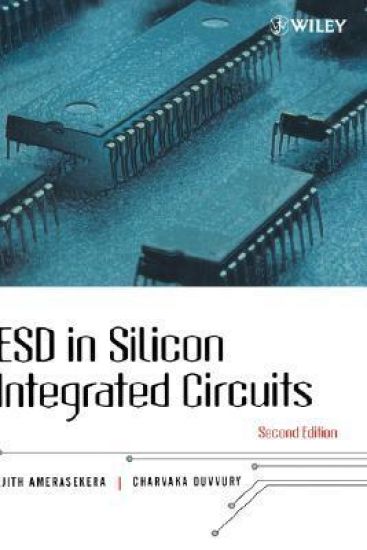
ESD in Silicon Integrated Circuits

ESD in Silicon Integrated Circuits

E. Ajith Amerasekera; Charvaka Duvvury

John Wiley Sons Inc
2002
sidottu
As high density circuits move deeper into submicron dimensions Electrostatic Discharge (ESD) effects become an increasing concern. This new edition of a classic reference presents a practical and systematic approach to ESD device physics, modelling and design techniques. The authors draw upon their wealth of industrial experience to provide a complete overview of ESD and its implications in the development of advanced integrated circuits. Fully revised to incorporate the latest industry achievements and featuring: *Design methods for a variety of technologies from 1 micron to the current sub-micron regimes, along with complete design approaches for MOS, BiCMOS and Power MOSFETs. *New sections on ESD design rules, process technology effects, layout approaches, package effects and circuit simulations. *Guidance on the implementation of circuit protection measures for a range of I/O configurations. *Detailed coverage of ESD simulation stress models. This unique reference provides the means to design protection circuits for a variety of applications and to diagnose and solve ESD problems in IC products. The coverage of state-of-the-art circuit design for ESD prevention will appeal to engineers and scientists working in the fields of IC and transistor design. Graduate students and researchers in device/circuit modeling and semiconductor reliability will appreciate this comprehensive coverage of ESD fundamentals.
Modeling of Electrical Overstress in Integrated Circuits

Modeling of Electrical Overstress in Integrated Circuits

Carlos H. Diaz; Charvaka Duvvury

Springer
1994
sidottu
Electrical overstress (EOS) and Electrostatic discharge (ESD) pose one of the most dominant threats to integrated circuits (ICs). These reliability concerns are becoming more serious with the downward scaling of device feature sizes. Modeling of Electrical Overstress in Integrated Circuits presents a comprehensive analysis of EOS/ESD-related failures in I/O protection devices in integrated circuits. The design of I/O protection circuits has been done in a hit-or-miss way due to the lack of systematic analysis tools and concrete design guidelines. In general, the development of on-chip protection structures is a lengthy expensive iterative process that involves tester design, fabrication, testing and redesign. When the technology is changed, the same process has to be repeated almost entirely. This can be attributed to the lack of efficient CAD tools capable of simulating the device behavior up to the onset of failure which is a 3-D electrothermal problem. For these reasons, it is important to develop and use an adequate measure of the EOS robustness of integrated circuits in order to address the on-chip EOS protection issue. Fundamental understanding of the physical phenomena leading to device failures under ESD/EOS events is needed for the development of device models and CAD tools that can efficiently describe the device behavior up to the onset of thermal failure. Modeling of Electrical Overstress in Integrated Circuits is for VLSI designers and reliability engineers, particularly those who are working on the development of EOS/ESD analysis tools. CAD engineers working on development of circuit level and device level electrothermal simulators will also benefit from the material covered. This book will also be of interest to researchers and first and second year graduate students working in semiconductor devices and IC reliability fields.