Kirjojen hintavertailu. Mukana 12 595 353 kirjaa ja 12 kauppaa.
Kirjailija
Ched Myers
Kirjat ja teokset yhdessä paikassa: 21 kirjaa, julkaisuja vuosilta 1994-2025, suosituimpien joukossa Healing Affluenza and Resisting Plutocracy. Vertaile teosten hintoja ja tarkista saatavuus suomalaisista kirjakaupoista.
Healing Haunted Histories tackles the oldest and deepest injustices on the North American continent. Violations which inhabit every intersection of settler and Indigenous worlds, past and present. Wounds inextricably woven into the fabric of our personal and political lives. And it argues we can heal those wounds through the inward and outward journey of decolonization.The authors write as, and for, settlers on this journey, exploring the places, peoples, and spirits that have formed (and deformed) us. They look at issues of Indigenous justice and settler "response-ability" through the lens of Elaine's Mennonite family narrative, tracing Landlines, Bloodlines, and Songlines like a braided river. From Ukrainian steppes to Canadian prairies to California chaparral, they examine her forebearers' immigrant travails and trauma, settler unknowing and complicity, and traditions of resilience and conscience. And they invite readers to do the same. Part memoir, part social, historical, and theological analysis, and part practical workbook, this process invites settler Christians (and other people of faith) into a discipleship of decolonization. How are our histories, landscapes, and communities haunted by continuing Indigenous dispossession? How do we transform our colonizing self-perceptions, lifeways, and structures? And how might we practice restorative solidarity with Indigenous communities today?
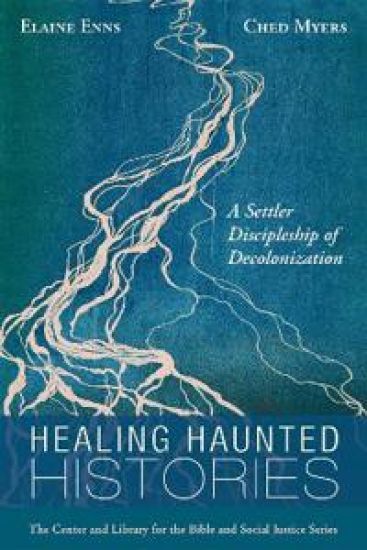
Healing Haunted Histories tackles the oldest and deepest injustices on the North American continent. Violations which inhabit every intersection of settler and Indigenous worlds, past and present. Wounds inextricably woven into the fabric of our personal and political lives. And it argues we can heal those wounds through the inward and outward journey of decolonization.The authors write as, and for, settlers on this journey, exploring the places, peoples, and spirits that have formed (and deformed) us. They look at issues of Indigenous justice and settler "response-ability" through the lens of Elaine's Mennonite family narrative, tracing Landlines, Bloodlines, and Songlines like a braided river. From Ukrainian steppes to Canadian prairies to California chaparral, they examine her forebearers' immigrant travails and trauma, settler unknowing and complicity, and traditions of resilience and conscience. And they invite readers to do the same.Part memoir, part social, historical, and theological analysis, and part practical workbook, this process invites settler Christians (and other people of faith) into a discipleship of decolonization. How are our histories, landscapes, and communities haunted by continuing Indigenous dispossession? How do we transform our colonizing self-perceptions, lifeways, and structures? And how might we practice restorative solidarity with Indigenous communities today?
A loving memoir about the life, illness, death and resurrection freedom of Christian mother, writer and community activist Jeanie Wylie-Kellermann. The book's first half focuses on her inspiring life, including her activism, journalism and documentary filmmaking. The second half follows her glioblastoma brain cancer, when Jeanie chose a process of "dying well" involving family and community.Reviewers describe the book's mix of letters, poetry and stories as "flashes of raw beauty and abject brilliance."The theologian Walter Brueggemann writes, "Of course all of us are precious in God's sight. But some of 'all of us' stand out because of their freedom, their courage and their tenacity. We call them 'saints.' Jeanie Wylie-Kellermann was one such. She embodied gospel passion that led her beyond herself to a rich network of justice and restoration."The book was written by Jeanie's husband Bill Wylie-Kellermann, also a nationally known social-justice activist and writer--and her partner in many social justice causes over the years. A great summary of the book can be found in the first eight words Bill wrote: "This book is verily an event of community." That choice of "verily," which evokes memories stretching back to the age of Chaucer, was no accident.In these 425 pages, Bill begins by chronicling Jeanie's robust life and then he shares many equally inspiring stories about the seven-year progress from diagnosis of a glioblastoma until her death. In "verily" on that first page, Bill is signaling to readers that this book is as much about memory as it is about this couple's cutting-edge, social-justice activism. Early reviewers repeatedly praised Dying Well as a profound love story about the two writer-activists who led a tumultuous life at the barricades of many justice issues--and then shared in an equally inspiring quest for healing and eventually after many years a graceful death. Ultimately, though, this book expands into an invitation for readers to remember: Remember a real love story you've known of an impassioned couple who became impassioned parents. Remember the best of family life. And remember, when the arc of life is closing its path in this tangible world--remember how loving families used to care for the dying and also the mourners in the humble surroundings of home."As readers experience our story, many of them are going to remember things about their own families. In our collective memory, in our community memory, we all know a lot more about family life as it shapes the eventual process of death and dying than we realize," Bill Wylie-Kellermann said in an interview about his book." Talk to your relatives, especially the older people, and you'll find we're not that far removed from vigils for loved ones in parlors, back before the funeral industry took over most of this process from us. These family-based and community-based stories of caring for the dying, right up through the vigil and funeral--that's a memory only a generation or two removed from most of us. These memories are still in our bones. We still can come together as family and community in ways that once were so natural for us. This story isn't as much about pushing some new agenda about dying well as it is remembering the power of community and family that we can reclaim.""Reading these pages, the love will jump right off the page," writes their daughter, the writer-activist Lydia Wylie-Kellermann in her Foreword to the book. "I hope that within these pages, we all find a bit of your own story and a friend on the journey."
Proverbs 22:22 enjoins the reader, ""Don't take advantage of the poor just because you can."" Mammon's Ecology is a systematic investigation into the mysterious nature of modern money, which confronts us with the perplexing fact that, in the global economy as it is, we take advantage of the poor whether we want to or not. We destroy natural systems whether we want to or not. Ched Myers describes Mammon's Ecology as a ""workbook"" about ""the secret life of money."" Where Prather and others have shown that money is one of the perverse Powers described in Ephesians 6, Mammon's Ecology details precisely how money exercises this peculiar power and outlines suggestions for Christians who feel trapped in this complicity--not just as individuals, but as church. Mammon's Ecology is not a book about economics (which the author calls ""the world's best antidote to insomnia""), but rather a book about the ""deep ecology"" of (post)modern power and injustice. Read individually or as a group, Mammon's Ecology will leave you unable to think about money the same way again. ""Stan Goff has written that rare book: ambitious yet concise, erudite yet accessible. Mammon's Ecology is breathtaking. Deftly combining critical political economy and ecological thought with a radical Christian perspective, Mammon's Ecology should be read by everyone concerned about money, ecology, and justice. Goff challenges us to unthink the ways of knowing that have made today's planetary crisis, and in so doing to begin to think, hope, and imagine a world beyond modernity's violence."" --Jason W. Moore, Binghamton University, author of Capitalism in the Web of Life ""In a time when you might feel trapped between the megalomania of the charlatan who purports to explain everything, and the bubble mentality of the academic who won't step outside disciplinary fences, Goff's work is important. While being directly critical of thinkers who try to come up with simplistic universal explanations or cures, Goff also invites the reader to work out just how interconnected everything is."" --Rebecca Bratten Weiss, farmer, lecturer, and editor of Convivium Stan Goff has authored five books on war and militarism--including Borderline: Reflections on War, Sex, and Church (Cascade Books, 2015)--on gender and militarism. He has written numerous articles on socioeconomic issues since 1995. This is his first book on ""monetary ecology."" He is a former career soldier, a peace activist, and a Roman Catholic with latent Mennonite tendencies.
Proverbs 22:22 enjoins the reader, ""Don't take advantage of the poor just because you can."" Mammon's Ecology is a systematic investigation into the mysterious nature of modern money, which confronts us with the perplexing fact that, in the global economy as it is, we take advantage of the poor whether we want to or not. We destroy natural systems whether we want to or not. Ched Myers describes Mammon's Ecology as a ""workbook"" about ""the secret life of money."" Where Prather and others have shown that money is one of the perverse Powers described in Ephesians 6, Mammon's Ecology details precisely how money exercises this peculiar power and outlines suggestions for Christians who feel trapped in this complicity--not just as individuals, but as church. Mammon's Ecology is not a book about economics (which the author calls ""the world's best antidote to insomnia""), but rather a book about the ""deep ecology"" of (post)modern power and injustice. Read individually or as a group, Mammon's Ecology will leave you unable to think about money the same way again. ""Stan Goff has written that rare book: ambitious yet concise, erudite yet accessible. Mammon's Ecology is breathtaking. Deftly combining critical political economy and ecological thought with a radical Christian perspective, Mammon's Ecology should be read by everyone concerned about money, ecology, and justice. Goff challenges us to unthink the ways of knowing that have made today's planetary crisis, and in so doing to begin to think, hope, and imagine a world beyond modernity's violence."" --Jason W. Moore, Binghamton University, author of Capitalism in the Web of Life ""In a time when you might feel trapped between the megalomania of the charlatan who purports to explain everything, and the bubble mentality of the academic who won't step outside disciplinary fences, Goff's work is important. While being directly critical of thinkers who try to come up with simplistic universal explanations or cures, Goff also invites the reader to work out just how interconnected everything is."" --Rebecca Bratten Weiss, farmer, lecturer, and editor of Convivium Stan Goff has authored five books on war and militarism--including Borderline: Reflections on War, Sex, and Church (Cascade Books, 2015)--on gender and militarism. He has written numerous articles on socioeconomic issues since 1995. This is his first book on ""monetary ecology."" He is a former career soldier, a peace activist, and a Roman Catholic with latent Mennonite tendencies.
Este libro es una propuesta b blica y teol gica que puede ayudarnos a forjar un futuro humano diferente que sea sostenible y justo, y a inspirar la pr xima gran renovaci n de una iglesia determinada a vivir a la luz de, no a pesar de, el final ecol gico que se avecina. Reconoce que estamos en un momento de crisis hist rico y decisivo, que nos exige que la justicia social y la resiliencia ambiental formen parte integral de todo nuestro accionar como cristianas y cristianos que habitamos en lugares espec ficos. Nuestro discipulado individual, y la vida y el testimonio de la iglesia local se desarrollan en un contexto de la cuenca hidrogr fica (es decir, un contexto ecol gico y cultural espec fico), sin excepci n. Esto nos desaf a a convertirnos en disc pulos y disc pulas de nuestras cuencas hidrogr ficas, de manera que aprendamos lo que su ecolog a e historia nos ense an.
Uppmaningar om gästfrihet och vårt ansvar gentemot den som är utsatt är ett återkommande tema genom hela Bibeln. Vad betyder det för oss när flyktingpolitik och integration plötsligt står överst på alla agendor? Hur ska kyrkans folk agera? Ched Myers, amerikansk teolog och politisk aktivist, är djupt engagerad i migrantfrågor. I Gud är papperslös gräver han djupt i ett antal olika bibeltexter och reflekterar över vad de har att säga om kulturella skillnader, gästfrihet, Guds vision om inkluderande, att omfamna »annorlundaskap« och att välkomna flyktingen.
In That Holy Anarchist, Mark Van Steenwyk explores the relationship between Christianity and anarchism. The name of Jesus is invoked by those in power as well as those resisting that power. What were the politics of Jesus and how can they continue to inform us as we struggle for justice?
Since its publication in 1988, Binding the Strong Man has been widely recognized as a landmark in contemporary biblical criticism. Applying a multidisciplinary approach called socio-literary method, Myers integrates literary criticism, socio-historical exegesis, and political hermeneutics in his investigation of Mark as a manifesto of radical discipleship.
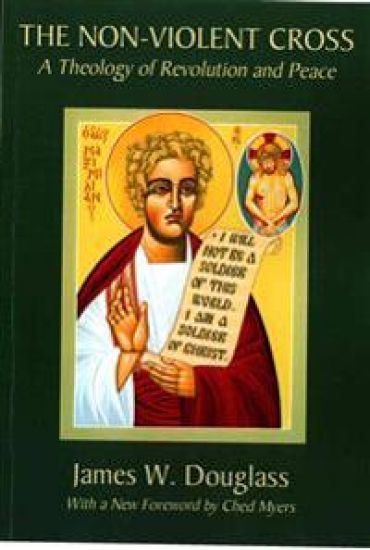
One of the ten best religious books of 1968 . . . a fascinating proposal of revolutionary action through non-violence from the Judeo-Christian faith and the experiments in truth of Gandhi. 'New Book Review' 'The Non-Violent Cross' was a crucial text to push me into becoming a pacifist. It remains as relevant today as it was when first published in 1966. Douglass was in conversation not only with Catholic perspectives but also John Howard Yoder. Indeed he was among the first to show us how the most orthodox Christian claims committed the church to the practice of non-violence. We are in Wipf & Stock's debt for bringing the book back into print. Stanley Hauerwas, Duke University It will be Jim's reflections on nonviolence and just war theory for which he will be remembered best. And it is here that his language stretches, bends, and breaks under the strain of the inexplicable. For he is not just settling arguments. He is trying to convey the meaning of the kingdom of Reality which will be the final victory of Truth in history. If that kingdom is ever to come, it will be people like Jim who blazed the way. Walter Wink Not only is this book the most thoroughgoing treatment to date of non-violence...but in its analyses of the current scene it is also a 'tract for the times.' The Christian Century
'Becoming Children of God' offers a fresh and original commentary on the Gospel of John as a narrative inviting readers -- both in the evangelist's time and our own -- to a radical commitment to follow Jesus from within a spirit-filled community. This reading is grounded in a poetics of biblical narrative"" that balances attention to historical, ideological, and aesthetic aspects of John's Gospel while highlighting its relevance for today. By committing himself to a close analysis of the text as symbolic action"" Howard-Brook makes it clear how John's Gospel fairly bristles with references to societal conditions that demand a direct response. Throughout the commentary, his close attention to literary structure as well as social background yields new insights into the often-obscure message of the Fourth Gospel.
With the editor the team of authors represented here share the conviction that Mark's story has transforming power only as it intersects with our own life-stories and the broader story of the times in which we live.