Kirjojen hintavertailu. Mukana 12 522 784 kirjaa ja 12 kauppaa.
Kirjailija
Cheryl Misak
Kirjat ja teokset yhdessä paikassa: 11 kirjaa, julkaisuja vuosilta 1999-2025, suosituimpien joukossa Frank Ramsey. Vertaile teosten hintoja ja tarkista saatavuus suomalaisista kirjakaupoista.
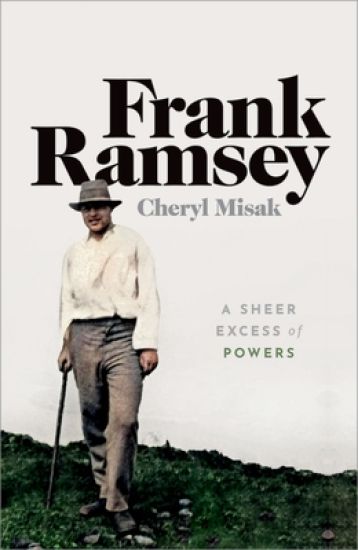
The full story of Frank Ramsey's extraordinary life. When he died in 1930 aged 26, Frank Ramsey had already invented one branch of mathematics and two branches of economics, laying the foundations for decision theory and game theory. Keynes deferred to him; he was the only philosopher whom Wittgenstein treated as an equal. Had he lived he might have been recognized as the most brilliant thinker of the century. This amiable shambling bear of a man was an ardent socialist, a believer in free love, and an intimate of the Bloomsbury set. For the first time, Cheryl Misak tells the story of his tragically short, but extraordinary life.
This volume examines the important but, until recently, forgotten work of the British analytic philosopher Margaret Macdonald. Macdonald's career spanned one of the most significant and fascinating periods in the history of analytic philosophy: the pre-war London of Susan Stebbing as she advanced philosophical analysis; the Cambridge of Ludwig Wittgenstein as he lectured on his new practice-centred philosophy; the Oxford of Gilbert Ryle and ordinary language philosophy; and the post-war London of A.J. Ayer as he defended a version of logical positivism. In this predominantly male, elite world, Macdonald was an anomaly: a woman, abandoned as a child, raised by foster parents and in an orphanage, poor for much of her life. Remarkably, she made a highly respected academic life for herself. A talented philosopher, she was a major influence on Ryle, and one of those few who really understood Wittgenstein during the 1930s. She also helped found, and later edited, the journal Analysis, and was a serious scholar of C. S. Peirce, introducing his complex work to her British colleagues. Cheryl Misak and Michael Kremer provide a biographical essay, a transcription of a no-longer accessible paper on Peirce, an essay on Macdonald as a scholar of pragmatism, and an essay on her as a scholar of Wittgenstein. The centrepiece is a set of letters from Macdonald to Max Black, written between 1932 and 1937--a crucial time for the development of the analytic school, embracing Cambridge analysis, Viennese logical positivism, Oxford linguistic philosophy, and American pragmatism and neo-realisms. The letters shed light on the cultural, social, and political situation in Britain in the 1930s and its impact on academic life, revealing that, against the mighty obstacles stacked against them, some women in English philosophy before World War II were able to carve out paths as professional philosophers.
Oxford Pragmatism uncovers and explores the unrecognized impact of American pragmatism on the Oxford linguistic philosophy that thrived from the 1930s to the 1950s, made famous by Gilbert Ryle and J. L Austin. Cheryl Misak argues that Margaret Macdonald, a neglected British analytic philosopher and excellent scholar of American pragmatism, delivered core pragmatist ideas to her friend Ryle: the mind as a set of dispositions to behave; laws as 'inference tickets', and the distinction between knowing that something is true and knowing how to do something. Macdonald found these ideas in the work of the founder of pragmatism C. S. Peirce and his two most impressive followers, Clarence Irving Lewis in Cambridge, Massachusetts and Frank Ramsey in Cambridge, England. Ryle, it is argued, picked them up from Macdonald, though failed to acknowledge them as hers or as pragmatist. A lineage is also traced from American pragmatism to Austin's ideas that when we use words we perform actions, and that definitions must be fit for purpose. This route runs from Peirce and Lewis to Austin and through to contemporary conceptual engineers who follow in Austin's footsteps. Along the way, the views of Wittgenstein, Russell, Schiller, Ayer, and Cook Wilson are canvassed and assessed. In a Postscript, Misak outlines how pragmatism played out in the next generation of Oxford philosophers, such as Strawson and Wiggins.
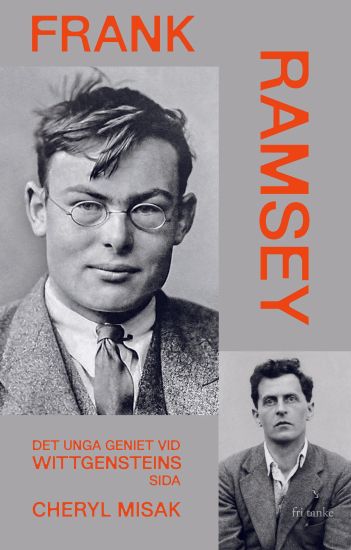
Han kunde ha blivit en av 1900-talets stora filosofer. Istället dog han endast 26 år gammal. Trots det hann britten Frank Ramsey lämna efter sig en stor mängd betydelsefulla bidrag inom såväl matematik, sannolikhetslära, filosofi som ekonomi. I kretsen kring några av tidens stora tänkare som G.E. Moore och Bertrand Russell blev han Ludwig Wittgensteins mest lovande lärjunge. Han deltog också i den berömda Bloomsburygruppens aktiviteter och hade ekonomen John Maynard Keynes som mentor och samtalspartner.Utifrån ett helt nytt källmaterial, däribland tidigare okända intervjuer, är detta den första heltäckande biografin över Frank Ramseys korta men händelserika liv. Cheryl Misaks inkännande biografi har blivit hyllad som standardverket över en av 1900-talets hemligaste och ivrigaste tänkare.
When he died in 1930 aged 26, Frank Ramsey had already invented one branch of mathematics and two branches of economics, laying the foundations for decision theory and game theory. Keynes deferred to him; he was the only philosopher whom Wittgenstein treated as an equal. Had he lived he might have been recognized as the most brilliant thinker of the century. This amiable shambling bear of a man was an ardent socialist, a believer in free love, and an intimate of the Bloomsbury set. For the first time Cheryl Misak tells the full story of his extraordinary life.
Cheryl Misak offers a strikingly new view of the development of philosophy in the twentieth century. Pragmatism, the home-grown philosophy of America, thinks of truth not as a static relation between a sentence and the believer-independent world, but rather, a belief that works. The founders of pragmatism, Peirce and James, developed this idea in more (Peirce) and less (James) objective ways. The standard story of the reception of American pragmatism in England is that Russell and Moore savaged James's theory, and that pragmatism has never fully recovered. An alternative, and underappreciated, story is told here. The brilliant Cambridge mathematician, philosopher and economist, Frank Ramsey, was in the mid-1920s heavily influenced by the almost-unheard-of Peirce and was developing a pragmatist position of great promise. He then transmitted that pragmatism to his friend Wittgenstein, although had Ramsey lived past the age of 26 to see what Wittgenstein did with that position, Ramsey would not have like what he saw.
Cheryl Misak offers a strikingly new view of the development of philosophy in the twentieth century. Pragmatism, the home-grown philosophy of America, thinks of truth not as a static relation between a sentence and the believer-independent world, but rather, a belief that works. The founders of pragmatism, Peirce and James, developed this idea in more (Peirce) and less (James) objective ways. The standard story of the reception of American pragmatism in England is that Russell and Moore savaged James's theory, and that pragmatism has never fully recovered. An alternative, and underappreciated, story is told here. The brilliant Cambridge mathematician, philosopher and economist, Frank Ramsey, was in the mid-1920s heavily influenced by the almost-unheard-of Peirce and was developing a pragmatist position of great promise. He then transmitted that pragmatism to his friend Wittgenstein, although had Ramsey lived past the age of 26 to see what Wittgenstein did with that position, Ramsey would not have liked what he saw.
Cheryl Misak presents a history of the great American philosophical tradition of pragmatism, from its inception in the Metaphysical Club of the 1870s to the present day. This ambitious new account identifies the connections between traditional American pragmatism and contemporary philosophy and argues that the most defensible version of pragmatism -- roughly, that of Peirce, Lewis, and Sellars -- must be seen and recovered as an important part of the analytic tradition.
Cheryl Misak presents a history of the great American philosophical tradition of pragmatism, from its inception in the Metaphysical Club of the 1870s to the present day. She identifies two dominant lines of thought in the tradition: the first begins with Charles S. Peirce and Chauncey Wright and continues through to Lewis, Quine, and Sellars; the other begins with William James and continues through to Dewey and Rorty. This ambitious new account identifies the connections between traditional American pragmatism and twentieth-century Anglo-American philosophy, and links pragmatism to major positions in the recent history of philosophy, such as logical empiricism. Misak argues that the most defensible version of pragmatism must be seen and recovered as an important part of the analytic tradition.
Cheryl Misak argues that truth ought to be reinstated to a central position in moral and political philosophy. She argues that the correct account of truth is one found in a certain kind of pragmatism: a true belief is one upon which inquiry could not improve, a belief which would not be defeated by experience and argument. This account is not only an improvement on the views of central figures such as Rawls and Habermas, but it can also make sense of the idea that, despite conflict, pluralism, and the expression of difference, our moral and political beliefs aim at truth and can be subject to criticism. Anyone interested in a fresh discussion of political theory and philosophy will find this a fascinating read.
Cheryl Misak argues that truth ought to be reinstated to a central position in moral and political philosophy. She argues that the correct account of truth is one found in a certain kind of pragmatism: a true belief is one upon which inquiry could not improve, a belief which would not be defeated by experience and argument. This account is not only an improvement on the views of central figures such as Rawls and Habermas, but it can also make sense of the idea that, despite conflict, pluralism, and the expression of difference, our moral and political beliefs aim at truth and can be subject to criticism. Anyone interested in a fresh discussion of political theory and philosophy will find this a fascinating read.