Kirjojen hintavertailu. Mukana 12 595 353 kirjaa ja 12 kauppaa.

Kirjailija

Chiara Oldani

Kirjat ja teokset yhdessä paikassa: 2 kirjaa, julkaisuja vuosilta 2008-2011, suosituimpien joukossa Governing Global Derivatives. Vertaile teosten hintoja ja tarkista saatavuus suomalaisista kirjakaupoista.

2 kirjaa

Kirjojen julkaisuhaarukka 2008-2011.

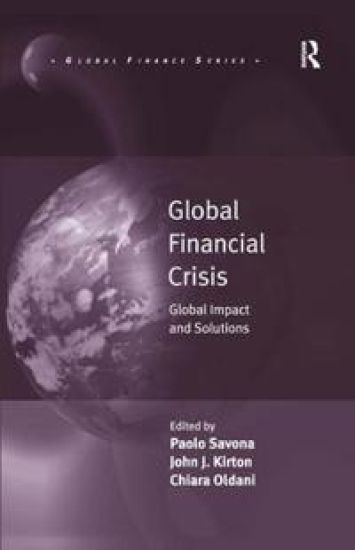
Global Financial Crisis

Global Financial Crisis

Paolo Savona; Chiara Oldani

Ashgate Publishing Limited
2011
sidottu
Out of the debate over the effectiveness of the policy responses to the 2008 global financial crisis as well as over the innovativeness of global governance comes this collection by leading academics and practitioners who explore the dynamics of economic crisis and impact. Edited by Paolo Savona, John J. Kirton, and Chiara Oldani Global Financial Crisis: Global Impact and Solutions examines the nature of the recent crisis, its consequences in major regions and countries, the innovations in the ideas, instruments and institutions that constitute national and regional policy responses, building on the G8's response at its L'Aquila Summit. Experts from Africa, North America, Asia and Europe examine the implications of those responses for international cooperation, coordination and institutional change in global economic governance, and identify ways to reform and even replace the architecture created in the mid 20th century in order to meet the global challenges of the 21st.
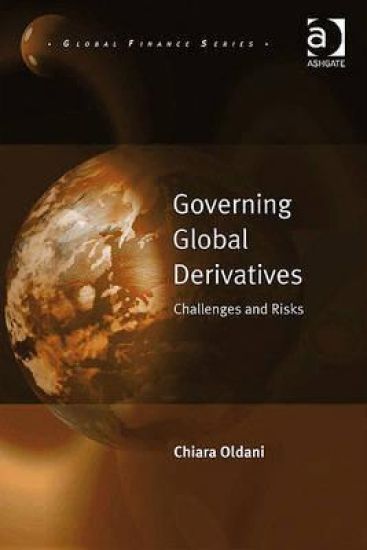
Governing Global Derivatives

Governing Global Derivatives

Chiara Oldani

Ashgate Publishing Limited
2008
sidottu
Governing Global Derivatives analyzes the role of the most important financial innovation of the last two decades - financial derivatives - in a global dimension. The evolution of derivatives, especially Over the Counter (OTC), and the possibility of managing risks tailored to customers' needs, are the basic recipe for the success of derivatives. This book focuses on the role of derivatives from a macroeconomic point of view, considering how monetary theory and policy, fiscal policy and the growth process are affected. It fills a gap by rethinking the way financial markets are considered in the macroeconomy and the transmission mechanism of impulses.