Kirjojen hintavertailu. Mukana 12 595 353 kirjaa ja 12 kauppaa.

Kirjailija

Chris Baber

Kirjat ja teokset yhdessä paikassa: 6 kirjaa, julkaisuja vuosilta 1999-2022, suosituimpien joukossa Human Factors Methods. Vertaile teosten hintoja ja tarkista saatavuus suomalaisista kirjakaupoista.

6 kirjaa

Kirjojen julkaisuhaarukka 1999-2022.

Human Factors Methods

Human Factors Methods

Neville A. Stanton; Paul M. Salmon; Laura A. Rafferty; Guy H. Walker; Chris Baber; Daniel P. Jenkins

Ashgate Publishing Limited
2013
sidottu
This second edition of Human Factors Methods: A Practical Guide for Engineering and Design now presents 107 design and evaluation methods as well as numerous refinements to those that featured in the original. The book has been carefully designed to act as an ergonomics methods manual, aiding both students and practitioners. The eleven sections represent the different categories of ergonomics methods and techniques that can be used in the evaluation and design process. Offering a 'how-to' text on a substantial range of ergonomics methods that can be used in the design and evaluation of products and systems, it is a comprehensive point of reference for all these methods. An overview of the methods is presented in chapter one, with a methods matrix showing which can be used in conjunction. The following chapters detail the methods showing how to apply them in practice. Flowcharts, procedures and examples cover the requirements of a diverse audience and varied applications of the methods. The final chapter, a new addition, illustrates the EAST method, which integrates several well-known methods into a teamwork analysis approach.
Human Factors Methods

Human Factors Methods

Neville A. Stanton; Paul M. Salmon; Laura A. Rafferty; Guy H. Walker; Chris Baber; Daniel P. Jenkins

Ashgate Publishing Limited
2013
nidottu
This second edition of Human Factors Methods: A Practical Guide for Engineering and Design now presents 107 design and evaluation methods as well as numerous refinements to those that featured in the original. The book has been carefully designed to act as an ergonomics methods manual, aiding both students and practitioners. The eleven sections represent the different categories of ergonomics methods and techniques that can be used in the evaluation and design process. Offering a 'how-to' text on a substantial range of ergonomics methods that can be used in the design and evaluation of products and systems, it is a comprehensive point of reference for all these methods. An overview of the methods is presented in chapter one, with a methods matrix showing which can be used in conjunction. The following chapters detail the methods showing how to apply them in practice. Flowcharts, procedures and examples cover the requirements of a diverse audience and varied applications of the methods. The final chapter, a new addition, illustrates the EAST method, which integrates several well-known methods into a teamwork analysis approach.

User-Centred Design of Systems

User-Centred Design of Systems

Jan Noyes; Chris Baber

Springer-Verlag Berlin and Heidelberg GmbH Co. K
1999
nidottu
System design has conventionally been the province of engineers, and the approaches taken to the design of systems have conventionally led to formal specification of the system. The past decade or two has seen the rise of another approach, that of human-computer interaction (HCI). Given the number of incidents and accidents which are attributed to 'human error', it is sensible to develop an approach to system design which views humans as an essential element in the system. Thus, an important aspect of designing systems is the study of the interaction between humans and the technology that they use. In terms of bringing computers and computing to a wide audience, the 1980s were the boom years. The first personal computer (PC) was launched onto the market in February 1978, and since then, PCs have become a common-place feature of our homes, offices, schools, retail outlets, hospitals, banks, etc. Within Western society today, there are very few organisations that have not been infiltrated by computer technology, and few individuals who have not had experience of computers. However, the increase in use of computers has not been matched with a corresponding spread of training of users; much of the human-computer interaction research has sought to design systems which do not require special training, i. e. which people can simply walk up to and use. Not surprisingly, this has resulted in a number of difficulties; some of which have yet to be satisfactorily resolved.
Easy

Easy

Chris Baber

Ebury Publishing
2022
nidottu
Simple. Speedy. Delicious. Stuffed with quick, simple and mouth-watering recipes, Easy is the only cookbook you'll need to make every meal count without stressing in the kitchen. Whether it's having a crowd of mates over for a weeknight dinner, recreating your favourite takeaway or rustling up a delicious brunch to start the weekend right, Chris has a dish for every occasion. Packed with straightforward recipes - from Spicy Prawn Tostadas and Honey and Harissa Spatchcock Chicken to Veggie Pilaf with Fried Halloumi and Summer Strawberry and Raspberry Crumble - and handy tips, Easy is the perfect guide to creating delicious food that hits the spot every time.
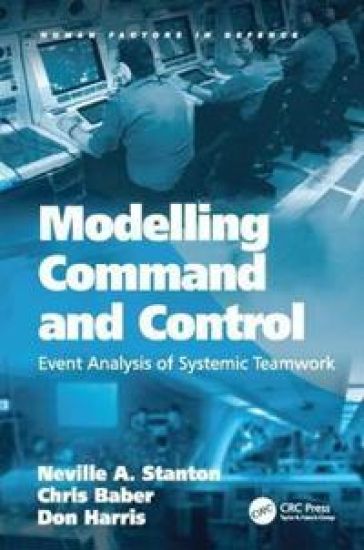
Modelling Command and Control

Modelling Command and Control

Neville A. Stanton; Chris Baber

CRC Press
2018
nidottu
Since its inception, just after the Second World War, Human Factors research has paid special attention to the issues surrounding human control of systems. Command and control environments continue to represent a challenging domain for human factors research. Modelling Command and Control takes a broad view of command and control research, to include C2 (command and control), C3 (command, control and communication), and C4 (command, control, communication and computers) as well as human supervisory control paradigms. The book presents case studies in diverse military applications (for example, land, sea and air) of command and control. The book explores the differences and similarities in the land, sea and air domains; the theoretical and methodological developments, approaches to system and interface design, and the workload and situation awareness issues involved. It places the role of humans as central and distinct from other aspects of the system. Using extensive case study material, Modelling Command and Control demonstrates how the social and technical domains interact, and why each require equal treatment and importance in the future.
Modelling Command and Control

Modelling Command and Control

Neville A. Stanton; Chris Baber

Ashgate Publishing Limited
2008
sidottu
Since its inception, just after the Second World War, Human Factors research has paid special attention to the issues surrounding human control of systems. Command and control environments continue to represent a challenging domain for human factors research. Modelling Command and Control takes a broad view of command and control research, to include C2 (command and control), C3 (command, control and communication), and C4 (command, control, communication and computers) as well as human supervisory control paradigms. The book presents case studies in diverse military applications (for example, land, sea and air) of command and control. The book explores the differences and similarities in the land, sea and air domains; the theoretical and methodological developments, approaches to system and interface design, and the workload and situation awareness issues involved. It places the role of humans as central and distinct from other aspects of the system. Using extensive case study material, Modelling Command and Control demonstrates how the social and technical domains interact, and why each require equal treatment and importance in the future.