Kirjojen hintavertailu. Mukana 12 595 353 kirjaa ja 12 kauppaa.

Kirjailija

Chris Goss

Kirjat ja teokset yhdessä paikassa: 40 kirjaa, julkaisuja vuosilta 2000-2026, suosituimpien joukossa Helmut Lent's Logbook. Vertaile teosten hintoja ja tarkista saatavuus suomalaisista kirjakaupoista.

40 kirjaa

Kirjojen julkaisuhaarukka 2000-2026.

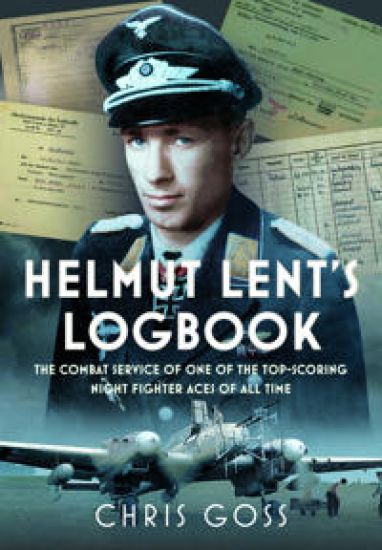
Helmut Lent's Logbook

Helmut Lent's Logbook

Chris Goss

PEN SWORD BOOKS LTD
2026
sidottu
Credited with 110 aerial victories, Helmut Lent was one of the most successful German night-fighter aces of the Second World War. Born on 13 June 1918, he initially served as a day fighter pilot in the Luftwaffe, flying Messerschmitt Bf 110s during the early campaigns of the war. Lent’s combat career began over the North Sea, Norway and the early stages of the Battle of Britain but in September 1940 his unit transitioned to night fighting. As part of Nachtjagdgeschwader 1, after initial self-doubts as to his ability, he established himself as a formidable night-fighter pilot, adapting to the emerging technology of radar-guided interception. His aircraft of choice was the Messerschmitt Bf 110 but in 1944 he flew the Junkers Ju 88, both of which he used to devastating effect against Allied bombers conducting night attacks over German territory; of his 110 victories, 102 had taken place at night. By 1943, Lent had risen through the ranks, eventually taking command of Nachtjagdgeschwader 3, and would receive numerous decorations, including the Knight’s Cross of the Iron Cross with Oak Leaves, Swords, and Diamonds, Germany’s highest military honour. He was the first night fighter pilot to receive this award, defining his status as a leading figure in aerial combat at night. Lent’s career was cut short on 5 October 1944, when his Ju 88 crashed on landing in an accident. He succumbed to his injuries two days later at the age of 26. Such was his standing in the eyes of the Luftwaffe, that Reichsmarschall Hermann Göring spoke at his funeral. Based around Lent’s own pilot’s logbooks and a unique collection of rare archive images, as well drawing on surviving combat reports and documents from the Lent family archive, the renowned aviation historian Chris Goss explores the life and service of one of the top-scoring night fighter aces of all time.
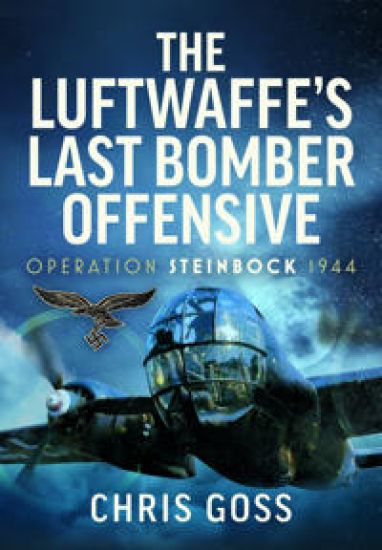
The Luftwaffe’s Last Bomber Offensive

The Luftwaffe’s Last Bomber Offensive

Chris Goss

PEN SWORD BOOKS LTD
2026
sidottu
Called by the ‘Baby Blitz’ by the British, Operation Steinbock was the Luftwaffe's last major air offensive against the UK launched between January and May 1944. Led by Generalmajor Dietrich Peltz, the operation sought to strike London and other English cities, the target list including places such as Bristol, Hull, and Portsmouth. Despite its ambitious goals, Steinbock was poorly timed and ill executed. By 1944, the Luftwaffe’s bomber force was a shadow of its former self: it faced severe shortages of trained aircrew, fuel, and modern aircraft, while British radar, night-fighter defences, and anti-aircraft coordination had become highly sophisticated and effective. A number of Luftwaffe types were used in the attacks, from the four-engine Heinkel He 177A, through to Junkers Ju 188s, Dornier Do 217s, Junkers Ju 88s, Messerschmitt Me 410s and Focke-Wulf Fw 190s. The raiders’ losses were catastrophic – over 500 aircraft were destroyed or damaged, draining the Luftwaffe of irreplaceable aircrew. This amounted to 63% of the German aircraft committed to Operation Steinbock, at an average rate of 77 aircraft lost each month. Such losses almost bled the German bomber arm dry. Peltz himself summed up the campaign thus after the war: ‘The attacks on London and other British cities were, in my opinion, like a few drops of water on a hot stone – a bit of commotion, but after a very short time the whole thing was forgotten.’ Indeed, the raids inflicted limited damage compared to the Blitz of 1940–41. Despite the fact that some 1,556 people were killed, they had negligible impact on British morale or industry. Operation Steinbock marked the Luftwaffe’s last sustained large-scale strategic night bombing campaign against the United Kingdom in the Second World War. In this book, the renowned Luftwaffe historian Chris Goss not only details how the campaign developed, but also the RAF’s and Allies’ response. As the author reveals, Steinbock demonstrated the Third Reich’s declining air power and the growing futility of offensive operations under Allied air superiority. The operation’s failure further weakened the Luftwaffe’s ability to resist the Allied air offensive that would soon precede the D-Day invasion.
Royal Flying Corps In Combat

Royal Flying Corps In Combat

Chris Goss

PEN SWORD BOOKS LTD
2025
sidottu
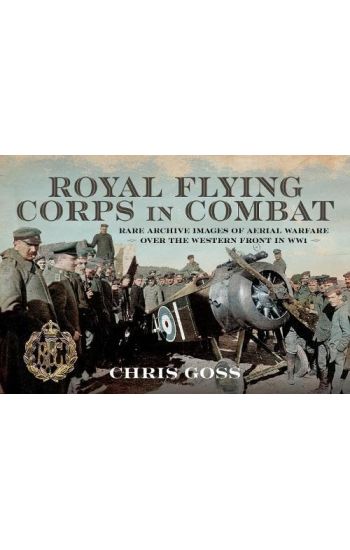
"Knights of the Air" was the title given to daring aviators of the First World War, who flew fragile, unreliable machines in thrilling dogfights. Many pilots of the Royal Flying Corps met tragic ends, and this book by Chris Goss showcases an extraordinary collection of photos and stories of these downed aircraft from the Western Front. Each image tells the tale of the aviators behind them. For example, Second Lieutenant Gilbert Insall and Air Mechanic Thomas Donald, after their Vickers FB 5 Gunbus was damaged, made repairs under enemy fire and returned to base. They were shot down again weeks later, but Insall later escaped captivity and received the Victoria Cross. Chris Goss delves into the stories behind the crashes, even identifying enemy pilots who shot down some of the planes. The mysterious case of Second Lieutenant John Holtom’s DH 2, whose body was never recovered, remains unsolved. This book also reveals how many surviving pilots went on to have distinguished careers, including Montagu Chidson, who, after being captured in 1915, later rescued vital diamonds from Amsterdam in 1940 while serving with M.I.9. Royal Flying Corps in Combat is a captivating account of the aircraft, battles, and aviators of the First World War.
Luftwaffe Aces in the Battle of Britain

Luftwaffe Aces in the Battle of Britain

Chris Goss

PEN SWORD BOOKS LTD
2025
nidottu
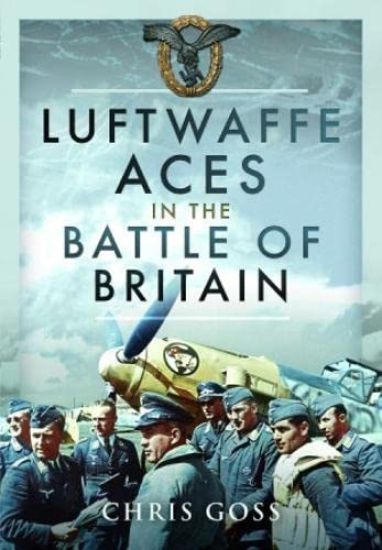
The term fighter ace' grew in prominence with the introduction and development of aerial combat in the First World War. The actual number of aerial victories required to officially qualify as an ace' has varied but is usually considered to be five or more. For the Luftwaffe, a number of its fighter pilots, many of whom had fought with the Legion Condor in Spain, had already gained their Experte, or ace, status in the Battle of France. However, many more would achieve that status in the hectic dogfights over southern England and the Channel during the Battle of Britain in the summer of 1940. A number would also be either killed or captured. Some of these men, individuals such as Adolf Galland, Werner Molders, and Helmut Wick, who between them had claimed 147 aerial victories by 31 October 1940, are well-known, but most are less so. In this book, the story of each of the Luftwaffe's 204 Messerschmitt Bf 109 aces' from the summer of 1940 is examined, with all of the individual biographies, detailing individual fates during the war, being highly-illustrated throughout. Original German records from the summer of 1940, have been examined, providing a definitive list of each pilot's individual claims. It also covers, to a lesser extent, those forgotten fifty-three Messerschmitt Bf 110 pilots who also achieved ace status by day and also by night between 10 July and 31 October 1940.
Luftwaffe Intruder Operations Over the United Kingdom
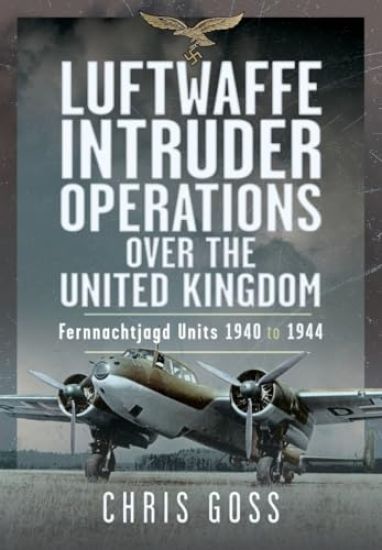
On 17 July 1940, Oberst Josef Kammhuber took command of the Luftwaffe’s 1 Nachtjagddivision after his release from French captivity. He was tasked with combating RAF bombers, which were increasingly threatening Germany during the Battle of Britain. Kammhuber’s strategy, the Fernnachtjagd (long-range night fighter missions), focused on targeting bombers while they were vulnerable during takeoff and return to bases. Kammhuber believed that converted German bombers like the Dornier Do 17Z and Junkers Ju 88, flown by experienced crews, would be ideal for these missions. The first claims from Fernnachtjagd occurred on 23 July 1940, when Luftwaffe pilots mistakenly shot down a Bristol Blenheim, thinking it was a Vickers Wellington. These night missions continued over the next few years, with varying success. By 1942, the campaign shifted to a “stopgap” phase, and the introduction of the Messerschmitt Me 210 and Me 410 marked further changes in the tactics and aircraft used. While Fernnachtjagd operations had some impact in 1941, by 1944, their effectiveness had diminished. Notably, during the Allies' Berlin raid on 19 February 1944, the Luftwaffe claimed more RAF bombers than the entire Me 410 campaign achieved in 14 months.
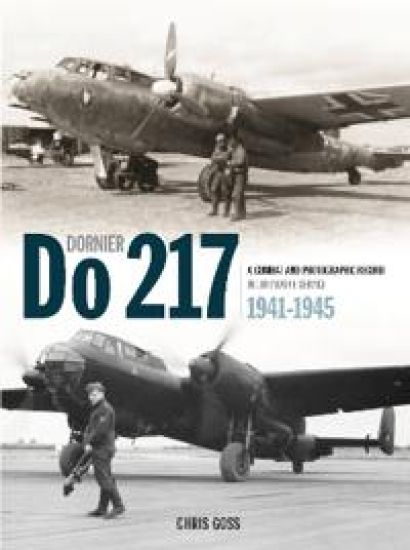
Dornier Do 217

Dornier Do 217

Chris Goss

PEN SWORD BOOKS LTD
2025
sidottu
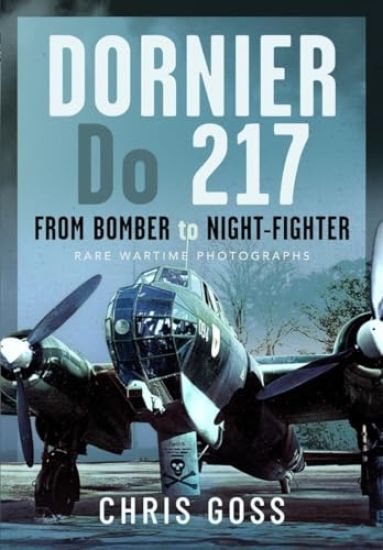
Entering service in early 1941, the Dornier Do 217 was designed as an improved version of the ‘Flying Pencil’, the Do 17 bomber. The Do 217E-1 twin radial-engine bomber first flew in October 1940, the same month that the production of the Do 17 ceased. The Do 217 was initially used for conventional bombing and anti-shipping missions around the United Kingdom, including the infamous Baedeker Blitz against British provincial cities in 1942\. The Do 217 was the main German bomber in this theatre until late 1943, when it started to be replaced by the Messerschmitt Me 410 and Junkers Ju 188\. During this period, the Do 217E was improved, leading to the introduction of the Do 217K or M, the difference between the two being the engines. The Do 217 would be deployed in all of the Luftwaffe’s campaigns and fronts in the Second World War. Curiously, though, the only operational units to use the type on the Eastern Front were the night reconnaissance units, aside from which only occasionally did other Do 217 units fly missions against Stalin’s forces. With the delay in the Heinkel He 177 entering service, it was the Do 217 that became the first aircraft in history to be used to deploy precision-guided weapons in combat. This came on 21 July 1943, when Do 217s of KG 100 attacked Allied shipping in Augusta harbour, Sicily, using Fritz X radio-guided glide bombs. Then, on 25 August 1943 twelve Do 217E-5s from II./KG 100 attacked a convoy off the Spanish coast with a similar weapon to the Fritz X, the Henschel Hs 293 radio-guided glide bomb. This attack resulted in damage to three warships. In response to the intensifying Allied strategic bomber offensive, additional night fighters were needed by the Luftwaffe. The Do 217E-2 was therefore modified by fitting four MG17s and four MG-FF 20mm cannon in a solid nose. The rear firing guns, including the MG131 in the turret, were retained, as was the ability to carry bombs, creating the Do 217J-1 which was intended as a night intruder. The Do 217 also served extensively as a night fighter, with examples being fitted with Lichtenstein radar and obliquely mounted upward-firing MG151 cannon in the fuselage, the so called Schräge Musik modification. Despite the Do 217’s versatility and wide-spread deployment – all of which is explored here by the author through a remarkable set of archive images, many of which have never been seen in print before – production ceased in October 1943\. By the following year, the Do 217 had become obsolete.
Operation Steinbock 1944

Operation Steinbock 1944

Chris Goss

BLOOMSBURY PUBLISHING PLC
2025
nidottu
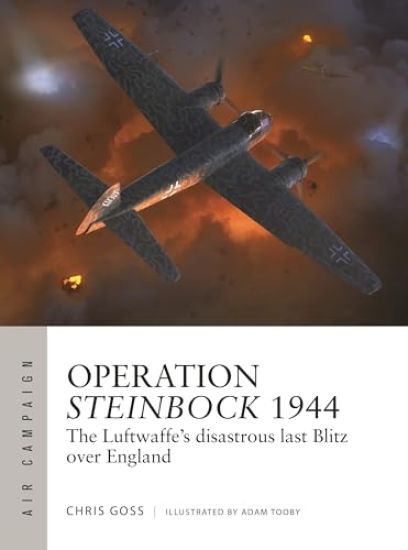
The story of Germany's disastrous last cross-Channel Blitz in early 1944, which left the Luftwaffe devastated and barely able to oppose the D-Day landings. Operation Steinbock, or as it became known, the ‘Baby Blitz’ was the Luftwaffe’s last sustained night bomber offensive against the United Kingdom. In this book, renowned Luftwaffe historian Chris Goss explains how and why the Luftwaffe's last cross-Channel campaign was such a contrast to the Battle of Britain and subsequent Blitz of 1940–41. In 1944, the Luftwaffe’s under-trained, hard-pressed, and inexperienced bomber crews were out-thought and outfought by their opponents, who combined the latest ground-controlled radar with powerful new night fighters and advanced anti-aircraft defences, including radar-assisted guns and even anti-aircraft rockets. Packed with dramatic original illustrations, explanatory diagrams, 2D maps of the strategic situation and 3D maps recreating key missions, this book tells the story of Operation Steinbock and its crucial consequences. The Germans' last air campaign over England ended in late May 1944, with the Luftwaffe having lost hundreds of much-needed aircraft and crews. Just days later, the Allies stormed ashore across the beaches of Normandy, and the Luftwaffe could do little to stop them.
FOCKE-WULF Fw 190

FOCKE-WULF Fw 190

Chris Goss

PEN SWORD BOOKS LTD
2023
nidottu
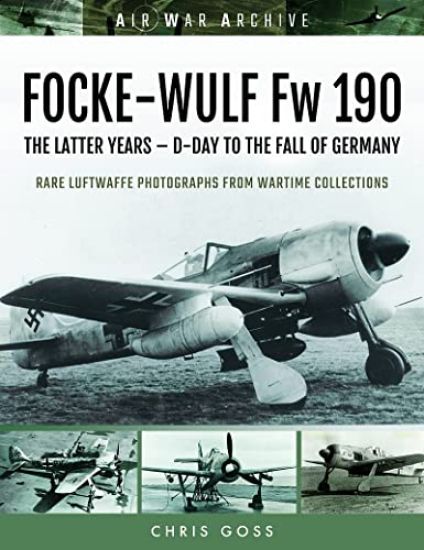
As the war began to turn against Germany, the Luftwaffe was forced to defend the Reich against increasingly overwhelming numbers of Allied fighters and bombers. The Focke-Wulf Fw 190, together with the Bf 109G, was the mainstay of the Luftwaffe's Reichsverteidigung (Defence of the Reich) fighter force, both by day and by night. As the war progressed, the US Eighth Air Force, suffering heavy losses over Germany, changed tactics. The escorting US fighters had been expected to fly alongside the bombers to provide close protection. But this meant that they could not chase after the enemy when in combat, having to return to the bombers. So, from early 1944, the decision was made to free the fighters, allowing them to fly ahead of the bomber stream clearing the skies of German fighters. To counter this, the Luftwaffe developed the Gefechtsverband, or battle formation, composed of two units of Bf 109s and one Sturmgruppe of Fw 190s. In Gefechtsverband operations, the Bf 109s would engage the Allied fighters, particularly the long-range P-51 Mustangs, leaving the more heavily-armed Fw 190s to attack the bombers. Though the large Gefechtsverband formations were unweildy and not always effective, when they did work well, the powerful and well-armoured Fw 190s wreaked havoc amongst the US bombers. Meanwhile, on the Eastern Front, the Fw 190 was incresaingly relied upon for fighter and Jabo missions against a dogged Soviet Air Force. With the tide well and truly turned against the Luftwaffe, newer versions of the Fw 190, such as the F and G variants, were intruduced as well as the superlative D-9 which was powered by the Jumo 213 A engine, armed with two MG 131s and two MG 151/20 guns and had a new fuselage and wings. In this second volume detailing the service of the Fw 190, Chris Goss has assembled photographs, many of which have come from the archive of the late Dr Alfred Price, to illustrate the final years of the type's war.
Royal Navy and Army Helicopters of the 1970s and '80s
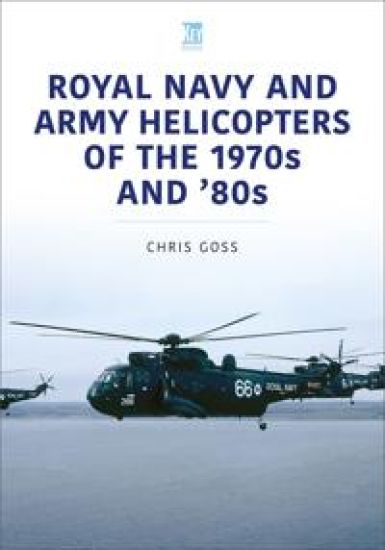
Focusing on the helicopters used specifically by the Royal Navy and British Army, this book looks at the Lynx, Sea King, Wasp Scout, Wessex, Whirlwind and some minor types. With over 180 black and white and colour photographs, this book, the sixth in a series covering British combat aircraft of the 1970s and '80s, showcases the helicopters used by the Royal Navy and Army and their part in the latter stages of the Cold War.
Luftwaffe Fighters of World War II

Luftwaffe Fighters of World War II

Chris Goss

KEY PUBLISHING LTD
2023
sidottu
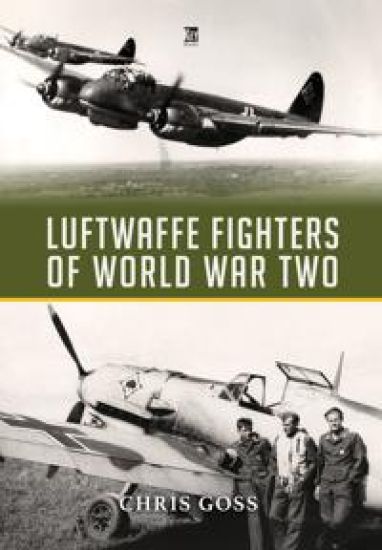
This book gives the reader, be they well-versed in Luftwaffe matters or just simply curious to know more, an insight into the main Luftwaffe fighters of World War Two. It details the genesis of many of the well-known types, such as the Messerschmitt Bf 109 or Focke Wulf Fw 190 single-engined fighters, as well as illustrating the lesser-known types such as the Bachem Ba 349 Natter single-seat rocket fighter. The book also includes unit, campaign and combat histories so as to give an idea of what it was like to fly or fight in these aircraft between 1939 and 1945. The book is richly illustrated throughout with over 200 black and white and colourised photographs and full-colour profiles.
British Reconnaissance Aircraft of the 1970s and 80s
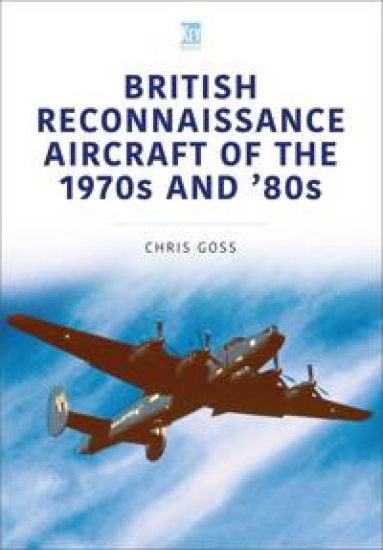
This book explores the reconnaissance aircraft used by the British armed forces in the 1970s and '80s, namely the Avro Shackleton, Hawker Siddeley Nimrod, Fairey Gannet and English Electric Canberra. The maritime patrol and airborne early warning (AEW) Shackleton was a descendant of the Avro Lancaster and Lincoln and was in service from 1951 to 1991. The Nimrod, based on the de Havilland Comet, was also a maritime patrol aircraft and served between 1969 and 2011. The Gannet first flew in 1949, but, during the period covered by this book, flew in the AEW role with just one Royal Navy squadron. Finally, the Canberra, which first flew in 1949, was used as a bomber and then mainly in the reconnaissance role. It was finally retired from the RAF in 2006. With over 180 black and white and colour photographs, this book, the fourth in a series covering British combat aircraft of the 1970s and '80s, looks at the aircraft used in the reconnaissance or AEW roles.
RAF Helicopters of the 70s and 80s

RAF Helicopters of the 70s and 80s

Chris Goss

KEY PUBLISHING LTD
2023
nidottu
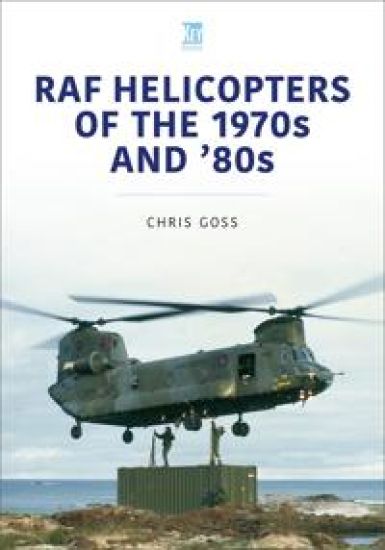
This is the fifth book in the series of photographs of British combat aircraft of the 1970s and 1980s and covers the RAF helicopters in service during those two decades and their part in the latter stages of the Cold War. The Westland Whirlwind was used in the air-sea rescue (ASR) role before being replaced by the Westland Sea King, both aircraft being prominent around the British coastline with their bright yellow colouring. The Westland Wessex was used by the RAF in a variety of roles including search and rescue. The A rospatiale Puma was introduced to service with the RAF in 1968 and is still being flown today while the Boeing Chinook came into service in 1981, just in time to take part in the Falklands War, and is still in service today. Containing 180 photographs, this book is a pictorial compendium of these iconic machines.
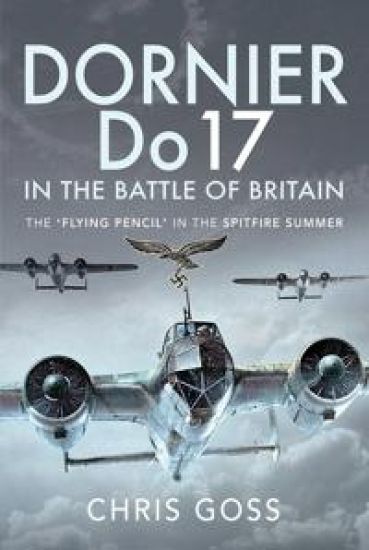
Dornier Do 17 in the Battle of Britain
During Britain's desperate struggle for survival that in the summer of 1940, the Dornier Do 17 played a prominent part in raids designed at neutralising the RAF's ability to resist and the British people's will to fight back. Having been built to outrun contemporary fighters when introduced into the Luftwaffe in 1937, it had become the Luftwaffe's main light bomber, and for the attack against Britain, three bomber wings, KG 2, KG3 and KG77, were equipped with the Do 17\. But by 1940, the Do 17 was nearing obsolescence and, with its weak defensive armament, it fell prey to Fighter Command's Hurricanes and Spitfires. Its vulnerability was starkly revealed on 18 August 1940, when eight Dorniers were shot down and nine damaged in attacks on RAF Kenley, and on 15 September - Battle of Britain Day - when twenty were shot down and a further thirteen damaged. On that day, Sergeant Ray Holmes rammed his Hurricane into a Do 17 that was reportedly aiming for Buckingham Palace. Part of the bomber's wreckage fell to earth near Victoria Station. In this comprehensive pictorial record of the Do 17, the bomber's role throughout the period of the Battle of Britain is displayed in the author's unique collection of British and German photographs. These photographs, coupled with first-hand stories from those who flew and those who fought against the Do 17, bring those desperate days and dark nights back to life in the manner which only contemporary images and accounts can achieve.
British Ground-Attack Aircraft of the 1970s and 80s
The Soci t Europ enne de Production de l'avion cole de Combat et d'Appui Tactique (SEPECAT) Jaguar and Hawker Siddeley Harrier played critical ground-attack and tactical reconnaissance roles, including in the latter stages of the Cold War. The Jaguar came into service with the RAF in 1974 and flew with eight operational squadrons and an Operational Conversion Unit before finally being retired in 2007. The unique Harrier entered service with the RAF in 1969.It flew operationally with four squadrons, as well as being deployed in Belize and the Falkland Islands and with an Operational Conversion Unit. The second-generation Harrier was prematurely retired in 2011. With over 180 photographs, both black and white and colour, this book, the third in a series on British combat aircraft of the 1970s and '80s, is an essential addition to the libraries of those who flew or worked on these aircraft, aviation historians and enthusiasts, and modellers alike.
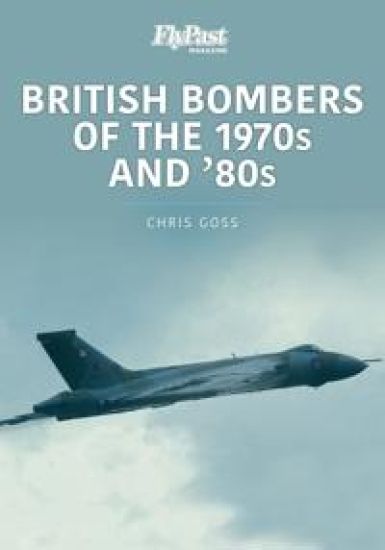
British Bombers: The 1970s and '80s

British Bombers: The 1970s and '80s

Chris Goss

KEY PUBLISHING LTD
2022
nidottu
The mainstays of the RAF's bomber force in the 1970s and '80s were the distinctive Avro Vulcan and the slightly less well-known Blackburn Buccaneer. The Buccaneer came into service in 1962 and flew with just five RAF and six RN squadrons before being retired in 1994. The Vulcan came into service in 1956 and was retired after the Falklands War in 1982, having flown operationally with nine RAF squadron. Illustrated with 180 photographs, this book details the much-loved Buccaneer and Vulcan and the part they played in the latter stages of the Cold War. AUTHOR: Having retired from the RAF with the rank of Wing Commander, Chris Goss is a regular and highly respected contributor to major aviation publications in the UK, France and Germany. 180 illustrations
British Fighters of the 1970s and '80s

British Fighters of the 1970s and '80s

Chris Goss

KEY PUBLISHING LTD
2022
nidottu
Two of the RAF's most memorable aircraft are the English Electric Lightning and the McDonnell Phantom. The Lightning, which flew with nine RAF squadrons before being retired in 1988, is fondly remembered for is astonishing rate of climb, while the Phantom, which flew with three Royal Navy squadrons and 15 RAF squadrons, started out in the ground-attack and reconnaissance roles but became more predominant in the tactical fighter role before being finally retired in 1992. Illustrated with more than 180 photographs, this book covers in great detail the Lightning and Phantom fighter aircraft and the part they played in the latter stages of the Cold War. 180 illustrations