Kirjailija
Chris Harris
Kirjat ja teokset yhdessä paikassa: 68 kirjaa, julkaisuja vuosilta 2002-2025, suosituimpien joukossa Creature Codex Pocket Edition. Vertaile teosten hintoja ja tarkista saatavuus suomalaisista kirjakaupoista.
68 kirjaa
Kirjojen julkaisuhaarukka 2002-2025.
In the global marketplace, no business is a self-contained island. No matter how effective your internal material movement, to be a future-thinking business, you must go to the next step and develop long-term supplier partnerships built on a dedication to continuous improvement and the basic concepts of Lean implementation. Lean Supplier Development: Establishing Partnerships and True Costs Throughout the Supply Chain provides step-by-step instruction on how to build partnerships of mutual improvement and success through supplier development. Offering the same advice that they have successfully applied to corporations across the globe, award-winning consultants Chris Harris, Rick Harris, and Chuck Streeter Provide criteria on how to choose suppliers that will make good long-term partnerships Demonstrate proven methods for employing Plan for Every Part (PFEP) to link your facility to the supply base Present a true cost model that eliminates guesswork when choosing suppliers to develop Show how to develop and maintain efficient information flow all along your supply chain Use real-world examples to cover likely contingencies Provide a sample quarterly supplier review that you can adapt for your own use Lean is a journey, not a destination. It requires flexible leaders at the helm who can readily adjust to ever-changing conditions and it requires like-minded partners all along the supply chain. Finding and developing these partners is not about good fortune, it is all about an uncompromising approach to continuous improvement and the application of systematic methods that will build working partnerships that broaden your definition of what is possible

Includes the dramatic scenes of the railways of 1964 when the Beeching Report was published which was to reshape the railways in the years that followed.
Christopher's Precious Little Life 2: My Family!
Chris Harris
Createspace Independent Publishing Platform
2016
nidottu
Utility and Welfare Optimization in Electricity Market s lays out clear optimization strategies for understanding the economic foundations of regulatory supply measures, further cementing electricity's role as an asset class with fixed and variable costs.
For the younger reader there are wonderful pictures of trains, real trains. There will, for example, be tank engines, engines, electric trains and multiple units and many more varieties besides! Some will be recognised from train sets, model railways and books, while others will be seen for the first time. in this volume we travel back to 1983.
The aim of this series is to appeal to readers of all ages, perhaps for different reasons...In this volume: We travel back to the year 1976 For the younger reader there are wonderful pictures of trains, real trains. There will, for example, be tank engines, steam engines, electric trains and multiple units and many more varieties besides! Some will be recognised from train sets, model railways and books, while others will be seen for the first time. For the older reader the books are designed to build into a collection placing the railway in the context of key events thus providing an historical perspective of travel in times past. For those old enough to remember the years depicted, the series will, we hope, provide reminders for many of school days, time perhaps spent train-spotting, shed bashing and generally gricing! The books also make ideal theme gifts for the year of birth, marriage, retirement, starting work and other such events in life. In the year 1976...The Cod Wars, The NEC is opened by The Queen, Hillman Imp production ends, Seychelles gain Independence from UK, Southend Pier fire, Big Ben takes a rest, James Hunt-World Champion
Capitalizing on Lean Production Systems to Win New Business
Chris Harris; Rick Harris
CRC Press Inc
2013
nidottu
Although there are many organizations that have implemented Lean production systems and become more profitable as a result, there can be a gap between what those organizations currently do and how they should plan for and profit from new business. Capitalizing on Lean Production Systems to Win New Business: Creating a Lean and Profitable New Product Portfolio explains how to create a Lean product portfolio to fill that gap so you can become more profitable from that new business.Providing a fundamental understanding of the Lean enterprise production system, this book can help an organization take its current Lean knowledge and translate that knowledge into a step-by-step methodology to win and launch new business. Lean topics covered include:Value Stream MappingPlan for Every PartProcess Design and Standard WorkScheduling and Material FlowMachine ChangeoverQuality and Continuous ImprovementBy developing the New Product Acquisition and Launch Portfolio presented in this book, you can dramatically improve your ability to produce the products customers desire and deliver them on time. Focusing on the concepts that are critical to the longevity of your Lean enterprise system, this book will help you understand how to deliver a product that meets the quality and delivery standards of your customer. It will also help you understand how this new product fits into your Lean enterprise system.Detailing how to achieve a successful new product launch through upfront planning, this book provides you with the tools to enhance efficiencies throughout your supply chain.
Thunder Mountain Brides: Be Wild My Little Child-Pamela
Chris Harris
Createspace Independent Publishing Platform
2013
nidottu
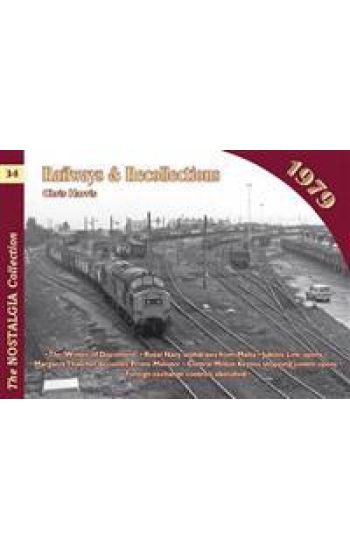
In this volume we travel back to 1979. For the younger reader there are wonderful pictures of trains, real trains. There will, be tank engines, steam engines, electric trains and multiple units and many more varieties besides! Some will be recognised from train sets, model railways and books, while others will be seen for the first time.
In this volume we travel back to 1971. For the younger reader there are wonderful pictures of trains, real trains. There will, be tank engines, steam engines, electric trains and multiple units and many more varieties besides! Some will be recognised from train sets, model railways and books, while others will be seen for the first time.
Adaptive Modelling, Estimation and Fusion from Data
Chris Harris; Xia Hong; Qiang Gan
Springer-Verlag Berlin and Heidelberg GmbH Co. K
2012
nidottu
In a world of almost permanent and rapidly increasing electronic data availability, techniques of filtering, compressing, and interpreting this data to transform it into valuable and easily comprehensible information is of utmost importance. One key topic in this area is the capability to deduce future system behavior from a given data input. This book brings together for the first time the complete theory of data-based neurofuzzy modelling and the linguistic attributes of fuzzy logic in a single cohesive mathematical framework. After introducing the basic theory of data-based modelling, new concepts including extended additive and multiplicative submodels are developed and their extensions to state estimation and data fusion are derived. All these algorithms are illustrated with benchmark and real-life examples to demonstrate their efficiency. Chris Harris and his group have carried out pioneering work which has tied together the fields of neural networks and linguistic rule-based algortihms. This book is aimed at researchers and scientists in time series modeling, empirical data modeling, knowledge discovery, data mining, and data fusion.
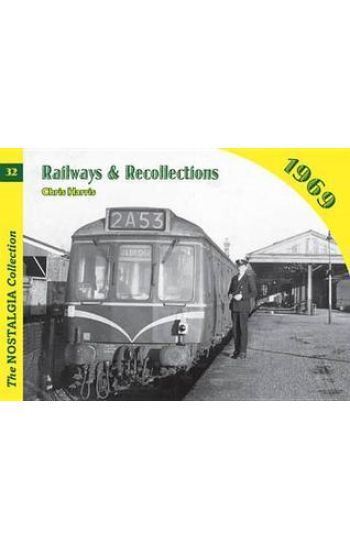
In this volume: We travel back to the year 1969. For the younger reader there are pictures of trains, real trains. There will, for example, be tank engines, steam engines, electric trains and multiple units and many more varieties besides!
In the global marketplace, no business is a self-contained island. No matter how effective your internal material movement, to be a future-thinking business, you must go to the next step and develop long-term supplier partnerships built on a dedication to continuous improvement and the basic concepts of Lean implementation. Lean Supplier Development: Establishing Partnerships and True Costs Throughout the Supply Chain provides step-by-step instruction on how to build partnerships of mutual improvement and success through supplier development. Offering the same advice that they have successfully applied to corporations across the globe, award-winning consultants Chris Harris, Rick Harris, and Chuck Streeter — Provide criteria on how to choose suppliers that will make good long-term partnershipsDemonstrate proven methods for employing Plan for Every Part (PFEP) to link your facility to the supply basePresent a true cost model that eliminates guesswork when choosing suppliers to developShow how to develop and maintain efficient information flow all along your supply chainUse real-world examples to cover likely contingenciesProvide a sample quarterly supplier review that you can adapt for your own useLean is a journey, not a destination. It requires flexible leaders at the helm who can readily adjust to ever-changing conditions and it requires like-minded partners all along the supply chain. Finding and developing these partners is not about good fortune, it is all about an uncompromising approach to continuous improvement and the application of systematic methods that will build working partnerships that broaden your definition of what is possible

Mention 1967 to any transport enthusiast who hails from the South of England and the reply will almost certainly be 'the year steam ended on the Southern Region'. Monday 10 July, 1967 was indeed a sad day for fans of the steam locomotive, being the first day on the Southern Region without them. This book features the Southern Steam.
Not 'just another travelog' - this is a light-hearted blend of observation, anecdote, humor and history, all sympathetically portrayed through the perceptive pen of a guest from Europe. The book was inspired by a USA coast-to-coast expedition from San Francisco to Washington DC to raise funds for charity (ALS, Lou Gehrig's Disease, Motor Neurone Disease), undertaken for much of the way in a 30-year-old open top 'classic' car along the historic Route 66. Little escapes review - from cow-chip throwing to IndyCar racing; from poker running to the deeply ingrained religiosity of bible belt America. The story ranges from the sparkling waters of San Francisco Bay, via Amarillo in the Texas panhandle, to shipwreck in the pounding Atlantic surf off Cape Hatteras. People and places, and triumphs and tragedies of American history, all are there. The distinctive style is the author's own - although he likes to think it is inspired by the best of Bryson, RL Stevenson and JK Jerome. Enjoy!
This book addresses the complexity of family change. It draws on evidence from two linked studies, one carried out in the 1960s and the other in the early years of the 21st century, to analyse the specific ways in which family lives have changed and how they have been affected by the major structural and cultural changes of the second half of the twentieth century. The book shows that, while there has undeniably been change, there is a surprising degree of continuity in family practices. It casts doubt on claims that families have been subject to a process of dramatic change and provides an alternative account which is based on careful analysis of empirical data. The book presents a unique opportunity to chart the nature of social change in a particular locality over the last 50 years; includes discussions of social and cultural variations in family life, focusing on younger as well as older generations; explores not only what happens within family-households but also what happens within networks of kin across different households and shows the way changing patterns of employment affect kinship networks and how geographical mobility co-exists with the maintenance of strong kinship ties. The findings will be of interest to students of sociology, social anthropology, social policy, women's studies, gender studies and human geography at undergraduate and postgraduate level.
Dependable information flow is a necessary prerequisite to the successful implementation of lean production principles. But while most managers understand how to make materials and manpower flow, the flow of information tends to be much more underdeveloped. Even companies that excel at recognizing waste and are otherwise adept at implementing the principles of lean production are often challenged to provide satisfactory information flow. Lean Connections: Making Information Flow Efficiently and Effectively isdesigned to help you rethink the way your organization views information flow. It provides the building blocks of a comprehensive information-flow system, showing you calculations and methods that will allow you to get the necessary information to those individuals who need it, when they need it. Following a logical and detailed progression, this manual shows how to make information flow in lean production facility— From the end customer through materials control to the production floor On the production floor at the operator, team, and value stream level And then from the production floor to the management of the facility Employing a workbook format, this manual follows RNA Manufacturing, a fictional company, through its implementation of a comprehensive lean production system. As the authors outline RNA’s methods and thought processes, they employ exercises that ask questions about your own production system. Your challenge is to think deeply about the answers, as well as the changes that need to be made to effectively make information flow through your facility. Make certain that everyone gets the information that they need when they need it