

Kirjailija
Chris Hedges
Kirjat ja teokset yhdessä paikassa: 29 kirjaa, julkaisuja vuosilta 2006-2027, suosituimpien joukossa Requiem for Gaza. Vertaile teosten hintoja ja tarkista saatavuus suomalaisista kirjakaupoista.
29 kirjaa
Kirjojen julkaisuhaarukka 2006-2027.
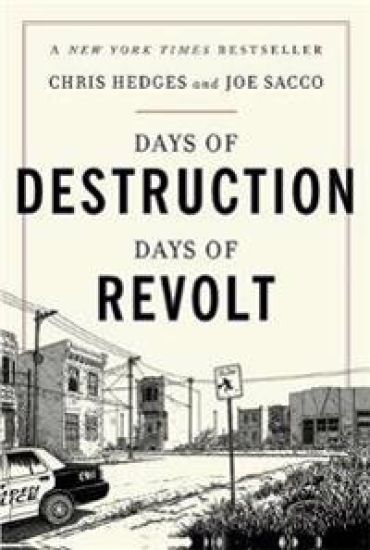
Named a Best Book of the Year by Amazon.com and the Washington Post Three years ago, Pulitzer Prize-winner Chris Hedges and award-winning cartoonist and journalist Joe Sacco set out to take a look at the sacrifice zones, those areas in America that have been offered up for exploitation in the name of profit, progress, and technological advancement. They wanted to show in words and drawings what life looks like in places where the marketplace rules without constraints, where human beings and the natural world are used and then discarded to maximize profit. Days of Destruction, Days of Revolt is the searing account of their travels.



I centrum för Ett förväntat folkmord står händelserna i Gaza efter Hamas attack den 7 oktober 2023. Händelser som gjort Gaza närmast obeboeligt och av många betecknas som ett folkmord. För den amerikanske reportern Chris Hedges kom detta inte som en överraskning. Folkmord på palestinier ser han som en logisk konsekvens av det bosättarkoloniala projekt som staten Israel utgör. I det har palestinierna ingen roll att spela. I sin bok skildrar Chris Hedges vad som hänt. Han ger sin personliga tolkning av det och sätter in det i ett historiskt sammanhang. Det palestinska motståndet jämför han med Warszawaupproret 1943 och med 1800-talets slavrevolter i USA. Protesterna mot Israels våldsutövande jämför han med dem mot Vietnamkriget.Han tar också upp hur Israels utdragna och livestreamade illdåd på civila tycks ha öppnat världens ögon. En ny global medvetenhet har tagit form som kan komma att förändra situationen för palestinierna. Folkmordet har väckt en sovande jätte, menar författaren.APPENDIX: I boken ingår rapporten Folkmord som kolonial utradering av FN:s särskilda rapportör Francesca Albanese.Chris Hedges är en amerikansk Pulitzerprisbelönad journalist och författare. Åren 1990-2005 arbetade han för New York Times som korrespondent på Balkan och i Mellanöstern. Chris Hedges har en pastoralteologisk examen vid Harvard University och har undervisat vid bl.a. Columbia och Princeton University. Tidigare har han utgivit 15 böcker.Francesca Albanese är FN:s särskilda rapportör om situationen för mänskliga rättigheter i de sedan 1967 ockuperade palestinska territorierna. Hon har bl.a. publicerat boken Palestinian Refugees in International Law (med Lex Takkenberg, Oxford University Press, 2020). »Folkmordet berättar något inte bara om Israel, utan också om oss« Av Chris Hedges Folkmordet i Gaza är kulmen på en process. Det är ingen motaktion. Folkmordet är den förutsägbara förlängningen av Israels bosättarkoloniala projekt. Det ligger i den israeliska apartheidstatens DNA. Det var där Israel var förbestämt att hamna. Det överträffar de värsta övergreppen under nakban (al-Nakba, katastrofen) i vilken 750000 palestinier 1948 fördrevs från sitt land och 8000 till 15000 massakrerades av sionistiska terroristmiliser som Irgun, Lehi, Haganah och Palmach. Efter denna etniska rensning styrde Israel över 160000 palestinska araber som hade stannat kvar, en femtedel av den arabiska befolkningen före kriget. Sionistiska ledare talar öppet om sina mål. Efter den 7 oktober 2023 meddelade Israels försvarsminister Yoav Gallant att ingen elektricitet, ingen mat, inget vatten, inget bränsle skulle tillhandhållas Gaza. Den israeliske utrikesministern Israel Katz sade: Humanitär hjälp till Gaza? Ingen strömbrytare kommer att slås på, ingen vattenpost kommer att öppnas. Jordbruksministern Avi Dichter kallade Israels militära anfall Gaza Nakba 2023. Revital Tally Gotliv, Likudmedlem i det israeliska Knesset, skrev på sociala medier: Rasera byggnader!! Bomba utan urskillning!! Jämna Gaza med marken. Skoningslöst! För att inte låta sig övertrumfas uttalade kulturarvsminister Amihai Eliyahu sitt stöd för användning av kärnvapen mot Gaza som ett av alternativen. Budskapet från den israeliska ledningen är otvetydigt. Israel följer den så kallade Dahiyadoktrinen. Doktrinen formulerades efter kriget 2006 mellan Israel och Hizbollah i Libanon av den tidigare stabschefen för Israels försvarsstyrkor (IDF), Gadi Eisenkot, som ingår i det nuvarande krigskabinettet. Dahiya (al-Dahiya al-janubiyya) är en förort i södra Beirut och ett starkt fäste för Hizbollah. Den utsattes för kraftiga anfall av israeliska jetflygplan efter det att två israeliska soldater hade tillfångatagits. Doktrinen hävdar att Israel i avskräckande syfte bör sätta in kraftigt, oproportionerligt våld och förstöra infrastruktur och civila bostäder. Daniel Hagari, talesman för IDF, uppgav i början av Israels senaste attack mot Gaza att betoningen skulle ligga på det som orsakar maximal skada. Israel har övergett sin taktik att knacka på taket, där en raket utan stridsspets sköts för att landa på ett tak för att varna dem på insidan och ge dem chansen att utrymma. Israel har också slutat med sina telefonsamtal med varningar om ett nära förestående anfall. Familjer i flerbostadshus, flyktingboenden eller hela kvarter utplånas utan förvarning. Folkmordet berättar något inte bara om Israel, utan också om oss, om den västerländska civilisationen, om vilka vi är, var vi kommer ifrån och vad som definierar oss. Det säger att all vår omskrutna moral och respekt för mänskliga rättigheter är en lögn.
With intimate and harrowing portraits of the human consequences of oppression, occupation, and violence experienced in Palestine today, Pulitzer-prize-winning journalist Chris Hedges issues a call to action urging us to bear witness and engage with the ongoing humanitarian crisis. Hedges wrote the first section of the book when he was in Ramallah in July 2024, and he draws from his experience doing extensive reporting from the Middle East, including Gaza, for the New York Times. A Genocide Foretold confronts the stark realities of life under siege in Gaza and the heroic effort ordinary Palestinians are waging to resist and survive. Weaving together personal stories, historical context, and unflinching journalism, Chris Hedges provides an intimate portrait of systemic oppression, occupation, and violence. The book includes chapters on: What life is like in Gaza City and Ramallah in the midst of approaching bombs and gunfire.The history of the dispossession of Palestinians of their land in relation to the ideology of Zionism.A portrait of Amr, a 17-year-old highschool student who is forced to evacuate his village with his family.Psychoanalysis of the state of permanent war that has led to the destruction of hospitals, telecommunications centers, governmental buildings, roads, homes universities, schools, and libraries and archaeological and heritage sites in Gaza.The ways in which the collective retribution against innocents is a familiar tactic employed by colonial rulers.A heartbreaking final chapter called "Letter to the Children of Gaza."Hedges, the Pulitzer Prize-winning former Middle East Bureau Chief for The New York Times, is an Arabic speaker who spent seven years covering the conflict. He wrote the first section of the book when he was in Ramallah in July 2024. A Pulitzer-Prize winning journalist, he is also the author of two bestselling books, War is a Force that Gives us Meaning and The Greatest Evil is War. In A Genocide Foretold he writes with an emotional depth that can only be achieved from spending many years on the ground in Gaza and the West Bank. A Genocide Foretold is a call to action, urging us to bear witness and engage with the ongoing humanitarian crisis.
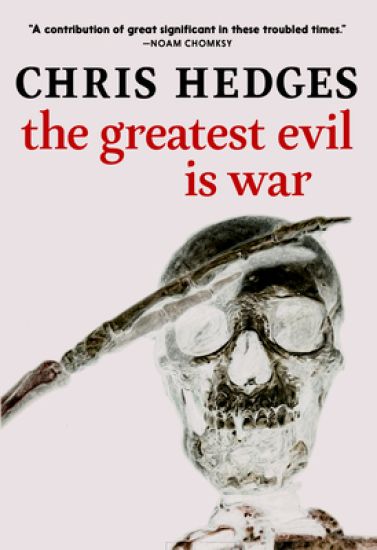
Now with a new preface for the paperback edition by the author, an unflinching indictment of the horror and obscenity of war by one of our finest war correspondents. Drawn from experience and interviews by Pulitzer-prize-winner Chris Hedges, a devastating look the hidden costs of war, what it does to individuals, families, communities and nations. "A remarkable record of reporting and analysis. . . A contribution of great significance in these troubled times." --Noam Chomsky In the twenty years since the publication of War Is a Force that Gives Us Meaning, Chris Hedges has not wanted to write another book on the subject of war--until now, with the outbreak of war in Ukraine. In fifteen short chapters, Chris Hedges astonishes us with his clear and cogent argument against war, not on philosophical grounds or through moral arguments, but in an irrefutable stream of personal encounters with the victims of war, from veterans and parents to gravely wounded American serviceman who served in the Iraq War, to survivors of the Holocaust, to soldiers in the Falklands War, among others. Hedges reported from Sarajevo, and was in the Balkans to witness the collapse of the Soviet Union. Today it is important again to be reminded who are the victors of the spoils of war and of other unerring truths, not only in this war but in all modern wars, where civilians are always the main victims, and the tools and methods of war are capable of so much destruction it boggles the mind.
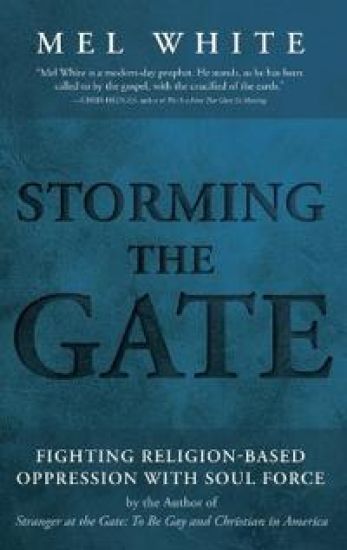
Storming the Gate picks up the story forty years after the publication of Stranger at the Gate (1993). Mel and his husband, Gary Nixon, have founded Soulforce and recruited an army of volunteers to help end the lie. Their nonviolent protests made headlines across the nation. These are the heroic and sometimes hilarious stories of Mel, Gary, and their volunteers being harassed, arrested, tried, and jailed for doing battle with the lie and with the Catholic, Protestant, and Evangelical liars who know the truth but refused to tell it.

Storming the Gate picks up the story forty years after the publication of Stranger at the Gate (1993). Mel and his husband, Gary Nixon, have founded Soulforce and recruited an army of volunteers to help end the lie. Their nonviolent protests made headlines across the nation. These are the heroic and sometimes hilarious stories of Mel, Gary, and their volunteers being harassed, arrested, tried, and jailed for doing battle with the lie and with the Catholic, Protestant, and Evangelical liars who know the truth but refused to tell it.
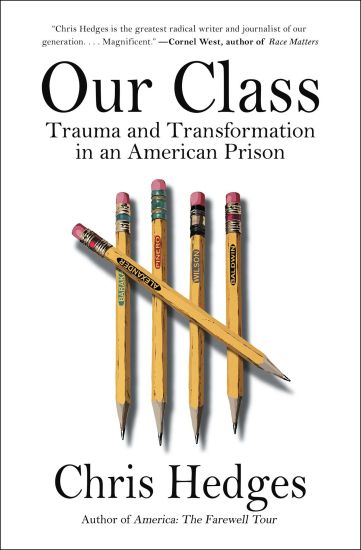
A powerfully moving book that "could make graspable why today's prisons are contemporary slave plantations" (Alice Walker, author of The Color Purple), giving voice to the poorest among us and laying bare the cruelty of a penal system that too often defines their lives.Pulitzer Prize-winning journalist Chris Hedges has taught courses in drama, literature, philosophy, and history since 2013 in the college degree program offered by Rutgers University at East Jersey State Prison and other New Jersey prisons. In his first class at East Jersey State Prison, where students read and discussed plays by Amiri Baraka and August Wilson, among others, his class set out to write a play of their own. In writing the play, Caged, which would run for a month in 2018 to sold-out audiences at The Passage Theatre in Trenton, New Jersey, and later be published, students gave words to the grief and suffering they and their families have endured, as well as to their hopes and dreams. The class's artistic and personal discovery, as well as transformation, is chronicled in heartbreaking detail in Our Class. This "magnificent" (Cornel West, author of Race Matters) book gives a human face and a voice to those our society too often demonizes and abandons. It exposes the terrible crucible and injustice of America's penal system and the struggle by those trapped within its embrace to live lives of dignity, meaning, and purpose.
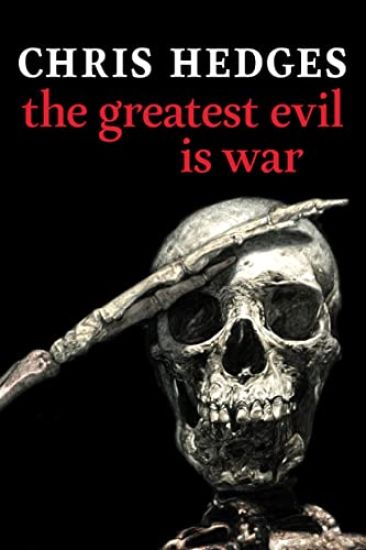
An unflinching indictment of the horror and obscenity of war by one of our finest war correspondents. Drawn from experience and interviews by Pulitzer-prize-winner Chris Hedges, this book looks at the hidden costs of war, what it does to individuals, families, communities and nations. In fifteen short chapters, Chris Hedges astonishes us with his clear and cogent argument against war, not on philosophical grounds or through moral arguments, but in an irrefutable stream of personal encounters with the victims of war, from veterans and parents to gravely wounded American serviceman who served in the Iraq War, to survivors of the Holocaust, to soldiers in the Falklands War, among others. Hedges reported from Sarajevo, and was in the Balkans to witness the collapse of the Soviet Union. In 2002 he published War Is a Force that Gives Us Meaning, which the Los Angeles Times described as "the best kind of war journalism... bitterly poetic and ruthlessly philosophical" and the New York Times called "a brilliant, thoughtful, timely, and unsettling book." In the twenty years since, Hedges has not wanted to write another book on the subject of war--until now, with the outbreak of war in Ukraine. It is important again to be reminded who are the victors of the spoils of war and of other unerring truths, not only in this war but in all modern wars, where civilians are always the main victims, and the tools and methods of war are capable of so much destruction it boggles the mind. This book is an unflinching indictment of the horror and obscenity of war by one of our finest war correspondents.

Our Hearts Are Restless Till They Find Their Rest in Thee
Coleman B Brown; Peter Ochs; Chris Hedges
Cascade Books
2020
pokkari
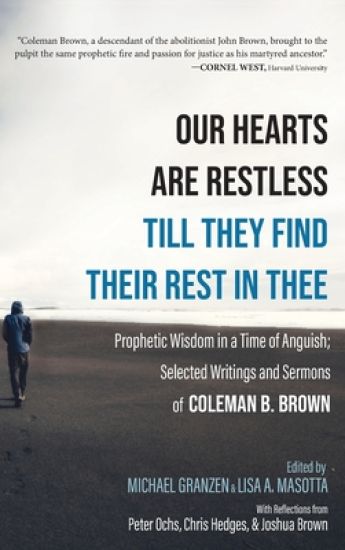
Our Hearts Are Restless Till They Find Their Rest in Thee
Coleman B Brown; Peter Ochs; Chris Hedges
Cascade Books
2020
sidottu
Our Hearts Are Restless Till They Find Their Rest in Thee: Prophetic Wisdom in a Time of Anguish from Coleman B. Brown, edited by Michael Granzen and Lisa A. Masotta. The book includes powerful reflections from Chris Hedges, Peter Ochs, and Joshua Brown.
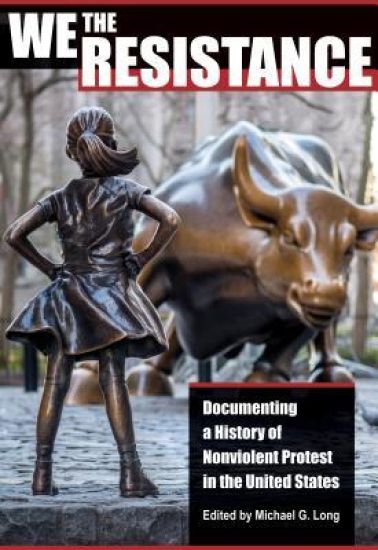
"A highly relevant, inclusive collection of voices from the roots of resistance. . . . Empowering words to challenge, confront, and defy."--Kirkus Reviews"This book fights fascism. This books offers hope. We The Resistance is essential reading for those who wish to understand how popular movements built around nonviolence have changed the world and why they retain the power to do so again."—Jonathan Eig, author of Ali: A Life "This comprehensive documentary history of non-violent resisters and resistance movements is an inspiring antidote to any movement fatigue or pessimism about the value of protest. It tells us we can learn from the past as we confront the present and hope to shape the future. Read, enjoy and take courage knowing you are never alone in trying to create a more just world. Persevere and persist and win, but know that even losing is worth the fight and teaches lessons for later struggles."—Mary Frances Berry, author of History Teaches Us to Resist: How Progressive Movements Have Succeeded in Challenging Times"We the Resistance illustrates the deeply rooted, dynamic, and multicultural history of nonviolent resistance and progressive activism in North America and the United States. With a truly comprehensive collection of primary sources, it becomes clear that dissent has always been a central feature of American political culture and that periods of quiescence and consensus are aberrant rather than the norm. Indeed, the depth and breadth of resistant and discordant voices in this collection is simply outstanding."—Leilah Danielson, author of American Gandhi: A.J. Muste and the History of American Radicalism in the Twentieth Century While historical accounts of the United States typically focus on the nation's military past, a rich and vibrant counterpoint remains basically unknown to most Americans. This alternate story of the formation of our nation—and its character—is one in which courageous individuals and movements have wielded the weapons of nonviolence to resist policies and practices they considered to be unjust, unfair, and immoral. We the Resistance gives curious citizens and current resisters unfiltered access to the hearts and minds—the rational and passionate voices—of their activist predecessors. Beginning with the pre-Revolutionary era and continuing through the present day, readers will directly encounter the voices of protesters sharing instructive stories about their methods (from sit-ins to tree-sitting) and opponents (from Puritans to Wall Street bankers), as well as inspirational stories about their failures (from slave petitions to the fight for the ERA) and successes (from enfranchisement for women to today's reform of police practices). Instruction and inspiration run throughout this captivating reader, generously illustrated with historic graphics and photographs of nonviolent protests throughout U.S. history.
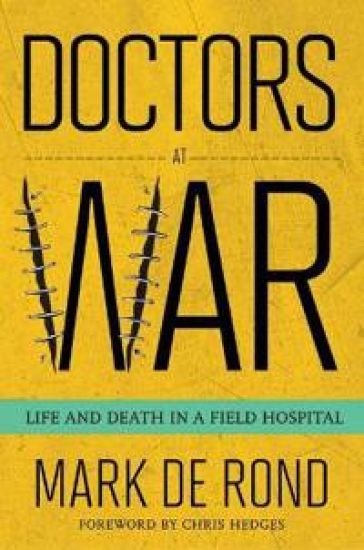
Doctors at War is a candid account of a trauma surgical team based, for a tour of duty, at a field hospital in Helmand, Afghanistan. Mark de Rond tells of the highs and lows of surgical life in hard-hitting detail, bringing to life a morally ambiguous world in which good people face impossible choices and in which routines designed to normalize experience have the unintended effect of highlighting war's absurdity. With stories that are at once comical and tragic, de Rond captures the surreal experience of being a doctor at war. He lifts the cover on a world rarely ever seen, let alone written about, and provides a poignant counterpoint to the archetypical, adrenaline-packed, macho tale of what it is like to go to war. Here the crude and visceral coexist with the tender and affectionate. The author tells of well-meaning soldiers at hospital reception, there to deliver a pair of legs in the belief that these can be reattached to their comrade, now in mid-surgery; of midsummer Christmas parties and pancake breakfasts and late-night sauna sessions; of interpersonal rivalries and banter; of caring too little or too much; of tenderness and compassion fatigue; of hell and redemption; of heroism and of playing God. While many good firsthand accounts of war by frontline soldiers exist, this is one of the first books ever to bring to life the experience of the surgical teams tasked with mending what war destroys.

Chris Hedges on the most taboo topics in America, with David Talbot. Chris Hedges has been telling truth to (and against) power since his earliest days as a radical journalist. He is an intellectual bomb thrower, who continues to confront American empire in the most incisive, challenging ways. The kinds of insights he provides into the deeply troubled state of our democracy cannot be found anywhere else. Like many of our most important thinkers, he has been relegated to the margins because of ideas deemed too radical?or true?for public consumption. Whether it is covering the dissolution of former Soviet states or embedding in the Middle East to understand the post-9/11 world, he has been a singular voice pushing against mainstream media disinformation and the amnesia of establishment received wisdom. He is an intellectual heir to American radical heroes such as Thomas Paine and Noam Chomsky, and is dedicated to reigniting a shared commitment to radical equality and honesty. Hedges here speaks up about the most pressing issues that currently face our nation. He tackles the rise of a fascist right in support of Donald Trump, which advocates xenophobia and violence in a push for American totalitarianism. He rails against the posturing of inclusivity from establishment elites on both sides of the aisle, who post-Occupy-Wall-Street continue to advocate for policies that make America uninhabitable for all but the ultra-rich and, as lackeys for corporate interests, continue to expand income inequality in all directions. He tears into the contemporary glamorization of the military and the unchecked, unchallenged hawkishness that defines contemporary American foreign policy. Moreover, he shows his support for contemporary revolts against this twisted order?such as Black Lives Matter?that represent Americans refusing to take the destruction of their country lying down. And that’s just the start. He possesses a clear understanding of the challenges that lie before us, and has proven to be ahead of the curve time and again. All of which is to say, Chris Hedges is unafraid to say what is necessary and true?and has always been. If we are to combat the intellectual and moral decay that have come to grip American life, we must listen to him and the urgent message he brings in this book.
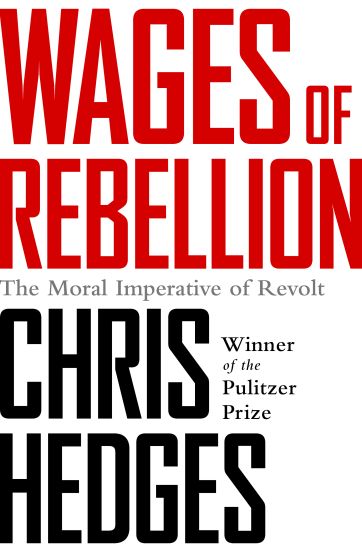
Revolutions come in waves and cycles. We are again riding the crest of a revolutionary epic, much like 1848 or 1917, from the Arab Spring to movements against austerity in Greece to the Occupy movement. In Wages of Rebellion , Chris Hedges- who has chronicled the malaise and sickness of a society in terminal moral decline in his books Empire of Illusion and Death of the Liberal Class - investigates what social and psychological factors cause revolution, rebellion, and resistance. Drawing on an ambitious overview of prominent philosophers, historians, and literary figures he shows not only the harbingers of a coming crisis but also the nascent seeds of rebellion. Hedges' message is clear: popular uprisings in the United States and around the world are inevitable in the face of environmental destruction and wealth polarization.Focusing on the stories of rebels from around the world and throughout history, Hedges investigates what it takes to be a rebel in modern times. Utilizing the work of Reinhold Niebuhr, Hedges describes the motivation that guides the actions of rebels as sublime madness" , the state of passion that causes the rebel to engage in an unavailing fight against overwhelmingly powerful and oppressive forces. For Hedges, resistance is carried out not for its success, but as a moral imperative that affirms life. Those who rise up against the odds will be those endowed with this sublime madness."From South African activists who dedicated their lives to ending apartheid, to contemporary anti-fracking protests in Alberta, Canada, to whistleblowers in pursuit of transparency, Wages of Rebellion shows the cost of a life committed to speaking the truth and demanding justice. Hedges has penned an indispensable guide to rebellion.
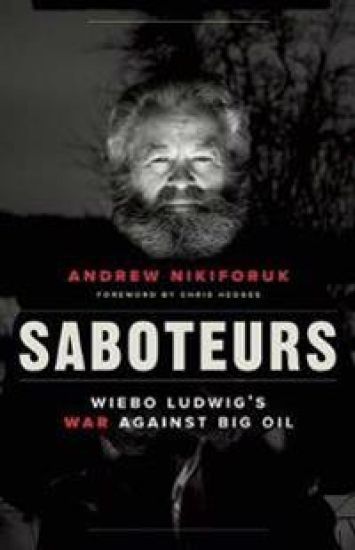
At Trickle Creek in northern Alberta, Wiebo Ludwig thought he'd buffered his tiny religious community from civilization, but in 1990 civilization came calling. A Calgary oil company proposed to drill directly in view of the farm's communal dining room. Ludwig wrote letters, petitioned, forced public hearings, and discovered the provincial regulator cared little about landowners. After the oil company accidentally vented raw sour gas, Ludwig's wife miscarried. Hostilities against the oil company began with nails on the roads, sabotaged well sites, and road blockades. They culminated in death threats, shootings, and bombings. The RCMP recruited a Ludwig acolyte as an informant, and in an attempt to establish the man's credibility the police themselves blew up an equipment shack. Ludwig was charged with 19 counts of mischief, vandalism, and possession of explosives, and he was later convicted on five charges. This taut work of nonfiction, first published in 2002, won both a Governor General's Award and the Arthur Ellis Award for True Crime Writing. With the escalation of oil and gas extraction over the past decade, the unsettling questions Saboteurs raises about individual rights, corporate power, police methods, and government accountability are more relevant than ever.
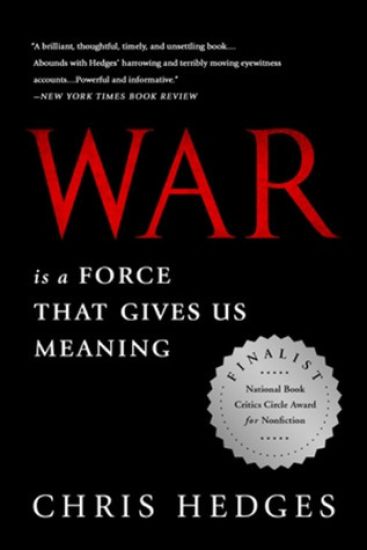
As a veteran war correspondent, Chris Hedges has survived ambushes in Central America, imprisonment in Sudan, and a beating by Saudi military police. He has seen children murdered for sport in Gaza and petty thugs elevated into war heroes in the Balkans. Hedges, who is also a former divinity student, has seen war at its worst and knows too well that to those who pass through it, war can be exhilarating and even addictive: It gives us purpose, meaning, a reason for living."Drawing on his own experience and on the literature of combat from Homer to Michael Herr, Hedges shows how war seduces not just those on the front lines but entire societies,corrupting politics, destroying culture, and perverting basic human desires. Mixing hard-nosed realism with profound moral and philosophical insight, War Is a Force that Gives Us Meaning is a work of terrible power and redemptive clarity whose truths have never been more necessary.