

Kirjailija
Chris Mann
Kirjat ja teokset yhdessä paikassa: 16 kirjaa, julkaisuja vuosilta 1998-2021, suosituimpien joukossa World War II Secret Operations Handbook: The Resistance in German-Occupied Europe. Vertaile teosten hintoja ja tarkista saatavuus suomalaisista kirjakaupoista.
16 kirjaa
Kirjojen julkaisuhaarukka 1998-2021.

World War II Secret Operations Handbook: The Resistance in German-Occupied Europe
Stephen Hart; Chris Mann
Amber Books
2021
nidottu
The World War II Secret Operations Handbook lets you in on the skills and tricks used by the British SOE (Special Operations Executive), the US OSS (Office of Strategic Services), the French Maquis, and other special forces in combat in Europe, Africa and Asia between 1939 and 1945. Learn how to rig up a makeshift radio, how to pass undetected in enemy territory, how to live off the land and make shelter, and how to work as a sniper. Learn how operatives blow up bridges, roads, railways and arms depots and how they work with the local resistance. Presented in a handy pocket-size format, the World War II Secret Operations Handbook takes the reader from arrival in enemy territory through survival, accomplishing a mission and finally ensuring sound exit strategies. The book also includes a number of sidebars on real life secret operations from World War II. With more than 120 black-&-white artworks and with easy-to-follow text, the World War II Secret Operations Handbook is an excellent guide to the techniques and skills used by the men and women of the special forces, techniques that are as relevant today as they were in 1945.

Featherwing & Hackle Flies for Salmon & Steelhead: A Comprehensive Guide for Anglers and Flytyers
Chris Mann
STACKPOLE BOOKS
2021
nidottu
The tradition of tying salmon flies with feathers is a very old one, recorded in Ancient Greece, but the Victorians instilled artistry into salmon fly tying with their elaborate built-wing flies using feathers from a variety of exotic birds. After a period in which featherwing flies were eclipsed by those made from animal hairs and man-made materials, the popularity of these versatile feathers is resurging. This international directory of old and modern featherwing salmon flies features dressings from North America and Europe. The origins of patterns, precise dressings, and superb color illustrations will inspire fly tyers to attain new heights of achievement. This book is companion to Shrimp & Spey Flies for Salmon and Steelhead and Hairwing & Tube Flies for Salmon and Steelhead.
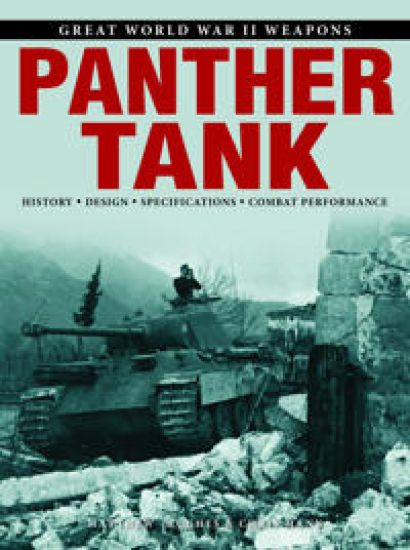
In the early years of World War II the German panzer divisions swept aside all Allied opposition as they swarmed through Poland and France in the Blitzkrieg campaigns. However, during the German invasion of the Soviet Union in July 1941, the advancing German tanks met the Soviet T-34, which could deflect any German tank weapon. A new tank was required that could fight the T-34 on equal terms – thus the Panther was born. By the time of the German surrender in 1945, more than 5500 Panthers had been built. The Panther Tank follows the Panther’s development and production, detailing not only its technical specifications but also its service at, among other battles, Kursk and in Normandy, in the words of the soldiers who fought in it. Specification tables provide manufacturing details, while comparative tables allow the reader to make at-a-glance assessments of how the Panther matched its rivals. Authoritatively written and featuring 70 photographs, fully annotated cutaway artworks, three- and four-view profile artworks and tables, Panther Tank tells the story of World War II’s finest all-round tank and will have a strong appeal to anyone interested in twentieth century military history.
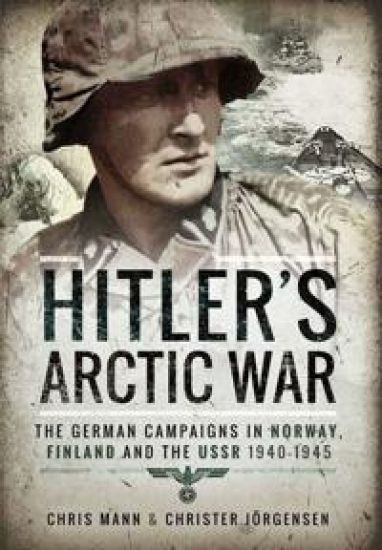
Hitler's Arctic War: The German Campaigns in Norway, Finland and the USSR 1940-1945
Christer Jorgensen; Chris Mann
PEN SWORD BOOKS LTD
2017
nidottu
'In the past the German General Staff had taken no interest in the military history of wars in the north and east of Europe. Nobody had ever taken into account the possibility that some day German divisions would have to fight and to winter in northern Karelia and on the Murmansk coast.' (Lieutenant-General Waldemar Erfurth, German Army). Despite this statement, the German Army's first campaign in the far north was a great success: between April and June 1940 German forces totalling less than 20,000 men seized Norway, a state of three million people, for minimal losses. Hitler's Arctic War is a study of the campaign waged by the Germans on the northern periphery of Europe between 1940 and 1945. As Hitler's Arctic War makes clear, the emphasis was on small-unit actions, with soldiers carrying everything they needed - food, ammunition and medical supplies - on their backs. The terrain placed limitations on the use of tanks and heavy artillery, while lack of airfields restricted the employment of aircraft.Hitler's Arctic War also includes a chapter on the campaign fought by Luftwaffe aircraft and Kriegsmarine ships and submarines against the Allied convoys supplying the Soviet Union with aid. However, Wehrmacht resources committed to Norway and Finland were ultimately an unnecessary drain on the German war effort. Hitler's Arctic War is a ground-breaking study of how war was waged in the far north and its effects on German strategy.

The Encyclopedia of the World's Special Forces
Mike Ryan; Chris Mann; Alexander Stilwell
Spellmount Publishers Ltd
2003
nidottu
Encyclopedia of the World's Special Forces.
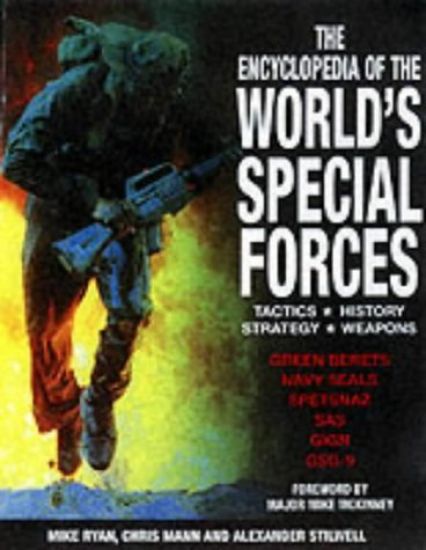
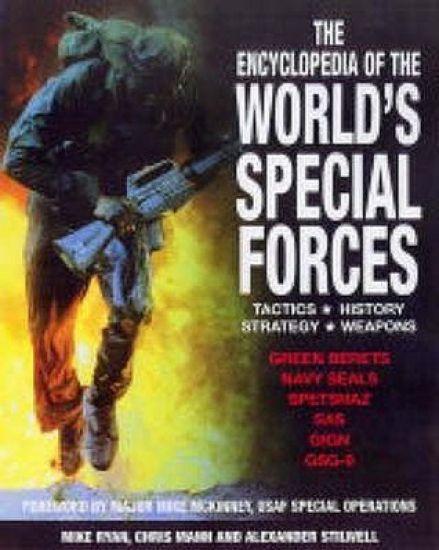
The Encyclopedia of the World's Special Forces
Mike Ryan; Chris Mann; Alexander Stilwell; Mike McKinney
Spellmount Publishers Ltd
2002
sidottu
This heavily illustrated informative book is the most comprehensive guide available to anyone interested in the special forces and it includes detailed listings and information on special force units and their tactics. - Special forces are trained small, elite teams of soldiers who perform operations deemed too risky or demanding for regular troops. - Special forces missions include counter-insurgency, hostage rescue, political assassination, sabotage, spying, covert surveillance and force ambush. - Most of these operations are performed deep behind hostile lines or within enemy strongholds. - With a battlefield effect out of all proportion to their numbers, special forces today are usually the first into combat and the last out.

Our heartlands are felt encounters with places that resonate in our memories. Such encounters, their people, plants and animals, contribute to the meaning we find and make in our lives. Chris Zithulele Mann's book depicts a wide variety of heartlands. His poems invite us to discover the numerous places of significance in our own lives. Exploring such heartlands helps to create and nurture our identities as individuals. This is Chris Mann's 7th volume of poetry, and he has also written three plays in verse.
Tank Warfare: Strategy and Tactics
Christer Jorgensen; Chris Mann
Spellmount Publishers Ltd
2001
nidottu
This military history provides the reader with a guide to tank warfare, including the development of tank tactics and strategy. Also included are details of great tank battles such as Cambrai, Kursk, Chinese Farm and the Gulf War.
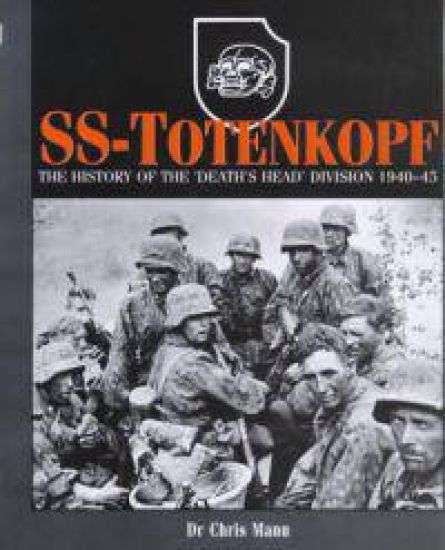
This military history examines one of the most famous of the Waffen-SS divisions, the "Death's Head". The author describes the formation of the division, its men and officers, as well as uniform and insignia, and provides a full combat record.
Internet Communication and Qualitative Research
Chris Mann; Fiona Stewart
SAGE Publications Inc
2000
sidottu
`Internet Communication and Qualitative Research is a trailblazing introduction to data sources that will come to the fore in the new millennium. Its cogent discussion of the techniques, ethics and methods of analysis of Internet data should be read by every qualitative researcher' - David Silverman, Goldsmiths College `The internet is exploding with possibilities for conducting social research. Mann and Stewart offer the first in-depth consideration of the prospects and potentials for doing qualitative research on-line. This wide ranging, clearly-written book is essential reading for researchers working at the cutting edge of qualitative methodology' - James A. Holstein, Marquette University `This is e-scholarship. The book is a transformative project which brings the best skills of the old print scholarship to the cyberworld. The authors are no mere theoreticians - but hands-on net-users, who have made the imaginative leap to the dot.com world, and who have mapped the way for net research and researchers. The authors are pioneers in the realm of digit-crit - opening the way with their critical evaluation of the digital media and net research. They profile the skills required by the online researcher and evaluate the context in which they are used - in relation to privacy, security, ethics and legal considerations. They also take up issues of power; they explore the social and political implications of the digital media, (with specific reference to gender) and the role of the online researcher. An absolute must for cybercitizens and an indispensable guide for students, researchers, and knowledge workers in the dot.com world' - Dale Spender `Mann and Stewart have prized open the mysteries of on-line qualitative research. For those new to this methodology the technology review demystifies; the social science research ethics issues are re-addressed with reference to the on-line situation; methods of conducting online focus groups and interviews, in particular, are detailed. The tone is both analytical and practical with a host of techniques suggested. I recommend this accessible text for all qualitative researchers, both academic and practitioner' - Rehan Ul-Haq, University of Birmingham Business School `Here is the clear, useful guide to the Internet research needed by all of us interested in on-line relationships and research. The authors address such issues as ethics, confidentiality, the theory and practice of on-line research, and on-line power relationships (which will be of concern in distance learning plans and programs). A very valuable book.' - Cheris Kramarae, Center for the Study of Women in Society, University of Oregon `Wonderful - "beyond the software" and into on-line interaction to aid and abet our qualitative research. This book shines the light. Mann and Stewart are to be congratulated in offering qualitative researchers effective and authentic ways forward through electronic communication. I'll use and recommend it!' - Gilly Salmon, Centre for Information and Innovation, Open University Business School `Opens to view a whole new avenue for social research. Internet communication is the wave of the future. Mann and Stewart capture its potential with insight, caution, and consummate procedural skill. Pathbreaking in its area of research methodology! Students and researchers will be very pleased with its clarity and usefulness' - Jaber F Gubrium, Department of Sociology, University of Florida `The authors have produced a timely and stimulating publication with handy explanations of Internet terms and qualitative research applications. This work should be made readily available not only for reference to academics and practitioners of marketing, but also to those with a lay interest in it' - Professor Len Tiu Wright, De Montfort University Internet Communication and Qualitative Research is the first textbook to examine the impact of Internet technology on qualitative research methods. Drawing on many pioneering studies using computer-mediated communication (CMC), the authors show how online researchers can employ Internet-based qualitative methods to collect rich, descriptive, contextually-situated data. They discuss the methodological, practical and theoretical considerations associated with such methods as: in-depth online interviewing, virtual focus groups, participant observation in virtual communities. This is a comprehensive and practical guide that: - reviews online research practice and basic Internet technology - looks in detail at the skills required by the online researcher - examines the ethical, confidentiality, security and legal issues involved in online research - considers the theoretical challenges surrounding data collected in a 'virtual venue' - addresses the social and cultural impact of researching online through a discussion of power, gender and identity issues in the virtual world. Internet Communication and Qualitative Research will be an indispensable guide for all students and researchers working in the digital age.
Internet Communication and Qualitative Research
Chris Mann; Fiona Stewart
SAGE Publications Inc
2000
nidottu
`Internet Communication and Qualitative Research is a trailblazing introduction to data sources that will come to the fore in the new millennium. Its cogent discussion of the techniques, ethics and methods of analysis of Internet data should be read by every qualitative researcher' - David Silverman, Goldsmiths College `The internet is exploding with possibilities for conducting social research. Mann and Stewart offer the first in-depth consideration of the prospects and potentials for doing qualitative research on-line. This wide ranging, clearly-written book is essential reading for researchers working at the cutting edge of qualitative methodology' - James A. Holstein, Marquette University `This is e-scholarship. The book is a transformative project which brings the best skills of the old print scholarship to the cyberworld. The authors are no mere theoreticians - but hands-on net-users, who have made the imaginative leap to the dot.com world, and who have mapped the way for net research and researchers. The authors are pioneers in the realm of digit-crit - opening the way with their critical evaluation of the digital media and net research. They profile the skills required by the online researcher and evaluate the context in which they are used - in relation to privacy, security, ethics and legal considerations. They also take up issues of power; they explore the social and political implications of the digital media, (with specific reference to gender) and the role of the online researcher. An absolute must for cybercitizens and an indispensable guide for students, researchers, and knowledge workers in the dot.com world' - Dale Spender `Mann and Stewart have prized open the mysteries of on-line qualitative research. For those new to this methodology the technology review demystifies; the social science research ethics issues are re-addressed with reference to the on-line situation; methods of conducting online focus groups and interviews, in particular, are detailed. The tone is both analytical and practical with a host of techniques suggested. I recommend this accessible text for all qualitative researchers, both academic and practitioner' - Rehan Ul-Haq, University of Birmingham Business School `Here is the clear, useful guide to the Internet research needed by all of us interested in on-line relationships and research. The authors address such issues as ethics, confidentiality, the theory and practice of on-line research, and on-line power relationships (which will be of concern in distance learning plans and programs). A very valuable book.' - Cheris Kramarae, Center for the Study of Women in Society, University of Oregon `Wonderful - "beyond the software" and into on-line interaction to aid and abet our qualitative research. This book shines the light. Mann and Stewart are to be congratulated in offering qualitative researchers effective and authentic ways forward through electronic communication. I'll use and recommend it!' - Gilly Salmon, Centre for Information and Innovation, Open University Business School `Opens to view a whole new avenue for social research. Internet communication is the wave of the future. Mann and Stewart capture its potential with insight, caution, and consummate procedural skill. Pathbreaking in its area of research methodology! Students and researchers will be very pleased with its clarity and usefulness' - Jaber F Gubrium, Department of Sociology, University of Florida `The authors have produced a timely and stimulating publication with handy explanations of Internet terms and qualitative research applications. This work should be made readily available not only for reference to academics and practitioners of marketing, but also to those with a lay interest in it' - Professor Len Tiu Wright, De Montfort University Internet Communication and Qualitative Research is the first textbook to examine the impact of Internet technology on qualitative research methods. Drawing on many pioneering studies using computer-mediated communication (CMC), the authors show how online researchers can employ Internet-based qualitative methods to collect rich, descriptive, contextually-situated data. They discuss the methodological, practical and theoretical considerations associated with such methods as: in-depth online interviewing, virtual focus groups, participant observation in virtual communities. This is a comprehensive and practical guide that: - reviews online research practice and basic Internet technology - looks in detail at the skills required by the online researcher - examines the ethical, confidentiality, security and legal issues involved in online research - considers the theoretical challenges surrounding data collected in a 'virtual venue' - addresses the social and cultural impact of researching online through a discussion of power, gender and identity issues in the virtual world. Internet Communication and Qualitative Research will be an indispensable guide for all students and researchers working in the digital age.
The third title in this new illustrated series gives a comprehensive examination of the Russians' most important tank, the T-34, which combined hitting power with mobility and was instrumental in the Germans' defeat on the Eastern Front.
This title provides a series of portraits, of people as individuals and in groups of individuals. The subjects of these portrait-poems are drawn from a variety of cultural and economic settings. They come from different rural and urban backgrounds, are of different age-groups and genders, and speak different languages. The title thus provides a glimpse of the astonishing diversity of the people who are South Africans.