Kirjojen hintavertailu. Mukana 12 390 323 kirjaa ja 12 kauppaa.

Kirjailija

Chris Phillipson

Kirjat ja teokset yhdessä paikassa: 12 kirjaa, julkaisuja vuosilta 1998-2025, suosituimpien joukossa Drugs, Ageing and Society. Vertaile teosten hintoja ja tarkista saatavuus suomalaisista kirjakaupoista.

12 kirjaa

Kirjojen julkaisuhaarukka 1998-2025.

Drugs, Ageing and Society

Drugs, Ageing and Society

Bruce Burns; Chris Phillipson

TAYLOR FRANCIS LTD
2025
nidottu
During the 1970s and 1980s prescription and over-the-counter drugs had come to play a major role in the health care of older people. Originally published in 1986, this book reviews the historical background to this development and explores its social and pharmacological implications. The main aim of the study was to provide a critical perspective on drug use together with a framework for developing effective prescribing policies. The authors do not, in developing their arguments, reject the enormous value of drugs in the treatment of many illnesses affecting older people; they do, however, criticise excessive as well as inappropriate prescribing. The intention was to provide some practical illustrations of how the harmful effects of drug use can be curtailed. This book was aimed, in particular, at workers in the health services, for example: doctors, health visitors, district nurses, pharmacists, the professions allied to medicine. However, it should also be of interest to other groups such as social workers, carers, support groups and older people themselves.
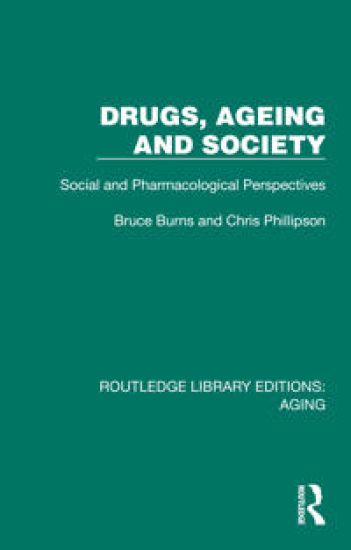
Drugs, Ageing and Society

Drugs, Ageing and Society

Bruce Burns; Chris Phillipson

TAYLOR FRANCIS LTD
2024
sidottu
During the 1970s and 1980s prescription and over-the-counter drugs had come to play a major role in the health care of older people. Originally published in 1986, this book reviews the historical background to this development and explores its social and pharmacological implications. The main aim of the study was to provide a critical perspective on drug use together with a framework for developing effective prescribing policies. The authors do not, in developing their arguments, reject the enormous value of drugs in the treatment of many illnesses affecting older people; they do, however, criticise excessive as well as inappropriate prescribing. The intention was to provide some practical illustrations of how the harmful effects of drug use can be curtailed. This book was aimed, in particular, at workers in the health services, for example: doctors, health visitors, district nurses, pharmacists, the professions allied to medicine. However, it should also be of interest to other groups such as social workers, carers, support groups and older people themselves.
Ageing in Place in Urban Environments

Ageing in Place in Urban Environments

Tine Buffel; Chris Phillipson

TAYLOR FRANCIS LTD
2023
sidottu
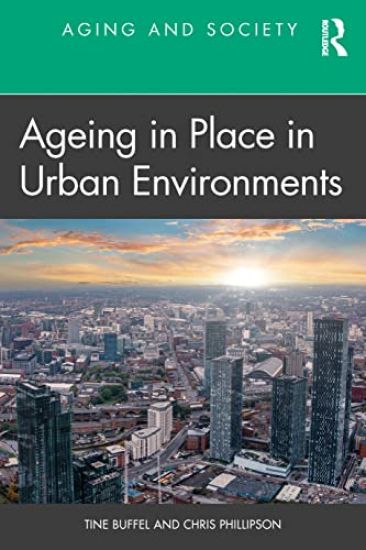
Ageing in Place in Urban Environments considers together two major trends influencing economic and social life: population ageing on the one side and urbanisation on the other.Both have been identified as dominant demographic trends of the twenty-first century. Cities are where the majority of people of all ages now live and where they will spend their old age. Nevertheless, cities are typically imagined and structured with a younger, working-age population in mind while older people are rarely incorporated into the mainstream of thinking and planning around urban environments. Cities can contribute to vulnerability arising from high levels of population turnover, environmental problems, gentrification, and reduced availability of affordable housing. However, they can also provide innovative forms of support and services essential to promoting the quality of life of older people. Policies in Europe have emphasised the role of the local environment in promoting “ageing in place”, a term used to describe the goal of helping people to remain in their own homes and communities for as long as they wish. However, while this has been the dominant approach, the places in which older people are ageing have often proved to be challenging environments. The book explores the forces behind these developments and how older people have responded.Drawing upon approaches from social gerontology, urban studies, geography, and sociology, this book will be essential reading for researchers, policymakers, and practitioners searching for innovative ways to improve the lives of older people living in urban environments.The Open Access version of this book, available at http://www.taylorfrancis.com, has been made available under a Creative Commons [Attribution-Non Commercial-No Derivatives (CC-BY-NC-ND)] 4.0 license.
Ageing in Place in Urban Environments

Ageing in Place in Urban Environments

Tine Buffel; Chris Phillipson

TAYLOR FRANCIS LTD
2023
nidottu
Ageing in Place in Urban Environments considers together two major trends influencing economic and social life: population ageing on the one side and urbanisation on the other.Both have been identified as dominant demographic trends of the twenty-first century. Cities are where the majority of people of all ages now live and where they will spend their old age. Nevertheless, cities are typically imagined and structured with a younger, working-age population in mind while older people are rarely incorporated into the mainstream of thinking and planning around urban environments. Cities can contribute to vulnerability arising from high levels of population turnover, environmental problems, gentrification, and reduced availability of affordable housing. However, they can also provide innovative forms of support and services essential to promoting the quality of life of older people. Policies in Europe have emphasised the role of the local environment in promoting “ageing in place”, a term used to describe the goal of helping people to remain in their own homes and communities for as long as they wish. However, while this has been the dominant approach, the places in which older people are ageing have often proved to be challenging environments. The book explores the forces behind these developments and how older people have responded.Drawing upon approaches from social gerontology, urban studies, geography, and sociology, this book will be essential reading for researchers, policymakers, and practitioners searching for innovative ways to improve the lives of older people living in urban environments.The Open Access version of this book, available at http://www.taylorfrancis.com, has been made available under a Creative Commons [Attribution-Non Commercial-No Derivatives (CC-BY-NC-ND)] 4.0 license.
COVID-19, Inequality and Older People

COVID-19, Inequality and Older People

Camilla Lewis; Chris Phillipson; Sophie Yarker; Luciana Lang

Bristol University Press
2023
nidottu
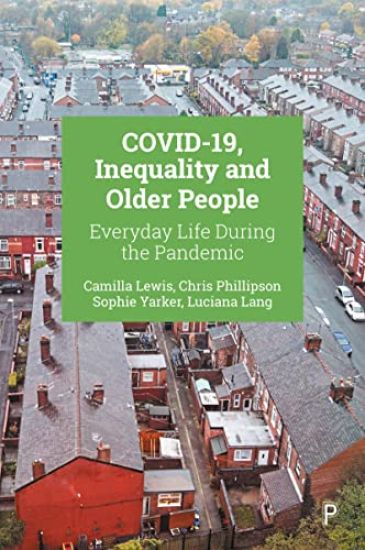
EPDF and EPUB available Open Access under CC-BY-NC-ND licence. This book provides new insights into the challenges facing older people in the context of the COVID-19 pandemic. It draws upon novel qualitative longitudinal research which recorded the experiences of a diverse group of people aged 50+ in Greater Manchester over a 12-month period during the pandemic. The book analyses their lived experiences and those of organisations working to support them, shedding light on the isolating effects of social distancing. Focusing on interviews with 21 organisations, as well as 102 people from four ethnic/identity groups, the authors argue that the pandemic exacerbated existing inequalities in the UK, disproportionately affecting low-income neighbourhoods and minority ethnic communities. The book outlines recommendations in relation to developing a ‘community-centred approach’ in responding to future variants of COVID-19, as well as making suggestions for how to create post-pandemic neighbourhoods.
Family practices in later life

Family practices in later life

Pat Chambers; Graham Allan; Chris Phillipson; Mo Ray

Policy Press
2009
nidottu
There is no shortage of political and moral commentary on family life. Frequently the underlying theme of these commentaries is the decline of contemporary family commitment, particularly when older people's family experiences are the focus. "Family Practices in Later Life" challenges many common stereotypes about the nature of family involvement as people age. The book explores diversity and change in the family relationships older people maintain, looking at how family relationships are constructed and organised in later life. It recognises that the emerging patterns are a consequence of the choices and decisions negotiated within family networks, emphasising older people's agency in the construction of their family practices. In exploring such themes as long-term marriage, sibling ties in later life and grandparenthood, the book highlights the continued significance of family connection and solidarity in later life, while recognizing that family relationships are inevitably modified over time as people's social and material circumstances alter. "Family Practices in Later Life" will be of interest to students, researchers and academics in the fields of social policy, family studies and social gerontology. It provides a valuable contribution to the developing field of critical social gerontology as well as to an understanding of family process.
Family practices in later life

Family practices in later life

Chambers Pat; Graham Allan; Chris Phillipson; Ray Mo

Policy Press
2009
sidottu
There is no shortage of political and moral commentary on family life. Frequently the underlying theme of these commentaries is the decline of contemporary family commitment, particularly when older people's family experiences are the focus. "Family Practices in Later Life" challenges many common stereotypes about the nature of family involvement as people age. The book explores diversity and change in the family relationships older people maintain, looking at how family relationships are constructed and organised in later life. It recognises that the emerging patterns are a consequence of the choices and decisions negotiated within family networks, emphasising older people's agency in the construction of their family practices. In exploring such themes as long-term marriage, sibling ties in later life and grandparenthood, the book highlights the continued significance of family connection and solidarity in later life, while recognizing that family relationships are inevitably modified over time as people's social and material circumstances alter. "Family Practices in Later Life" will be of interest to students, researchers and academics in the fields of social policy, family studies and social gerontology. It provides a valuable contribution to the developing field of critical social gerontology as well as to an understanding of family process.
Women in transition

Women in transition

Chris Phillipson; Nilufar Ahmed; Joanna Latimer

Policy Press
2003
nidottu
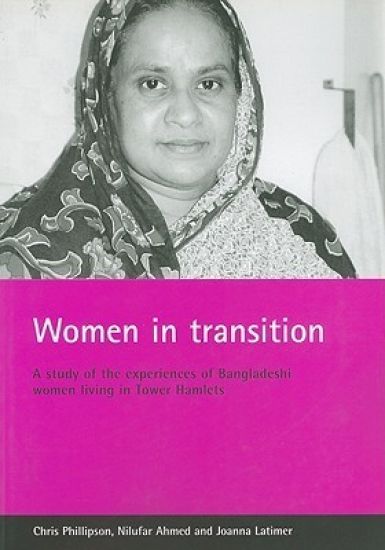
Drawing on interviews with over 100 first generation migrant women in the London borough of Tower Hamlets (home to the largest population of Bangladeshis in the UK) the report: · presents the first detailed study of this significant ethnic minority group; · identifies the pressures facing women as they juggle competing demands from younger and older generations; · addresses particular concerns such as the barriers to adopting English language within the community; · highlights the issues for those involved in service delivery; · demonstrates the range of issues to be considered when trying to access minority ethnic communities for the purpose of research. The report will make fascinating reading for those working in the field of minority ethnic research, where studies of this depth are still comparatively rare. It will also be of particular value to policy makers and those involved in the delivery of services, as well as academics, students and practitioners with an interest in minority ethnic groups, women, and problems of social exclusion more generally.
Family and Community Life of Older People

Family and Community Life of Older People

Miriam Bernard; Jim Ogg; Judith and Phillips; Chris Phillipson

Routledge
2000
sidottu
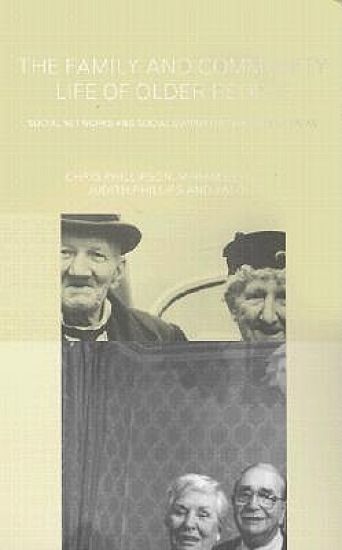
Family life has changed rapidly over te past fifty years and the number of people living longer increases year on year Family and Community Life of Older People revisits three areas (Bethnal Green in London, Wolverhampton in the Midlands and Woodford in Essex) which were the subject of classic studies in the late 1940s and 1950s and explores changes to the family and community lives of older people. The book examines issues such as:*changes in household composition*changes in the geographical proximity of kin and relatives*the extent and type of help provided by the family*contact and relationships with neighbours*relationships with friends*involvement in social and leisure activities*experiences of minority ethnic groups.These questions are explored through a unique set of data including census material, and survey data from interviews with over 600 older people. A key finding is that over the past 50 years we have moved from an old age experienced within the context of the family group to one shaped by personal communities in which friends may feature as significantly as immediate kin and relatives.Family and Community Life of Older People is a major contribution to the sociology of the family, of ageing, and of urban life and points up the social policy issues for an ageing society.
Family and Community Life of Older People

Family and Community Life of Older People

Miriam Bernard; Jim Ogg; Judith and Phillips; Chris Phillipson

Routledge
2000
nidottu
Family life has changed rapidly over te past fifty years and the number of people living longer increases year on year Family and Community Life of Older People revisits three areas (Bethnal Green in London, Wolverhampton in the Midlands and Woodford in Essex) which were the subject of classic studies in the late 1940s and 1950s and explores changes to the family and community lives of older people. The book examines issues such as:*changes in household composition*changes in the geographical proximity of kin and relatives*the extent and type of help provided by the family*contact and relationships with neighbours*relationships with friends*involvement in social and leisure activities*experiences of minority ethnic groups.These questions are explored through a unique set of data including census material, and survey data from interviews with over 600 older people. A key finding is that over the past 50 years we have moved from an old age experienced within the context of the family group to one shaped by personal communities in which friends may feature as significantly as immediate kin and relatives.Family and Community Life of Older People is a major contribution to the sociology of the family, of ageing, and of urban life and points up the social policy issues for an ageing society.
Reconstructing Old Age

Reconstructing Old Age

Chris Phillipson

SAGE Publications Ltd
1998
sidottu
In this timely and authoritative overview on social gerontology and social theory, Chris Phillipson outlines the changing contexts and experiences associated with later life as we move into a new century. The book critically reviews the different theoretical explanations which attempt to explain these changes. Phillipson shows how in late modernity changes to pensions, employment and retirement, and intergenerational relations, are placing doubt on the meaning of growing old. He suggests that later life is being reconstructed as a period of potential choice on the one hand, but also of risk and danger on the other. This book will be essential reading for students and academics in social gerontology, as well as for students and academics in sociology, social policy and related disciplines interested in the future of an ageing population and the future of social gerontology.
Reconstructing Old Age

Reconstructing Old Age

Chris Phillipson

SAGE Publications Ltd
1998
nidottu
In this timely and authoritative overview on social gerontology and social theory, Chris Phillipson outlines the changing contexts and experiences associated with later life as we move into a new century. The book critically reviews the different theoretical explanations which attempt to explain these changes. Phillipson shows how in late modernity changes to pensions, employment and retirement, and intergenerational relations, are placing doubt on the meaning of growing old. He suggests that later life is being reconstructed as a period of potential choice on the one hand, but also of risk and danger on the other. This book will be essential reading for students and academics in social gerontology, as well as for students and academics in sociology, social policy and related disciplines interested in the future of an ageing population and the future of social gerontology.