Kirjojen hintavertailu. Mukana 12 564 720 kirjaa ja 12 kauppaa.

Kirjailija

Chris Thornhill

Kirjat ja teokset yhdessä paikassa: 14 kirjaa, julkaisuja vuosilta 1999-2026, suosituimpien joukossa Public Law in a Hybrid State. Vertaile teosten hintoja ja tarkista saatavuus suomalaisista kirjakaupoista.

14 kirjaa

Kirjojen julkaisuhaarukka 1999-2026.

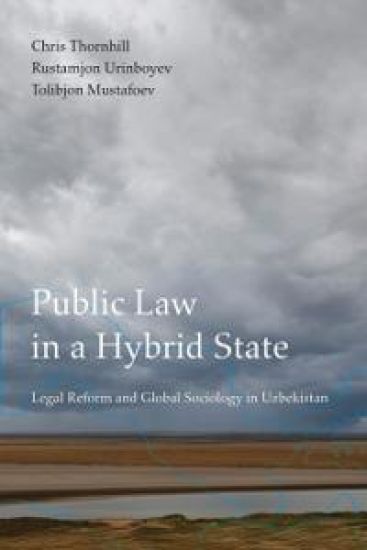
Public Law in a Hybrid State

Public Law in a Hybrid State

Chris Thornhill; Rustamjon Urinboyev; Tolibjon Mustafoev

University of California Press
2026
sidottu
Public Law in a Hybrid State presents a broad sociological analysis of legal developments in contemporary Uzbekistan, using this example to assess why states with some authoritarian features may promote legal reforms and why the modernization of legal institutions may generate benefits for governments. It examines how, alongside constitutional changes, reforms in administrative law play an important role in polities with hybrid constitutions, shaping the architecture of government and constructing procedures to manage exchanges between government and citizens. Placing these reform processes in the longer-term context of postimperial history, it also shows how changes to legal systems acquire distinctive importance in societies with recent experiences of decolonization, uncertain sovereignty, and unstable patterns of citizenship.
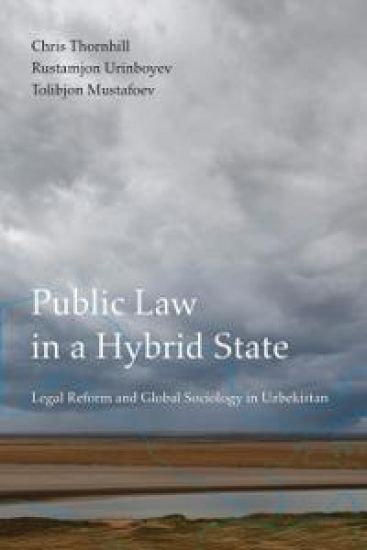
Public Law in a Hybrid State

Public Law in a Hybrid State

Chris Thornhill; Rustamjon Urinboyev; Tolibjon Mustafoev

University of California Press
2026
pokkari
Public Law in a Hybrid State presents a broad sociological analysis of legal developments in contemporary Uzbekistan, using this example to assess why states with some authoritarian features may promote legal reforms and why the modernization of legal institutions may generate benefits for governments. It examines how, alongside constitutional changes, reforms in administrative law play an important role in polities with hybrid constitutions, shaping the architecture of government and constructing procedures to manage exchanges between government and citizens. Placing these reform processes in the longer-term context of postimperial history, it also shows how changes to legal systems acquire distinctive importance in societies with recent experiences of decolonization, uncertain sovereignty, and unstable patterns of citizenship.
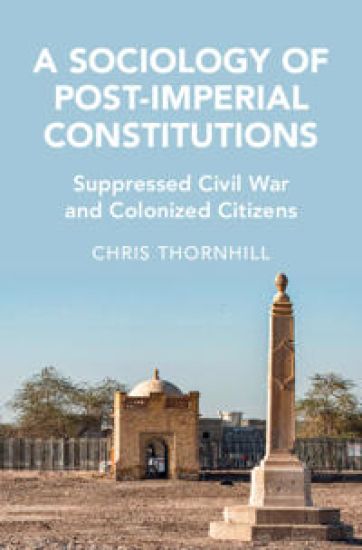
A Sociology of Post-Imperial Constitutions

A Sociology of Post-Imperial Constitutions

Chris Thornhill

Cambridge University Press
2024
sidottu
Covering the period from the eighteenth century to the present, A Sociology of Post-Imperial Constitutions combines global history and historical legal sociology to explain how democratic constitutions were created by imperialism and military policies related to imperialism. It challenges common views about the relation between democracy and peace, examining how, in different locations and different periods, the constitutional ordering of citizenship both reflected and perpetuated warfare. It also isolates the features of constitutional systems that have been successful in obviating military violence, separating democracy from its military origins. It discusses how the emergence of democratic government after 1945 depended on a dialectical transformation of the war/law nexus in constitutional rule. It then assesses ways in which, and the reasons why, many contemporary constitutions have begun to remilitarize their societies and to rearticulate military constructs of legitimacy.
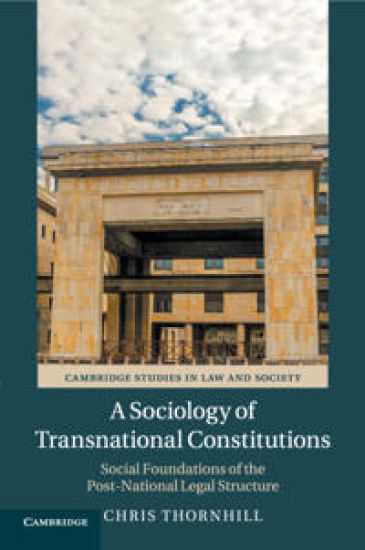
A Sociology of Transnational Constitutions

A Sociology of Transnational Constitutions

Chris Thornhill

Cambridge University Press
2019
pokkari
This volume focuses on the rise of transnational constitutional laws, primarily created by the interaction between national and international courts, and by the domestic transformation of international law. Through detailed analysis of patterns of institutional formation at key historical junctures in a number of national societies, it examines the social processes that have locked national states into an increasingly transnational constitutional order, and it explains how the growth of global constitutional norms has provided a stabilizing framework for the functions of state institutions. The book adopts a distinctive historical-sociological approach to these questions, examining the deep continuities between national constitutional law and contemporary models of global law. The volume makes an important contribution to the sociology of constitutional law, to the sociology of post-national legal processes, and to the sociology of human rights law. This title is also available as Open Access.
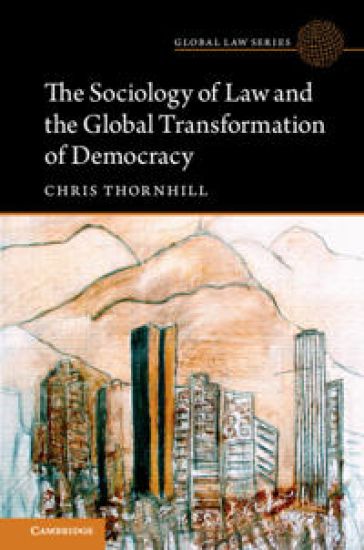
The Sociology of Law and the Global Transformation of Democracy
This book provides a new legal-sociological account of contemporary democracy. It is based on a revision of standard positions in democratic theory, reflecting the impact of global legal norms on the institutions of national states. Chris Thornhill argues that the establishment of fully democratic, fully inclusive governance systems in national societies was generally impeded by inner-societal structural factors, and that inclusive patterns of democratic citizenship only evolved on the foundation of global legal norms that were consolidated after 1945. He claims that this process can be best understood through a transposition of key insights of classical legal sociology onto the form of global society. Extensive analysis of select case studies in different regions illustrate these claims. Thornhill offers a sociological theory of global law to explain contemporary processes of democratic integration and institutional formation, and contemporary constructions of citizenship and political rights. This title is also available as Open Access.
The Sociology of Law and the Global Transformation of Democracy
This book provides a new legal-sociological account of contemporary democracy. It is based on a revision of standard positions in democratic theory, reflecting the impact of global legal norms on the institutions of national states. Chris Thornhill argues that the establishment of fully democratic, fully inclusive governance systems in national societies was generally impeded by inner-societal structural factors, and that inclusive patterns of democratic citizenship only evolved on the foundation of global legal norms that were consolidated after 1945. He claims that this process can be best understood through a transposition of key insights of classical legal sociology onto the form of global society. Extensive analysis of select case studies in different regions illustrate these claims. Thornhill offers a sociological theory of global law to explain contemporary processes of democratic integration and institutional formation, and contemporary constructions of citizenship and political rights. This title is also available as Open Access.
A Practical Introduction to Public Management

A Practical Introduction to Public Management

Chris Thornhill; Natasja Holtzhausen; Isioma Ile; Barry Hanyane; Lindiwe Qele; Enslin Van Rooyen; Lizel Lues; Daryl Newton; Sanjay Balkaran; Steve Madue

Oxford University Press Southern Africa
2015
nidottu
A practical introduction to Public Management will have a vocational approach; the text would be accessible and practice-based, whilst also embedding knowledge of relevant theories and principles that underpin the operational elements of the public sector profession. This book would be supportive to students grounding in the subject area both theoretically and practically, with the right balance across those elements. A practical introduction to Public Management would actively build skills and knowledge-base, and a real-life understanding, to prepare the student for progression through the undergraduate students, leading to employment in the public sector.
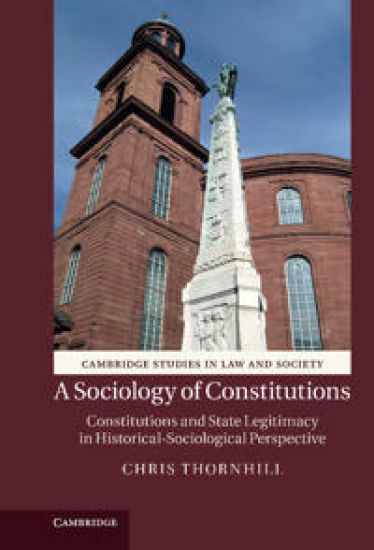
A Sociology of Constitutions

A Sociology of Constitutions

Chris Thornhill

Cambridge University Press
2011
sidottu
Using a methodology that both analyzes particular constitutional texts and theories and reconstructs their historical evolution, Chris Thornhill examines the social role and legitimating status of constitutions from the first quasi-constitutional documents of medieval Europe, through the classical period of revolutionary constitutionalism, to recent processes of constitutional transition. A Sociology of Constitutions explores the reasons why modern societies require constitutions and constitutional norms and presents a distinctive socio-normative analysis of the constitutional preconditions of political legitimacy.
German Political Philosophy

German Political Philosophy

Chris Thornhill

Routledge
2010
nidottu
This book combines philosophical, intellectual-historical and political-theoretical methodologies to provide a new synoptic reading of the history of German political philosophy. Incorporating chapters on the political ideas of Luther and Zwingli, on the politics of the early Enlightenment, on Idealism, on Historicism and Lukács, on early Twentieth-Century political theology, on the Frankfurt School, and on Habermas and Luhmann, the book sets out both a broad and a detailed discussion of German political reflection from the Reformation to the present. In doing so, it explains how the development of German political philosophy is marked by a continual concern with certain unresolved and recurrent problems. It claims that all the major positions address questions relating to the origin of law, that all seek to account for the relation between legal validity and metaphysical and theological superstructures, and that all are centred on the attempt to conceptualise and reconstruct the character of the legal subject.
German Political Philosophy

German Political Philosophy

Chris Thornhill

Routledge
2006
sidottu
This book combines philosophical, intellectual-historical and political-theoretical methodologies to provide a new synoptic reading of the history of German political philosophy. Incorporating chapters on the political ideas of Luther and Zwingli, on the politics of the early Enlightenment, on Idealism, on Historicism and Lukács, on early Twentieth-Century political theology, on the Frankfurt School, and on Habermas and Luhmann, the book sets out both a broad and a detailed discussion of German political reflection from the Reformation to the present. In doing so, it explains how the development of German political philosophy is marked by a continual concern with certain unresolved and recurrent problems. It claims that all the major positions address questions relating to the origin of law, that all seek to account for the relation between legal validity and metaphysical and theological superstructures, and that all are centred on the attempt to conceptualise and reconstruct the character of the legal subject.
Karl Jaspers

Karl Jaspers

Chris Thornhill

Routledge
2006
nidottu
This book sets out a new reading of the much-neglected philosophy of Karl Jaspers. By questioning the common perception of Jaspers either as a proponent of irrationalist cultural philosophy or as an early, peripheral disciple of Martin Heidegger, it re-establishes him as a central figure in modern European philosophy. Giving particular consideration to his position in epistemological, metaphysical and political debate, the author argues that Jaspers's work deserves renewed consideration in a number of important discussions, particularly in hermeneutics, anthropological reflections on religion, the critique of idealism, and debates on the end of metaphysics.
Karl Jaspers

Karl Jaspers

Chris Thornhill

Routledge
2002
sidottu
This book sets out a new reading of the much-neglected philosophy of Karl Jaspers. By questioning the common perception of Jaspers either as a proponent of irrationalist cultural philosophy or as an early, peripheral disciple of Martin Heidegger, it re-establishes him as a central figure in modern European philosophy. Giving particular consideration to his position in epistemological, metaphysical and political debate, the author argues that Jaspers's work deserves renewed consideration in a number of important discussions, particularly in hermeneutics, anthropological reflections on religion, the critique of idealism, and debates on the end of metaphysics.
Political Theory in Modern Germany

Political Theory in Modern Germany

Chris Thornhill

Polity Press
1999
sidottu
This book provides an accessible and comprehensive introduction to the major political thinkers of modern Germany. It includes chapters on the works of Max Weber, Carl Schmitt, Franz Neumann, Otto Kirchheimer, Jurgen Habermas and Niklas Luhmann. These works are examined in their social and historical contexts, ranging from the period of Bismarck to the present day. A clear picture is presented of the connections between individual theoretical positions and the general political conditions of modern Germany. Areas of political history covered in particular depth include nineteenth-century legal and parliamentary history, aspects of German liberalism, Weimar social democracy, political Catholicism, Adenauer and Erhard, Brandt's reforms and the Tendenzwende of the late 1970s. By closely linking intellectual and political history, this work examines how recent German political theory has developed as a set of varying responses to recurring aspects and problems of political life in modern Germany. At the same time, it addresses the philosophical and political implications of the works which it treats, and it critically examines how modern German political theory has contributed to broader attempts to theorize political legitimacy and politics itself. This book will be of interest to students of political theory, German studies and European political history.
Political Theory in Modern Germany

Political Theory in Modern Germany

Chris Thornhill

Polity Press
1999
nidottu
This book provides an accessible and comprehensive introduction to the major political thinkers of modern Germany. It includes chapters on the works of Max Weber, Carl Schmitt, Franz Neumann, Otto Kirchheimer, Jurgen Habermas and Niklas Luhmann. These works are examined in their social and historical contexts, ranging from the period of Bismarck to the present day. A clear picture is presented of the connections between individual theoretical positions and the general political conditions of modern Germany. Areas of political history covered in particular depth include nineteenth-century legal and parliamentary history, aspects of German liberalism, Weimar social democracy, political Catholicism, Adenauer and Erhard, Brandt's reforms and the Tendenzwende of the late 1970s. By closely linking intellectual and political history, this work examines how recent German political theory has developed as a set of varying responses to recurring aspects and problems of political life in modern Germany. At the same time, it addresses the philosophical and political implications of the works which it treats, and it critically examines how modern German political theory has contributed to broader attempts to theorize political legitimacy and politics itself. This book will be of interest to students of political theory, German studies and European political history.