Kirjojen hintavertailu. Mukana 12 231 917 kirjaa ja 12 kauppaa.

Kirjailija

Chris Ward

Kirjat ja teokset yhdessä paikassa: 75 kirjaa, julkaisuja vuosilta 1990-2026, suosituimpien joukossa Bermondsey Trifle. Vertaile teosten hintoja ja tarkista saatavuus suomalaisista kirjakaupoista.

75 kirjaa

Kirjojen julkaisuhaarukka 1990-2026.

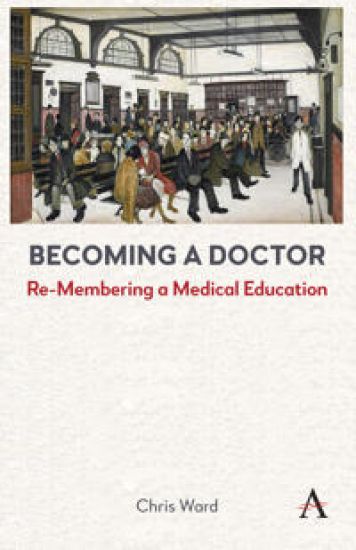
Becoming a Doctor

Becoming a Doctor

Chris Ward

ANTHEM PRESS
2026
sidottu
This book is a personal account of a medical education that began in 1966. Being a medical student and doctor was (and still is) a blend of absurdities, frustrations and joys. The curriculum was shot through with holes in the 1960s, and it still is. A hospital is no place to learn about how ill people live their lives.
Becoming a Doctor

Becoming a Doctor

Chris Ward

ANTHEM PRESS
2026
nidottu
This book is a personal account of a medical education that began in 1966. Being a medical student and doctor was (and still is) a blend of absurdities, frustrations and joys. The curriculum was shot through with holes in the 1960s, and it still is. A hospital is no place to learn about how ill people live their lives.
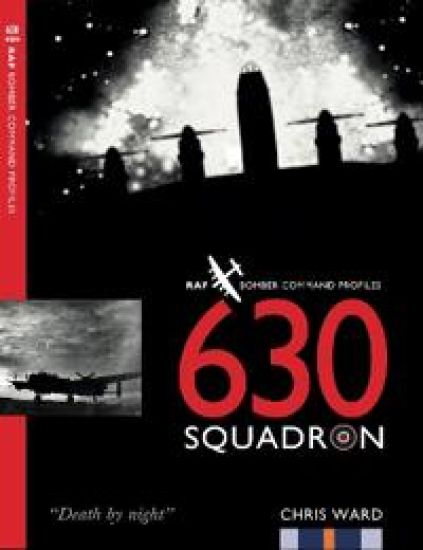
630 Squadron

630 Squadron

Chris Ward

Aviation Books Ltd.
2024
nidottu
During the autumn and early winter of 1943, a batch of new Lancaster squadrons was formed in Bomber Command and, having become the first resident unit of the new bomber station at East Kirkby in August, 57 Squadron donated its C Flight to become the nucleus of 630 Squadron in mid-November.The fledgling unit was operational in time to participate in the resumption of the Berlin offensive, over the winter of 1943/44. It was a tough time for the bulk of the crews, inexperienced on arriving from the conversion units, as their first taste of going to war would be a campaign against Germany's capital city and other distant targets.From April 1944 onwards, 630 Squadron took part in the pre-invasion raids on railway infrastructure and coastal defences in occupied France and Belgium. After D-Day, the unit was engaged in the campaigns against oil, V-Weapons and communications targets, while providing tactical support for the Allied ground forces.During the autumn, a second Ruhr offensive saw the squadron participate in the levelling of all of the major towns and cities in the enemy's industrial heartland and later at locations across the rest of Germany. 5 Group became Bomber Command's "canal busters", with a series of operations against the Dortmund-Ems and Mittelland Canals between November 1944 and March 1945, which put a stranglehold on one of Germany's most important communications systems.630 Squadron played its part in 5 Group's success and once the bombing war concluded in late April, took part in the humanitarian campaigns to feed the starving Dutch people still under occupation and to repatriate former prisoners of war from the Continent.In the late 1980s, the home of 630 Squadron, East Kirkby, became the Lincolnshire Aviation Heritage Centre, where the restored Lancaster NX611 is the centrepiece and proudly bears the codes of both 57 and 630 Squadrons.
75 (NZ) Squadron

75 (NZ) Squadron

Chris Newey; Chris Ward

Mention the War Ltd.
2023
pokkari
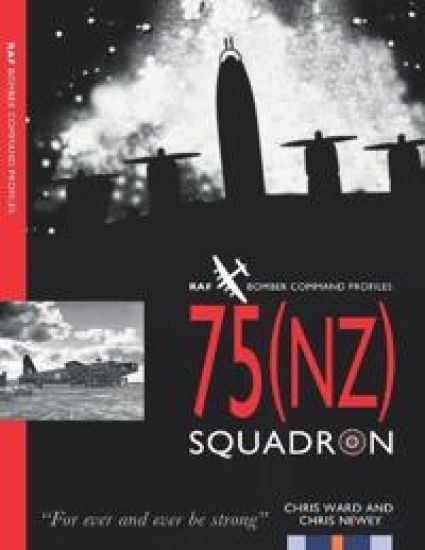
This expanded and updated edition of Chris Ward's Profile of 75(NZ) Squadron is the definitive and comprehensive wartime account of this well-known and highly-regarded Bomber Command outfit. Produced with the full support and assistance of squadron veterans, the Royal New Zealand Air Force Association and the New Zealand Bomber Command Association, it is a testament to the duty and sacrifice of all those who served with this famous unit throughout the Second World War. Chris Ward's detailed narrative, based on the squadron's Second World War Operations Record Book, is complemented by several hundred photographs, many published for the first time.In 1938, the New Zealand government had ordered thirty Vickers Wellington Mk1 bombers. RNZAF aircrew were despatched to train on the new aircraft at RAF Marham, and then take them to their new home in the Southern Hemisphere. When war broke out, the New Zealand Government placed the aircraft and their crews at the disposal of the RAF to help fight the new enemy. Already known as 'The New Zealand Squadron', the unit was given the number 75 on 4 April 1940, the previous unit so numbered having been disbanded. This meant that the original nucleus of personnel remained together as an operational unit of the RAF.On 4 April 1940, The New Zealand Squadron was renamed 75(NZ) Squadron. Although often referred to as an RNZAF unit, it was wholly equipped and controlled by the RAF until the end of the conflict. It was a key component of No. 3 Group, Bomber Command, and was based initially at RAF Feltwell, then RAF Mildenhall, RAF Newmarket and RAF Mepal, in Cambridgeshire. The unit saw action over France, Norway, Belgium, Italy, Sweden and Germany, distinguishing itself in the process.The squadron operated with a strength of three Flights after receiving Short Stirling bombers. In line with the rest of No. 3 Group, the squadron re-equipped with the Avro Lancaster in 1944, the type seeing the unit through to August 1945. 75(NZ) Sqn operated against the Germans from 1940 to VE Day, flying more sorties than any other allied heavy bomber squadron, suffering the second highest number of casualties. A Victoria Cross was awarded to Sgt J A Ward for climbing out onto the wing of his Wellington on an operation over Europe, in an attempt to put out an engine fire. Although badly damaged by enemy fighters' cannon shells, the aircraft managed to return to its base.
49 Squadron

49 Squadron

Chris Ward

Aviation Books Ltd.
2023
pokkari
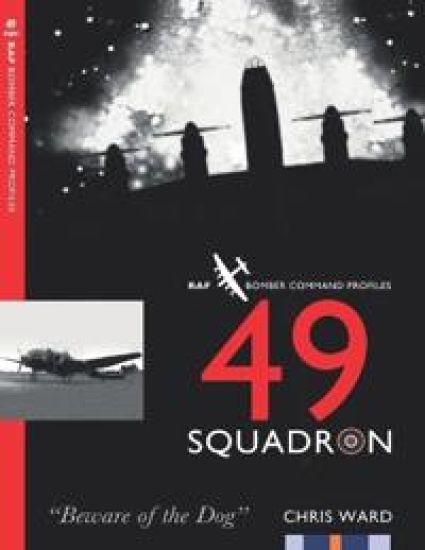
Chris Ward's Bomber Command Squadron Profiles series continues with this volume, focussing on 49 Squadron. Lavishly illustrated and with comprehensive operational details, this is a 'must read' for anyone interested in the wartime history of the squadron and its personnel. 49 Squadron was one of six front-line Hampden units serving with 5 Group at the outbreak of war. It was in action against the enemy on the day that war was declared, and apart from a brief spell on attachment to Coastal Command between the 26th of January and 19th of March 1940, spent its entire career in Bomber Command operating under the banner of 5 Group. Operations during the first two years and nine months of WWII were carried out in the trusty but increasingly obsolete twin-engine Hampden, a type which rendered magnificent service and in which 49 Squadron crews took part in the first mining operations in April 1940, the first strategic bombing operations over Germany in May and the attacks on invasion barges assembling in ports along the occupied coast as the Battle of Britain drew to a close in the late summer and autumn. At the limit of its range, the Hampden took 49 squadron crews to Berlin on many occasions, often arriving back over England flying on little more than fumes. The squadron took part in the infamous "Channel Dash" episode on the 12th of February 1942, during which the German fleet escaped from its long-time lodgings at Brest and passed under the noses of the British defences, through the English Channel and on to German ports. A massive daylight commitment of aircraft by Bomber and Coastal Commands and the Fleet Air Arm failed to halt the vessels' progress and four 49 Squadron Hampdens were among fifteen aircraft lost. The great hope was the Avro Manchester, the type intended to replace the Hampden, but its engine design was fatally flawed and the type was approaching the end of its brief operational career by the time that 49 Squadron converted in the early summer of 1942. It was not a happy two months of operations, which included the three "Thousand Bomber Raids on Cologne, Essen and Bremen, the last-mentioned bringing down the curtain on the Manchester's ill-fated career. Thereafter, 49 Squadron went to war in Lancasters and played a major role in the campaigns of 1943 against the Ruhr, Hamburg and Berlin, the last mentioned continuing until the spring of 1944. 5 Group gained independence from Bomber Command's main force in April 1944 and remained at the forefront of operations. pre-invasion against railways and coastal defences and post-invasion in tactical support of ground forces and in on-going campaigns against railways, V-Weapons and oil. The squadron suffered its heaviest loss on Midsummer's Night 1944, when losing six crews, including that of its commanding officer, in an attack on a synthetic oil refinery at Wesseling near Cologne. From late summer onwards, the squadron was involved in a second Ruhr campaign and in 1945 took part in frequent attacks on the Dortmund-Ems and Mittelland canals, which resulted in their destruction. 49 Squadron sustained consistently fewer casualties than most squadrons and set an example of excellence that few other squadrons matched and, certainly, none surpassed.
102 (Ceylon) Squadron

102 (Ceylon) Squadron

Chris Ward

Aviation Books Ltd.
2022
pokkari
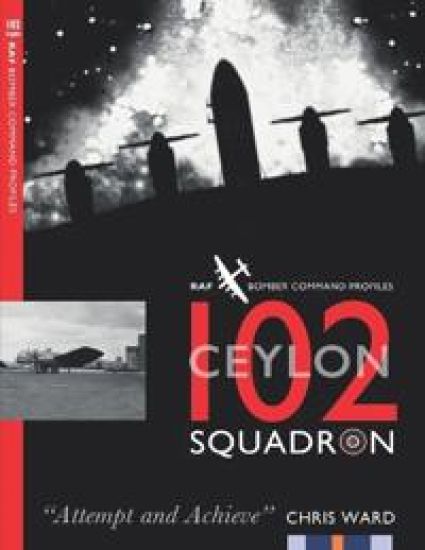
102 (Ceylon) Squadron was a mainstay of 4 Group from the outbreak of war to the end of hostilities, operating for the first time on the day after war was declared. 4 Group was equipped with the twin-engine Armstrong Whitworth Whitley, a slow but immensely reliable aircraft capable of remaining aloft for more than twelve hours. The Whitley was employed initially in a pioneering role to deliver propaganda leaflets to populations as far away as Poland, Czechoslovakia, and Austria. Such sorties exposed the crews to extremes of cold in unheated aircraft but taught them also how to navigate over a blacked-out Europe at night at a time when the rest of Bomber Command was trained only for daylight operations. The squadron was attached to 18 Group of Coastal Command for a short period during the autumn of 1940 and undertook convoy protection duties. It was during this period that P/O Leonard Cheshire joined the squadron to begin an illustrious operational career that would see him progress through the ranks to command 76 Squadron and, later, the famous 617 Squadron (Dambusters), and to earn the award of a Victoria Cross. A contemporary of Cheshire was P/O Henry "Dinghy" Young, who would be selected as a flight commander under W/C Guy Gibson for Operation Chastise, the epic attack on the Ruhr Dams, from which he would fail to return. At the end of 1941 the squadron converted to the four-engine Handley Page Halifax, an aircraft with a troubled gestation period, which saw it withdrawn from operations for modifications on a number of occasions. The type was not suited to retrospective modifications, and this meant that 4 Group squadrons were constantly exchanging one variant for another. The Mk II/V Halifax underwent many design changes in an attempt to improve its performance and shed its questionable reputation. However it saw 102 Squadron through the campaigns of 1943 against the Ruhr, Hamburg and Berlin, the last-mentioned extending through the winter of 1943/44. Late in 1943, 4 Group began to re-equip with the much-improved Hercules-powered Mk III Halifax. It would be some time before the type reached 102 (Ceylon) Squadron. At the time, the squadron was among those operating the Merlin-powered variants which, following the disaster of Leipzig in February 1944, was withdrawn from operations over Germany. Finally, in May 1944, the squadron returned to the forefront of operations with Mk IIIs and later Mk IVs. In the autumn of 1944, the squadron was among a number from 42 Base employed to ferry petrol to Europe to fuel the advance into Germany. During the course of its wartime career, the squadron suffered the third highest operational losses in Bomber Command, the highest losses in 4 Group and the highest Whitley losses. At the war's end 102 (Ceylon) Squadron was transferred to the newly formed Transport Command.
619 Squadron

619 Squadron

Chris Ward

Aviation Books Ltd.
2021
pokkari
619 Squadron came into existence when Bomber Command was expanding during the spring of 1943, its high number, like that of the famous 617 Squadron, reflecting the fact that it was not a reforming unit, but was brand new with no history behind it. Like some other squadrons created within Bomber Command at this time, and later, in the autumn of 1943, it would not be awarded an authorised crest and motto during its relatively brief period of service, arriving on the operational scene as it did with just two years of conflict left. The squadron was formed at Woodhall Spa in April 1943 under the banner of 5 Group, and it would serve as a standard "squadron of the line", beginning operations in June 1943, during the most intense weeks of the five-month-long Ruhr offensive. From that point on, the squadron took part in all the main bombing campaigns, including the devastating four-raid series against Hamburg under Operation Gomorrah at the end of July. The squadron then participated in attacks against Italy, Peenem nde and the start of the Berlin offensive in August. Autumn saw the crippling attacks on Hannover, Mannheim and Kassel in September and October, followed by the main Winter Offensive from November 1943 to the end of March 1944, including the sixteen further raids on Berlin. At the start of 1944, the squadron moved to Dunholme Lodge, from where it participated in the Transportation Plan and other pre- and post-invasion campaigns, including those against oil refineries, railways and flying-bomb storage and launching sites along with tactical support for the ground forces. The squadron played a full part in the second Ruhr offensive from October 1944, during which period the Command bludgeoned its way across Germany delivering the heaviest blows of the war against its industrial and communications systems. The squadron took up residence at Strubby towards the end of 1944 and remained there until the end of hostilities. 619 Squadron ended the war with a fine record of service, having made a telling contribution to Bomber Command's part in the ultimate victory. Chris Ward's Bomber Command Squadron Profiles series continues with a comprehensively-illustrated, in-depth operational history of this fine unit.
Crossroads

Crossroads

Chris Ward

Fulton Books
2021
pokkari
Reader, what an exciting opportunity you will have to unravel the mind of the two main characters Kane and Xavier as you follow these main characters who both struggle with life lessons and growing up in the inner city project life. As things build to a climax in these young characters' lives, both struggle with their versions of morality and what's real. Throughout the story, reader, you too, of course, will be able to relate to certain situations that the characters are faced with throughout their different paths to the crossroads. That's right-the Crossroads, the same place in time that the most important paths are chosen. However, in the case of these characters, every decision, every word, and every thought affects the other character's path to the Crossroads. Reader, brace yourself for the first of a two-part series of an exhilarating, mysterious, exciting, and thrilling story of two paths to one destination. Prepare for twists, turns, and betrayal which will captivate your attention. I hope you will not just read but relate to the transparency of the characters and the deep connection to their own realities as the series continues. Thank you.