Kirjojen hintavertailu. Mukana 12 390 323 kirjaa ja 12 kauppaa.

Kirjailija

Chris Wells

Kirjat ja teokset yhdessä paikassa: 10 kirjaa, julkaisuja vuosilta 2010-2022, suosituimpien joukossa Battleground. Vertaile teosten hintoja ja tarkista saatavuus suomalaisista kirjakaupoista.

10 kirjaa

Kirjojen julkaisuhaarukka 2010-2022.

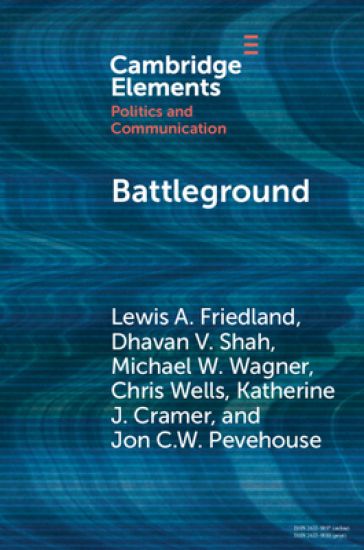
Battleground

Battleground

Lewis A. Friedland; Dhavan V. Shah; Michael W. Wagner; Katherine J. Cramer; Chris Wells; Jon Pevehouse

Cambridge University Press
2022
pokkari
Battleground models Wisconsin's contentious political communication ecology: the way that politics, social life, and communication intersect and create conditions of polarization and democratic decline. Drawing from 10 years of interviews, news and social media content, and state-wide surveys, we combine qualitative and computational analysis with time-series and multi-level modeling to study this hybrid communication system – an approach that yields unique insights about nationalization, social structure, conventional discourses, and the lifeworld. We explore these concepts through case studies of immigration, healthcare, and economic development, concluding that despite nationalization, distinct state-level effects vary by issue as partisan actors exert their discursive power.

Fitness on Foot

Fitness on Foot

Eldin Onsgard; Chris Wells; Eystein Enoksen

Total Health Publications
2020
pokkari
If you like to run and. want to know more about how to do it better - Read this book If you want you want to walk for fitness--Read this book if you want to run faster - -Read this book if you want to have more fun --Read this book Whether walking, jogging, running marathons, sprinting or orienteering--this book not only gives you the "hows" but also the "whys" as to how to do it better and how your body can makes positive adjustments to your exercise program.
QM2

QM2

Chris Frame; Rachelle Cross; Stephen M. Payne; Chris Wells

The History Press Ltd
2017
nidottu
By the 1970s it looked as if QE2 would be the last of the great transatlantic ocean liners. However, over three decades later the world watched in awe as Queen Mary 2, the largest, longest, grandest and most expensive ocean liner ever to be constructed, set sail on her maiden voyage in 2004.With 14 decks and beautiful lounges, dining rooms and a ballroom, QM2 evokes the glamour of the golden age of ocean travel. QM2: A Photographic Journey allows the reader to experience this unique vessel from the comfort of their own home, with numerous photographs of each of QM2’s public rooms as well as stunning exterior shots and behind the scenes access.This revised edition has been extensively updated to reflect the 2016 refit, with many new photographs from around the ship.
Queen Elizabeth

Queen Elizabeth

Chris Frame; Rachelle Cross; Chris Wells; Peter Shanks

The History Press Ltd
2015
nidottu
Queen Elizabeth: A Photographic Journey allows the reader to travel aboard Cunard’s newest ship, the second largest ship to carry the Cunard colours. The ultimate in luxury cruising waits aboard Queen Elizabeth. From the three-storey Royal Court Theatre, complete with box seating, to the opulence of the Queens Room, the authors have captured the interior elegance of Queen Elizabeth with never-before-published images. Explore the behind-the-scenes areas, with a tour of the Engine Room, Stores and the Bridge, before returning to the passenger areas to discover bars, lounges, restaurants and cabins. This stunning volume is a must-have whether you’re a seasoned Cunard passenger, or simply an armchair traveller. Written by two enthusiastic Cunard fans, travellers and historians, this book is beautifully illustrated with over 200 colour photographs and includes a foreword by Peter Shanks, former president of the Cunard Line, thoughts from Commodore Rynd on the ship’s fifth anniversary and an afterword by Captain Chris Wells, Queen Elizabeth’s First Master. This is Chris Frame and Rachelle Cross’ sixth Cunard book and the fourth in their Journey series.
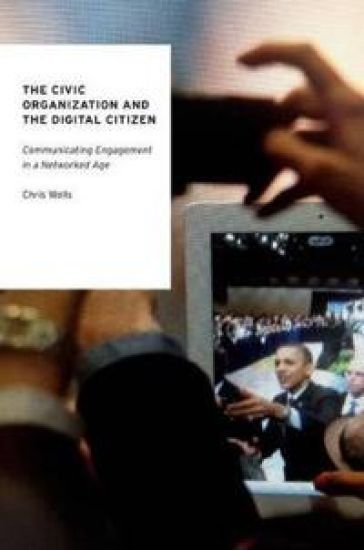
The Civic Organization and the Digital Citizen

The Civic Organization and the Digital Citizen

Chris Wells

Oxford University Press Inc
2015
nidottu
The powerful potential of digital media to engage citizens in political actions has now crossed our news screens many times. But scholarly focus has tended to be on "networked," anti-institutional forms of collective action, to the neglect of advocacy and service organizations. This book investigates the changing fortunes of the citizen-civil society relationship by exploring how social changes and innovations in communication technology are transforming the information expectations and preferences of many citizens, especially young citizens. In doing so, it is the first work to bring together theories of civic identity change with research on civic organizations. Specifically, it argues that a shift in "information styles" may help to explain the disjuncture felt by many young people when it comes to institutional participation and politics. The book theorizes two paradigms of information style: a dutiful style, which was rooted in the society, communication system and citizen norms of the modern era, and an actualizing style, which constitutes the set of information practices and expectations of the young citizens of late modernity for whom interactive digital media are the norm. Hypothesizing that civil society institutions have difficulty adapting to the norms and practices of the actualizing information style, two empirical studies apply the dutiful/actualizing framework to innovative content analyses of organizations' online communications-on their websites, and through Facebook. Results demonstrate that with intriguing exceptions, most major civil society organizations use digital media more in line with dutiful information norms than actualizing ones: they tend to broadcast strategic messages to an audience of receivers, rather than encouraging participation or exchange among an active set of participants. The book concludes with a discussion of the tensions inherent in bureaucratic organizations trying to adapt to an actualizing information style, and recommendations for how they may more successfully do so.
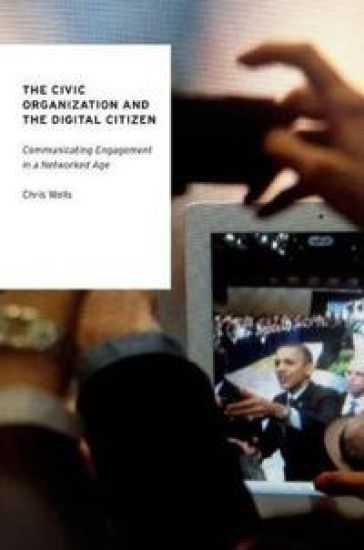
The Civic Organization and the Digital Citizen

The Civic Organization and the Digital Citizen

Chris Wells

Oxford University Press Inc
2015
sidottu
The powerful potential of digital media to engage citizens in political actions has now crossed our news screens many times. But scholarly focus has tended to be on "networked," anti-institutional forms of collective action, to the neglect of advocacy and service organizations. This book investigates the changing fortunes of the citizen-civil society relationship by exploring how social changes and innovations in communication technology are transforming the information expectations and preferences of many citizens, especially young citizens. In doing so, it is the first work to bring together theories of civic identity change with research on civic organizations. Specifically, it argues that a shift in "information styles" may help to explain the disjuncture felt by many young people when it comes to institutional participation and politics. The book theorizes two paradigms of information style: a dutiful style, which was rooted in the society, communication system and citizen norms of the modern era, and an actualizing style, which constitutes the set of information practices and expectations of the young citizens of late modernity for whom interactive digital media are the norm. Hypothesizing that civil society institutions have difficulty adapting to the norms and practices of the actualizing information style, two empirical studies apply the dutiful/actualizing framework to innovative content analyses of organizations' online communications-on their websites, and through Facebook. Results demonstrate that with intriguing exceptions, most major civil society organizations use digital media more in line with dutiful information norms than actualizing ones: they tend to broadcast strategic messages to an audience of receivers, rather than encouraging participation or exchange among an active set of participants. The book concludes with a discussion of the tensions inherent in bureaucratic organizations trying to adapt to an actualizing information style, and recommendations for how they may more successfully do so.