Kirjojen hintavertailu. Mukana 12 595 353 kirjaa ja 12 kauppaa.

Kirjailija

Christa Dierksheide

Kirjat ja teokset yhdessä paikassa: 3 kirjaa, julkaisuja vuosilta 2014-2026, suosituimpien joukossa Jefferson's Wolf. Vertaile teosten hintoja ja tarkista saatavuus suomalaisista kirjakaupoista.

3 kirjaa

Kirjojen julkaisuhaarukka 2014-2026.

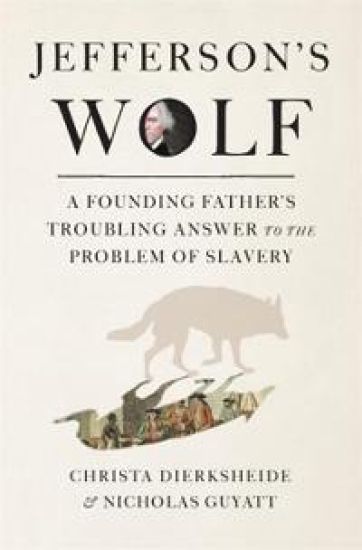
Jefferson's Wolf

Jefferson's Wolf

Christa Dierksheide; Nicholas Guyatt

HARVARD UNIVERSITY PRESS
2026
sidottu
A decisive reassessment of Thomas Jefferson's long-debated views on slavery, showing that his chief antislavery strategy was racial exclusion: the removal of emancipated Black people from the United States. Toward the end of his life, Thomas Jefferson made his most famous statement about American slavery: "We have the wolf by the ear, and we can neither hold him safely, nor let him go." Presenting abolition as both necessary and perilous, the phrase has long been relied upon to explain an apparent paradox: despite publicly opposing slavery for four decades, Jefferson had made no progress toward Black freedom in his political career by the time he died in 1826. Nor had he done so in his expansive household, where he enslaved more than 600 people, including Sally Hemings and the four children he fathered with her. Christa Dierksheide and Nicholas Guyatt argue that the key to understanding Jefferson's antislavery position is his commitment to racial exclusion. Jefferson believed that the principal reason to abolish slavery was the threat of a massive slave revolt, but he viewed the presence of free Black people in the new nation as no less dangerous. To avert racial violence, Jefferson argued, the gradual abolition of slavery had to be paired with Black exile. Even when challenged by white and Black contemporaries with more expansive views of American belonging, Jefferson held fast to his vision for a white republic. Neither an egalitarian antiracist nor a proslavery apologist, Jefferson became the most influential advocate for racial separation in the early United States. Charting the evolution of his thought across the nation's formative decades, Jefferson's Wolf is a surprising and provocative account of the problem of slavery in the founding era.
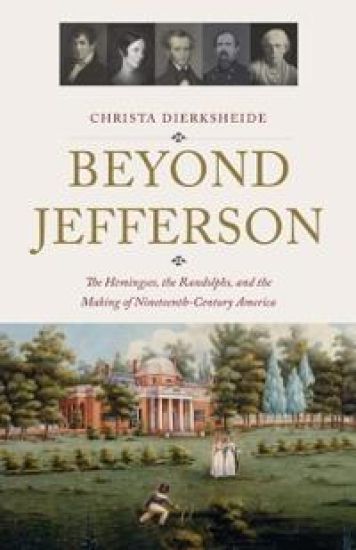
Beyond Jefferson

Beyond Jefferson

Christa Dierksheide

YALE UNIVERSITY PRESS
2024
sidottu
A global history of how Thomas Jefferson’s descendants navigated the legacy of the Declaration of Independence on both sides of the color line The Declaration of Independence identified two core principles—independence and equality—that defined the American Revolution and the nation forged in 1776. Jefferson believed that each new generation of Americans would have to look to the “experience of the present” rather than the “wisdom” of the past to interpret and apply these principles in new and progressive ways. Historian Christa Dierksheide examines the lives and experiences of a rising generation of Jefferson’s descendants, Black and white, illuminating how they redefined equality and independence in a world that was half a century removed from the American Revolution. The Hemingses and Randolphs moved beyond Jefferson and his eighteenth-century world, leveraging their own ideas and experiences in nineteenth-century Britain, China, Cuba, Mexico, and the American West to claim independence and equal rights in an imperial and slaveholding republic.
Amelioration and Empire

Amelioration and Empire

Christa Dierksheide

University of Virginia Press
2014
sidottu
Christa Dierksheide argues that “enlightened” slaveowners in the British Caribbean and the American South, neither backward reactionaries nor freedom-loving hypocrites, thought of themselves as modern, cosmopolitan men with a powerful alternative vision of progress in the Atlantic world. Instead of radical revolution and liberty, they believed that amelioration - defined by them as gradual progress through the mitigation of social or political evils such as slavery - was the best means of driving the development and expansion of New World societies.Interrogating amelioration as an intellectual concept among slaveowners, Dierksheide uses a transnational approach that focuses on provincial planters rather than metropolitan abolitionists, shedding new light on the practice of slavery in the Anglophone Atlantic world. She argues that amelioration - of slavery and provincial society more generally - was a dominant concept shared by enlightened planters who sought to “improve” slavery toward its abolition, as well as by those who sought to ameliorate the institution in order to expand the system. By illuminating the common ground shared between supposedly anti- and pro-slavery provincials, she provides a powerful alternative to the usual story of liberal progress in the plantation Americas. Amelioration, she demonstrates, went well beyond the master-slave relationship, underpinning Anglo-American imperial expansion throughout the Atlantic world.