Kirjojen hintavertailu. Mukana 12 595 353 kirjaa ja 12 kauppaa.

Kirjailija

Christian Joppke

Kirjat ja teokset yhdessä paikassa: 22 kirjaa, julkaisuja vuosilta 1993-2025, suosituimpien joukossa Veil. Vertaile teosten hintoja ja tarkista saatavuus suomalaisista kirjakaupoista.

22 kirjaa

Kirjojen julkaisuhaarukka 1993-2025.

Veil

Veil

Christian Joppke

Polity Press
2009
nidottu
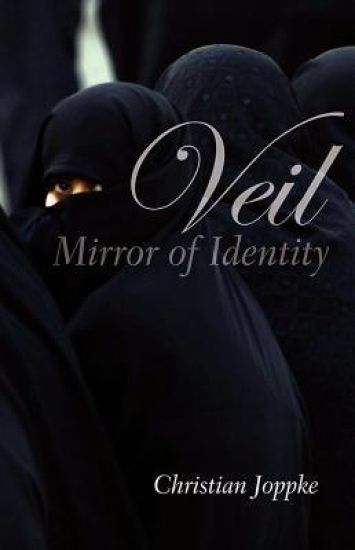
The Islamic headscarf has become the subject of heated legal and political debate. France and Germany have legislated against it, and even the UK, long a champion of multiculturalism, has recently restricted the veil proper. Ever since home-grown Islamic terrorism struck Europe, these debates have become even more prominent, impassioned and wide-ranging, with vital global importance. In this concise and beautifully written introduction to the politics of the veil in modern societies, Christian Joppke examines why a piece of clothing could have led to such controversy. He dissects the multiple meanings of the Islamic headscarf, and explores its links with the global rise of Islam, Muslim integration, and the retreat from multiculturalism. He argues that the headscarf functions as a mirror of identity, but one in which national and liberal identities overlap, exposing the paradox that while it may be an affront to liberal values, its suppression is equally illiberal. Veil: Mirror of Identity will illuminate, challenge and provoke readers, and will make compelling reading for scholars, students and general readers alike.
Veil

Veil

Christian Joppke

Polity Press
2009
sidottu
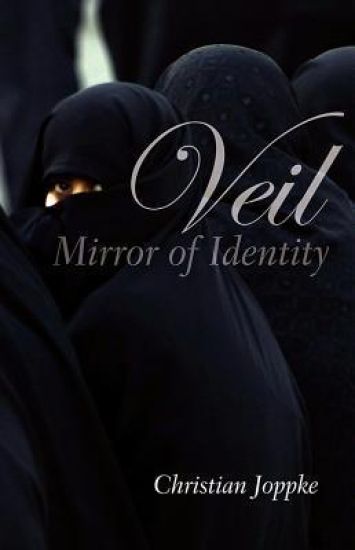
The Islamic headscarf has become the subject of heated legal and political debate. France and Germany have legislated against it, and even the UK, long a champion of multiculturalism, has recently restricted the veil proper. Ever since home-grown Islamic terrorism struck Europe, these debates have become even more prominent, impassioned and wide-ranging, with vital global importance. In this concise and beautifully written introduction to the politics of the veil in modern societies, Christian Joppke examines why a piece of clothing could have led to such controversy. He dissects the multiple meanings of the Islamic headscarf, and explores its links with the global rise of Islam, Muslim integration, and the retreat from multiculturalism. He argues that the headscarf functions as a mirror of identity, but one in which national and liberal identities overlap, exposing the paradox that while it may be an affront to liberal values, its suppression is equally illiberal. Veil: Mirror of Identity will illuminate, challenge and provoke readers, and will make compelling reading for scholars, students and general readers alike.
Political Neoliberalism

Political Neoliberalism

Christian Joppke

OXFORD UNIVERSITY PRESS INC
2025
sidottu
In recent years, the concept of neoliberalism has been discarded as shrill and overspent. In Political Neoliberalism, Christian Joppke argues that it is a useful lens to make sense of a wide range of political phenomena--those pertaining to the order and governing of advanced Western societies, but also rupture and conflict at the extreme right and left ends of the political spectrum. With respect to order, Joppke outlines an inventory of the political forms of neoliberalism that undermined the post-World War II liberal-democratic synthesis. This is complemented by a genealogy of neoliberalism, which matured from a movement associated with the right into a full-blown political order once the left, in terms of the Third Way, embraced its principles. In response to the center right-left consensus on market-conforming principles and policies, radical movements have emerged that signal rupture: right-wing populism, on the one hand, and left-wing identity politics, on the other. Despite their oppositionist posture and claims to be authentically democratic, Joppke argues that both are movements within rather than against neoliberalism. Their illiberal leanings make them unsuited to credibly recover democracy, the indispensable tool to rein in the imposition of market principles on most--if not all--aspects of society. In contrast to the optimism for a return of a public-good oriented state that was galvanized by the Covid-19 pandemic, Joppke's telling closes with an indictment of the ways pandemic public health management rejuvenated political neoliberalism through the expansion of technocratic authoritarianism and the increased power of big corporations, with no forces on the horizon capable of shifting political neoliberalism off-track. A shrewd and original analysis of what must be considered the predominant ideological project in our time, this is essential reading for anyone interested in neoliberalism and the persistent crisis of liberal democracy.
Political Neoliberalism

Political Neoliberalism

Christian Joppke

OXFORD UNIVERSITY PRESS INC
2025
nidottu
In recent years, the concept of neoliberalism has been discarded as shrill and overspent. In Political Neoliberalism, Christian Joppke argues that it is a useful lens to make sense of a wide range of political phenomena--those pertaining to the order and governing of advanced Western societies, but also rupture and conflict at the extreme right and left ends of the political spectrum. With respect to order, Joppke outlines an inventory of the political forms of neoliberalism that undermined the post-World War II liberal-democratic synthesis. This is complemented by a genealogy of neoliberalism, which matured from a movement associated with the right into a full-blown political order once the left, in terms of the Third Way, embraced its principles. In response to the center right-left consensus on market-conforming principles and policies, radical movements have emerged that signal rupture: right-wing populism, on the one hand, and left-wing identity politics, on the other. Despite their oppositionist posture and claims to be authentically democratic, Joppke argues that both are movements within rather than against neoliberalism. Their illiberal leanings make them unsuited to credibly recover democracy, the indispensable tool to rein in the imposition of market principles on most--if not all--aspects of society. In contrast to the optimism for a return of a public-good oriented state that was galvanized by the Covid-19 pandemic, Joppke's telling closes with an indictment of the ways pandemic public health management rejuvenated political neoliberalism through the expansion of technocratic authoritarianism and the increased power of big corporations, with no forces on the horizon capable of shifting political neoliberalism off-track. A shrewd and original analysis of what must be considered the predominant ideological project in our time, this is essential reading for anyone interested in neoliberalism and the persistent crisis of liberal democracy.
Neoliberal Nationalism

Neoliberal Nationalism

Christian Joppke

Cambridge University Press
2021
pokkari
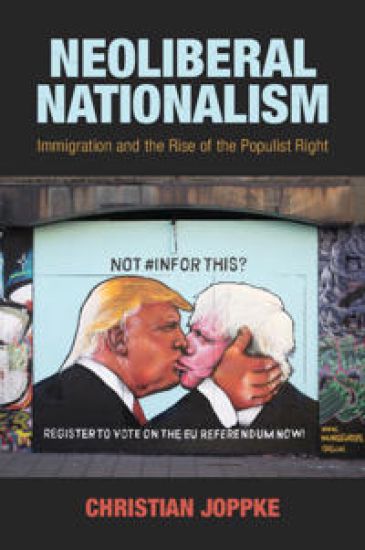
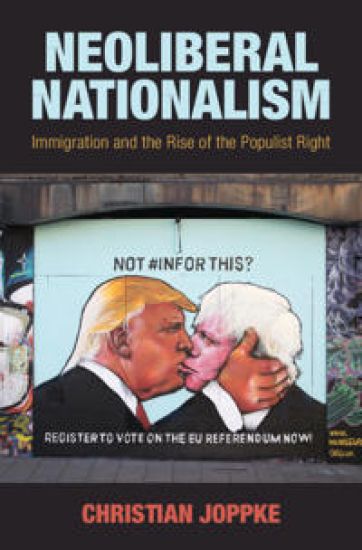
The Brexit and Trump shocks of 2016 mark a deep caesura in the history of liberal societies. It is no longer sufficient, if it ever was, to look at Western states' immigration and citizenship policies through the single lens of advancing liberalism. Instead, two additional forces need to be reckoned with: a new nationalism, but also the neoliberal restructuring of state and society in which it is generated. Joppke demonstrates that many of the new policies have their roots in neoliberalism rather than the new nationalism. Moreover, some of them, such as 'earned citizenship', are the product of neoliberalism and nationalism working in tandem, in terms of a neoliberal nationalism. The neoliberalism-nationalism nexus is complex, its elements sometimes opposing but sometimes complementing or even constituting one another. This topical book will appeal to students and scholars of populism, nationalism, and immigration and citizenship, across comparative politics, sociology and political theory.
Neoliberal Nationalism

Neoliberal Nationalism

Christian Joppke

Cambridge University Press
2021
sidottu
The Brexit and Trump shocks of 2016 mark a deep caesura in the history of liberal societies. It is no longer sufficient, if it ever was, to look at Western states' immigration and citizenship policies through the single lens of advancing liberalism. Instead, two additional forces need to be reckoned with: a new nationalism, but also the neoliberal restructuring of state and society in which it is generated. Joppke demonstrates that many of the new policies have their roots in neoliberalism rather than the new nationalism. Moreover, some of them, such as 'earned citizenship', are the product of neoliberalism and nationalism working in tandem, in terms of a neoliberal nationalism. The neoliberalism-nationalism nexus is complex, its elements sometimes opposing but sometimes complementing or even constituting one another. This topical book will appeal to students and scholars of populism, nationalism, and immigration and citizenship, across comparative politics, sociology and political theory.
Is Multiculturalism Dead?

Is Multiculturalism Dead?

Christian Joppke

Polity Press
2016
nidottu
Multiculturalism is controversial in the liberal state and has frequently been declared dead, even in countries that have never had a policy under that name. This authoritative book reviews the different meanings multiculturalism has acquired across theories, countries, and domains to evaluate the extent of its demise and the ways in which it lives on. Christian Joppke intriguingly argues that, beyond the ebb and flow of policy, liberal constitutionalism itself bears out a ?multiculturalism of the individual? that is not only alive but necessary in a liberal society. Through a provocative comparison of gay rights in the United States and the accommodation of Islam in Europe, he shows that liberal constitutionalism constrains majority power, requiring the state to be neutral about people?s values and ethical commitment. It cannot but give rise to multiple ways of life or cultures, as people are endowed with the freedom to embrace them. Accordingly, impulses toward multiculturalism persist, despite its political crisis, but with a new accent on the individual, rather than group, as the unit of integration. Tightly argued and clearly written, this book provides a judicious assessment of multiculturalism in the West and will be of interest to a broad readership across the social sciences and legal studies.
Is Multiculturalism Dead?

Is Multiculturalism Dead?

Christian Joppke

Polity Press
2016
sidottu
Multiculturalism is controversial in the liberal state and has frequently been declared dead, even in countries that have never had a policy under that name. This authoritative book reviews the different meanings multiculturalism has acquired across theories, countries, and domains to evaluate the extent of its demise and the ways in which it lives on. Christian Joppke intriguingly argues that, beyond the ebb and flow of policy, liberal constitutionalism itself bears out a ?multiculturalism of the individual? that is not only alive but necessary in a liberal society. Through a provocative comparison of gay rights in the United States and the accommodation of Islam in Europe, he shows that liberal constitutionalism constrains majority power, requiring the state to be neutral about people?s values and ethical commitment. It cannot but give rise to multiple ways of life or cultures, as people are endowed with the freedom to embrace them. Accordingly, impulses toward multiculturalism persist, despite its political crisis, but with a new accent on the individual, rather than group, as the unit of integration. Tightly argued and clearly written, this book provides a judicious assessment of multiculturalism in the West and will be of interest to a broad readership across the social sciences and legal studies.
Den sekulära staten under belägring : religion och politik i Europa och USA
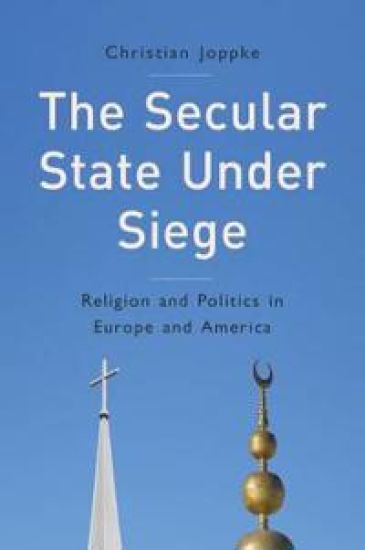
Sociologen Christian Joppke griper i "Den sekulära staten under belägring" sig an förhållandet mellan religion och politik ur ett historiskt och institutionellt perspektiv, med dubbelt fokus på Västeuropa och Nordamerika, kristendom och islam. Efter århundraden av sekularisering av västliga samhällen som skilt de två sfärerna åt, har religionen på senare tid fått en ny offentlig roll som enligt Joppke utmanar den sekulära staten. Hur staten har förhållit sig till religionen sedan den drog sig tillbaka från politiken har varierat, inte minst mellan Europa (där kyrkan och staten tidigare var rivaliserande krafter) och Amerika (där ingen sådan rivalitet existerat). Inom Europa skiljer sig relationen religion/stat mellan protestantiska och katolska eller blandade länder, med ett helt spektrum av kyrka-stat-ordningar, samtliga förenliga med sekularismens krav, och med förekomsten av kristdemokratiska partier i vissa länder men inte i andra. Genom migration har också nya religioner kommit in i västerländska samhällen ? med islam som paradexemplet ? som måste integreras i befintliga kyrka-stat-system. Mot bakgrund av en översikt av samhällvetenskaplig teoribildning om religionen analyserar Joppke sekuliseringsprocessen och hur den möjliggjordes av kristendomen själv. Den kristna högern i USA och islam i Europa är de främsta exemplen på den offentliga religionens återkomst i en sekulär miljö. Enligt Joppke har den kristna högern haft större inflytande på lagstiftningen än på politiken och i viss mån fått USA att avvika från sin historiska modell av strikt åtskillnad mellan religion och stat. I analysen av konflikterna mellan islam och det sekulariserade Europa framhåller han att islam trots allt funnit sin plats som en grundlagsskyddad minoritetsreligion. Hur den sekulära staten och rättssystemet förhållit sig till religionen på varsin sida av Atlanten exemplifieras med det kristna krucifixet och den islamiska slöjan som två uttryck för ?offentlig religion?. "Den sekulära staten under belägring" ger en utmärkt introduktion för den som vill förstå förhållandet mellan religion och politik i dagens västvärld. Christian Joppke är professor i allmän sociologi i Bern.
The Secular State Under Siege

The Secular State Under Siege

Christian Joppke

Polity Press
2015
nidottu
Throughout human history, religion and politics have entertained the most intimate of connections as systems of authority regulating individuals and society. While the two have come apart through the process of secularization, secularism is challenged today by the return of public religion. This cogent analysis unravels the nature of the connection, disconnection, and attempted reconnection between religion and politics in the West.In a comparison of Western Europe and North America, Christianity and Islam, Joppke advances far-reaching theoretical, historical, and comparative-political arguments. With respect to theory, it is argued that only a “substantive” concept of religion, as pertaining to the existence of supra-human powers, opens up the possibility of a historical-comparative perspective on religion. At the level of history, secularization is shown to be the distinct outcome of Latin Christianity itself. And at the level of comparative politics, the Christian Right in America which has attacked the “wall of separation” between religion and state and Islam in Europe with the controversial insistence on sharia law and other “illiberal” claims from some quarters are taken to be counterpart incarnations of public religion and challenges to the secular state.This clearly argued, sweeping book will provide an invaluable framework for approaching an array of critical issues at the intersection of religion, law and politics for advanced students and researchers across the social sciences and legal studies, as well as for the interested public.
The Secular State Under Siege

The Secular State Under Siege

Christian Joppke

Polity Press
2015
sidottu
Throughout human history, religion and politics have entertained the most intimate of connections as systems of authority regulating individuals and society. While the two have come apart through the process of secularization, secularism is challenged today by the return of public religion. This cogent analysis unravels the nature of the connection, disconnection, and attempted reconnection between religion and politics in the West.In a comparison of Western Europe and North America, Christianity and Islam, Joppke advances far-reaching theoretical, historical, and comparative-political arguments. With respect to theory, it is argued that only a “substantive” concept of religion, as pertaining to the existence of supra-human powers, opens up the possibility of a historical-comparative perspective on religion. At the level of history, secularization is shown to be the distinct outcome of Latin Christianity itself. And at the level of comparative politics, the Christian Right in America which has attacked the “wall of separation” between religion and state and Islam in Europe with the controversial insistence on sharia law and other “illiberal” claims from some quarters are taken to be counterpart incarnations of public religion and challenges to the secular state.This clearly argued, sweeping book will provide an invaluable framework for approaching an array of critical issues at the intersection of religion, law and politics for advanced students and researchers across the social sciences and legal studies, as well as for the interested public.
Legal Integration of Islam

Legal Integration of Islam

Christian Joppke; John Torpey

Harvard University Press
2013
sidottu
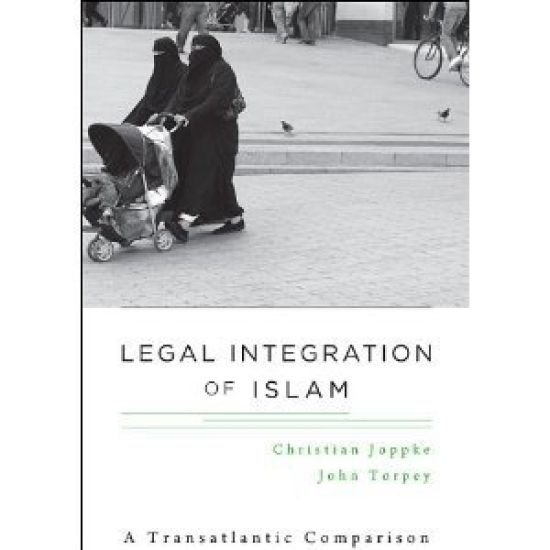
The status of Islam in Western societies remains deeply contentious. Countering strident claims on both the right and left, Legal Integration of Islam offers an empirically informed analysis of how four liberal democracies—France, Germany, Canada, and the United States—have responded to the challenge of integrating Islam and Muslim populations. Demonstrating the centrality of the legal system to this process, Christian Joppke and John Torpey reject the widely held notion that Europe is incapable of accommodating Islam and argue that institutional barriers to Muslim integration are no greater on one side of the Atlantic than the other.While Muslims have achieved a substantial degree of equality working through the courts, political dynamics increasingly push back against these gains, particularly in Europe. From a classical liberal viewpoint, religion can either be driven out of public space, as in France, or included without sectarian preference, as in Germany. But both policies come at a price—religious liberty in France and full equality in Germany. Often seen as the flagship of multiculturalism, Canada has found itself responding to nativist and liberal pressures as Muslims become more assertive. And although there have been outbursts of anti-Islamic sentiment in the United States, the legal and political recognition of Islam is well established and largely uncontested.Legal Integration of Islam brings to light the successes and the shortcomings of integrating Islam through law without denying the challenges that this religion presents for liberal societies.
Immigrant Integration in Federal Countries

Immigrant Integration in Federal Countries

Christian Joppke; F. Leslie Seidle

McGill-Queen's University Press
2012
sidottu
This volume analyzes immigrant integration policies and the implications for governance in Australia, Belgium, Canada, Germany, Spain, Switzerland, and the United States. Leading experts review recent developments in their respective countries and current public policies and programs in three categories: selection/admission, economic and social integration, and civic and political integration (including naturalization). These analyses show that the integration of immigrants is an ongoing process that extends beyond the initial years of settlement in a new country, involving the actions of different governments, non-governmental organizations and others. By examining a range of policy and governance issues from the perspective of federalism, this volume fills a gap in the literature on immigrant integration. It will interest not only academics and researchers but also political representatives and public servants concerned with these important topics.
Immigrant Integration in Federal Countries

Immigrant Integration in Federal Countries

Christian Joppke; F. Leslie Seidle

McGill-Queen's University Press
2012
nidottu
This volume analyzes immigrant integration policies and the implications for governance in Australia, Belgium, Canada, Germany, Spain, Switzerland, and the United States. Leading experts review recent developments in their respective countries and current public policies and programs in three categories: selection/admission, economic and social integration, and civic and political integration (including naturalization). These analyses show that the integration of immigrants is an ongoing process that extends beyond the initial years of settlement in a new country, involving the actions of different governments, non-governmental organizations and others. By examining a range of policy and governance issues from the perspective of federalism, this volume fills a gap in the literature on immigrant integration. It will interest not only academics and researchers but also political representatives and public servants concerned with these important topics.
Citizenship and Immigration

Citizenship and Immigration

Christian Joppke

Polity Press
2010
sidottu
This incisive book provides a succinct overview of the new academic field of citizenship and immigration, as well as presenting a fresh and original argument about changing citizenship in our contemporary human rights era. Instead of being nationally resilient or in “postnational” decline, citizenship in Western states has continued to evolve, converging on a liberal model of inclusive citizenship with diminished rights implications and increasingly universalistic identities. This convergence is demonstrated through a sustained comparison of developments in North America, Western Europe and Australia. Topics covered in the book include: recent trends in nationality laws; what ethnic diversity does to the welfare state; the decline of multiculturalism accompanied by the continuing rise of antidiscrimination policies; and the new state campaigns to “upgrade” citizenship in the post-2001 period. Sophisticated and informative, and written in a lively and accessible style, this book will appeal to upper-level students and scholars in sociology, political science, and immigration and citizenship studies.
Citizenship and Immigration

Citizenship and Immigration

Christian Joppke

Polity Press
2010
nidottu
This incisive book provides a succinct overview of the new academic field of citizenship and immigration, as well as presenting a fresh and original argument about changing citizenship in our contemporary human rights era. Instead of being nationally resilient or in “postnational” decline, citizenship in Western states has continued to evolve, converging on a liberal model of inclusive citizenship with diminished rights implications and increasingly universalistic identities. This convergence is demonstrated through a sustained comparison of developments in North America, Western Europe and Australia. Topics covered in the book include: recent trends in nationality laws; what ethnic diversity does to the welfare state; the decline of multiculturalism accompanied by the continuing rise of antidiscrimination policies; and the new state campaigns to “upgrade” citizenship in the post-2001 period. Sophisticated and informative, and written in a lively and accessible style, this book will appeal to upper-level students and scholars in sociology, political science, and immigration and citizenship studies.
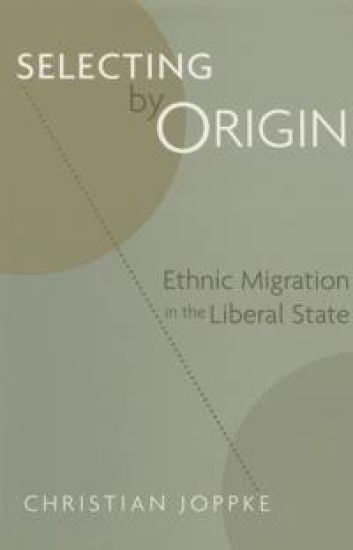
Selecting by Origin

Selecting by Origin

Christian Joppke

Harvard University Press
2005
sidottu
In a world of mutually exclusive nation-states, international migration constitutes a fundamental anomaly. No wonder that such states have been inclined to select migrants according to their origins. The result is ethnic migration.But Christian Joppke shows that after World War II there has been a trend away from ethnic selectivity and toward non-discriminatory immigration policies across Western states. Indeed, he depicts the modern state in the crossfire of particularistic and universalistic principles and commitments, with universalism gradually winning the upper hand. Thus, the policies that regulate the boundaries of states can no longer invoke the particularisms that constitute these boundaries and the collectivities residing within them.Joppke presents detailed case studies of the United States, Australia, Western Europe, and Israel. His book will be of interest to a broad audience of sociologists, political scientists, historians, legal scholars, and area specialists.
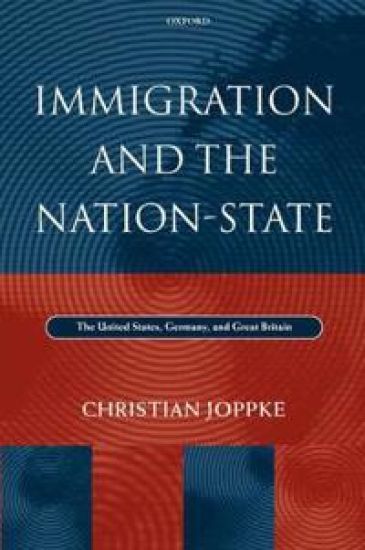
Immigration and the Nation-State

Immigration and the Nation-State

Christian Joppke

Clarendon Press
1999
sidottu
In this important and timely new study Professor Joppke compares the postwar politics of immigration control and immigrant integration in the United States, Germany, and Britain - three liberal states characterized by sharply distinct nationhood traditions and immigration experiences. Mapping out the many variations between these cases, the book focuses on the impact of immigration in the two key areas of sovereignty and citizenship. In Part 1, the author analyses the effect of immigration control on state sovereignty, arguing that liberal states are self-limited by interest-group pluralism, autonomous legal systems, and moral obligations toward particular immigrant groups - the weight of these factors differing across particular cases. In Part 2, he addresses the ways in which immigrant integration impacts upon citizenship, arguing for the continuing relevance of national citizenship for incorporating immigrants, albeit modified by nationally distinct schemes of multiculturalism. In the face of current diagnoses of nation-states weakened by the external forces of globalization and international human rights regimes and discourses, Professor Joppke demonstrates that, in relation to immigration at least, nation-states have proved remarkably resilient. Not only does this book offer an thorough, insightful examination of the immigration experiences of the USA, Germany, and Britain, it also makes a powerful contribution to the growing macro-sociological and political science literature on immigration, citizenship, and the nation-state.
Immigration and the Nation-State

Immigration and the Nation-State

Christian Joppke

Clarendon Press
1999
nidottu
In this important and timely new study Professor Joppke compares the postwar politics of immigration control and immigrant integration in the United States, Germany, and Britain - three liberal states characterized by sharply distinct nationhood traditions and immigration experiences. Mapping out the many variations between these cases, the book focuses on the impact of immigration in the two key areas of sovereignty and citizenship. In Part 1, the author analyses the effect of immigration control on state sovereignty, arguing that liberal states are self-limited by interest-group pluralism, autonomous legal systems, and moral obligations toward particular immigrant groups - the weight of these factors differing across particular cases. In Part 2, he addresses the ways in which immigrant integration impacts upon citizenship, arguing for the continuing relevance of national citizenship for incorporating immigrants, albeit modified by nationally distinct schemes of multiculturalism. In the face of current diagnoses of nation-states weakened by the external forces of globalization and international human rights regimes and discourses, Professor Joppke demonstrates that, in relation to immigration at least, nation-states have proved remarkably resilient. Not only does this book offer an thorough, insightful examination of the immigration experiences of the USA, Germany, and Britain, it also makes a powerful contribution to the growing macro-sociological and political science literature on immigration, citizenship, and the nation-state.
East German Dissidents and the Revolution of 1989

East German Dissidents and the Revolution of 1989

Christian Joppke

New York University Press
1995
sidottu
While the dissident movements of Eastern Europe were abandoning communism in pursuit of visions of liberal democracy, the East German movement continued to struggle for reform within the communist movement. In East German Dissidents and the Revolution of 1989, Christian Joppke explains this anomaly in compelling narrative detail. He argues that the peculiarities of German history and culture prevented the possibility of a national opposition to communism. Lured by the regime's proclaimed antifascism, East German dissidents had to remain in a paradoxical way loyal to the opposed regime. The definitive study of East German opposition, Joppke's work also presents an overview of opposition in communist systems in general, providing both a model of social movements within Leninist regimes and a balance to current revisionist histories of the GDR. East German Dissidents and the Revolution of 1989 will be of interest to scholars and students of social movements, revolution, German politics and society, the East European transformation, and communist systems.