Kirjojen hintavertailu. Mukana 12 483 768 kirjaa ja 12 kauppaa.
Kirjailija
Christian Stary
Kirjat ja teokset yhdessä paikassa: 17 kirjaa, julkaisuja vuosilta 1994-2026, suosituimpien joukossa Contextual Process Digitalization. Vertaile teosten hintoja ja tarkista saatavuus suomalaisista kirjakaupoista.
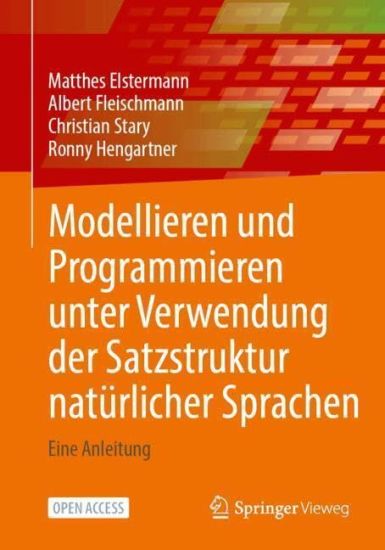
Mit diesem Buch ist ein niederschwelliger, weil intuitiver Einstieg in die Modellierung von Abläufen sichergestellt. Anleitung für Personen ohne jegliches Vorwissen, wie mittels Elementen und Sätzen natürlicher Sprache Prozesswissen gewonnen und in ausführbare Modelle überführt werden kann. Das Werk nimmt Bedenken, dass Personen ohne Vorwissen nicht an Organisationsentwicklung und Modellbildung über Arbeitsplätzen nicht teilhaben können – im Gegenteil es sichert ihnen die Mitsprache auf nicht-flüchtiger Ebene durch sprachgerechte Kommunikation und Dokumentation. Sie wollen ins Tun kommen? Dies wollten wir auch – daher haben wir diese Anleitung zur Anwendung des subjektorientierten Denkmodells zur Entwicklung von Systemen geschrieben. Wir stellen alle entsprechenden Modellierungselemente und ihre Verwendung schrittweise vor, ebenso wie die Techniken, mit denen diese Modelle implementiert werden können. Schließlich leiten wir Sie an, wie sie sich einer Managementstruktur für die Erstellung komplexer subjektorientierter Systeme konstruktiv, weil auf Basis der natürlichen Sprache, bedienen können. Dies ist ein Open-Access-Buch.
In dieser erweiterten und aktualisierten 2. Auflage des ursprünglichen Open-Access Buches wird das Geschäftsprozessmanagement als ein ganzheitlicher Prozess begriffen, der der Mitwirkung aller Stakeholder bedarf. Denn das traditionelle Business Process Engineering stößt heute angesichts der Digitalisierung und der dynamischen Entwicklung von Organisationen immer mehr an seine Grenzen, beispielsweise bezüglich Agilität. Um nun das Wesen von Aufgaben und Abläufen in Organisationen zu erfassen, schlagen die Autoren einen Perspektivenwechsel vor: das Denken in Kommunikationsprozessen. Dieses Konzept lässt sich wirtschaftlich, organisatorisch und technisch ohne einschlägige Vorkenntnisse umsetzen. Leserinnen und Leser finden in dem Buch konkrete Handlungsanleitungen für die Digitalisierung von organisationsrelevanten Abläufen. Daneben liefern die Autoren Einblicke in die Systemtheorie und in das Design Thinking. Ihr Ziel ist, Konzepte einfach und verständlich zu erläutern, ohne dabei komplexe Zusammenhänge zu vernachlässigen. Dank ausführlicher Konzeptdarstellung und Ausflüge in die Theorie mit Beispielen aus der Praxis, eignet es sich für Studierende und für Wissenschaftler genauso wie für Praktiker. Entwickler und andere Fachkräfte aus den Bereichen Operatives Management, Geschäftsprozessmanagement, Organisationsentwicklung, Qualitätsmanagement, Wissensmanagement werden sich von der Übersichtlichkeit und dem Nutzwert angesprochen fühlen.
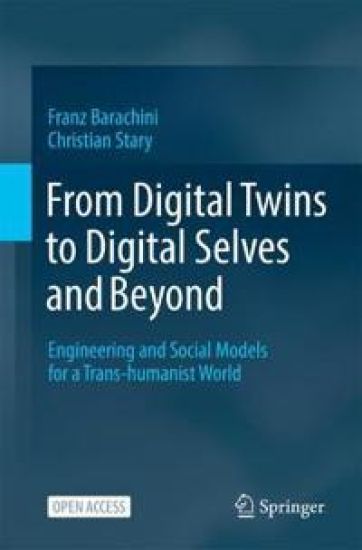
This open access book aims at deepening the understanding of the relation between cyber-physical systems (CPSs) as socio-technical systems and their digital representations with intertwined artificial intelligence (AI). The authors describe why it is crucial for digital selves to be able to develop emotional behavior and why a humanity-inspired AI is necessary so that humans and humanoids can coexist. The introductory chapter describes major milestones in computer science which form the basis for the implementation of digital twins and digital selves. The subsequent Part I then lays the foundation to develop a socio-technical understanding of the nature of digital twins as representations and trans-human development objects. Following the conceptual understanding of digital twins and how they could be engineered according to cognitive and organizational structures, Part II forms the groundwork for understanding social behavior and its modeling. It discusses various perception-based socio-emotional approaches before sketching behavior-relevant models and their simulation capabilities. In particular, it is shown how emotions can substantially influence the collective behavior of artificial actors. Part III eventually presents a symbiosis showing under which preconditions digital selves might construct and produce digital twins as integrated design elements in trans-human ecosystems. The chapters in this part are dedicated to opportunities and modes of co-creating reflective socio-trans-human systems based on digital twin models, exploring mutual control and continuous development. The final epilog is congenitally speculative in its nature by presenting thoughts on future developments of artificial life in computational substrates. The book is written for researchers and professionals in areas like cyber-physical systems, robotics, social simulation or systems engineering, interested to take a speculative look into the future of digital twins and autonomous agents. It also touches upon philosophical aspects of digital twins, digital selves and humanoids.
Combining theory, methodology and tools, this open access book illustrates how to guide innovation in today's digitized business environment. Highlighting the importance of human knowledge and experience in implementing business processes, the authors take a conceptual perspective to explore the challenges and issues currently facing organizations. Subsequent chapters put these concepts into practice, discussing instruments that can be used to support the articulation and alignment of knowledge within work processes. A timely and comprehensive set of tools and case studies, this book is essential reading for those researching innovation and digitization, organization and business strategy. This work was published by Saint Philip Street Press pursuant to a Creative Commons license permitting commercial use. All rights not granted by the work's license are retained by the author or authors.
Combining theory, methodology and tools, this open access book illustrates how to guide innovation in today's digitized business environment. Highlighting the importance of human knowledge and experience in implementing business processes, the authors take a conceptual perspective to explore the challenges and issues currently facing organizations. Subsequent chapters put these concepts into practice, discussing instruments that can be used to support the articulation and alignment of knowledge within work processes. A timely and comprehensive set of tools and case studies, this book is essential reading for those researching innovation and digitization, organization and business strategy. This work was published by Saint Philip Street Press pursuant to a Creative Commons license permitting commercial use. All rights not granted by the work's license are retained by the author or authors.
This open access book presents an overview and step-by-step explanation of process management. It starts with the individual participants’ perspectives on their work in a process and its structuring and harmonization, and then moves on to its specification in a model and how it is embedded in the organizational and IT environment of the company. Lastly, the book examines the joint processing of instances in the resulting socio-technical systems. A corresponding illustration, which expands with the overview, enables readers to gain a comprehensive understanding of business process management.The book presents various facets of business process management from the perspective of the participants, and introduces a selection of models that have proved useful in practice. The design of such models supports the transition from a more-or-less unstructured or unsatisfactory way of working to a structured process that corresponds to the ideas of the company and its customers. The book is intended for professionals in industry as well as students in the field of business information systems who are looking for guidelines on how to discover, create and implement real-world processes.
Combining theory, methodology and tools, this open access book illustrates how to guide innovation in today’s digitized business environment. Highlighting the importance of human knowledge and experience in implementing business processes, the authors take a conceptual perspective to explore the challenges and issues currently facing organizations. Subsequent chapters put these concepts into practice, discussing instruments that can be used to support the articulation and alignment of knowledge within work processes. A timely and comprehensive set of tools and case studies, this book is essential reading for those researching innovation and digitization, organization and business strategy.
This open access book presents an overview and step-by-step explanation of process management. It starts with the individual participants’ perspectives on their work in a process and its structuring and harmonization, and then moves on to its specification in a model and how it is embedded in the organizational and IT environment of the company. Lastly, the book examines the joint processing of instances in the resulting socio-technical systems. A corresponding illustration, which expands with the overview, enables readers to gain a comprehensive understanding of business process management.The book presents various facets of business process management from the perspective of the participants, and introduces a selection of models that have proved useful in practice. The design of such models supports the transition from a more-or-less unstructured or unsatisfactory way of working to a structured process that corresponds to the ideas of the company and its customers. The book is intended for professionals in industry as well as students in the field of business information systems who are looking for guidelines on how to discover, create and implement real-world processes.
Combining theory, methodology and tools, this open access book illustrates how to guide innovation in today’s digitized business environment. Highlighting the importance of human knowledge and experience in implementing business processes, the authors take a conceptual perspective to explore the challenges and issues currently facing organizations. Subsequent chapters put these concepts into practice, discussing instruments that can be used to support the articulation and alignment of knowledge within work processes. A timely and comprehensive set of tools and case studies, this book is essential reading for those researching innovation and digitization, organization and business strategy.
Designing Healthcare That Works: A Sociotechnical Approach takes up the pragmatic, messy problems of designing and implementing sociotechnical solutions which integrate organizational and technical systems for the benefit of human health. The book helps practitioners apply principles of sociotechnical design in healthcare and consider the adoption of new theories of change. As practitioners need new processes and tools to create a more systematic alignment between technical mechanisms and social structures in healthcare, the book helps readers recognize the requirements of this alignment. The systematic understanding developed within the book’s case studies includes new ways of designing and adopting sociotechnical systems in healthcare. For example, helping practitioners examine the role of exogenous factors, like CMS Systems in the U.S. Or, more globally, helping practitioners consider systems external to the boundaries drawn around a particular healthcare IT system is one key to understand the design challenge. Written by scholars in the realm of sociotechnical systems research, the book is a valuable source for medical informatics professionals, software designers and any healthcare providers who are interested in making changes in the design of the systems.
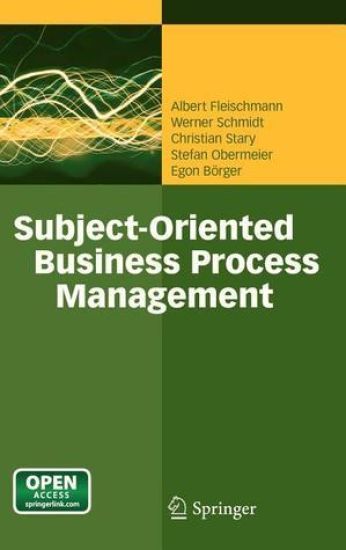
Activities performed in organizations are coordinated via communication between the people involved. The sentences used to communicate are naturally structured by subject, verb, and object. The subject describes the actor, the verb the action and the object what is affected by the action. Subject-oriented Business Process Management (S-BPM) as presented in this book is based on this simple structure which enables process-oriented thinking and process modeling. S-BPM puts the subject of a process at the center of attention and thus deals with business processes and their organizational environment from a new perspective, meeting organizational requirements in a much better way than traditional approaches. Subjects represent agents of an action in a process, which can be either technical or human (e.g. a thread in an IT system or a clerk). A process structures the actions of each subject and coordinates the required communication among the subjects. S-BPM provides a coherent procedural framework to model and analyze business processes: its focus is the cooperation of all stakeholders involved in the strategic, tactical, and operational issues, sharing their knowledge in a networked structure. The authors illustrate how each modeling activity through the whole development lifecycle can be supported through the use of appropriate software tools. The presentation style focuses on professionals in industry, and on students specializing in process management or organizational modeling. Each chapter begins with a summary of key findings and is full of examples, hints, and possible pitfalls. An interpreter model, a toolbox, and a glossary summarizing the main terms complete the book. The web site www.i2pm.net provides additional software tools and further material.
Activities performed in organizations are coordinated via communication between the people involved. The sentences used to communicate are naturally structured by subject, verb, and object. The subject describes the actor, the verb the action and the object what is affected by the action. Subject-oriented Business Process Management (S-BPM) as presented in this book is based on this simple structure which enables process-oriented thinking and process modeling. S-BPM puts the subject of a process at the center of attention and thus deals with business processes and their organizational environment from a new perspective, meeting organizational requirements in a much better way than traditional approaches. Subjects represent agents of an action in a process, which can be either technical or human (e.g. a thread in an IT system or a clerk). A process structures the actions of each subject and coordinates the required communication among the subjects. S-BPM provides a coherent procedural framework to model and analyze business processes: its focus is the cooperation of all stakeholders involved in the strategic, tactical, and operational issues, sharing their knowledge in a networked structure. The authors illustrate how each modeling activity through the whole development lifecycle can be supported through the use of appropriate software tools. The presentation style focuses on professionals in industry, and on students specializing in process management or organizational modeling. Each chapter begins with a summary of key findings and is full of examples, hints, and possible pitfalls. An interpreter model, a toolbox, and a glossary summarizing the main terms complete the book. The web site www.i2pm.net provides additional software tools and further material.
Harald Eichelberger; Christian Laner; Harald Angerer; John Bronkhorst; Henning Günther; Edgar Hungs; Renate Kock; Wolf Dieter Kohlberg; Georges Kuppens; Christian Stary
Das Buch enthalt zahlreiche Beispiele virtuellen Lernens zur professionellen Weiterbildung von Lehrerinnen und Lehrern. Es dokumentiert europaische Projekte und deren Ergebnisse zu den aktuellen Moglichkeiten der Lehrerinnen- und Lehrerweiterbildung via eLearning."
Das Buch reflektiert die Erkenntnisse reformpadagogischer Ansatze und unternimmt den Bruckenschlag zu aktuellen Lerntechnologien. Das Werk ermuntert Lehrende und Lernende zur Offenheit und einer Haltung des Ausprobierens und Erkundens, die ihnen auch ermoglichen, Effekte eigener Handlungen zu verfolgen und zu reflektieren. Die Autoren wollen zu Agilitat anregen, die dem Wunsch nach tiefer Erkenntnis entspricht und dem Gedanken selbst bestimmter Weiterentwicklung von Individuen Rechnung tragt.
Simone Heftberger und Christian Stary zeigen, wie partizipative organisationale Lerntheorien mit prozessbasierter Wissensmanagement-Technik effektiv implementiert werden konnen. So wird organisationales Lernen zum wechselseitigen, auf die wesentlichen Unternehmensgegenstande und Geschaftsprozesse fokussierten Diskurs.
Die Akzeptanz und damit der Erfolg interaktiver Systeme (Software und Hardware zur gemeinsamen Bewaltigung von Aufgaben durch Mensch und Computer) wer- den grofitenteils von ihrer Benutzerschnittstelle bestimmt. Daher ziihlen Benutzer- schnittstellen heute zu intensiv beforschten Systemkomponenten. Die Gestaltung interaktiver Systeme wird nicht nur von Software und Hardware an der Schnitt- stelle dominiert. Vielmehr erfordert sie von Entwicklern umfassendes Wissen iiber Mensch-Maschine Kommunikation, d.h. Wissen iiber die Benutzer und ihre Tatig- keiten sowie iiber Interaktionskonzepte, welche Hard- und Software integrieren. Das vorliegende Buch solI theoretische, methodologische und praktische Grund- lagen fUr die Entwicklung und Bewertung interaktiver Systeme vermitteln. Zum einen ist hierzu Bewufitseinsbildung beziiglich der wissenschaftlichen Breite des Gebietes notwendig, welche durch die vielen beteiligten Disziplinen bedingt wird. Zum anderen bedarf die Komplexitat des Entwicklungsprozesses, welche durch das wechselweise Zusammenspiel mehrerer Systemkomponenten (Benutzer, Aufgaben, Hardware, Software) bedingt wird, vertieften Wissens zur Hard- und Softwarege- staltung sowie Wissens urn menschliche Fahigkeiten. Da dieses Wissen unterschied- lich strukturiert vorliegt, mufi eine methodische Integration im Rahmen ganzheit- licher Entwicklung vorgenOmmen werden.