Kirjojen hintavertailu. Mukana 12 657 676 kirjaa ja 12 kauppaa.

Kirjailija

Christina Sharpe

Kirjat ja teokset yhdessä paikassa: 9 kirjaa, julkaisuja vuosilta 2010-2025, suosituimpien joukossa The Fire Now. Vertaile teosten hintoja ja tarkista saatavuus suomalaisista kirjakaupoista.

9 kirjaa

Kirjojen julkaisuhaarukka 2010-2025.

Ordinary Notes

Ordinary Notes

Christina Sharpe

Picador USA
2025
nidottu
A finalist for the National Book Award in NonfictionA finalist for the National Book Critics Circle Award in Nonfiction Named a Best Book of 2023 by The New York Times, NPR, New York magazine, Kirkus, and Barnes and NobleThe critically acclaimed author of In the Wake, "Christina Sharpe is a brilliant thinker who attends unflinchingly to the brutality of our current arrangements . . . and yet always finds a way to beauty and possibility" (Saidiya Hartman). A singular achievement, Ordinary Notes explores profound questions about loss and the shapes of Black life that emerge in the wake. In a series of 248 notes that gather meaning as we read them, Christina Sharpe skillfully weaves artifacts from the past--public ones alongside others that are poignantly personal--together with present realities and possible futures, intricately constructing an immersive portrait of everyday Black existence. The themes and tones that echo through these pages, sometimes about language, beauty, and memory, sometimes about history, art, photography, and literature, always attend, with exquisite care, to the ordinary-extraordinary dimensions of Black life. At the heart of Ordinary Notes is the indelible presence of the author's mother, Ida Wright Sharpe. "I learned to see in my mother's house," writes Sharpe. "I learned how not to see in my mother's house . . . My mother gifted me a love of beauty, a love of words." Using these gifts and other ways of seeing, Sharpe steadily summons a chorus of voices and experiences to the page. She practices an aesthetic of "beauty as a method," collects entries from a community of thinkers toward a "Dictionary of Untranslatable Blackness," and rigorously examines sites of memory and memorial. And in the process, she forges a brilliant new literary form, as multivalent as the ways of Black being it traces. Color art throughout
Ordinary Notes

Ordinary Notes

Christina Sharpe

Farrar, Straus and Giroux
2023
sidottu
A finalist for the National Book Award in NonfictionA finalist for the National Book Critics Circle Award in Nonfiction Named a Best Book of 2023 by The New York Times, NPR, New York magazine, Kirkus, and Barnes and NobleThe critically acclaimed author of In the Wake, "Christina Sharpe is a brilliant thinker who attends unflinchingly to the brutality of our current arrangements . . . and yet always finds a way to beauty and possibility" (Saidiya Hartman). A singular achievement, Ordinary Notes explores profound questions about loss and the shapes of Black life that emerge in the wake. In a series of 248 notes that gather meaning as we read them, Christina Sharpe skillfully weaves artifacts from the past--public ones alongside others that are poignantly personal--together with present realities and possible futures, intricately constructing an immersive portrait of everyday Black existence. The themes and tones that echo through these pages, sometimes about language, beauty, and memory, sometimes about history, art, photography, and literature, always attend, with exquisite care, to the ordinary-extraordinary dimensions of Black life. At the heart of Ordinary Notes is the indelible presence of the author's mother, Ida Wright Sharpe. "I learned to see in my mother's house," writes Sharpe. "I learned how not to see in my mother's house . . . My mother gifted me a love of beauty, a love of words." Using these gifts and other ways of seeing, Sharpe steadily summons a chorus of voices and experiences to the page. She practices an aesthetic of "beauty as a method," collects entries from a community of thinkers toward a "Dictionary of Untranslatable Blackness," and rigorously examines sites of memory and memorial. And in the process, she forges a brilliant new literary form, as multivalent as the ways of Black being it traces. Color art throughout
The Fire Now

The Fire Now

Christina Sharpe; George Yancy

Zed Books Ltd
2018
nidottu
Not so long ago, many spoke of a ‘post-racial’ era, claiming that advances made by people of colour showed that racial divisions were becoming a thing of the past. But the hollowness of such claims has been exposed by the rise of Trump and Brexit, both of which have revealed deep seated white resentment, and have been attended by a resurgence in hate crime and overt racial hatred on both sides of the Atlantic.At a time when progress towards equality is not only stalling, but being actively reversed, how should anti-racist scholars respond? This collection carries on James Baldwin’s legacy of bearing witness to racial violence in its many forms. Its authors address how we got to this particular moment, arguing that it can only be truly understood by placing it within the wider historical and structural contexts that normalise racism and white supremacy. Its chapters engage with a wide range of contemporary issues and debates, from the whiteness of the recent women’s marches, to anti-racist education, to the question of Black resistance and intersectionality. Mapping out the problems we face, and the solutions we need, the book considers how anti-racist scholarship and activism can overcome the setbacks posed by the resurgence of white supremacy.
The Fire Now

The Fire Now

Christina Sharpe; George Yancy

Zed Books Ltd
2018
sidottu
Not so long ago, many spoke of a ‘post-racial’ era, claiming that advances made by people of colour showed that racial divisions were becoming a thing of the past. But the hollowness of such claims has been exposed by the rise of Trump and Brexit, both of which have revealed deep seated white resentment, and have been attended by a resurgence in hate crime and overt racial hatred on both sides of the Atlantic.At a time when progress towards equality is not only stalling, but being actively reversed, how should anti-racist scholars respond? This collection carries on James Baldwin’s legacy of bearing witness to racial violence in its many forms. Its authors address how we got to this particular moment, arguing that it can only be truly understood by placing it within the wider historical and structural contexts that normalise racism and white supremacy. Its chapters engage with a wide range of contemporary issues and debates, from the whiteness of the recent women’s marches, to anti-racist education, to the question of Black resistance and intersectionality. Mapping out the problems we face, and the solutions we need, the book considers how anti-racist scholarship and activism can overcome the setbacks posed by the resurgence of white supremacy.
In the Wake

In the Wake

Christina Sharpe

Duke University Press
2016
pokkari
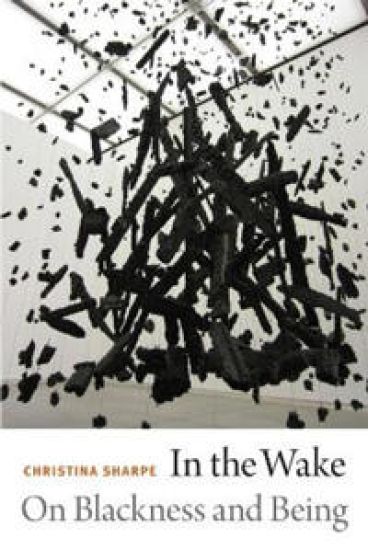
In this original and trenchant work, Christina Sharpe interrogates literary, visual, cinematic, and quotidian representations of Black life that comprise what she calls the "orthography of the wake." Activating multiple registers of "wake"-the path behind a ship, keeping watch with the dead, coming to consciousness-Sharpe illustrates how Black lives are swept up and animated by the afterlives of slavery, and she delineates what survives despite such insistent violence and negation. Initiating and describing a theory and method of reading the metaphors and materiality of "the wake," "the ship," "the hold," and "the weather," Sharpe shows how the sign of the slave ship marks and haunts contemporary Black life in the diaspora and how the specter of the hold produces conditions of containment, regulation, and punishment, but also something in excess of them. In the weather, Sharpe situates anti-Blackness and white supremacy as the total climate that produces premature Black death as normative. Formulating the wake and "wake work" as sites of artistic production, resistance, consciousness, and possibility for living in diaspora, In the Wake offers a way forward.
In the Wake

In the Wake

Christina Sharpe

Duke University Press
2016
sidottu
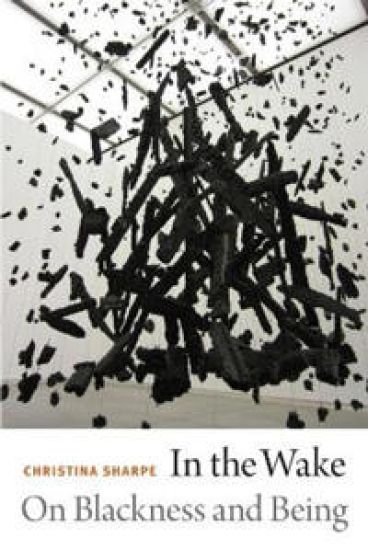
In this original and trenchant work, Christina Sharpe interrogates literary, visual, cinematic, and quotidian representations of Black life that comprise what she calls the "orthography of the wake." Activating multiple registers of "wake"-the path behind a ship, keeping watch with the dead, coming to consciousness-Sharpe illustrates how Black lives are swept up and animated by the afterlives of slavery, and she delineates what survives despite such insistent violence and negation. Initiating and describing a theory and method of reading the metaphors and materiality of "the wake," "the ship," "the hold," and "the weather," Sharpe shows how the sign of the slave ship marks and haunts contemporary Black life in the diaspora and how the specter of the hold produces conditions of containment, regulation, and punishment, but also something in excess of them. In the weather, Sharpe situates anti-Blackness and white supremacy as the total climate that produces premature Black death as normative. Formulating the wake and "wake work" as sites of artistic production, resistance, consciousness, and possibility for living in diaspora, In the Wake offers a way forward.
Monstrous Intimacies

Monstrous Intimacies

Christina Sharpe

Duke University Press
2010
pokkari
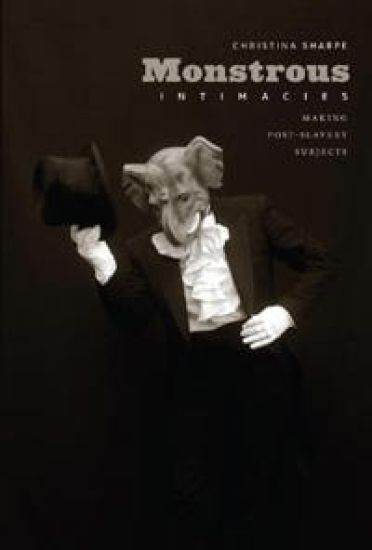
Arguing that the fundamental, familiar, sexual violence of slavery and racialized subjugation have continued to shape black and white subjectivities into the present, Christina Sharpe interprets African diasporic and Black Atlantic visual and literary texts that address those “monstrous intimacies” and their repetition as constitutive of post-slavery subjectivity. Her illuminating readings juxtapose Frederick Douglass’s narrative of witnessing the brutal beating of his Aunt Hester with Essie Mae Washington-Williams’s declaration of freedom in Dear Senator: A Memoir by the Daughter of Strom Thurmond, as well as the “generational genital fantasies” depicted in Gayl Jones’s novel Corregidora with a firsthand account of such “monstrous intimacies” in the journals of an antebellum South Carolina senator, slaveholder, and vocal critic of miscegenation. Sharpe explores the South African–born writer Bessie Head’s novel Maru-about race, power, and liberation in Botswana-in light of the history of the KhoiSan woman Saartje Baartman, who was displayed in Europe as the “Hottentot Venus” in the nineteenth century. Reading Isaac Julien’s film The Attendant, Sharpe takes up issues of representation, slavery, and the sadomasochism of everyday black life. Her powerful meditation on intimacy, subjection, and subjectivity culminates in an analysis of Kara Walker’s black silhouettes, and the critiques leveled against both the silhouettes and the artist.
Monstrous Intimacies

Monstrous Intimacies

Christina Sharpe

Duke University Press
2010
sidottu
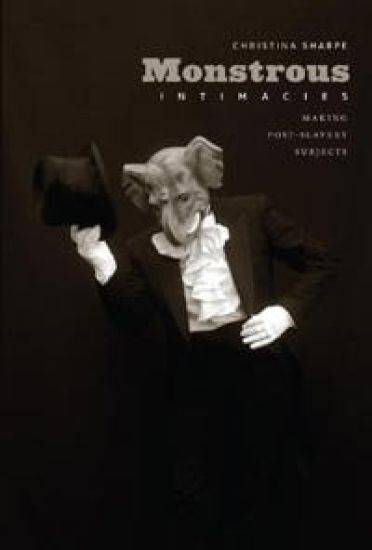
Arguing that the fundamental, familiar, sexual violence of slavery and racialized subjugation have continued to shape black and white subjectivities into the present, Christina Sharpe interprets African diasporic and Black Atlantic visual and literary texts that address those “monstrous intimacies” and their repetition as constitutive of post-slavery subjectivity. Her illuminating readings juxtapose Frederick Douglass’s narrative of witnessing the brutal beating of his Aunt Hester with Essie Mae Washington-Williams’s declaration of freedom in Dear Senator: A Memoir by the Daughter of Strom Thurmond, as well as the “generational genital fantasies” depicted in Gayl Jones’s novel Corregidora with a firsthand account of such “monstrous intimacies” in the journals of an antebellum South Carolina senator, slaveholder, and vocal critic of miscegenation. Sharpe explores the South African–born writer Bessie Head’s novel Maru-about race, power, and liberation in Botswana-in light of the history of the KhoiSan woman Saartje Baartman, who was displayed in Europe as the “Hottentot Venus” in the nineteenth century. Reading Isaac Julien’s film The Attendant, Sharpe takes up issues of representation, slavery, and the sadomasochism of everyday black life. Her powerful meditation on intimacy, subjection, and subjectivity culminates in an analysis of Kara Walker’s black silhouettes, and the critiques leveled against both the silhouettes and the artist.