Kirjojen hintavertailu. Mukana 12 295 426 kirjaa ja 12 kauppaa.

Kirjailija

Christine J. Wade

Kirjat ja teokset yhdessä paikassa: 6 kirjaa, julkaisuja vuosilta 2016-2020, suosituimpien joukossa Understanding Central America. Vertaile teosten hintoja ja tarkista saatavuus suomalaisista kirjakaupoista.

6 kirjaa

Kirjojen julkaisuhaarukka 2016-2020.

Understanding Central America

Understanding Central America

John A. Booth; Christine J. Wade; Thomas W. Walker

Routledge
2020
nidottu
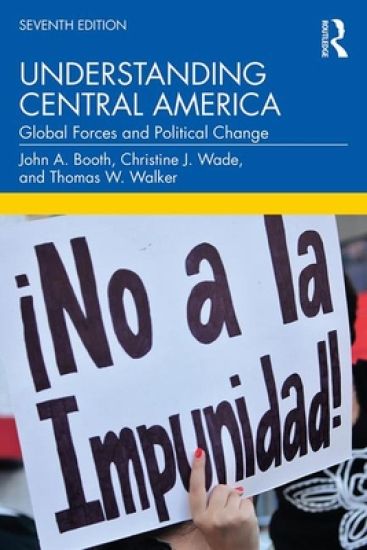
In this seventh edition, John A. Booth, Christine J. Wade, and Thomas W. Walker update a classic in the field which invites students to explore the histories, economies, and politics of Costa Rica, Nicaragua, El Salvador, Guatemala, and Honduras. Covering the region's political and economic development from the early 1800s onward, the authors bring the Central American story up to date.New to the 7th Edition:Analysis of trends in human rights performance, political violence, and evolution of regime types; Updated findings from surveys to examine levels of political participation and support for democratic norms among Central Americans; Historical and current-era material on indigenous peoples and other racial minorities; Discussion of popular attitudes toward political rights for homosexuals, and LGBTQ access to public services; Discussion of women’s rights and access to reproductive health services, and women’s integration into elective offices; Tracing evolving party systems, national elections, and US policy toward the region under the Obama and Trump administrations; Central America’s international concerns including Venezuela’s shrinking role as an alternative source of foreign aid and antagonist to US policy in the region, and migration among and through Central American nations.Understanding Central America is an ideal text for all students of Latin American politics and is highly recommended for courses on Central American politics, social systems, and history.
Understanding Central America

Understanding Central America

John A. Booth; Christine J. Wade; Thomas W. Walker

Routledge
2020
sidottu
In this seventh edition, John A. Booth, Christine J. Wade, and Thomas W. Walker update a classic in the field which invites students to explore the histories, economies, and politics of Costa Rica, Nicaragua, El Salvador, Guatemala, and Honduras. Covering the region's political and economic development from the early 1800s onward, the authors bring the Central American story up to date.New to the 7th Edition:Analysis of trends in human rights performance, political violence, and evolution of regime types; Updated findings from surveys to examine levels of political participation and support for democratic norms among Central Americans; Historical and current-era material on indigenous peoples and other racial minorities; Discussion of popular attitudes toward political rights for homosexuals, and LGBTQ access to public services; Discussion of women’s rights and access to reproductive health services, and women’s integration into elective offices; Tracing evolving party systems, national elections, and US policy toward the region under the Obama and Trump administrations; Central America’s international concerns including Venezuela’s shrinking role as an alternative source of foreign aid and antagonist to US policy in the region, and migration among and through Central American nations.Understanding Central America is an ideal text for all students of Latin American politics and is highly recommended for courses on Central American politics, social systems, and history.
Nicaragua

Nicaragua

Thomas W. Walker; Christine J. Wade

Routledge
2019
sidottu
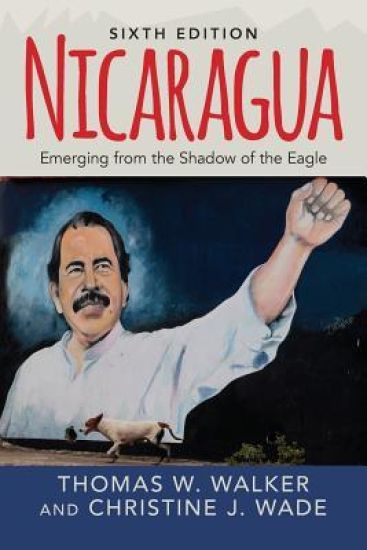
Nicaragua: Emerging from the Shadow of the Eagle details the country's unique history, culture, economics, politics, and foreign relations. Its historical coverage considers Nicaragua from pre-Columbian and colonial times as well as during the nationalist liberal era, the U.S. Marine occupation, the Somoza dictatorship, the Sandinista revolution and government, the conservative restoration after 1990, and consolidation of the FSLN's power since the return of Daniel Ortega to the presidency in 2006.The thoroughly revised and updated sixth edition features new material covering political, economic, and social developments since 2011. This includes expanded discussions on economic diversification, women and gender, and social programs. Students of Latin American politics and history will learn the how the interventions by the United States 'the eagle' to 'the north' have shaped Nicaraguan political, economic, and cultural life, but also the extent to which Nicaragua is increasingly emerging from the eagle's shadow.
Nicaragua

Nicaragua

Thomas W. Walker; Christine J. Wade

Westview Press Inc
2016
nidottu
Nicaragua: Emerging from the Shadow of the Eagle details the country's unique history, culture, economics, politics, and foreign relations. Its historical coverage considers Nicaragua from pre-Columbian and colonial times as well as during the nationalist liberal era, the U.S. Marine occupation, the Somoza dictatorship, the Sandinista revolution and government, the conservative restoration after 1990, and consolidation of the FSLN's power since the return of Daniel Ortega to the presidency in 2006.The thoroughly revised and updated sixth edition features new material covering political, economic, and social developments since 2011. This includes expanded discussions on economic diversification, women and gender, and social programs. Students of Latin American politics and history will learn the how the interventions by the United States 'the eagle' to 'the north' have shaped Nicaraguan political, economic, and cultural life, but also the extent to which Nicaragua is increasingly emerging from the eagle's shadow.
Captured Peace

Captured Peace

Christine J. Wade

Ohio University Press
2016
pokkari
El Salvador is widely considered one of the most successful United Nations peacebuilding efforts, but record homicide rates, political polarization, socioeconomic exclusion, and corruption have diminished the quality of peace for many of its citizens. In Captured Peace: Elites and Peacebuilding in El Salvador, Christine J. Wade adapts the concept of elite capture to expand on the idea of "captured peace," explaining how local elites commandeered political, social, and economic affairs before war's end and then used the peace accords to deepen their control in these spheres. While much scholarship has focused on the role of gangs in Salvadoran unrest, Wade draws on an exhaustive range of sources to demonstrate how day-to-day violence is inextricable from the economic and political dimensions. In this in-depth analysis of postwar politics in El Salvador, she highlights the local actors' primary role in peacebuilding and demonstrates the political advantage an incumbent party—in this case, the Nationalist Republican Alliance (ARENA—has throughout the peace process and the consequences of this to the quality of peace that results.
Captured Peace

Captured Peace

Christine J. Wade

Ohio University Press
2016
sidottu
El Salvador is widely considered one of the most successful United Nations peacebuilding efforts, but record homicide rates, political polarization, socioeconomic exclusion, and corruption have diminished the quality of peace for many of its citizens. In Captured Peace: Elites and Peacebuilding in El Salvador, Christine J. Wade adapts the concept of elite capture to expand on the idea of "captured peace," explaining how local elites commandeered political, social, and economic affairs before war's end and then used the peace accords to deepen their control in these spheres. While much scholarship has focused on the role of gangs in Salvadoran unrest, Wade draws on an exhaustive range of sources to demonstrate how day-to-day violence is inextricable from the economic and political dimensions. In this in-depth analysis of postwar politics in El Salvador, she highlights the local actors' primary role in peacebuilding and demonstrates the political advantage an incumbent party—in this case, the Nationalist Republican Alliance (ARENA—has throughout the peace process and the consequences of this to the quality of peace that results.