Kirjojen hintavertailu. Mukana 12 657 676 kirjaa ja 12 kauppaa.

Kirjailija

Christine J. Walley

Kirjat ja teokset yhdessä paikassa: 3 kirjaa, julkaisuja vuosilta 2004-2013, suosituimpien joukossa Exit Zero. Vertaile teosten hintoja ja tarkista saatavuus suomalaisista kirjakaupoista.

3 kirjaa

Kirjojen julkaisuhaarukka 2004-2013.

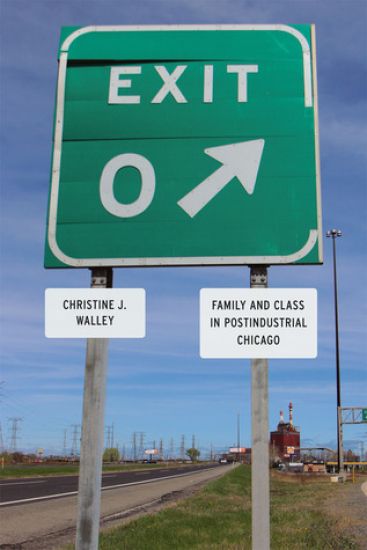
Exit Zero

Exit Zero

Christine J. Walley

University of Chicago Press
2013
nidottu
In 1980, Christine J. Walley's world was turned upside down when the steel mill in Southeast Chicago where her father worked abruptly closed. In the ensuing years, ninety thousand other area residents would also lose their jobs in the mills - just one example of the vast scale of de-industrialization occurring across the United States. The disruption of this event propelled Walley into a career as a cultural anthropologist, and now, in "Exit Zero", she brings her anthropological perspective home, examining the fate of her family and that of blue-collar America at large. Interweaving personal narratives and family photos with a nuanced assessment of the social impacts of de-industrialization, "Exit Zero" is one part memoir and one part ethnography - providing a much-needed female and familial perspective on cultures of labor and their decline. Through vivid accounts of her family's struggles and her own upward mobility, Walley reveals the social landscapes of America's industrial fallout, navigating complex tensions among class, labor, economy, and environment. Unsatisfied with the notion that her family's turmoil was inevitable in the ever-forward progress of the United States, she provides a fresh and important counter narrative that gives a new voice to the many Americans whose distress resulting from de-industrialization has too often counter narrative ignored.
Exit Zero

Exit Zero

Christine J. Walley

University of Chicago Press
2013
sidottu
In 1980, Christine J. Walley's world was turned upside down when the steel mill in Southeast Chicago where her father worked abruptly closed. In the ensuing years, ninety thousand other area residents would also lose their jobs in the mills - just one example of the vast scale of de-industrialization occurring across the United States. The disruption of this event propelled Walley into a career as a cultural anthropologist, and now, in "Exit Zero", she brings her anthropological perspective home, examining the fate of her family and that of blue-collar America at large. Interweaving personal narratives and family photos with a nuanced assessment of the social impacts of de-industrialization, "Exit Zero" is one part memoir and one part ethnography - providing a much-needed female and familial perspective on cultures of labor and their decline. Through vivid accounts of her family's struggles and her own upward mobility, Walley reveals the social landscapes of America's industrial fallout, navigating complex tensions among class, labor, economy, and environment. Unsatisfied with the notion that her family's turmoil was inevitable in the ever-forward progress of the United States, she provides a fresh and important counter narrative that gives a new voice to the many Americans whose distress resulting from de-industrialization has too often counter narrative ignored.
Rough Waters

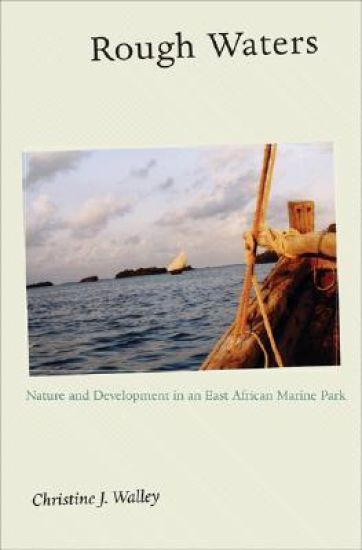
Rough Waters

Christine J. Walley

Princeton University Press
2004
pokkari
Rough Waters explores one of the most crucial problems of the contemporary era--struggles over access to, and use of, the environment. It combines insights from anthropology, history, and environmental studies, mounting an interdisciplinary challenge to contemporary accounts of "globalization." The book focuses on The Mafia Island Marine Park, a national park in Tanzania that became the center of political conflict during its creation in the mid-1990s. The park, reflecting a new generation of internationally sponsored projects, was designed to encourage environmental conservation as well as development. Rather than excluding residents, as had been common in East Africa's mainland wildlife parks, Mafia Island was intended to represent a new type of national park that would encourage the participation of area residents and incorporate their ideas. While the park had been described in the project's general management plan as "for the people and by the people," residents remained excluded from the most basic decisions made about the park. The book details the day-to-day tensions and alliances that arose among Mafia residents, Tanzanian government officials, and representatives of international organizations, as each group attempted to control and define the park. Walley's analysis argues that a technocentric approach to conservation and development can work to the detriment of both poorer people and the environment. It further suggests that the concept of the global may be inadequate for understanding this and other social dramas in the contemporary world.