Kirjojen hintavertailu. Mukana 12 657 676 kirjaa ja 12 kauppaa.
Kirjailija
Christine Kinealy
Kirjat ja teokset yhdessä paikassa: 25 kirjaa, julkaisuja vuosilta 1997-2026, suosituimpien joukossa Black Abolitionists in Ireland, Volume 3. Vertaile teosten hintoja ja tarkista saatavuus suomalaisista kirjakaupoista.
This volume traces the experiences of seven African American abolitionists who travelled to Ireland during the tumultuous years after the Fugitive Slave Act of 1850: Eli Stokes, William Allen, Isaac Davison, William Mitchell, William Troy, James Cheeney Thompson, and Robert Maxwell Johnson. Despite their diverse life stories, many of these visitors shared deeply held evangelical beliefs, with the ambition to save souls being central to their mission. This aspiration resonated in an era when Christianity and civilisation were widely conflated. Although this book focuses on these seven men – clergy, academics, lecturers – it also examines their interactions with other activists, authors, and actors, and how they negotiated the complex intersections of politics, culture, religion, race, ethnicity, physical appearance and gender. Moreover, through the involvement of Canada and Africa, notably Liberia, they gave the abolition movement a transnational presence. Each of these abolitionists attracted extensive press coverage during their time overseas, and three published successful biographies, yet they have largely faded from view in the historiography. Nonetheless, individually and collectively their contributions to ending enslavement and to Black advancement were considerable. This book will be of value to students and scholars interested in modern European history and social and cultural history.
Building on the narratives explored in volume one, this publication recovers the story of a further seven Black visitors to Ireland in the decades prior to the American Civil War.This volume examines each of these seven activists and artists, and how their unique and diverse talents contributed to the movement to abolish enslavement and to the demand for Black equality. In an era that witnessed the rise of minstrelsy, they provided a powerful counter argument to the lie of Black inferiority. Moreover, their interactions with Irish abolitionists helped to build a strong transatlantic movement that had a global reach and impact. The lives explored are: Ira Aldridge (the African Roscius), William Henry Lane (Master Juba), William P. Powell, Elizabeth Greenfield (the Black Swan), Reuben Nixon, James Watkins and William H. Day. Individually and collectively they demonstrated the agency and power of Black involvement in the search for social justice.This book will be of value to students and scholars alike interested in modern European history and social and cultural history.
Building on the narratives explored in volume one, this publication recovers the story of a further seven Black visitors to Ireland in the decades prior to the American Civil War.This volume examines each of these seven activists and artists, and how their unique and diverse talents contributed to the movement to abolish enslavement and to the demand for Black equality. In an era that witnessed the rise of minstrelsy, they provided a powerful counter argument to the lie of Black inferiority. Moreover, their interactions with Irish abolitionists helped to build a strong transatlantic movement that had a global reach and impact. The lives explored are: Ira Aldridge (the African Roscius), William Henry Lane (Master Juba), William P. Powell, Elizabeth Greenfield (the Black Swan), Reuben Nixon, James Watkins and William H. Day. Individually and collectively they demonstrated the agency and power of Black involvement in the search for social justice.This book will be of value to students and scholars alike interested in modern European history and social and cultural history.
This study throws light on a little-studied but emerging field within Irish studies: Black history. It focuses on an American-born Black Shakespearean actor, Ira Aldridge, who, to follow his vocation and escape prejudice in America, travelled to England in 1824, aged only 17. Despite some racial stereotyping, his rise to prominence in the theatrical world was meteoric. Until his premature death in 1867, he played to audiences throughout Europe—from Galway in Ireland to St Petersburg in Russia—winning plaudits and accolades, and recognition as the leading Shakespearean tragedian of the day. Aldridge was not just an actor; wherever he performed, he also delivered a message about the cruelty of enslavement and the need for Black equality. This publication focuses on Aldridge's special relationship with Ireland and its theatrical traditions over a period of three decades.
The story of the anti-slavery movement in Ireland is little known, yet when Frederick Douglass visited the country in 1845, he described Irish abolitionists as the most ‘ardent’ that he had ever encountered. Moreover, their involvement proved to be an important factor in ending the slave trade, and later slavery, in both the British Empire and in America.While Frederick Douglass remains the most renowned black abolitionist to visit Ireland, he was not the only one. This publication traces the stories of ten black abolitionists, including Douglass, who travelled to Ireland in the decades before the American Civil War, to win support for their cause. It opens with former slave, Olaudah Equiano, kidnapped as a boy from his home in Africa, and who was hosted by the United Irishmen in the 1790s; it closes with the redoubtable Sarah Parker Remond, who visited Ireland in 1859 and chose never to return to America. The stories of these ten men and women, and their interactions with Ireland, are diverse and remarkable.
The story of the anti-slavery movement in Ireland is little known, yet when Frederick Douglass visited the country in 1845, he described Irish abolitionists as the most ‘ardent’ that he had ever encountered. Moreover, their involvement proved to be an important factor in ending the slave trade, and later slavery, in both the British Empire and in America.While Frederick Douglass remains the most renowned black abolitionist to visit Ireland, he was not the only one. This publication traces the stories of ten black abolitionists, including Douglass, who travelled to Ireland in the decades before the American Civil War, to win support for their cause. It opens with former slave, Olaudah Equiano, kidnapped as a boy from his home in Africa, and who was hosted by the United Irishmen in the 1790s; it closes with the redoubtable Sarah Parker Remond, who visited Ireland in 1859 and chose never to return to America. The stories of these ten men and women, and their interactions with Ireland, are diverse and remarkable.
Previous histories on O’Connell have dealt predominantly with his attempts to secure a repeal of the 1800 Act of Union and on his success in achieving Catholic Emancipation in 1829, Kinealy focuses instead on the neglected issue of O’Connell’s contribution to the anti-slavery movement in the United States.
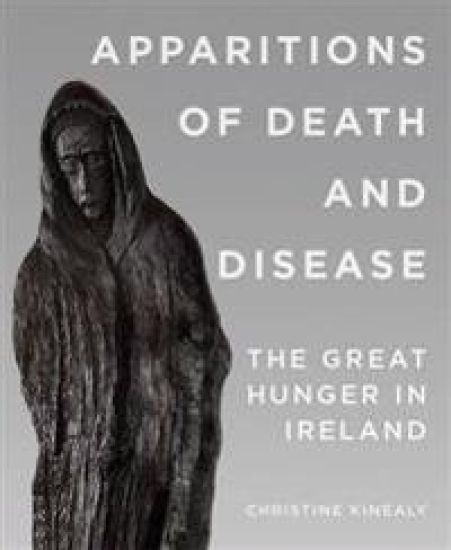
Ireland's Great Hunger Museum at Quinnipiac University publishes Famine Folios, a unique resource for students, scholars and researchers, as well as general readers, covering many aspects of the Famine in Ireland from 1845 - 1852 - the worst demographic catastrophe of nineteenth-century Europe. The essays are interdisciplinary in nature, and make available new research in Famine studies by internationally established scholars in history, art history, cultural theory, philosophy, media history, political economy, literature and music. This publications initiative is devised to augment the Museum experience, and is part of the Museum's commitment to making its collection accessible to audiences of all ages and levels of educational interest. The booklets are produced to the highest level, beautifully illustrated with works from the Museum and related collections. It ensures that audiences have access to the latest scholarship as it pertains to both the historical and contemporary dimensions of the collection.Christine Kinealy provides a chronology of the Famine and examines the causes and consequences of this tragedy, and asks how could a famine of this magnitude occur at the centre of the British Empire? Why did Ireland starve?
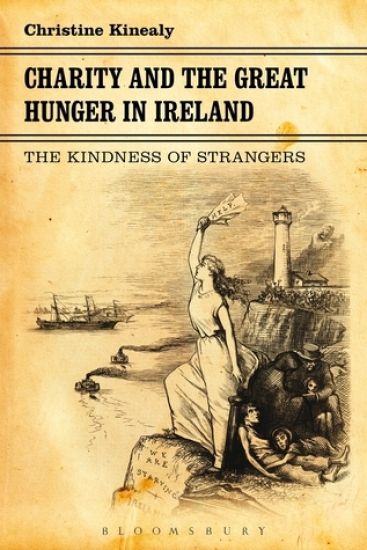
The Great Irish Famine was one of the most devastating humanitarian disasters of the nineteenth century. In a period of only five years, Ireland lost approximately 25% of its population through a combination of death and emigration. How could such a tragedy have occurred at the heart of the vast, and resource-rich, British Empire?Charity and the Great Hunger in Ireland explores this question by focusing on a particular, and lesser-known, aspect of the Famine: that being the extent to which people throughout the world mobilized to provide money, food and clothing to assist the starving Irish. This book considers how, helped by developments in transport and communications, newspapers throughout the world reported on the suffering in Ireland, prompting funds to be raised globally on an unprecedented scale. Donations came from as far away as Australia, China, India and South America and contributors emerged from across the various religious, ethnic, social and gender divides. Charity and the Great Hunger in Ireland traces the story of this international aid effort and uses it to reveal previously unconsidered elements in the history of the Famine in Ireland.
The Great Irish Famine was one of the most devastating humanitarian disasters of the nineteenth century. In a period of only five years, Ireland lost approximately 25% of its population through a combination of death and emigration. How could such a tragedy have occurred at the heart of the vast, and resource-rich, British Empire?Charity and the Great Hunger in Ireland explores this question by focusing on a particular, and lesser-known, aspect of the Famine: that being the extent to which people throughout the world mobilized to provide money, food and clothing to assist the starving Irish. This book considers how, helped by developments in transport and communications, newspapers throughout the world reported on the suffering in Ireland, prompting funds to be raised globally on an unprecedented scale. Donations came from as far away as Australia, China, India and South America and contributors emerged from across the various religious, ethnic, social and gender divides. Charity and the Great Hunger in Ireland traces the story of this international aid effort and uses it to reveal previously unconsidered elements in the history of the Famine in Ireland.
Previous histories on O’Connell have dealt predominantly with his attempts to secure a repeal of the 1800 Act of Union and on his success in achieving Catholic Emancipation in 1829, Kinealy focuses instead on the neglected issue of O’Connell’s contribution to the anti-slavery movement in the United States.
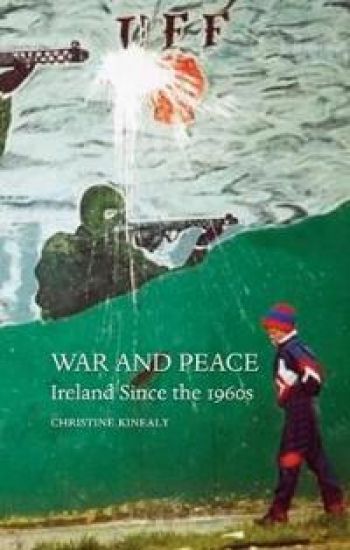
Over the past fifty years Ireland has been through a period of intense change, and has experienced both challenges and successes. In War and Peace: Ireland since the 1960s, historian Christine Kinealy explores the political triumphs and travails in Ireland over this period. Kinealy provides a thorough and up-to-date account of the unfolding of The Troubles, the three decades of violence and social unrest between Catholic nationalists and Protestant unionists. She explores the Republic of Ireland's entry into the European Union in 1973, its often contentious relationship with Britain, and the changes in rates of emigration to the USA and the rest of the world. The women's movement in the 1970s and the successive election of two female presidents proved the Republic's ability to accept and internalize social change, and despite Catholic Church scandals and Northern Ireland's turbulence, this partitioned island has remained a significant presence on the world stage. Ireland's economy has also transformed over the last fifty years: the phenomenon of the 'Celtic Tiger', the introduction of the euro, and Ireland's current struggle with the global recession brings the story up to date. This book presents a comprehensive panorama of the events that have shaped Ireland's social and political landscape over the last fifty years. It will be essential reading for anyone interested in Ireland's recent past, and how it will continue to develop in the future.
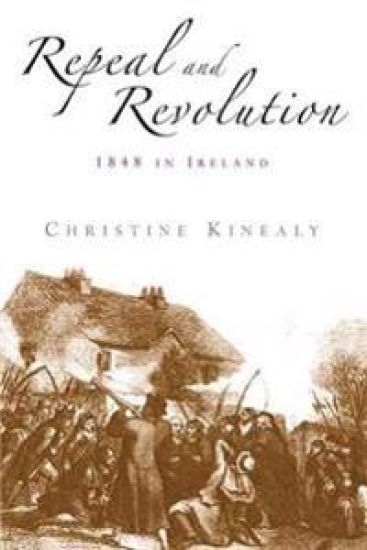
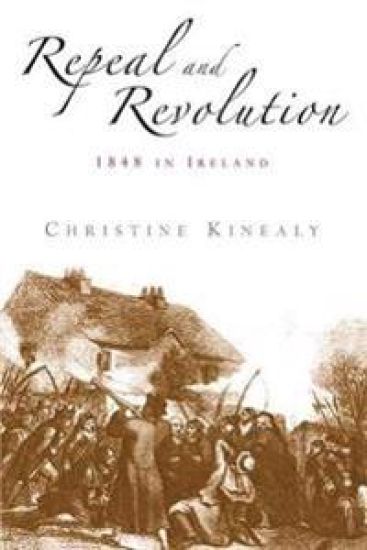
Repeal and revolution. 1848 in Ireland examines the events that led up to the 1848 rising and examines the reasons for its failure. It places the rising in the context of political changes outside Ireland, especially the links between the Irish nationalists and radicals and republicans in Britain, France and north America. The book concludes that far from being foolish or pathetic, the men and women who led and supported the 1848 rising in Ireland were remarkable, both individually and collectively.This book argues that despite the failure of the July rising in Ireland, the events that let to it and followed played a crucial part in the development of modern Irish nationalismThis study will engage academics, students and enthusiasts of Irish studies and modern History
Repeal and revolution. 1848 in Ireland examines the events that led up to the 1848 rising and examines the reasons for its failure. It places the rising in the context of political changes outside Ireland, especially the links between the Irish nationalists and radicals and republicans in Britain, France and north America. The book concludes that far from being foolish or pathetic, the men and women who led and supported the 1848 rising in Ireland were remarkable, both individually and collectively.This book argues that despite the failure of the July rising in Ireland, the events that let to it and followed played a crucial part in the development of modern Irish nationalismThis study will engage academics, students and enthusiasts of Irish studies and modern History
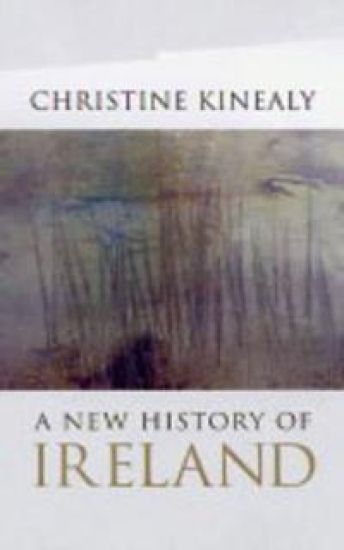
Christine Kinealy incorporates some of the most recent scholarship to explore the key developments and personalities that have helped to shape this country over 1500 years. From the arrival of the Anglo-Normans in the twelfth century - which began Ireland's complex and tortuous relationship with England - to Cromwell's invasion, the Plantation of Ulster, the Great Famine and Nationalism, Christine Kinealy challenges the dominant interpretation of events.
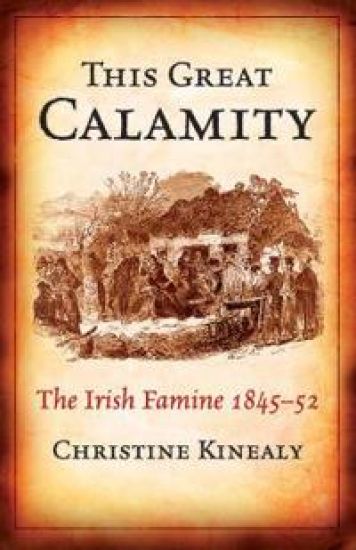
The Great Famine of 1845-52 was the most decisive event in the history of modern Ireland. In a country of eight million people, the Famine caused the death of approximately one million, while a similar number were forced to emigrate. The Irish population fell to just over four million by the beginning of the twentieth century. Christine Kinealy’s survey is long established as the most complete, scholarly survey of the Great Famine yet produced. The unravelling of fact from opinion, the interpretation of motives behind the London governments’ responses, and the confrontation of stereotypes are at the heart of this extensive work. This Great Calamity is an exceptional book, now available for the first time in pocket format. ‘This book is mandatory reading for anyone who wishes to be informed about Irish history.’ Irish Post ‘This is not the last word on the Famine, but it is the best so far.’ Irish Independent
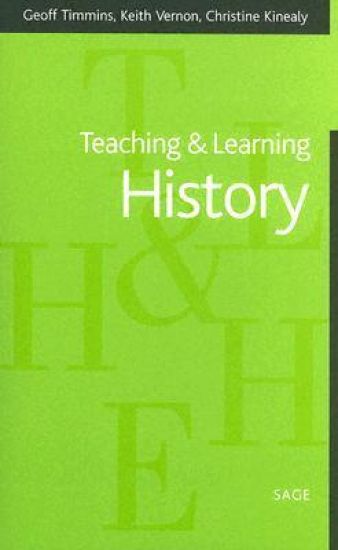
'This book, informed by exceptionally wide inquiry into current history teaching practices in the English-speaking world, is a real achievement. The authors convey current context and challenges with great insight, and they move through possibilities in sequencing, content, skills and assessment, without strident comment, extending our knowledge of options and pitfalls in the process' - Peter N. Stearns, Provost, George Mason University 'Comprehensive, persuasive, and at all times accessible in style and argument, this text both encourages and empowers university historians to review and enhance their teaching practices. All key facets of programme development are explored with reference to an extensive and well-chosen range of international examples. The chapter on the historian's skills and qualities of mind is one of several that I will be referring to frequently' - Jeanine Graham, Senior Lecturer, History, University of Waikato '... the varied findings make fascinating reading ... this book should be required reading for everyone involved in teaching history: there is plenty here for us all to learn from' - ESCalate 'In providing such a clear, informative and thoughtful exploration of the current state of history in higher education, and in helping to raise the quality of critical debate about its future, this book contributes greatly to the growing scholarship of teaching and learning in the discipline. It should also become a vital resource for all historians who wish to honour the old dictum that, in teaching as in research, the one duty we owe history is to rewrite it' - Professor Paul Hyland, Director of History in the Subject Centre for History, Classics and Archaeology '[E]xtremely useful... provides a thought-provoking and useful discussion concerning the task of actually teaching history at university level... This timely book needs to be read widely, and the many issues it raises should command our closest attention' - Higher Education Review Over the last 10 years or so, history as an academic discipline has become steeped in controversy and introspection. Additional areas of interest have opened up, fresh perspectives and approaches have been offered, and new teaching and learning strategies have been advocated. There has been an increasing emphasis on producing well-qualified graduates equipped with the skills, knowledge and attitudes to cope with the changing demands of the world of work. This book suggests how these issues may be managed. The authors identify and discuss the underlying principles, and consider ways in which they can be applied at module and programme levels. The Teaching & Learning in the Humanities series, edited by Ellie Chambers and Jan Parker, is for beginning and experienced lecturers. It deals with all aspects of teaching individual arts and humanities subjects in higher education. Experienced teachers offer authoritative suggestions on how to become critically reflective about discipline-specific practices.
'This book, informed by exceptionally wide inquiry into current history teaching practices in the English-speaking world, is a real achievement. The authors convey current context and challenges with great insight, and they move through possibilities in sequencing, content, skills and assessment, without strident comment, extending our knowledge of options and pitfalls in the process' - Peter N. Stearns, Provost, George Mason University 'Comprehensive, persuasive, and at all times accessible in style and argument, this text both encourages and empowers university historians to review and enhance their teaching practices. All key facets of programme development are explored with reference to an extensive and well-chosen range of international examples. The chapter on the historian's skills and qualities of mind is one of several that I will be referring to frequently' - Jeanine Graham, Senior Lecturer, History, University of Waikato '... the varied findings make fascinating reading ... this book should be required reading for everyone involved in teaching history: there is plenty here for us all to learn from' - ESCalate 'In providing such a clear, informative and thoughtful exploration of the current state of history in higher education, and in helping to raise the quality of critical debate about its future, this book contributes greatly to the growing scholarship of teaching and learning in the discipline. It should also become a vital resource for all historians who wish to honour the old dictum that, in teaching as in research, the one duty we owe history is to rewrite it' - Professor Paul Hyland, Director of History in the Subject Centre for History, Classics and Archaeology '[E]xtremely useful... provides a thought-provoking and useful discussion concerning the task of actually teaching history at university level... This timely book needs to be read widely, and the many issues it raises should command our closest attention' - Higher Education Review Over the last 10 years or so, history as an academic discipline has become steeped in controversy and introspection. Additional areas of interest have opened up, fresh perspectives and approaches have been offered, and new teaching and learning strategies have been advocated. There has been an increasing emphasis on producing well-qualified graduates equipped with the skills, knowledge and attitudes to cope with the changing demands of the world of work. This book suggests how these issues may be managed. The authors identify and discuss the underlying principles, and consider ways in which they can be applied at module and programme levels. The Teaching & Learning in the Humanities series, edited by Ellie Chambers and Jan Parker, is for beginning and experienced lecturers. It deals with all aspects of teaching individual arts and humanities subjects in higher education. Experienced teachers offer authoritative suggestions on how to become critically reflective about discipline-specific practices.
Irish history has been dominated by a succession of settlers, traders, invaders, soldiers and colonisers. The arrival of Patrick in the fifth century - arguably the most important settler ever - is the starting point for this concise and accessible account of 1500 years of Irish history. The coming of Christianity integrated Ireland more firmly with Europe and marked the emergence of a golden age of Irish scholarship. The arrival of the Anglo-Normans in the twelfth century signalled the beginning of Ireland's long, complex and often tortuous relationship with England, which changed the political landscape of both countries. At the beginning of the twenty-first century, the Republic of Ireland is again playing a leading role in Europe - economically, financially and culturally. This general survey examines the key developments and personalities of Irish history and challenges the dominant interpretation of events such as Cromwell's invasion, the Plantation of Ulster, the Great Famine and Nationalism. A New History of Ireland provides a concise, lucid and nuanced approach to Ireland's complex and fascinating history.