Kirjojen hintavertailu. Mukana 12 390 323 kirjaa ja 12 kauppaa.
Kirjailija
Christine Macintyre
Kirjat ja teokset yhdessä paikassa: 30 kirjaa, julkaisuja vuosilta 2000-2017, suosituimpien joukossa Play for Children with Special Needs. Vertaile teosten hintoja ja tarkista saatavuus suomalaisista kirjakaupoista.
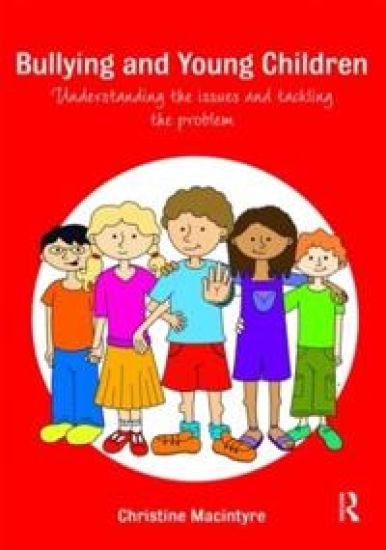
What is it that makes some children bully and some become victims?What can you do if despite your best efforts, a child keeps on taunting another?What steps can you take before communicating with parents and what will you say?The practice of bullying endures in all schools today. Despite the implementation of bullying policies, parents and staff can be equally perplexed: not really understanding what they have or haven’t done to allow it to happen. Christine Macintyre explores this highly emotive topic, asking why as many as one in 12 school children are bullying victims, and will show in a highly practical way, what can be done to support the children and help staff improve their own practice. This book will provide help and guidance on: enhancing the self-esteem of the affected children, showing how new-found confidence will enable children to offset the effects of being bullied or indeed being a bully. how to tell parents their child is bullying or being bullied, and how to build up a meaningful and mutually supportive relationship with them. creating a learning environment that prevents the desire for children to bully.Based on case studies giving first hand accounts of real-life situations, and evaluations of strategies that have been tried and tested, this book suggests fresh and inspiring ways of tackling a problem faced by many practitioners today.
Today there are more children than ever before in need of a variety of additional support needs, and many of these children have poor movement as a key contributory factor. Even in children with no specific ‘label’, movement is being found to be linked to learning, and educational professionals need to understand what is amiss and how to support children who do not meet their motor milestones at the correct time.The brand new topic areas featured in this comprehensive and practical new edition include: a discussion of terminology and labelling (in light of current inclusion guidelines) a range of age specific activities a section on the neurology of dyspraxia, showing the motor pathways that are energised and define motor competence a greater emphasis on balance, coordination and control examples from children of how movement is dependent on planning, sequencing and organising more practical activities that can form the basis of a programme to support the children. Practical strategies are provided throughout this authoritative book, so that teachers and other professionals can identify and understand movement difficulties, are empowered to support the children, and work effectively with the parents.
Can you recognize and tell the difference between gifted and talented children? Do you know how to provide the support they need? Responding directly to current thinking in education, this book raises practitioners’ expectations, and shows you how to identify children in your class as gifted and talented.Christine Macintyre addresses the nature/nurture debate in relation to gifted and talented children, and discusses related topics such as the norms of development and domains of learning. Essential reading for all primary teachers and teaching assistants, this fascinating book is full of practical suggestions enabling you to: recognise the innate nature of giftedness provide the teaching required for talent to emerge understand the experiences of gifted and talented children develop activities to challenge and encourage your gifted and talented children to widen their repertoire of skills and abilitiesA chapter on neurological development is included to confront questions such as "what is it that enables children to do well", and even "Is there a gene for genius?" Contrasting and conflicting answers are shared and debated.Finally, the issue of gifted and talented children with a learning difference/disability is raised and examples are given of how this ASD (asynchronous development) can hinder the recognition of gifts and talents in these children.
Written for teachers, nursery nurses, students and parents by experienced nursery staff, this is an essential guide to organizing, resourcing and teaching in pre-school settings.
`This book achieves what it sets out to do - provide clear guidance to parents and professionals on key aspects of movement in the early years. The book however does more than that - it emphasises that movement in the early years is not the territory of experts, but through the use of this book, the assessment of movement development of activities and programmes are within the range of all - class teachers and parents. I strongly recommend that this book is available in every school' - Educational Review `This book provides a good overview of issues in movement and development and learning, and will stimulate the interested reader to explore this topic further' - Early Years `This book will be a useful addition to any primary staff room bookshelf. It is a practical book based on sound theory. It will provide ideas for the non-specialist teacher and for parents anxious to help. The suggestions will provide a good framework for the staged assessment and support for young children for whom there is a cause for concern' - Support for Learning `For anyone involved in the development of any young child, this should be essential reading. The book is very informative and readable by parents, teachers and students and is simply illustrated with case studies' - Dyslexia Contact `As a behaviour advisory teacher I will certainly be influenced by reading this, and I know our local occupational therapists would be overjoyed if she knew all teachers read books like this' - Special Children `It is always good to be able to welcome a book on such a key factor as movement in early childhood development, and this text has been written to support parents and practitioners who wish to understand how movement contributes to all aspects of learning -intellectual, social and emotional, as well as physical' - Marian Whitehead, Nursery World `This book is an excellent introduction for anybody trying to understand how movement affects child development. It clearly explains the importance movement has on how young children learn and feel. The information and insights in this book can be found elsewhere but I have yet to find such breadth and depth of information on supporting children with movement difficulties as clearly written and accessible as this book' - Spare-Chair `The book is very informative and readable by parents, teachers and students and amply illustrated with case studies' - Judith Stansfield, SEN ICT Consultant Movement is a key factor in young children's development and it can affect how they learn and how they feel. Do you work with young children who have difficulties in this area? This book shows you how to observe a child as they move to allow for early identification of any problem and then tells you how to help. Dyspraxia (DCD) is on the increase in young children and less confident and easy movement can play a part in other specific learning difficulties such as dyslexia, attention deficit disorder (ADD) and with hyperactivity (ADHD). Included is advice on: } observing, analyzing and assessing movement development } building confidence } helping with handwriting } supporting mathematical development Why not ask the child to pop bubble paper as one way of promoting finger awareness? Carefully taught activities can be easy to plan and fun to carry out and there are lots of suggested activities set out in the book. Early years practitioners in nurseries, schools, playgroups and EYDCPs will find this book clear and useful; it also offers advice to parents. Christine Macintyre was formerly Senior Lecturer at Edinburgh University and is now a freelance consultant. Kim McVitty is a nursery school teacher.
`This book achieves what it sets out to do - provide clear guidance to parents and professionals on key aspects of movement in the early years. The book however does more than that - it emphasises that movement in the early years is not the territory of experts, but through the use of this book, the assessment of movement development of activities and programmes are within the range of all - class teachers and parents. I strongly recommend that this book is available in every school' - Educational Review `This book provides a good overview of issues in movement and development and learning, and will stimulate the interested reader to explore this topic further' - Early Years `This book will be a useful addition to any primary staff room bookshelf. It is a practical book based on sound theory. It will provide ideas for the non-specialist teacher and for parents anxious to help. The suggestions will provide a good framework for the staged assessment and support for young children for whom there is a cause for concern' - Support for Learning `For anyone involved in the development of any young child, this should be essential reading. The book is very informative and readable by parents, teachers and students and is simply illustrated with case studies' - Dyslexia Contact `As a behaviour advisory teacher I will certainly be influenced by reading this, and I know our local occupational therapists would be overjoyed if she knew all teachers read books like this' - Special Children `It is always good to be able to welcome a book on such a key factor as movement in early childhood development, and this text has been written to support parents and practitioners who wish to understand how movement contributes to all aspects of learning -intellectual, social and emotional, as well as physical' - Marian Whitehead, Nursery World `This book is an excellent introduction for anybody trying to understand how movement affects child development. It clearly explains the importance movement has on how young children learn and feel. The information and insights in this book can be found elsewhere but I have yet to find such breadth and depth of information on supporting children with movement difficulties as clearly written and accessible as this book' - Spare-Chair `The book is very informative and readable by parents, teachers and students and amply illustrated with case studies' - Judith Stansfield, SEN ICT Consultant Movement is a key factor in young children's development and it can affect how they learn and how they feel. Do you work with young children who have difficulties in this area? This book shows you how to observe a child as they move to allow for early identification of any problem and then tells you how to help. Dyspraxia (DCD) is on the increase in young children and less confident and easy movement can play a part in other specific learning difficulties such as dyslexia, attention deficit disorder (ADD) and with hyperactivity (ADHD). Included is advice on: } observing, analyzing and assessing movement development } building confidence } helping with handwriting } supporting mathematical development Why not ask the child to pop bubble paper as one way of promoting finger awareness? Carefully taught activities can be easy to plan and fun to carry out and there are lots of suggested activities set out in the book. Early years practitioners in nurseries, schools, playgroups and EYDCPs will find this book clear and useful; it also offers advice to parents. Christine Macintyre was formerly Senior Lecturer at Edinburgh University and is now a freelance consultant. Kim McVitty is a nursery school teacher.
Many children experience difficulties which impact on their learning at home and school. Some children are considered to have a specific learning difficulty such as dyslexia or dyspraxia, but other children display a range of indicators which cross the boundaries of specific named 'conditions'. If teachers are to offer appropriate support, the authors of this highly practical book argue that they must look beyond the label to assess the whole child. This is an informative book which: * encourages teachers to consider children as individuals rather than attempting to match them to existing sets of indicators * pinpoints the overlap of indicators within different specific learning difficulties * considers the process of assessment* explains the implications of the children's difficulties* offers tried-and-tested strategies to promote inclusive learning.Teachers, teaching assistants, Special Educational Needs Co-ordinators and students undertaking teacher education courses will all find this a refreshingly accessible book.
Many children experience difficulties which impact on their learning at home and school. Some children are considered to have a specific learning difficulty such as dyslexia or dyspraxia, but other children display a range of indicators which cross the boundaries of specific named 'conditions'. If teachers are to offer appropriate support, the authors of this highly practical book argue that they must look beyond the label to assess the whole child. This is an informative book which: * encourages teachers to consider children as individuals rather than attempting to match them to existing sets of indicators * pinpoints the overlap of indicators within different specific learning difficulties * considers the process of assessment* explains the implications of the children's difficulties* offers tried-and-tested strategies to promote inclusive learning.Teachers, teaching assistants, Special Educational Needs Co-ordinators and students undertaking teacher education courses will all find this a refreshingly accessible book.
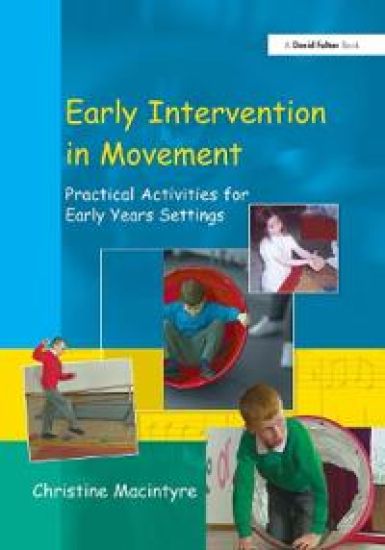
This text is full of practical ideas to help all early years children enjoy developing their movement abilities. Each activity uses rhymes and jingles and some have music. This is to enhance the children's rhythmic ability, their listening skills and their phonological awareness. There are many activities that form the basis of lesson plans. The material shows how the learning outcomes fulfil the criteria set out in the Curriculum Guidance for the Foundation Stage and the 5-14 Guidelines (Expressive Arts). The activities will be great fun for all children, whether they find movement easy and are always on the look-out for challenges, or whether they are less confident. The book aims to support teachers in their work to help all children fulfill their potential, offering guidance on diagnosis and assessment of skills and weaknesses as well as observation and progression. Chapters include developing the basic movement patterns: gross movements, fine movements and manipulative skills; developing sensory integration; teaching and observing movement; and detailed lesson plans. All children, whatever their level of ability, can be helped to be more confident and competent movers - a process which often also results in improved self-esteem. Teachers and support staff in all early years settings will find much in this book to inspire and enthuse all children in their care.
First Published in 2000. Based on the real-life experiences of teachers and student teachers using action research for the first time, this introductory text demystifies the issues commonly faced by the novice researcher. In an accessible and user-friendly style, the author explains how: the principles of action research can be effectively applied; small scale classroom research can discover important cues to aid learning; to implement action research in different curricular areas, individually or in groups, and with children of different abilities; the whole endeavour can be structured to form an undergraduate or postgraduate thesis. This book, which is suitable for use in nursery, primary and secondary schools, will be invaluable to any education professional wishing to progress from observing what happens in the classroom, to actually explaining why.