Kirjojen hintavertailu. Mukana 12 595 353 kirjaa ja 12 kauppaa.

Kirjailija

Christine Shaw

Kirjat ja teokset yhdessä paikassa: 13 kirjaa, julkaisuja vuosilta 1997-2023, suosituimpien joukossa Julius II. Vertaile teosten hintoja ja tarkista saatavuus suomalaisista kirjakaupoista.

13 kirjaa

Kirjojen julkaisuhaarukka 1997-2023.

Telling the Time Book 1 (KS1 Maths, Ages 5-6)

Telling the Time Book 1 (KS1 Maths, Ages 5-6)

SchofieldSims; Christine Shaw

Schofield Sims Ltd
2017
pokkari
Telling the time is a complex skill that many children struggle to grasp. SchofieldSims Telling the Time breaks this difficult topic down into a sequence of manageable ideas that young learners can approach at their own pace. Telling the Time Book 1 supports the National Curriculum requirements for Year 1.
Julius II

Julius II

Christine Shaw

JOHN WILEY AND SONS LTD
1997
nidottu
Christine Shaw's new biography uses a wealth of archival sources to paint a vivid portrait of one of the most remarkable and colourful men ever to sit on the papal throne. Admired and hated, his actions were always controversial and made him one of the most influential figures in Renaissance Italy.
Reason and Experience in Renaissance Italy

Reason and Experience in Renaissance Italy

Christine Shaw

Cambridge University Press
2023
pokkari
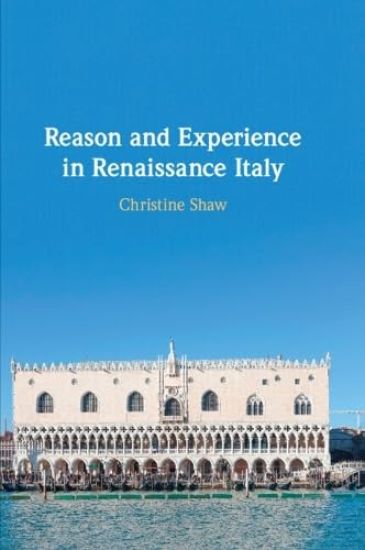
Political life in Renaissance Italy was held together by political principles which underlay, or were used to justify, political proposals and decisions in practice. This wide-ranging comparative survey examines these political principles, as expressed in sources such as council debates, preambles to legislation and official correspondence, in the mid-fifteenth to the mid-sixteenth century Italy. Focusing especially on the five republics - Florence, Venice, Genoa, Siena and Lucca - the book also considers princes and signori, and the principles underlying relations between states, particularly relations between major and minor powers. Many of the ideas articulated by those confronting practical political problems ranged beyond the questions dealt with in formal treatises of political thought and philosophy. Drawing on extensive archival research, Christine Shaw explores the relationship between 'reason and experience' in the conduct of political affairs in Renaissance Italy, and the gap between theory and practice.
Reason and Experience in Renaissance Italy

Reason and Experience in Renaissance Italy

Christine Shaw

Cambridge University Press
2021
sidottu
Political life in Renaissance Italy was held together by political principles which underlay, or were used to justify, political proposals and decisions in practice. This wide-ranging comparative survey examines these political principles, as expressed in sources such as council debates, preambles to legislation and official correspondence, in the mid-fifteenth to the mid-sixteenth century Italy. Focusing especially on the five republics - Florence, Venice, Genoa, Siena and Lucca - the book also considers princes and signori, and the principles underlying relations between states, particularly relations between major and minor powers. Many of the ideas articulated by those confronting practical political problems ranged beyond the questions dealt with in formal treatises of political thought and philosophy. Drawing on extensive archival research, Christine Shaw explores the relationship between 'reason and experience' in the conduct of political affairs in Renaissance Italy, and the gap between theory and practice.
Isabella d’Este

Isabella d’Este

Christine Shaw

Routledge
2019
sidottu
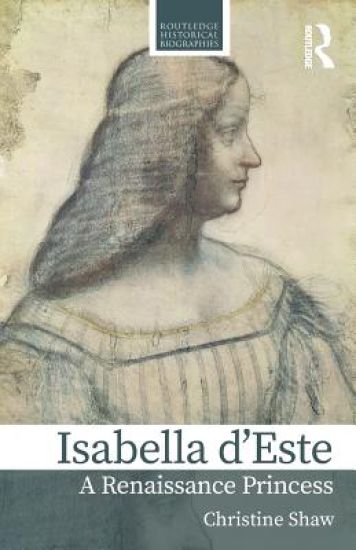
Isabella d’Este, Marchioness of Mantua (1474-1539), is one of the most studied figures of Renaissance Italy, as an epitome of Renaissance court culture and as a woman having an unusually prominent role in the politics of her day. This biography provides a well-rounded account of the full range of her activities and interests from her childhood to her final years as a dowager, and considers Isabella d’Este not as an icon but as a woman of her time and place in the world. It covers all aspects of her life including her relationship with her parents and siblings as well as with her husband and children; her interest in literature and music, painting and antiquities; her political and diplomatic activities; her concern with fashion and jewellery; her relations with other women; and her love of travel.In this book, grounded in an understanding of the context of the Italy of her day, the typical interests and behaviour of women of Isabella d’Este’s status within Renaissance Italy are distinguished from those that were unique to her, such as the elaborate apartments that she created for herself and her extensive surviving correspondence, which provides insights into all aspects of life in the major courts of northern Italy, centres of Renaissance culture. Providing fresh perspectives on one of the most famous figures of Renaissance Italy, Isabella d’Este will be of great interest to undergraduates and graduates of early modern history, gender studies, renaissance studies and art history.
Isabella d’Este

Isabella d’Este

Christine Shaw

Routledge
2019
nidottu
Isabella d’Este, Marchioness of Mantua (1474-1539), is one of the most studied figures of Renaissance Italy, as an epitome of Renaissance court culture and as a woman having an unusually prominent role in the politics of her day. This biography provides a well-rounded account of the full range of her activities and interests from her childhood to her final years as a dowager, and considers Isabella d’Este not as an icon but as a woman of her time and place in the world. It covers all aspects of her life including her relationship with her parents and siblings as well as with her husband and children; her interest in literature and music, painting and antiquities; her political and diplomatic activities; her concern with fashion and jewellery; her relations with other women; and her love of travel.In this book, grounded in an understanding of the context of the Italy of her day, the typical interests and behaviour of women of Isabella d’Este’s status within Renaissance Italy are distinguished from those that were unique to her, such as the elaborate apartments that she created for herself and her extensive surviving correspondence, which provides insights into all aspects of life in the major courts of northern Italy, centres of Renaissance culture. Providing fresh perspectives on one of the most famous figures of Renaissance Italy, Isabella d’Este will be of great interest to undergraduates and graduates of early modern history, gender studies, renaissance studies and art history.
The Italian Wars 1494-1559

The Italian Wars 1494-1559

Christine Shaw; Michael Mallett

Routledge
2018
sidottu
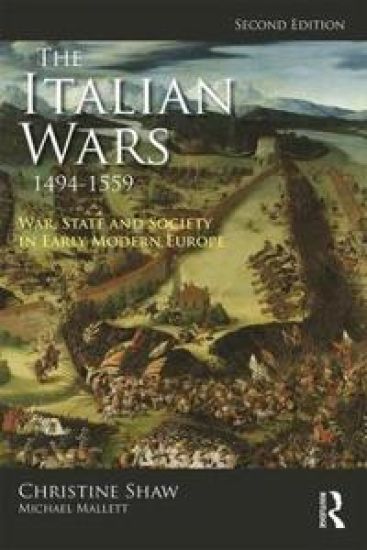
The Italian Wars 1494–1559 outlines the major impact that these wars had, not just on the history of Italy, but on the history of Europe as a whole. It provides the first detailed account of the entire course of the wars, covering all the campaigns and placing the military conflicts in their political, diplomatic, social and economic contexts.Throughout the book, new developments in military tactics, the composition of armies, the balance between infantry and cavalry, and the use of firearms are described and analysed. How Italians of all sectors of society reacted to the wars and the inevitable political and social change that they brought about is also examined, offering a view of the wars from a variety of perspectives. Fully updated and containing a range of maps as well as a brand-new chapter on propaganda and images of war, this second edition of The Italian Wars 1494–1559 is essential reading for all students of Renaissance and military history.
The Italian Wars 1494-1559

The Italian Wars 1494-1559

Christine Shaw; Michael Mallett

Routledge
2018
nidottu
The Italian Wars 1494–1559 outlines the major impact that these wars had, not just on the history of Italy, but on the history of Europe as a whole. It provides the first detailed account of the entire course of the wars, covering all the campaigns and placing the military conflicts in their political, diplomatic, social and economic contexts.Throughout the book, new developments in military tactics, the composition of armies, the balance between infantry and cavalry, and the use of firearms are described and analysed. How Italians of all sectors of society reacted to the wars and the inevitable political and social change that they brought about is also examined, offering a view of the wars from a variety of perspectives. Fully updated and containing a range of maps as well as a brand-new chapter on propaganda and images of war, this second edition of The Italian Wars 1494–1559 is essential reading for all students of Renaissance and military history.
Barons and Castellans

Barons and Castellans

Christine Shaw

BRILL
2014
sidottu
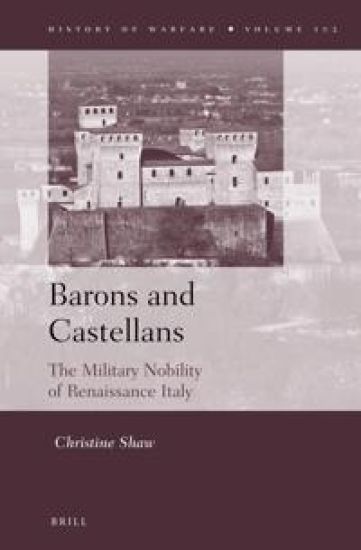
The military nobility – "signori di castelli", lords of castles – formed an important component of the society of Renaissance Italy, although they have often been disregarded by historians, or treated as an anomaly. In Barons and Castellans: The Military Nobility of Renaissance Italy, Christine Shaw provides the first comparative study of “lords of castles”, great and small, throughout Italy, examining their military and political significance, and how their roles changed during the Italian Wars. Her main focus is on their military resources and how they deployed them in public and private wars, in pursuit of their own interests and in the service of others, and on how their military weight affected their political standing and influence.
The Politics of Exile in Renaissance Italy

The Politics of Exile in Renaissance Italy

Christine Shaw

Cambridge University Press
2007
pokkari
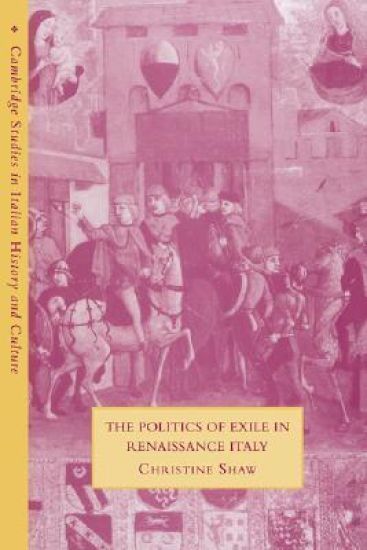
Political exiles were a prominent feature of political life in Renaissance Italy, often a source of intense concern to the states from which they were banished, and a ready instrument for governments wishing to intervene in the affairs of their rivals and enemies. This book, first published in 2000, provides a systematic analysis of the role of exiles in the political life of fifteenth-century Italy. The main focus is on the experiences and reactions of the exiles, and on how Italian states dealt with their own exiles and those of other powers. Siena, notorious in the 1480s for the numbers of her citizens in exile, is used as the model with which other cities are compared. Such a detailed study of the phenomenon of exile also provides alternative perspectives on the nature and power of governments in fifteenth-century Italy, and on ideas about the legitimacy of political authority and political action.
The Politics of Exile in Renaissance Italy

The Politics of Exile in Renaissance Italy

Christine Shaw

Cambridge University Press
2000
sidottu
Political exiles were a prominent feature of political life in Renaissance Italy, often a source of intense concern to the states from which they were banished, and a ready instrument for governments wishing to intervene in the affairs of their rivals and enemies. This book, first published in 2000, provides a systematic analysis of the role of exiles in the political life of fifteenth-century Italy. The main focus is on the experiences and reactions of the exiles, and on how Italian states dealt with their own exiles and those of other powers. Siena, notorious in the 1480s for the numbers of her citizens in exile, is used as the model with which other cities are compared. Such a detailed study of the phenomenon of exile also provides alternative perspectives on the nature and power of governments in fifteenth-century Italy, and on ideas about the legitimacy of political authority and political action.