Kirjojen hintavertailu. Mukana 12 390 323 kirjaa ja 12 kauppaa.

Kirjailija

Christof Dejung

Kirjat ja teokset yhdessä paikassa: 6 kirjaa, julkaisuja vuosilta 2018-2026, suosituimpien joukossa The Primitive Within. Vertaile teosten hintoja ja tarkista saatavuus suomalaisista kirjakaupoista.

6 kirjaa

Kirjojen julkaisuhaarukka 2018-2026.

The Primitive Within

The Primitive Within

Christof Dejung

Oxford University Press
2026
sidottu
This book is the first to examine the relation between German folklore studies and colonial anthropology in the age of empire. It expounds how anthropologists and folklorists aimed to compare rural cultures in the European hinterland to supposedly primitive societies in the colonial peripheries in the nineteenth and early twentieth centuries. This allows for a reconsideration of two fields that all too often have been examined in isolation. Whereas folklore studies has been interpreted as an aspect of nation-building, anthropology has been primarily examined in its relation to imperialism. The links between these two areas of research--and their eventual separation--have barely been examined in any detail to date. By taking Germany as an exemplary case, the book addresses the following questions: how did scholars think about comparing traditional cultures that were thousands of kilometres apart? Why were such cultural ties eventually severed at the turn of the twentieth century? How was the study of so-called primitive societies linked to metropolitan class struggles and assertions of territorial sovereignty, such as nationalism and imperialism? How far was the shifting relation between overseas and domestic primitivism caused, or accompanied, by the increasing importance of racial theories after the end of the First World War? And, last but not least, how was the study of primitivism linked to the concept of historical temporality?

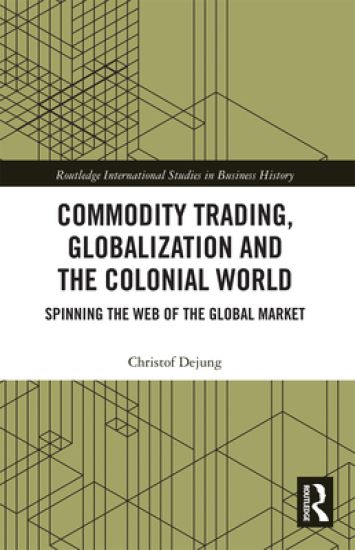
Commodity Trading, Globalization and the Colonial World
Commodity Trading, Globalization and the Colonial World: Spinning the Web of the Global Market provides a new perspective on economic globalization in the nineteenth and twentieth centuries. Instead of understanding the emergence of global markets as a mere result of supply and demand or as the effect of imperial politics, this book focuses on a global trading firm as an exemplary case of the actors responsible for conducting economic transactions in a multicultural business world. The study focuses on the Swiss merchant house Volkart Bros., which was one of the most important trading houses in British India after the late nineteenth century and became one of the biggest cotton and coffee traders in the world after decolonization.The book examines the following questions: How could European merchants establish business contacts with members of the mercantile elite from India, China or Latin America? What role did a shared mercantile culture play for establishing relations of trust? How did global business change with the construction of telegraph lines and railways and the development of economic institutions such as merchant banks and commodity exchanges? And what was the connection between the business interests of transnationally operating capitalists and the territorial aspirations of national and imperial governments?Based on a five-year-long research endeavor and the examination of 24 public and private archives in seven countries and on three continents, Commodity Trading, Globalization and the Colonial World: Spinning the Web of the Global Market goes well beyond a mere company history as it highlights the relationship between multinationally operating firms and colonial governments, and the role of business culture in establishing notions of trust, both within the firm and between economic actors in different parts of the world. It thus provides a cutting-edge history of globalization from a micro-perspective. Following an actor-theoretical perspective, the book maintains that the global market that came into being in the nineteenth century can be perceived as the consequence of the interaction of various actors. Merchants, peasants, colonial bureaucrats and industrialists were all involved in spinning the individual threads of this commercial web. By connecting established approaches from business history with recent scholarship in the fields of global and colonial history, Commodity Trading, Globalization and the Colonial World: Spinning the Web of the Global Market offers a new perspective on the emergence of global enterprise and provides an important addition to the history of imperialism and economic globalization.
The Global Bourgeoisie

The Global Bourgeoisie

Christof Dejung; David Motadel; Jürgen Osterhammel

Princeton University Press
2019
pokkari
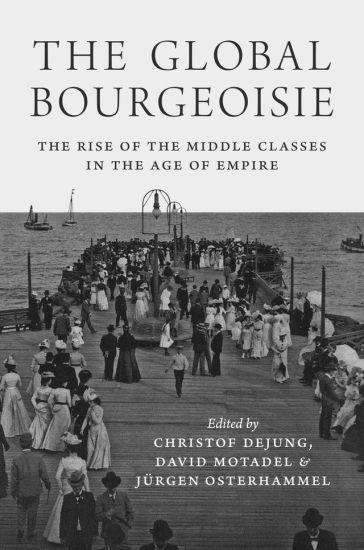
The first global history of the middle class While the nineteenth century has been described as the golden age of the European bourgeoisie, the emergence of the middle class and bourgeois culture was by no means exclusive to Europe. The Global Bourgeoisie explores the rise of the middle classes around the world during the age of empire. Bringing together eminent scholars, this landmark essay collection compares middle-class formation in various regions, highlighting differences and similarities, and assesses the extent to which bourgeois growth was tied to the increasing exchange of ideas and goods. The contributors indicate that the middle class was from its very beginning, even in Europe, the result of international connections and entanglements.Essays are grouped into six thematic sections: the political history of middle-class formation, the impact of imperial rule on the colonial middle class, the role of capitalism, the influence of religion, the obstacles to the middle class beyond the Western and colonial world, and, lastly, reflections on the creation of bourgeois cultures and global social history. Placing the establishment of middle-class society into historical context, this book shows how the triumph or destabilization of bourgeois values can shape the liberal world order.The Global Bourgeoisie irrevocably changes the understanding of how an important social class came to be.
The Global Bourgeoisie

The Global Bourgeoisie

Christof Dejung; David Motadel; Jürgen Osterhammel

PRINCETON UNIVERSITY PRESS
2019
sidottu
The first global history of the middle class While the nineteenth century has been described as the golden age of the European bourgeoisie, the emergence of the middle class and bourgeois culture was by no means exclusive to Europe. The Global Bourgeoisie explores the rise of the middle classes around the world during the age of empire. Bringing together eminent scholars, this landmark essay collection compares middle-class formation in various regions, highlighting differences and similarities, and assesses the extent to which bourgeois growth was tied to the increasing exchange of ideas and goods. The contributors indicate that the middle class was from its very beginning, even in Europe, the result of international connections and entanglements.Essays are grouped into six thematic sections: the political history of middle-class formation, the impact of imperial rule on the colonial middle class, the role of capitalism, the influence of religion, the obstacles to the middle class beyond the Western and colonial world, and, lastly, reflections on the creation of bourgeois cultures and global social history. Placing the establishment of middle-class society into historical context, this book shows how the triumph or destabilization of bourgeois values can shape the liberal world order.The Global Bourgeoisie irrevocably changes the understanding of how an important social class came to be.
Commodity Trading, Globalization and the Colonial World
Commodity Trading, Globalization and the Colonial World: Spinning the Web of the Global Market provides a new perspective on economic globalization in the nineteenth and twentieth centuries. Instead of understanding the emergence of global markets as a mere result of supply and demand or as the effect of imperial politics, this book focuses on a global trading firm as an exemplary case of the actors responsible for conducting economic transactions in a multicultural business world. The study focuses on the Swiss merchant house Volkart Bros., which was one of the most important trading houses in British India after the late nineteenth century and became one of the biggest cotton and coffee traders in the world after decolonization.The book examines the following questions: How could European merchants establish business contacts with members of the mercantile elite from India, China or Latin America? What role did a shared mercantile culture play for establishing relations of trust? How did global business change with the construction of telegraph lines and railways and the development of economic institutions such as merchant banks and commodity exchanges? And what was the connection between the business interests of transnationally operating capitalists and the territorial aspirations of national and imperial governments?Based on a five-year-long research endeavor and the examination of 24 public and private archives in seven countries and on three continents, Commodity Trading, Globalization and the Colonial World: Spinning the Web of the Global Market goes well beyond a mere company history as it highlights the relationship between multinationally operating firms and colonial governments, and the role of business culture in establishing notions of trust, both within the firm and between economic actors in different parts of the world. It thus provides a cutting-edge history of globalization from a micro-perspective. Following an actor-theoretical perspective, the book maintains that the global market that came into being in the nineteenth century can be perceived as the consequence of the interaction of various actors. Merchants, peasants, colonial bureaucrats and industrialists were all involved in spinning the individual threads of this commercial web. By connecting established approaches from business history with recent scholarship in the fields of global and colonial history, Commodity Trading, Globalization and the Colonial World: Spinning the Web of the Global Market offers a new perspective on the emergence of global enterprise and provides an important addition to the history of imperialism and economic globalization.