Kirjailija
Christoph Wolff
Kirjat ja teokset yhdessä paikassa: 18 kirjaa, julkaisuja vuosilta 1994-2027, suosituimpien joukossa Johann Sebastian Bach. Vertaile teosten hintoja ja tarkista saatavuus suomalaisista kirjakaupoista.
18 kirjaa
Kirjojen julkaisuhaarukka 1994-2027.
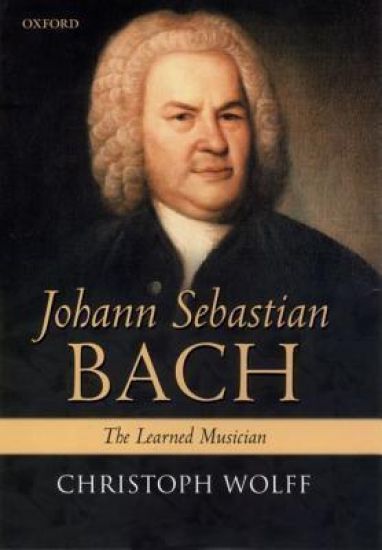
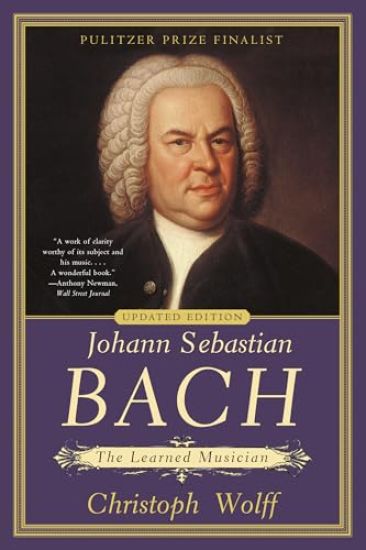
This biography portrays Bach as the living, breathing, and sometimes imperfect human being that he was, while using all the advances of Bach scholarship. The author demonstrates the connection between the composer's life and his music and looks at both in the context of the time.
Although we have heard of the music of J.S. Bach in countless performances and recordings, the composer himself still comes across only as an enigmatic figure in a single familiar portrait. As we mark the 250th anniversary of Bach's death, author and leading Bach scholar, here Christoph Wolff presents a new picture that brings to life this towering figure of the Baroque era. This engaging new biography portrays Bach as the living, breathing, and sometimes imperfect human being that he was, while bringing to bear all the advances of the last half-century of Bach scholarship. Wolff demonstrates the intimate connection between the composer's life and his music, showing how Bach's superb inventiveness pervaded his career as a musician, composer, performer, scholar, and teacher. And throughout, we see Bach in the broader context of his time: its institutions,traditions, and influences. With this highly readable book, Wolff sets a new standard for Bach biography.
Bach's St. John Passion for the Twenty-First Century
Michael Fuchs; Bradley Jenson; Christoph Wolff
BLOOMSBURY PUBLISHING PLC
2027
nidottu
This book examines Bach’s monumental St. John Passion from a 21st-century perspective, providing a new and comprehensive examination of the music and libretto. Since its composition and first performance in 1724, the St. John Passion has captured the spiritual and musical attention of musicians, audiences, and congregations. Michael Fuchs and Bradley Jenson explore the historical context of the work as well as its performance history and practice. They address important questions regarding the Gospel of John, Martin Luther’s theology, and anti-Judaism in the libretto. Combining expert theological and musical analysis, as well as a new English translation, this book is a useful resource for students, musicians, and scholars while being accessible to general audiences with a strong interest in the music of J.S. Bach, highlighting the composer’s compositional creativity.
Bach's St. John Passion for the Twenty-First Century
Michael Fuchs; Bradley Jenson; Christoph Wolff
ROWMAN LITTLEFIELD
2023
sidottu
With the 21st century audience in mind, the scholarship in this book focuses on how Johann Sebastian Bach used his compositional creativity to interpret the message of the Johannine passion narrative from a Lutheran perspective. The book begins by introducing St. John Passion in terms of its ongoing importance and relevance by providing a brief historical context as well as exploring its enduring legacy. It provides an update on important points of biblical and theological scholarship for the libretto itself. The book then focuses on the performance history of the work, featuring fresh translations of the libretto along with musical and theological commentary for each of the forty movements and highlighting Bach’s compositional creativity. The book also deals with important questions regarding the Gospel of John, Martin Luther’s theology, and questions about anti-Judaism and antisemitism in the libretto.
Bachs musikalisches Universum
Christoph Wolff
Springer-Verlag Berlin and Heidelberg GmbH Co. KG
2023
sidottu
Was bleibt? Johann Sebastian Bach gestaltete und verfeinerte sein reiches musikalisches Erbe sehr bewusst: Über Jahrzehnte hinweg trug er sorgfältig angelegte Sammlungen, Originaldrucke und reinschriftliche Partituren zusammen, mit denen er Maßstäbe setzen und der Nachwelt im Gedächtnis bleiben wollte – wie eine musikalische Autobiografie. Christoph Wolff porträtiert in seinem neuen Buch anhand dieser Referenzwerke Bachs bahnbrechende künstlerische Leistungen quer durch die verschiedenen Gattungen der Instrumental- und Vokalmusik: Präludien, Fugen und Orgelchoräle, Suiten, Sonaten und Konzerte sowie Kantaten, Passionen, Oratorien und Messen. Auf dieser imponierenden Strecke trieb Bach mit seiner musikalischen Logik und ausdrucksvollen Tonsprache die Kompositionsgeschichte voran.
In this companion volume to Johann Sebastian Bach: The Learned Musician, Christoph Wolff contextualises his famous subject by delving deeply into the composer’s rich collection of music. Emerging from this complex and massive oeuvre, Bach’s Musical Universe is a focused discussion of a meaningful selection of compositions. Unlike any previous study, this book details Bach’s creative process across the various instrumental and vocal genres, and centres on what the composer himself judiciously presented in carefully designed benchmark collections and individual works—all consequential to Bach’s musical art. Tracing Bach’s evolution as a composer, Wolff compellingly illuminates the ideals and legacy of this giant of classical music in a new, refreshing light for everyone, from the amateur to the virtuoso.
"I now stand at the gateway to my fortune," Mozart wrote in a letter of 1790. He had entered into the service of Emperor Joseph II of Austria two years earlier as Imperial-Royal Chamber Composer—a salaried appointment with a distinguished title and few obligations. His extraordinary subsequent output, beginning with the three final great symphonies from the summer of 1788, invites a reassessment of this entire period of his life. Readers will gain a new appreciation and understanding of the composer's works from that time without the usual emphasis on his imminent death. The author discusses the major biographical and musical implications of the royal appointment and explores Mozart's "imperial style" on the basis of his major compositions—keyboard,chamber, orchestral, operatic, and sacred—and focuses on the large, unfamiliar works he left incomplete. This new perspective points to an energetic, fresh beginning for the composer and a promising creative and financial future.
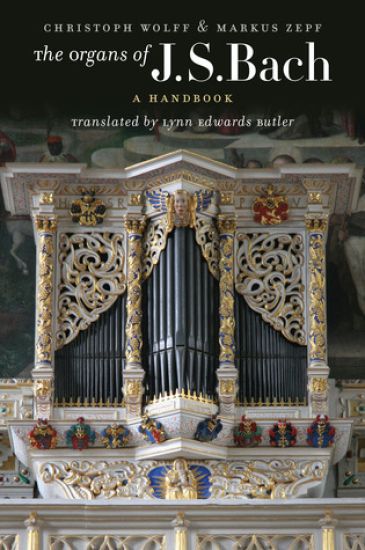
The Organs of J. S. Bach is a comprehensive and fascinating guide to the organs encountered by Bach throughout Germany in his roles as organist, concert artist, examiner, teacher, and visitor. Newly revised and updated, the book's entries are listed alphabetically by geographical location, from Arnstadt to Zschortau, providing an easy-to-reference overview. Includes detailed organ-specific information: high-quality color photographseach instrument's history, its connection to Bach, and its disposition as Bach would have known it architectural histories of the churches housing the instrumentsidentification of church organists Lynn Edwards Butler's graceful translation of Christoph Wolff and Markus Zepf's volume incorporates new research and many corrections and updates to the original German edition. Bibliographical references are updated to include English-language sources, and the translation includes an expanded essay by Christoph Wolff on Bach as organist, organ composer, and organ expert. The volume includes maps, a timeline of organ-related events, transcriptions of Bach's organ reports, a guide to examining organs attributed to Saxony's most famous organ builder Gottfried Silbermann, and biographical information on organ builders. Publication of this volume is supported by the American Bach Society.
"Eine fundierte Biographie des führenden Bach-Spezialisten Christoph Wolff. Das Leben Johann Sebastian Bachs und die Bedingungen seiner Zeit sind höchst anschaulich dargestellt, sein musikalisches Werk wird so eindringlich beschrieben und analysiert, daß das Lesen sogleich zum Hören verlockt. ""Brillant."" Die Welt ""Gewaltig."" Die Zeit"
Thematic Catalogue of the Musical Works of Johann Pachelbel
Jean M. Perreault; Christoph Wolff
Scarecrow Press
2004
sidottu
This Catalogue provides scholars and performers with a survey of the breadth and variety of the repertoire of the composer whom Christoph Wolff describes as "one of the most seminal and influential musicians of the pre-Bach generation in Germany." Pachelbel composed the majority of his 527 works for keyboard instruments, as well as choral, vocal, and chamber music. The Catalogue presents incipits for each that can be identified. The list of works is intended to determine the totality of the corpus and knowledge about it, to determine the best means of identifying each work, and to settle problems of identity among similarly titled works. An essay on authorities examines the controversies of authenticity of Pachelbel manuscripts. Liberally footnoted and meticulously compiled, the Catalogue is invaluable to those familiar with Pachelbel's compositions and will create new interest.
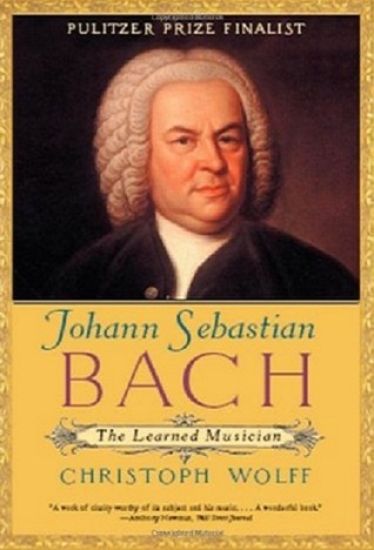
Although we have heard the music of J. S. Bach in countless performances and recordings, the composer himself still comes across only as an enigmatic figure in a single familiar portrait. As we mark the 250th anniversary of Bach's death, author Christoph Wolff presents a new picture that brings to life this towering figure of the Baroque era. This engaging new biography portrays Bach as the living, breathing, and sometimes imperfect human being that he was, while bringing to bear all the advances of the last half-century of Bach scholarship. Wolff demonstrates the intimate connection between the composer's life and his music, showing how Bach's superb inventiveness pervaded his career as musician, composer, performer, scholar, and teacher. And throughout, we see Bach in the broader context of his time: its institutions, traditions, and influences. With this highly readable book, Wolff sets a new standard for Bach biography.
Through hundreds of letters, family papers, anecdotes, and records, the Bach Reader established a new approach to biography by offering original documents in impeccable translations. In The New Bach Reader, Christoph Wolff has incorporated numerous facsimiles and added many newly discovered items, reflecting the current state of scholarship about the composer's life and music. The readings in this volume provide an accurate and vivid picture of Bach's world and of his far-reaching influence.
Mozart's unfinished Requiem has long been shrouded in mystery. Mozart undertook the commission for an Austrian nobleman, little knowing that he was to write a requiem for himself. Inevitably, the secrecy surrounding the anonymous commission, the circumstances of Mozart's death, the unfinished state of the work, and its completion under the direction of Mozart's widow, Constanze, have precipitated two centuries of romantic speculation and scholarly controversy. Christoph Wolff provides a critical introduction to the Requiem in its many facets. Part I of his study focuses on the tangled genesis and completion of the work and its fascinating early reception history until Constanze's death. Wolff summarizes the current state of research on the subject, provides new perspectives on Mozart's conception of the whole work, and surveys his contributions to the movements composed posthumously by his assistant, Sussmayr. Part II provides a musical analysis of Mozart's composition, including contextual, structural, and interpretive aspects. Part III consists of an annotated collection of the principal literary documents (1791-1839) that illuminate the fascinating early history of the Requiem. The book concludes with a complete edition of the work that is at the center of Wolff's study, the authentic score of the Requiem--Mozart's fragment--supplemented by crucial excerpts from Sussmayr's 1792 Requiem completion.
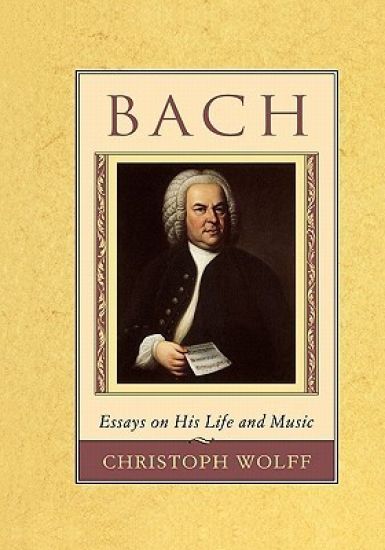
Johann Sebastian Bach holds a singular position in the history of music. A uniquely gifted musician, he combined outstanding performing virtuosity with supreme creative powers and remarkable intellectual discipline. More than two centuries after his lifetime, Bach’s work continues to set musical standards.The noted Bach scholar Christoph Wolff offers in this book new perspectives on the composer’s life and remarkable career. Uncovering important historical evidence, the author demonstrates significant influences on Bach’s artistic development and brings fresh insight on his work habits, compositional intent, and the musical traditions that shaped Bach’s thought. Wolff reveals a composer devoted to an ambitious and highly individual creative approach, one characterized by constant self-criticism and self-challenge, the absorption of new skills and techniques, and the rethinking of riches from the musical past.Readers will find illuminating analyses of some of Bach’s greatest music, including the B Minor Mass, important cantatas, keyboard and chamber compositions, the Musical Offering, and the Art of Fugue. Discussion of how these pieces “work” will be helpful to performers—singers, players, conductors—and to everyone interested in exploring the conceptual and contextual aspects of Bach’s music. All readers will find especially interesting those essays in which Wolff elaborates on his celebrated discoveries of previously unknown works: notably the fourteen “Goldberg” canons and a collection of thirty-three chorale preludes.Representing twenty-five years of scholarship, these essays—half of which appear here in English for the first time—have established Christoph Wolff as one of the world’s preeminent authorities on J. S. Bach. All students, performers, and lovers of Bach’s music will find this an engaging and enlightening book.