

Kirjailija
Christoph Zürcher
Kirjat ja teokset yhdessä paikassa: 5 kirjaa, julkaisuja vuosilta 2007-2018, suosituimpien joukossa Costly Democracy. Vertaile teosten hintoja ja tarkista saatavuus suomalaisista kirjakaupoista.
Mukana myös kirjoitusasut: Christoph Zurcher
5 kirjaa
Kirjojen julkaisuhaarukka 2007-2018.
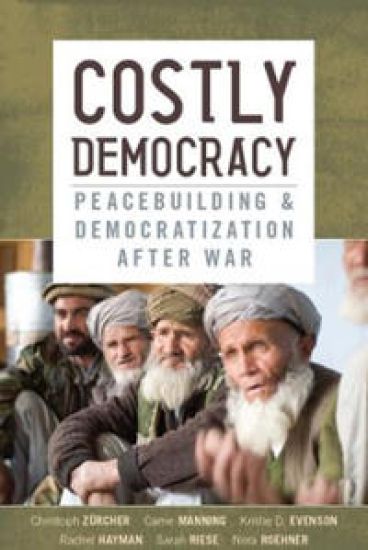
Costly Democracy
Christoph Zürcher; Carrie Manning; Kristie D. Evenson; Rachel Hayman; Sarah Riese; Nora Roehner
Stanford University Press
2014
pokkari
Peacebuilding is an interactive process that involves collaboration between peacebuilders and the victorious elites of a postwar society. While one of the most prominent assumptions of the peacebuilding literature asserts that the interests of domestic elites and peacebuilders coincide, Costly Democracy contends that they rarely align. It reveals that, while domestic elites in postwar societies may desire the resources that peacebuilders can bring, they are often less eager to adopt democracy, believing that democratic reforms may endanger their substantive interests. The book offers comparative analyses of recent cases of peacebuilding to deepen understanding of postwar democratization and better explain why peacebuilding missions often bring peace—but seldom democracy—to war-torn countries.
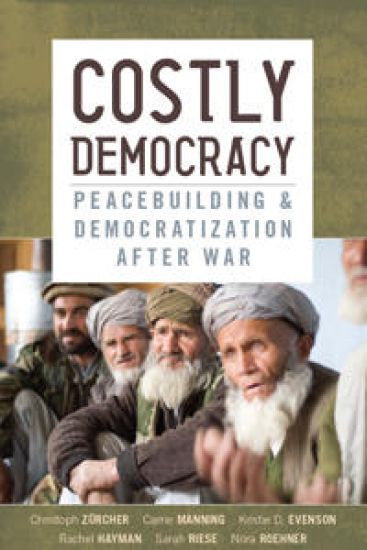
Costly Democracy
Christoph Zürcher; Carrie Manning; Kristie D. Evenson; Rachel Hayman; Sarah Riese; Nora Roehner
Stanford University Press
2013
sidottu
Peacebuilding is an interactive process that involves collaboration between peacebuilders and the victorious elites of a postwar society. While one of the most prominent assumptions of the peacebuilding literature asserts that the interests of domestic elites and peacebuilders coincide, Costly Democracy contends that they rarely align. It reveals that, while domestic elites in postwar societies may desire the resources that peacebuilders can bring, they are often less eager to adopt democracy, believing that democratic reforms may endanger their substantive interests. The book offers comparative analyses of recent cases of peacebuilding to deepen understanding of postwar democratization and better explain why peacebuilding missions often bring peace—but seldom democracy—to war-torn countries.
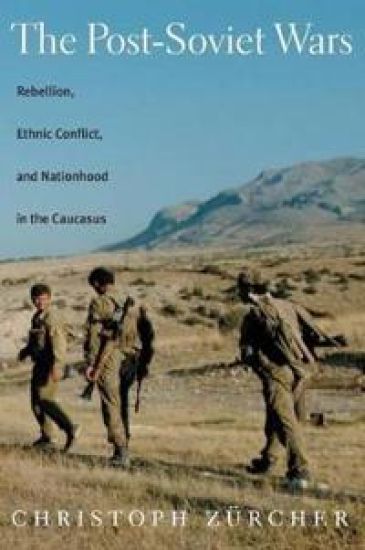
A brief history of the Caucusus region during and after the Post-Soviet Wars The Post-Soviet Wars is a comparative account of the organized violence in the Caucusus region, looking at four key areas: Chechnya, Armenia, Azerbaijan, Georgia, and Dagestan. Zürcher's goal is to understand the origin and nature of the violence in these regions, the response and suppression from the post-Soviet regime and the resulting outcomes, all with an eye toward understanding why some conflicts turned violent, whereas others not. Notably, in Dagestan actual violent conflict has not erupted, an exception of political stability for the region. The book provides a brief history of the region, particularly the collapse of the Soviet Union and the resulting changes that took place in the wake of this toppling. Zürcher carefully looks at the conditions within each region—economic, ethnic, religious, and political—to make sense of why some turned to violent conflict and some did not and what the future of the region might portend. This important volume provides both an overview of the region that is both up-to-date and comprehensive as well as an accessible understanding of the current scholarship on mobilization and violence.
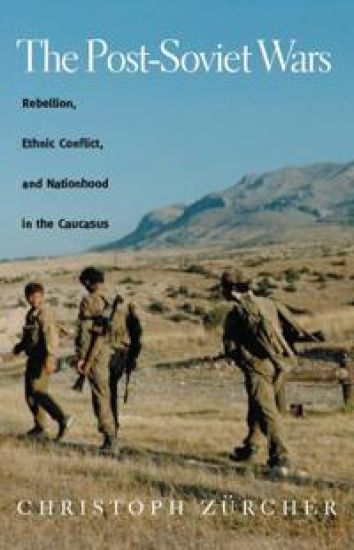
A brief history of the Caucusus region during and after the Post-Soviet Wars The Post-Soviet Wars is a comparative account of the organized violence in the Caucusus region, looking at four key areas: Chechnya, Armenia, Azerbaijan, Georgia, and Dagestan. Zürcher's goal is to understand the origin and nature of the violence in these regions, the response and suppression from the post-Soviet regime and the resulting outcomes, all with an eye toward understanding why some conflicts turned violent, whereas others not. Notably, in Dagestan actual violent conflict has not erupted, an exception of political stability for the region. The book provides a brief history of the region, particularly the collapse of the Soviet Union and the resulting changes that took place in the wake of this toppling. Zürcher carefully looks at the conditions within each region—economic, ethnic, religious, and political—to make sense of why some turned to violent conflict and some did not and what the future of the region might portend. This important volume provides both an overview of the region that is both up-to-date and comprehensive as well as an accessible understanding of the current scholarship on mobilization and violence.