Kirjailija
Christopher A. Hall
Kirjat ja teokset yhdessä paikassa: 15 kirjaa, julkaisuja vuosilta 1998-2026, suosituimpien joukossa Mark. Vertaile teosten hintoja ja tarkista saatavuus suomalaisista kirjakaupoista.
Mukana myös kirjoitusasut: Christopher a Hall
15 kirjaa
Kirjojen julkaisuhaarukka 1998-2026.
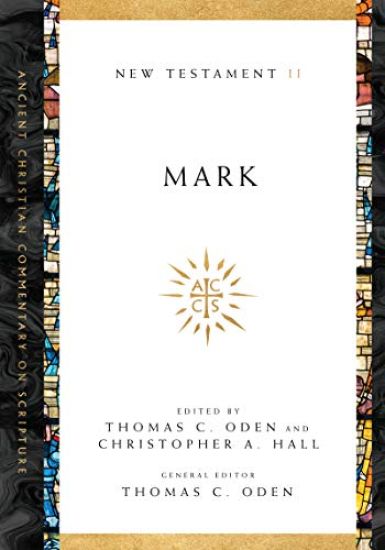
Christianity Today Book Award Winner The early church valued the Gospel of Mark for its preservation of the apostolic voice and gospel narrative of Peter. Yet the early church fathers very rarely produced sustained commentary on Mark. This brisk-paced and robust little Gospel, so much enjoyed by modern readers, was overshadowed in the minds of the fathers by the magisterial Gospels of Matthew and John. But now with the assistance of computer searches, an abundance of comment has been discovered to be embedded and interleaved amidst the textual archives of patristic homilies, apologies, letters, commentaries, theological treatises and hymnic verses. In this Ancient Christian Commentary on Mark, the insights of Augustine of Hippo and Clement of Alexandria, Ephrem the Syrian and Cyril of Jerusalem join in a polyphony of interpretive voices of the Eastern and Western church from the second century to the seventh. St. Mark's Gospel displays the evocative power of its story, parables and passion as it ignites a brilliant exhibit of theological insight and pastoral wisdom. The Ancient Christian Commentary on Mark (now in its second edition) opens up a long-forgotten passage through the arid and precipitous slopes of post-Enlightenment critical interpretation and bears us along to a fertile valley basking in the sunshine of theological and spiritual interpretation. In these pages we enter the interpretive world that long nurtured the great premodern pastors, theologians and saints of the church.
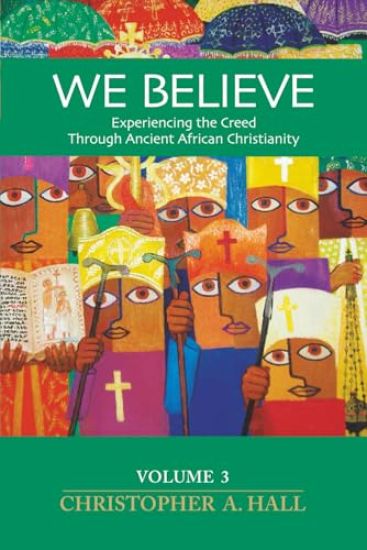
In We Believe, the rich legacy of the African church fathers comes alive, offering profound theological insights that shaped the Nicene Creed and continue to shape the Christian faith today. This second volume explores the phrase "We Believe in One Lord Jesus Christ...," inviting readers to reflect deeply on the beliefs of early African Christians like Tertullian, Origen, and Augustine. With thought-provoking questions and timeless wisdom, the series provides valuable insights and encourages spiritual flourishing.
We Believe: Experiencing the Creed through Ancient African Christianity. Volume 1
Christopher a. Hall
ICCS Press
2024
nidottu
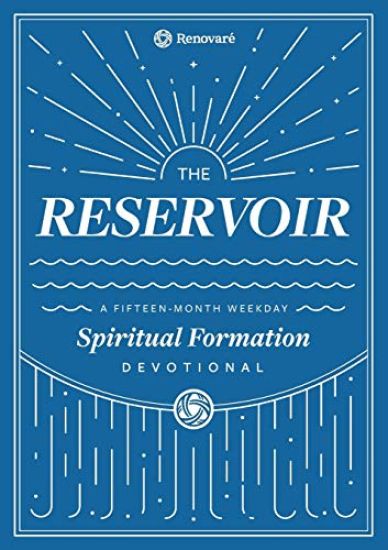
"If then you are wise, you will show yourself rather as a reservoir than as a canal. A canal spreads abroad water as it receives it, and a reservoir waits until it is filled before overflowing, and thus without loss to itself communicates its superabundant water. In the Church at the present day we have many canals but few reservoirs." --Bernard of ClairvauxOriginally commissioned by Food for the Hungry to spiritually nourish staff members serving on the front lines of international relief work, The Reservoir is an accessible weekday devotional for renewal and growth in Jesus. Written by Renovar team members including Chris Hall and Carolyn Arends, it first covers foundational questions--What is spiritual formation? What is my picture of God? What is my picture of myself?--then dives into in the six great Christian traditions outlined by Richard Foster's book Streams of Living Water.Each entry contains a quote, thought, Scripture passage, and questions for reflection or discussion to help you "live in the overflow" and become a reservoir rather than a canal. Your purchase helps further the work of two nonprofit organizations. All proceeds from the print version are donated to Renovar , and proceeds from the digital version are split between Renovar and Food for the Hungry.
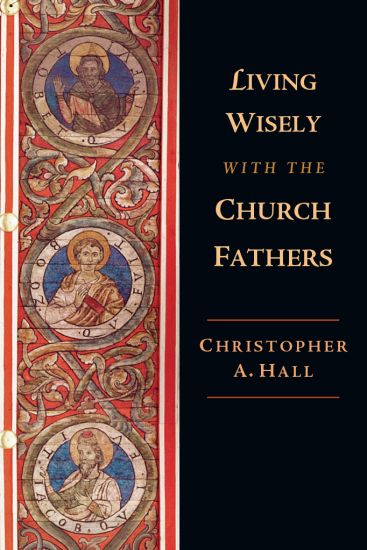
The first centuries of Christianity are like a far country. But despite their foreignness, they hold a treasury of wisdom for living. Early Christians struggled and flourished in a culture that was in love with empire and military power, infatuated with sex and entertainment, tolerant of all gods but hostile to the One. And from this crucible of discipleship they extracted lessons of virtue, faithfulness, and joy in Christ. Christopher Hall takes us to the ancient Mediterranean world, inquiring Christian leaders how to live a good life as a Christ follower. The menu of topics wends its way through wealth and poverty, war and violence, marriage and sexuality, theater and the arena, as well as the harsh realities of persecution and martyrdom. Gathering around Basil or Chrysostom or Augustine, we are instructed anew in the way of discipleship. And as they grapple with issues surprisingly resonant with our own, this cloud of ancient witnesses both surprises and challenges us in the life of faith.
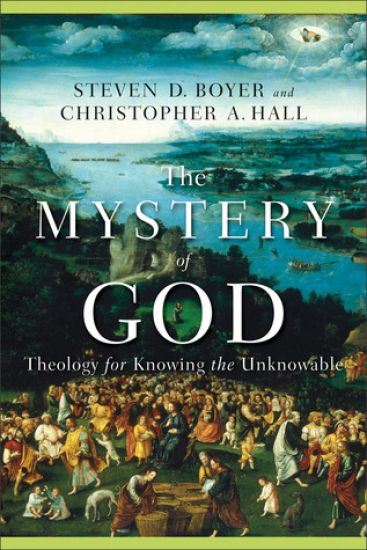
The Mystery of God – Theology for Knowing the Unknowable
Christopher A. Hall; Steven D. Boyer
Baker Academic, Div of Baker Publishing Group
2012
nidottu
Christianity Today 2014 Book Award WinnerHow can I know God if he is incomprehensible? Is it possible to know God in a way that takes seriously the fact that he is beyond knowledge? Steven Boyer and Christopher Hall argue that the "mystery of God" has a rightful place in theological discourse. They contend that considering divine incomprehensibility invites reverence and humility in our thinking and living as Christians and clarifies a variety of theological topics.The authors begin by investigating the biblical, historical, and practical foundations for understanding the mystery of God. They then spell out its implications for theological issues and practices such as the incarnation, salvation, and prayer, rooting knowledge of God in a concrete life of faith. Evangelical yet ecumenical, this book will appeal to theology students, pastors, church leaders, and all who want intellectual and practical guidance for knowing the unknowable God.
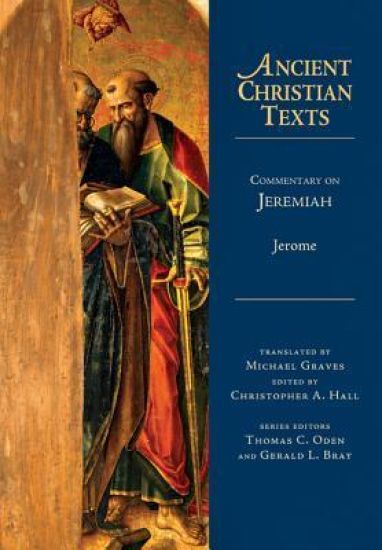
Commentary on Jeremiah
Michael Graves; Christopher A. Hall; Thomas C. Oden; Gerald L. Bray
Inter-Varsity Press,US
2012
nidottu
Jerome (c. 347-419), one of the West's four doctors of the church, was recognized early on as one of the church's foremost translators, commentators and advocates of Christian asceticism. Skilled in Hebrew and Greek in addition to his native Latin, he was thoroughly familiar with Jewish traditions and brought them to bear on his understanding of the Old Testament. In 405 Jerome completed his Latin translation of the Old Testament, based on the Hebrew text, and not long afterward began to work on commentaries devoted to the major prophets--Daniel (407), Isaiah (408-410), Ezekiel (410-414), culminating with Jeremiah but reaching only through chapter 32 before his death in 419. Throughout the commentary Jerome displays his familiarity with both Hebrew and Greek texts of Jeremiah, often establishing the literal meaning through the Hebrew text and offering a spiritual interpretation that draws on the Septuagint. He frequently interacts with other translations known from Origen's Hexapla. Jerome's extensive education in the classics and Jewish tradition as well as in both Antiochene and Alexandrian exegesis shine through the commentary at every point. Here for the first time Michael Graves supplies readers with a highly readable translation in English, useful textual notes and a helpful introduction. Ancient Christian Texts are new English translations of full-length commentaries or sermon series from ancient Christian authors that allow you to study key writings of the early church fathers in a fresh way.
Christopher Hall invites us to accompany the fathers as they enter the sanctuary for worship and the chapel for prayer. He also takes us to the wilderness, where we learn from the early monastics as they draw close to God in their solitary discipline. The focus of this book is not liturgy but more broadly worship in its corporate and individual dimensions. We enter into the patristic understanding of baptism and the Eucharist. And we come under the instruction and discipline of great spiritual teachers of prayer. In two previous books, Reading Scripture with the Church Fathers and Learning Theology with the Church Fathers, Christopher Hall has ushered us alongside the church fathers as they study the Scriptures and plumb the depths of theology. In this survey of the spiritual life of worship he informs and challenges Christians in faithful living today. Hall weaves his own experiences into his observations of the fathers' practices and teachings and so helps us close the gap of the centuries. Readers will enjoy a rich and rare schooling in developing their spiritual life.
Origen of Alexandria (185-254), one of the most prolific authors of antiquity and arguably the most important and influential pre-Nicene Christian theologian, was a man of deep learning and holiness of life. Regrettably, many of his works are no longer extant, in part due to the condemnation of his ideas by the Fifth Ecumenical Council in 553. The condemnation, however, took little account of his historical circumstances and the tentative nature of his speculations. The anathemas were more likely directed toward sixth-century Origenist views than to the views of Origen himself, though clearly he expounded some views that would be judged unacceptable today. Origen's numerous homilies provide the oldest surviving corpus of Christian sermons and shaped exegesis for succeeding centuries. With Jerome he was one of the early church's great critical and literal exegetes. Devoutly he sought to develop a spiritual exegesis of the Old Testament grounded in the revelation of Jesus Christ. The Homilies on Numbers presented here offer a splendid example of his spiritual interpretation of Old Testament texts. He asks, What foreshadowing, what warning, what instruction, what encouragement, reproof, correction or exhortation, do we find in the narratives of Numbers for our benefit as Christians? Here, based on Baehren's critical Latin text, is the first English edition of these homilies, ably translated with explanatory notes by Thomas P. Scheck. Ancient Christian Texts are new English translations of full-length commentaries or sermon series from ancient Christian authors that allow you to study key writings of the early church fathers in a fresh way.
The early church fathers were great theologians--though they did not think of themselves as such. They were working pastors, involved in the daily life and leadership of their congregations. Yet they were wrestling with many of the great and formative questions of the Christian faith, such as the Trinity, the incarnation, the providence of God and the nature of the church. These beliefs were defined in the crucible of spiritual leadership, pastoral care and theological conflict, all set against the background of the great cultural movements and events of their day. For the church fathers, theology was a spiritual exercise woven into the texture of life. What would it be like to sit under the preaching and instruction of these great men, to look over their shoulders as they thought and wrote, or to hear them debate theological issues? Learning Theology with the Church Fathers offers us that experience. With the same insight and love of his subject that he brought to Reading Scripture with the Church Fathers, Christopher A. Hall opens the door on patristic theology. Focusing on the great questions, we view these issues in their settings and find greater appreciation for the foundations and architecture of our Christian faith.
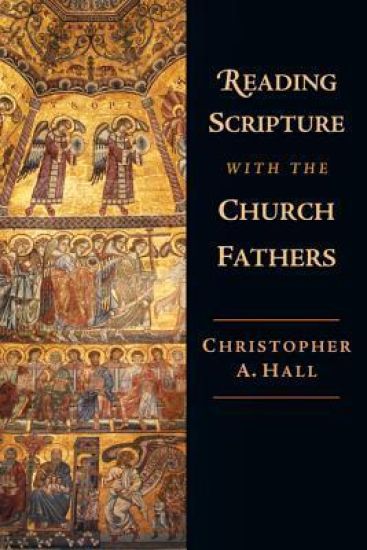
Many Christians today long to become reacquainted with their ancient ancestors in the faith. They see a deeper worship and devotion in the prayers and hymns of the early church. And they believe that the writings of the early church can shed new light on their understanding of Scripture. But where and how do we begin? Our first encounter with the writings of the church fathers may seem like visiting a far country where the language, assumptions, concerns and conclusions are completely unfamiliar to us. In Reading Scripture with the Church Fathers Christopher Hall helps us through this cultural confusion, introducing us to the early church, its unique world, and the sights and sounds of Scripture that are highlighted for them. As Hall points out, the ancient fathers hear music in Scripture where we remain tone-deaf. Despite their occasional eccentricities, theirs is a hearing refined through long listening in song, worship, teaching, meditation and oral reading. And like true masters they challenge and correct our modern assumptions as they invite us to tune our ears to hear the divine melodies of the Bible. Reading Scripture with the Church Fathers is an exceptional guide. Hall provides a warm, winsome, informative and indispensable introcution to who these leaders and scholars were, how they read and interpreted Scripture, and how we might read Scripture with them for all its worth.