Kirjojen hintavertailu. Mukana 12 390 323 kirjaa ja 12 kauppaa.

Kirjailija

Christopher A. Preble

Kirjat ja teokset yhdessä paikassa: 4 kirjaa, julkaisuja vuosilta 2004-2019, suosituimpien joukossa Exiting Iraq. Vertaile teosten hintoja ja tarkista saatavuus suomalaisista kirjakaupoista.

Mukana myös kirjoitusasut: Christopher a Preble

4 kirjaa

Kirjojen julkaisuhaarukka 2004-2019.

Fuel to the Fire

Fuel to the Fire

John Glaser; Christopher a Preble; A Trevor Thrall

Cato Institute,U.S.
2019
sidottu
As a presidential candidate, Donald Trump broke not only from the Republican Party but also from the bipartisan consensus on the direction of recent U.S. foreign policy. Calling the Iraq war a terrible mistake and lamenting America's nation building expeditions, Trump evinced little interest in maintaining the traditional form of American leadership of the liberal international order. He threatened to pull the United States out of NATO, complained that the United States was being taken advantage of by its trading partners, and argued that immigration was a terrible threat. Instead, Trump's "America First" vision called for a reassertion of American nationalism on the economic front as well as in foreign affairs. Since Trump took office, it has become clear that "America First" was more campaign slogan than coherent vision of American grand strategy and foreign policy. As president Trump has steered a course that has maintained some of the worst aspects of previous foreign policy - namely the pursuit of primacy and frequent military intervention - while managing to make a new set of mistakes all his own. This book provides an assessment of Trump's America First doctrine, its performance to date, and its implications for the future.
Peace, War, and Liberty

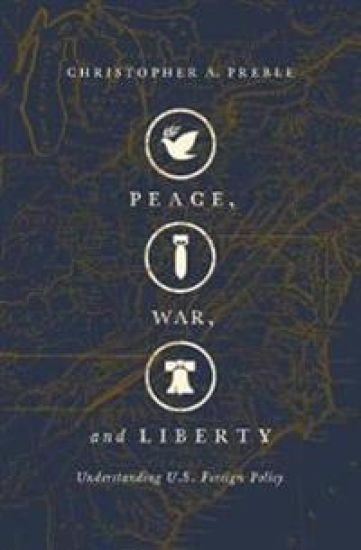
Peace, War, and Liberty

Christopher a Preble

Cato Institute,U.S.
2019
nidottu
Has the United States been a force for liberty around the world? Should it be? And if so, how? To answer these questions, Christopher A. Preble traces the history of U.S. foreign policy from the American Founding to the present, examining the ideas that have animated it, asking whether America's policy choices have made the world safer and freer, and considering the impact of those choices on freedom at home. Preble explains the need to question the assumptions that drive American foreign policy in the modern era--especially the assumption that American politicians can and should forcibly remake the international order to suit their desires. He asks readers to consider whether America and the world would be safer and freer if U.S. foreign policy incorporated libertarian insights about the limitations of government power. At once evenhanded and uncompromising, Peace, War, and Liberty is a comprehensive challenge to the interventionist ideology of America's foreign policy establishment.
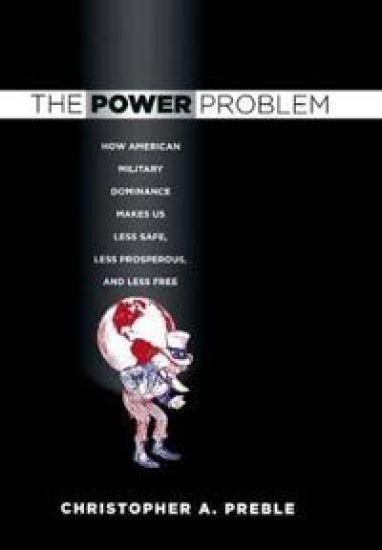
The Power Problem

The Power Problem

Christopher A. Preble

Cornell University Press
2009
sidottu
Numerous polls show that Americans want to reduce our military presence abroad, allowing our allies and other nations to assume greater responsibility both for their own defense and for enforcing security in their respective regions. In The Power Problem, Christopher A. Preble explores the aims, costs, and limitations of the use of this nation's military power; throughout, he makes the case that the majority of Americans are right, and the foreign policy experts who disdain the public's perspective are wrong. Preble is a keen and skeptical observer of recent U.S. foreign policy experiences, which have been marked by the promiscuous use of armed intervention. He documents how the possession of vast military strength runs contrary to the original intent of the Founders, and has, as they feared, shifted the balance of power away from individual citizens and toward the central government, and from the legislative and judicial branches of government to the executive. In Preble's estimate, if policymakers in Washington have at their disposal immense military might, they will constantly be tempted to overreach, and to redefine ever more broadly the "national interest." Preble holds that the core national interest—preserving American security—is easily defined and largely immutable. Possessing vast military power in order to further other objectives is, he asserts, illicit and to be resisted. Preble views military power as purely instrumental: if it advances U.S. security, then it is fulfilling its essential role. If it does not—if it undermines our security, imposes unnecessary costs, and forces all Americans to incur additional risks—then our military power is a problem, one that only we can solve. As it stands today, Washington's eagerness to maintain and use an enormous and expensive military is corrosive to contemporary American democracy.
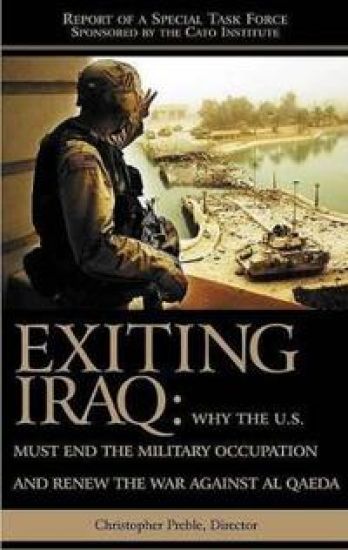
Exiting Iraq

Exiting Iraq

Christopher A. Preble

Cato Institute,U.S.
2004
pokkari
With the continuing U.S. occupation of Iraq, a special task force of scholars and policy experts calls into question the Bush administration's intention to "stay as long as necessary." In this joint statement, the members argue that the presence of troops in Iraq distracts attention from fighting Al Qaeda and emboldens a new class of terrorists to take up arms against the United States. The task force's findings are essential reading for anyone concerned with the ongoing conflict and the war on terrorism.