Kirjojen hintavertailu. Mukana 12 595 353 kirjaa ja 12 kauppaa.

Kirjailija

Christopher Alcantara

Kirjat ja teokset yhdessä paikassa: 10 kirjaa, julkaisuja vuosilta 2010-2020, suosituimpien joukossa Negotiating the Deal. Vertaile teosten hintoja ja tarkista saatavuus suomalaisista kirjakaupoista.

10 kirjaa

Kirjojen julkaisuhaarukka 2010-2020.

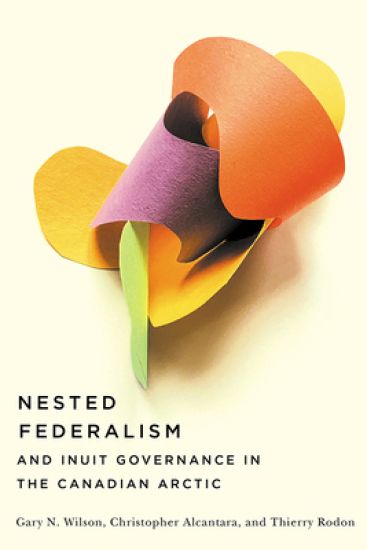
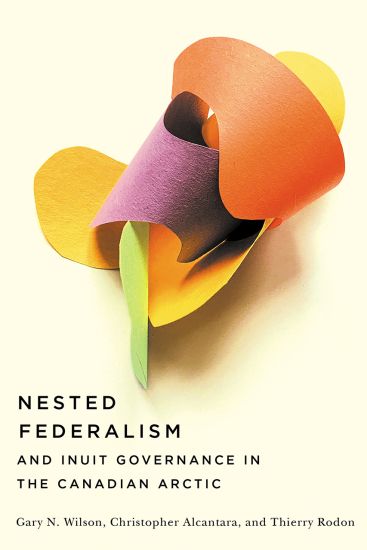
Nested Federalism and Inuit Governance in the Canadian Arctic

Nested Federalism and Inuit Governance in the Canadian Arctic

Gary N. Wilson; Christopher Alcantara; Thierry Rodon

University of British Columbia Press
2020
pokkari
The Canadian federal system was never designed to recognize Indigenous governance, and it has resisted formal institutional change. But change has come.Indigenous communities in the North have successfully negotiated the creation of self-governing regions, most of which have been situated politically and institutionally within existing constituent units of the Canadian federation. These varied governance arrangements are forms of nested federalism, a model that is transforming Canadian federalism as it reformulates the relationship between Indigenous peoples and the state.Nested Federalism and Inuit Governance in the Canadian Arctic traces the political journey toward self-governance taken by three predominantly Inuit regions over the past forty years: Nunavik in northern Québec, the Inuvialuit Settlement Region in the western Northwest Territories, and Nunatsiavut in northern Labrador. This meticulous analysis of the regions’ development trajectories provides new insight into the evolution of Indigenous self-government, as well as its consequences for Indigenous communities and for Canadian federalism.
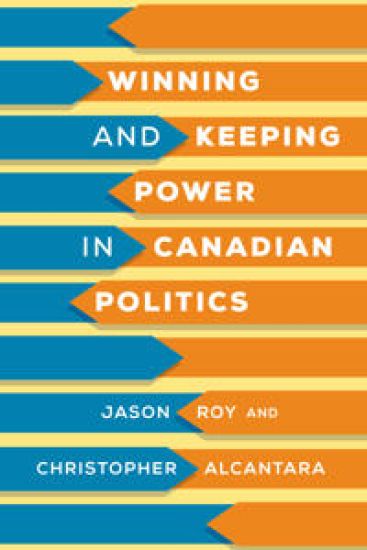
Winning and Keeping Power in Canadian Politics

Winning and Keeping Power in Canadian Politics

Jason Roy; Christopher Alcantara

University of Toronto Press
2020
sidottu
Do negative campaigns win elections? Do voters abandon candidates accused of scandalous behaviour? Do government apologies affect prospects for re-election? While many people assume the answer to each of these questions is yes, there is limited empirical evidence to support these assumptions. In this book, Jason Roy and Christopher Alcantara use a series of experiments to test these and other commonly held beliefs. Each chapter draws upon contemporary events and literature to frame the issues and strategies. The findings suggest that not all of the assumptions that people have about the best strategies for winning and keeping political power hold up to empirical scrutiny. In fact, some work in ways that many readers may find surprising. Original and innovative in its use of experimental methods, Winning and Keeping Power in Canadian Politics is a persuasive analysis of some of our most prominent and long-standing political myths. It will be a "go to" resource for journalists, strategists, scholars, and general readers alike.
Winning and Keeping Power in Canadian Politics

Winning and Keeping Power in Canadian Politics

Jason Roy; Christopher Alcantara

University of Toronto Press
2020
pokkari
Do negative campaigns win elections? Do voters abandon candidates accused of scandalous behaviour? Do government apologies affect prospects for re-election? While many people assume the answer to each of these questions is yes, there is limited empirical evidence to support these assumptions. In this book, Jason Roy and Christopher Alcantara use a series of experiments to test these and other commonly held beliefs. Each chapter draws upon contemporary events and literature to frame the issues and strategies. The findings suggest that not all of the assumptions that people have about the best strategies for winning and keeping political power hold up to empirical scrutiny. In fact, some work in ways that many readers may find surprising. Original and innovative in its use of experimental methods, Winning and Keeping Power in Canadian Politics is a persuasive analysis of some of our most prominent and long-standing political myths. It will be a "go to" resource for journalists, strategists, scholars, and general readers alike.
Nested Federalism and Inuit Governance in the Canadian Arctic

Nested Federalism and Inuit Governance in the Canadian Arctic

Gary N. Wilson; Christopher Alcantara; Thierry Rodon

University of British Columbia Press
2020
sidottu
The Canadian federal system was never designed to recognize Indigenous governance, and it has resisted formal institutional change. But change has come.Indigenous communities in the North have successfully negotiated the creation of self-governing regions, most of which have been situated politically and institutionally within existing constituent units of the Canadian federation. These varied governance arrangements are forms of nested federalism, a model that is transforming Canadian federalism as it reformulates the relationship between Indigenous peoples and the state.Nested Federalism and Inuit Governance in the Canadian Arctic traces the political journey toward self-governance taken by three predominantly Inuit regions over the past forty years: Nunavik in northern Québec, the Inuvialuit Settlement Region in the western Northwest Territories, and Nunatsiavut in northern Labrador. This meticulous analysis of the regions' development trajectories provides new insight into the evolution of Indigenous self-government, as well as its consequences for Indigenous communities and for Canadian federalism.
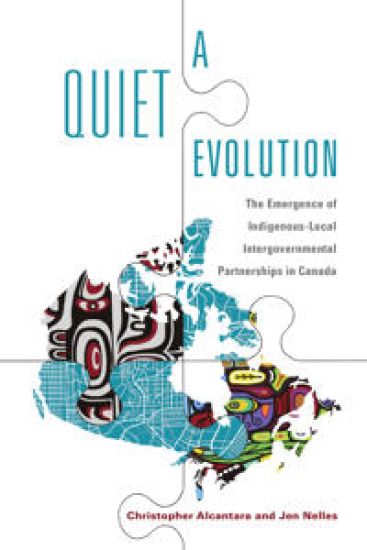
A Quiet Evolution

A Quiet Evolution

Christopher Alcantara; Jen Nelles

University of Toronto Press
2017
pokkari
Much of the coverage surrounding the relationship between Indigenous communities and the Crown in Canada has focused on the federal, provincial, and territorial governments. Yet it is at the local level where some of the most important and significant partnerships are being made between Indigenous and non-Indigenous peoples. In A Quiet Evolution, Christopher Alcantara and Jen Nelles look closely at hundreds of agreements from across Canada and at four case studies drawn from Ontario, Quebec, and Yukon Territory to explore relationships between Indigenous and local governments. By analyzing the various ways in which they work together, the authors provide an original, transferable framework for studying any type of intergovernmental partnership at the local level. Timely and accessible, A Quiet Evolution is a call to politicians, policymakers and citizens alike to encourage Indigenous and local governments to work towards mutually beneficial partnerships.
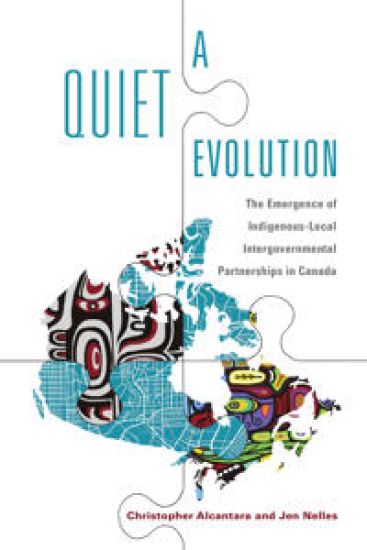
A Quiet Evolution

A Quiet Evolution

Christopher Alcantara; Jen Nelles

University of Toronto Press
2016
sidottu
Much of the coverage surrounding the relationship between Indigenous communities and the Crown in Canada has focused on the federal, provincial, and territorial governments. Yet it is at the local level where some of the most important and significant partnerships are being made between Indigenous and non-Indigenous peoples. In A Quiet Evolution, Christopher Alcantara and Jen Nelles look closely at hundreds of agreements from across Canada and at four case studies drawn from Ontario, Quebec, and Yukon Territory to explore relationships between Indigenous and local governments. By analyzing the various ways in which they work together, the authors provide an original, transferable framework for studying any type of intergovernmental partnership at the local level. Timely and accessible, A Quiet Evolution is a call to politicians, policymakers and citizens alike to encourage Indigenous and local governments to work towards mutually beneficial partnerships.
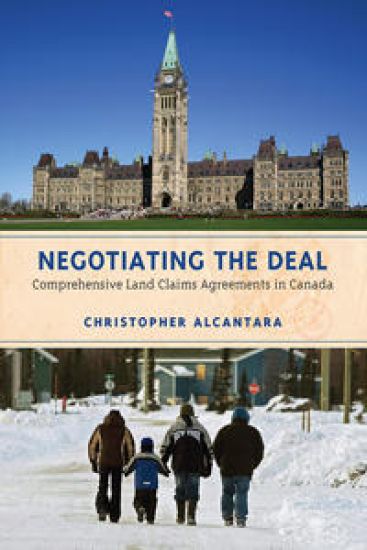
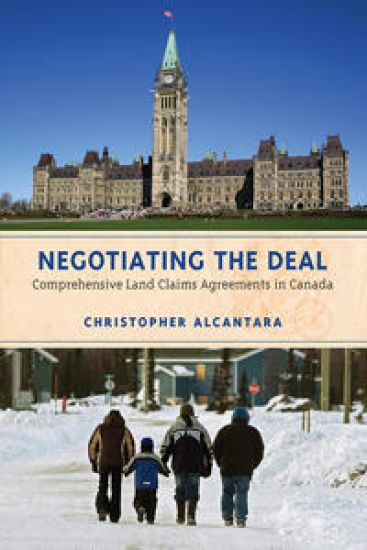
Negotiating the Deal

Negotiating the Deal

Christopher Alcantara

University of Toronto Press
2013
sidottu
This book provides the first systematic and comprehensive analysis of the factors that explain both completed and incomplete treaty negotiations between Aboriginal groups and the federal, provincial, and territorial governments of Canada. Since 1973, groups that have never signed treaties with the Crown have been invited to negotiate what the government calls “comprehensive land claims agreements,” otherwise known as modern treaties, which formally transfer jurisdiction, ownership, and title over selected lands to Aboriginal signatories. Despite their importance, not all groups have completed such agreements – a situation that is problematic not only for governments but for Aboriginal groups interested in rebuilding their communities and economies. Using in-depth interviews with Indigenous, federal, provincial, and territorial officials, Christopher Alcantara compares the experiences of four Aboriginal groups: the Kwanlin Dün First Nation (with a completed treaty) and the Kaska Nations (with incomplete negotiations) in Yukon Territory, and the Inuit (completed) and Innu (incomplete) in Newfoundland and Labrador. Based on the experiences of these groups, Alcantara argues that scholars and policymakers need to pay greater attention to the institutional framework governing treaty negotiations and, most importantly, to the active role that Aboriginal groups play in these processes.
Negotiating the Deal

Negotiating the Deal

Christopher Alcantara

University of Toronto Press
2013
pokkari
This book provides the first systematic and comprehensive analysis of the factors that explain both completed and incomplete treaty negotiations between Aboriginal groups and the federal, provincial, and territorial governments of Canada. Since 1973, groups that have never signed treaties with the Crown have been invited to negotiate what the government calls “comprehensive land claims agreements,” otherwise known as modern treaties, which formally transfer jurisdiction, ownership, and title over selected lands to Aboriginal signatories. Despite their importance, not all groups have completed such agreements – a situation that is problematic not only for governments but for Aboriginal groups interested in rebuilding their communities and economies. Using in-depth interviews with Indigenous, federal, provincial, and territorial officials, Christopher Alcantara compares the experiences of four Aboriginal groups: the Kwanlin Dün First Nation (with a completed treaty) and the Kaska Nations (with incomplete negotiations) in Yukon Territory, and the Inuit (completed) and Innu (incomplete) in Newfoundland and Labrador. Based on the experiences of these groups, Alcantara argues that scholars and policymakers need to pay greater attention to the institutional framework governing treaty negotiations and, most importantly, to the active role that Aboriginal groups play in these processes.
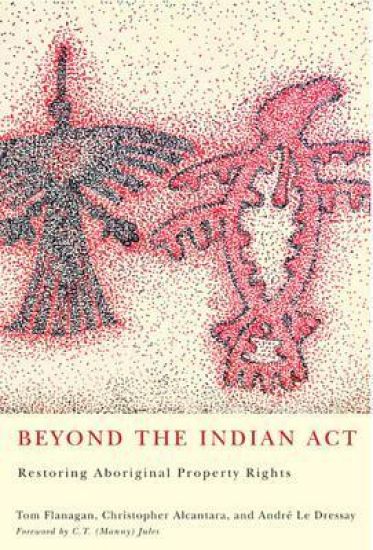
Beyond the Indian Act

Beyond the Indian Act

Tom Flanagan; Christopher Alcantara; André Le Dressay

McGill-Queen's University Press
2011
nidottu
The authors not only investigate the current forms of property rights on reservations but also expose the limitations of each system, showing that customary rights are insecure, certificates of possession cannot be sold outside the First Nation, and leases are temporary. As well, analysis of legislation, court decisions, and economic reports reveals that current land management has led to unnecessary economic losses. The authors propose creation of a First Nations Property Ownership Act that would make it possible for First Nations to take over full ownership of reserve lands from the Crown, arguing that permitting private property on reserves would provide increased economic advantages. An engaging and well-reasoned book, Beyond the Indian Act is a bold argument for a new system that could improve the quality of life for First Nations people in communities across the country.
Beyond the Indian Act

Beyond the Indian Act

Tom Flanagan; Christopher Alcantara; André Le Dressay

McGill-Queen's University Press
2010
sidottu
The authors not only investigate the current forms of property rights on reservations but also expose the limitations of each system, showing that customary rights are insecure, certificates of possession cannot be sold outside the First Nation, and leases are temporary. As well, analysis of legislation, court decisions, and economic reports reveals that current land management has led to unnecessary economic losses. The authors propose creation of a First Nations Property Ownership Act that would make it possible for First Nations to take over full ownership of reserve lands from the Crown, arguing that permitting private property on reserves would provide increased economic advantages. An engaging and well-reasoned book, Beyond the Indian Act is a bold argument for a new system that could improve the quality of life for First Nations people in communities across the country.