Kirjojen hintavertailu. Mukana 12 595 353 kirjaa ja 12 kauppaa.
Kirjailija
Christopher Alexander
Kirjat ja teokset yhdessä paikassa: 21 kirjaa, julkaisuja vuosilta 1964-2024, suosituimpien joukossa Gemeinschaft Und Privatbereich Im Neuen Bauen: Auf Dem Weg Zu Einer Humanen Architektur. Vertaile teosten hintoja ja tarkista saatavuus suomalaisista kirjakaupoista.
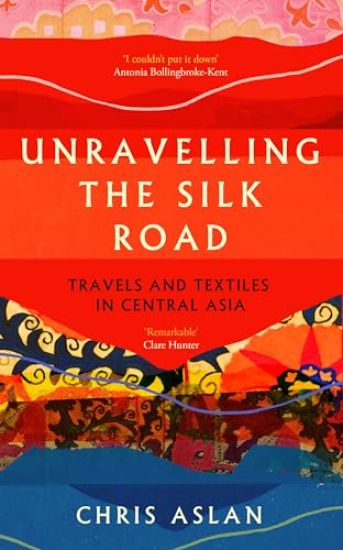
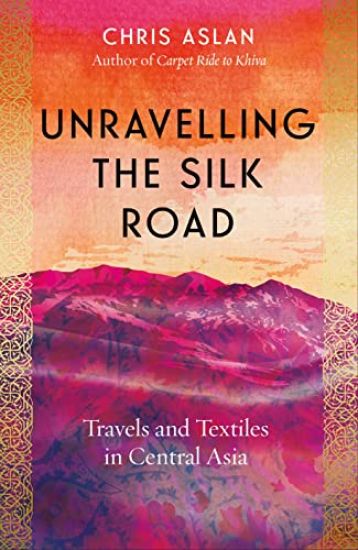
Three textile roads tangle their way through Central Asia. The famous Silk Road united east and west through trade. Older still was the Wool Road, of critical importance when houses made from wool enabled nomads to traverse the inhospitable winter steppes. Then there was the Cotton Road, marked by greed, colonialism and environmental disaster.At this intersection of human history, fortunes were made and lost through shimmering silks, life-giving felts and gossamer cottons. Chris Aslan, who has spent fifteen years living and working in the region, expertly unravels the strands of this tangled history and embroiders them with his own experiences of life in the heart of Asia.
Three textile roads tangle their way through Central Asia. The famous Silk Road united east and west through trade. Older still was the Wool Road, of critical importance when houses made from wool enabled nomads to traverse the inhospitable winter steppes. Then there was the Cotton Road, marked by greed, colonialism and environmental disaster.At this intersection of human history, fortunes were made and lost through shimmering silks, life-giving felts and gossamer cottons. Chris Aslan, who has spent fifteen years living and working in the region, expertly unravels the strands of this tangled history and embroiders them with his own experiences of life in the heart of Asia.
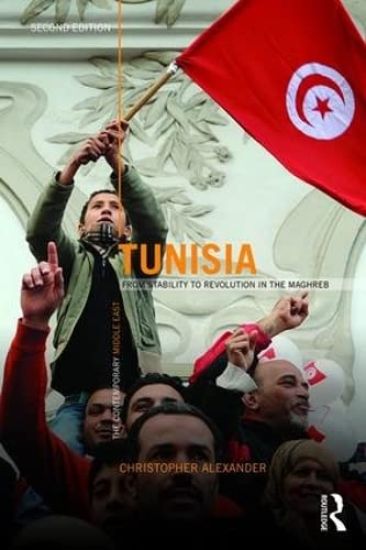
The first edition of Tunisia was released just nine months before the eruption of the Arab Spring. The most substantial period of political unrest felt by the Arab world in a half century originated in Tunisia, a fact that confounded expectations about Tunisian politics. This new edition builds upon the first edition’s overview of Tunisia’s political and economic development to examine how one of the region’s hardiest authoritarian orders was toppled by a loosely organised protest wave.Providing the most up-to-date introduction to Tunisia’s post-independence and post-Arab Spring politics, concisely written chapters cover topics such as: state formation domestic politics economic development foreign relations colonialism the Arab Spring; its factors and repercussionsKey to this new edition is the examination of Tunisian history, politics and society alongside the subsequent upheaval following the outbreak of revolts in December 2010. It looks at how political and economic changes after 2001, including economic deterioration and rising inequality and corruption, had already begun to erode bases of Ben Ali’s government, and explores why Tunisia is the sole Arab Spring country to construct a democracy thus far, and the challenges that this new democracy still faces. An essential inclusion on courses on Middle Eastern politics, African politics, and political science in general, this accessible introduction to Tunisia will also be of interest to anyone wishing to learn more about this significant region.
The first edition of Tunisia was released just nine months before the eruption of the Arab Spring. The most substantial period of political unrest felt by the Arab world in a half century originated in Tunisia, a fact that confounded expectations about Tunisian politics. This new edition builds upon the first edition’s overview of Tunisia’s political and economic development to examine how one of the region’s hardiest authoritarian orders was toppled by a loosely organised protest wave.Providing the most up-to-date introduction to Tunisia’s post-independence and post-Arab Spring politics, concisely written chapters cover topics such as: state formation domestic politics economic development foreign relations colonialism the Arab Spring; its factors and repercussionsKey to this new edition is the examination of Tunisian history, politics and society alongside the subsequent upheaval following the outbreak of revolts in December 2010. It looks at how political and economic changes after 2001, including economic deterioration and rising inequality and corruption, had already begun to erode bases of Ben Ali’s government, and explores why Tunisia is the sole Arab Spring country to construct a democracy thus far, and the challenges that this new democracy still faces. An essential inclusion on courses on Middle Eastern politics, African politics, and political science in general, this accessible introduction to Tunisia will also be of interest to anyone wishing to learn more about this significant region.
The purpose of all architecture, writes Christopher Alexander, is to encourage and support life-giving activity, dreams, and playfulness. But in recent decades, while our buildings are technically better—more sturdy, more waterproof, more energy efficient— they have also became progressively more sterile, rarely providing the kind of environment in which people are emotionally nourished, genuinely happy, and deeply contented. Using the example of his building of the Eishin Campus in Japan, Christopher Alexander and his collaborators reveal an ongoing dispute between two fundamentally different ways of shaping our world. One system places emphasis on subtleties, on finesse, on the structure of adaptation that makes each tiny part fit into the larger context. The other system is concerned with efficiency, with money, power and control, stressing the more gross aspects of size, speed, and profit. This second, "business-as-usual" system, Alexander argues, is incapable of creating the kind of environment that is able to genuinely support the emotional, whole-making side of human life. To confront this sterile system, the book presents a new architecture that we—both as a world-wide civilization, and as individual people and cultures—can create, using new processes that allow us to build places of human energy and beauty. The book outlines nine ways of working, each one fully dedicated to wholeness, and able to support day-to-day activities that will make planning, design and construction possible in an entirely new way, and in more humane ways. An innovative thinker about building techniques and planning, Christopher Alexander has attracted a devoted following. Here he introduces a way of building that includes the best current practices, enriched by a range of new processes that support the houses, communities, and health of all who inhabit the Earth.
The Silk Road conjures images of the exotic and the unknown. Most travellers simply pass along it. Brit Chris Alexander chose to live there. Ostensibly writing a guidebook, Alexander found life at the heart of the glittering madrassahs, mosques and minarets of the walled city of Khiva - a remote desert oasis in Uzbekistan - immensely alluring, and stayed.Immersing himself in the language and rich cultural traditions Alexander discovers a world torn between Marx and Mohammed - a place where veils and vodka, pork and polygamy freely mingle - against a backdrop of forgotten carpet designs, crumbling but magnificent Islamic architecture and scenes drawn straight from "The Arabian Nights". Accompanied by a large green parrot, a ginger cat and his adoptive Uzbek family, Alexander recounts his efforts to rediscover the lost art of traditional weaving and dyeing, and the process establishing a self-sufficient carpet workshop, employing local women and disabled people to train as apprentices.A Carpet Ride to Khiva sees Alexander being stripped naked at a former Soviet youth camp, crawling through silkworm droppings in an attempt to record their life-cycle, holed up in the British Museum discovering carpet designs dormant for half a millennia, tackling a carpet-thieving mayor, distinguishing natural dyes from sacks of opium in Northern Afghanistan, bluffing his way through an impromptu version of "My Heart Will Go On" for national Uzbek TV and seeking sanctuary as an anti-Western riot consumed the Kabul carpet bazaar. It is an unforgettable true travel story of a journey to the heart of the unknown and the unexpected friendship one man found there.
In Book Three of this four-volume work, Alexander presents hundreds of his own buildings and those of his contemporaries who have used methods consistent with the theory of living process.Containing nearly seven hundred pages of projects which have been built and planned in a number of countries over a thirty-year period, this book amply illustrates the impact of living process on the world. The book provides the reader with an intuitive feel for the kind of world which is needed to generate living structure in the world and its communities; its style and geometry and its ecological and natural character.The projects include public buildings, neighbourhoods, housing built by people for themselves, public urban space, rooms, gardens, ornament, colours, details of construction and construction innovation. These buildings, and the methods needed to design and build them, define living structure in a practical way that can be re-applied across a range of other projects.
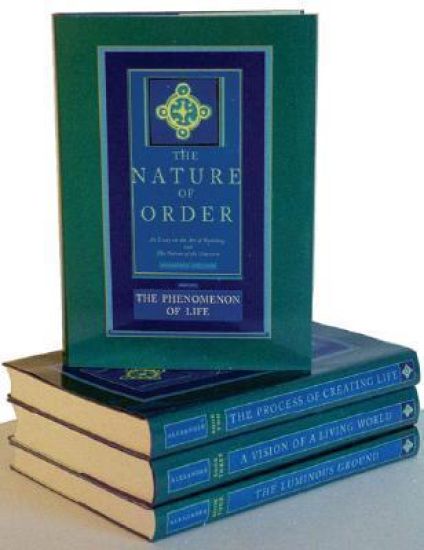
Christopher Alexander's four volume masterwork, the result of twenty-seven years of research, considers three vital perspectives: a scientific perspective; a perspective based on beauty and grace; a commonsense perspective based on intuitions and everyday life.This ground breaking work allows us to form one picture of the world in which all three perspectives are interlaced. It opens the door to twenty-first century science and cosmology.The four volumes can be read separately, independently, and in any order, however, it is together that they have their greatest impact as each one informs and illuminates the others.
In Book One of this four-volume work, Alexander describes a scientific view of the world in which all space-matter has perceptible degrees of life, and establishes this understanding of living structures as an intellectual basis for a new architecture.He identifies fifteen geometric properties which tend to accompany the presence of life in nature, and also in the buildings and cities we make. These properties are seen over and over in nature and in the cities and streets of the past, but they have almost disappeared in the impersonal developments and buildings of the last hundred years.This book shows that living structures depend on features which make a close connection with the human self, and that only living structure has the capacity to support human well-being.
Book Four presents a new cosmology that arises from the careful study of architecture and art, and above all from the practice of the arts. It is a cosmology which places the I, our experience of self, as the linking stem that unites each individual with the whole, connecting consciousness and matter.
Christopher Alexander's masterwork, the result of 27 years of research, considers three vital perspectives: a scientific perspective; a perspective based on beauty and grace; a commonsense perspective based on our intuitions and everyday life.
Suggests a new approach to urban design in which cities grow more organically, provides a set of seven basic principles, and offers an experimental redesign of a section of San Francisco
As an innovative thinker about building and planning, Christopher Alexander has attracted a devoted following. His seminal books--The Timeless Way of Building, A Pattern Language, and The Oregon Experiment--defined a radical and fundamently new process of environmental design. Alexander now gives us the latest book in his series--a book that puts his theories to the test and shows what sort of production system can create the kind of environment he has envisioned.The Production of Houses centers around a group of buildings which Alexander and his associates built in 1976 in northern Mexico. Each house is different and the book explains how each family helped to lay out and construct its own home according to the family's own needs and in the framework of the pattern language. Numerous diagrams and tables as well as a variety of anecdotes make the day-today process clear.The Mexican project, however, is only the starting point for a comprehensive theory of housing production. The Production of Houses describes seven principles which apply to any system of production in any part of the world for housing of any cost in any climate or culture or at any density.In the last part of the book, "The Shift of Paradigm," Alexander describes, in detail, the devastating nature of the revolution in world view which is contained in his proposal for housing construction, and its overall implications for deep-seated cultural change.
The theory of architecture implicit in our world today, Christopher Alexander believes, is bankrupt. More and more people are aware that something is deeply wrong. Yet the power of present-day ideas is so great that many feel uncomfortable, even afraid, to say openly that they dislike what is happening, because they are afraid to seem foolish, afraid perhaps that they will be laughed at. Now, at last, there is a coherent theory which describes in modern terms an architecture as ancient as human society itself. The Timeless Way of Building is the introductory volume in the Center for Environmental Structure series, Christopher Alexander presents in it a new theory of architecture, building, and planning which has at its core that age-old process by which the people of a society have always pulled the order of their world from their own being. Alexander writes, "There is one timeless way of building. It is thousands of years old, and the same today as it has always been. The great traditional buildings of the past, the villages and tents and temples in which man feels at home, have always been made by people who were very close to the center of this way. And as you will see, this way will lead anyone who looks for it to buildings which are themselves as ancient in their form as the trees and hills, and as our faces are."
Details the master architectural design plan currently being implemented at the University of Oregon, illustrating the participation of all members of a small community in the designing of their own environment
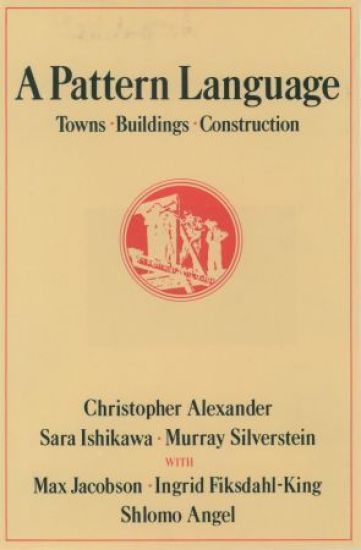
You can use this book to design a house for yourself with your family; you can use it to work with your neighbors to improve your town and neighborhood; you can use it to design an office, or a workshop, or a public building. And you can use it to guide you in the actual process of construction. After a ten-year silence, Christopher Alexander and his colleagues at the Center for Environmental Structure are now publishing a major statement in the form of three books which will, in their words, "lay the basis for an entirely new approach to architecture, building and planning, which will we hope replace existing ideas and practices entirely." The three books are The Timeless Way of Building, The Oregon Experiment, and this book, A Pattern Language. At the core of these books is the idea that people should design for themselves their own houses, streets, and communities. This idea may be radical (it implies a radical transformation of the architectural profession) but it comes simply from the observation that most of the wonderful places of the world were not made by architects but by the people. At the core of the books, too, is the point that in designing their environments people always rely on certain "languages," which, like the languages we speak, allow them to articulate and communicate an infinite variety of designs within a forma system which gives them coherence. This book provides a language of this kind. It will enable a person to make a design for almost any kind of building, or any part of the built environment. "Patterns," the units of this language, are answers to design problems (How high should a window sill be? How many stories should a building have? How much space in a neighborhood should be devoted to grass and trees?). More than 250 of the patterns in this pattern language are given: each consists of a problem statement, a discussion of the problem with an illustration, and a solution. As the authors say in their introduction, many of the patterns are archetypal, so deeply rooted in the nature of things that it seemly likely that they will be a part of human nature, and human action, as much in five hundred years as they are today.