

Kirjailija
Christopher Armstrong
Kirjat ja teokset yhdessä paikassa: 8 kirjaa, julkaisuja vuosilta 2007-2019, suosituimpien joukossa The Maker's Field Guide: Master Maker Edition. Vertaile teosten hintoja ja tarkista saatavuus suomalaisista kirjakaupoista.
8 kirjaa
Kirjojen julkaisuhaarukka 2007-2019.
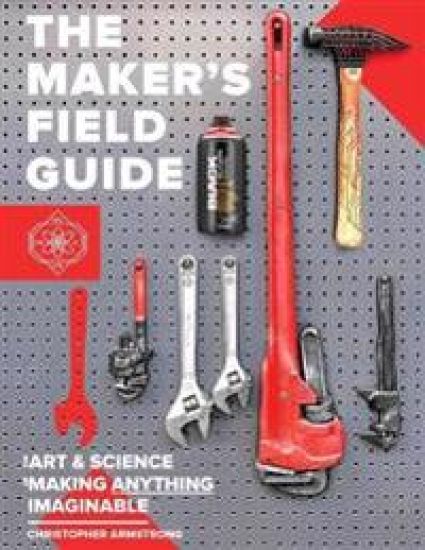
The first and only resource of its kind to to combine almost every single technique on making & building prototypes / models for design, engineering, and product development. The guide also elaborates on the fundamentals and advanced tools of the professional work shop - covering "old-school" tools of the trade, as well as the "new-school" state-of-the-art technologies. This guide is written for top professionals and curious DIY tinkerers alike - I have personally written this as a guide that I can quickly reference in the field or in the office, however because of it's simple, non-technical language, it can be easily understood by anyone who may have little to no understanding of design. For anyone who enjoys the process of making, or for those who plan on building the next big Startup widget that will take the world by storm. Having the proper tools is half the battle to achieving successful results.This book has been written with advanced professionals in mind, but it is also meant to be used as a valuable resource for beginners, design students, or recreational hobbyists in mind. THE TOOLS OF THE TRADE, INCLUDING: 22+ State-of-the-Art Shop Machines, including safety best practices. 20+ Hand Tools, including tool customization tricks used by the most elite makers & designers worldwide. 18+ Common material types. 80+ Industry-Standard suppliers guide, including machinery, shop tools, and materials (and where to buy). 52+ Pro tips - insights from professionals at the top of their industries, developed through a decade of trial, error, and real-world industry experience. High-End Work Shop & Makerspace design, build, and customization tips from the Pros. A PROFESSIONAL-LEVEL GUIDE TO MAKING ANYTHING IMAGINABLE: RTV Silicone Molding & Casting Fiberglass & Carbon Fiber Composites CNC Machining / CAD + CAM Prototyping 3D Printing & Laser Cutting Industrial Clay & Foam Modeling Techniques Bondo(TM) / Automotive Body Filler Modeling Spray Painting & Sanding Vacuum Forming Lifecasting & Prosthetics Photo-book quality print edition 370 color photos, 203 pages.

The Maker's Field Guide: Master Maker Edition
Christopher Armstrong
Armstrong Industries
2019
nidottu
The Maker's Field Guide: Master Maker Edition is the definitive guide to making anything imaginable. It is an extension of Christopher Armstrong's first book, the Maker's Field Guide, with a full new chapter on advanced project development following the process beginning to end, with 40 new pages of expanded content. Unlike anything you've ever encountered or likely will ever see again, this guide is meant as the end-all-be-all resource for top professional designers, engineers, and passionate DIY makers alike.The first and only resource of its kind to to combine almost every single technique on making & building prototypes / models for design, engineering, and product development. The guide also elaborates on the fundamentals and advanced tools of the professional work shop - covering "old-school" tools of the trade, as well as the "new-school" state-of-the-art technologies. This guide is written for top professionals and curious DIY tinkerers alike - I have personally written this as a guide that I can quickly reference in the field or in the office, however because of it's simple, non-technical language, it can be easily understood by anyone who may have little to no understanding of design. For anyone who enjoys the process of making, or for those who plan on building the next big Startup widget that will take the world by storm. Having the proper tools is half the battle to achieving successful results.This book has been written with advanced professionals in mind, but it is also meant to be used as a valuable resource for beginners, design students, or recreational hobbyists in mind. THE TOOLS OF THE TRADE, INCLUDING: 22+ State-of-the-Art Shop Machines, including safety best practices.20+ Hand Tools, including tool customization tricks used by the most elite makers & designers worldwide.18+ Common material types.80+ Industry-Standard suppliers guide, including machinery, shop tools, and materials (and where to buy).52+ Pro tips - insights from professionals at the top of their industries, developed through a decade of trial, error, and real-world industry experience.High-End Work Shop & Makerspace design, build, and customization tips from the Pros. A PROFESSIONAL-LEVEL GUIDE TO MAKING ANYTHING IMAGINABLE: RTV Silicone Molding & CastingFiberglass & Carbon Fiber CompositesCNC Machining / CAD + CAM Prototyping3D Printing & Laser CuttingIndustrial Clay & Foam Modeling TechniquesBondo(TM) / Automotive Body Filler ModelingSpray Painting & SandingVacuum FormingLifecasting & Prosthetics NEW 2019 Master Maker Edition with 40+ new pages of expanded content (230 pages total), including an all new Advanced Projects chapter covering step-by-step design / build of Entertainment Design and Industrial Design example projects.
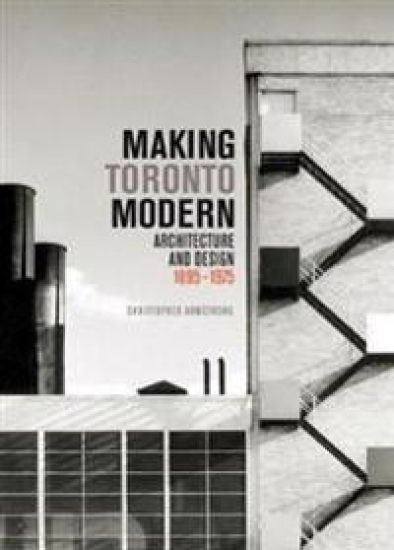
In the final years of the nineteenth century, Toronto architects started to consider how their city, through progressive architecture and urban planning, could be made "modern." Making Toronto Modern constructs Toronto's architectural past to create a compelling narrative of how new ideas about modernism were debated, received, and embodied in new buildings. Through a close examination of political debates, architectural journals, and home design magazines, Christopher Armstrong describes the competing motivations and ideals that influenced the ways in which the city was built. He shows how radical architectural ideas from Europe began to influence Toronto architects and planners in the 1920s, but that the city's residents proved cautiously conservative about modernism. It was not until the prosperous 1950s that the Modern Movement gained wider acceptance through the work of a new generation of practitioners and by the time Viljo Revell's dramatic New City Hall opened in 1965, it was clear that popular attitudes had undergone significant change. The book profiles major public buildings, university commissions, commercial buildings, and a range of residential architecture - from the homes of the city's richest businessmen in the early twentieth century to modernist works such as the Betel, Horne, and Fraser residences sixty years later. Extensively illustrated with period photographs, many previously unpublished, this broad overview fills a major gap in Toronto's architectural history. A reminder of what is at stake in the reception of new architecture and the factors that shape the development of contemporary architecture, Making Toronto Modern is critical to understanding how Torontonians came to see themselves as living in a world-class city attuned to the avant-garde.
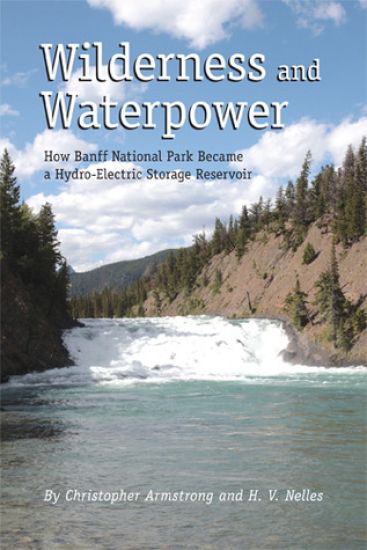
Wilderness and Waterpower
Christopher Armstrong; H. V. Nelles
University of Calgary Press
2013
nidottu
Wilderness and Waterpower explores how the need for electricity at the turn of the century affected and shaped Banff National Park. Today's conservationists and energy researchers will find much to think about in this tale of Alberta's early need for electricity, entrepreneurial greed, debates over aboriginal ownership of the river, moving park boundaries to accommodate hydro-electric initiatives, the importance of water for tourism, rural electrification, and the ultimate diversion to coal-produced electricity.It is also a lively national story, involving the irrepressible and impetuous Max Aitkin (later Lord Beaverbook), R.B. Bennett (local legal advisor and later prime minister), and a series of local politicians and bureaucrats whose contributions confuse and conflate issues along the way.
The River Returns
Christopher Armstrong; Matthew Evenden; H.V. Nelles
McGill-Queen's University Press
2011
nidottu
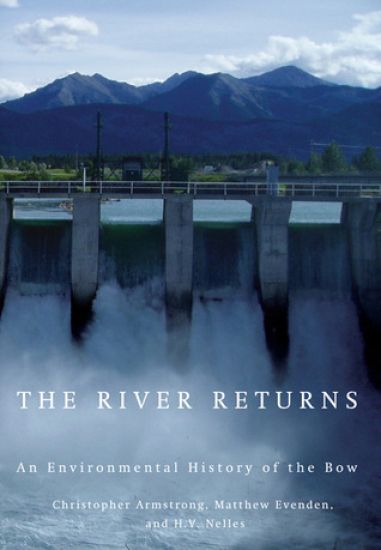
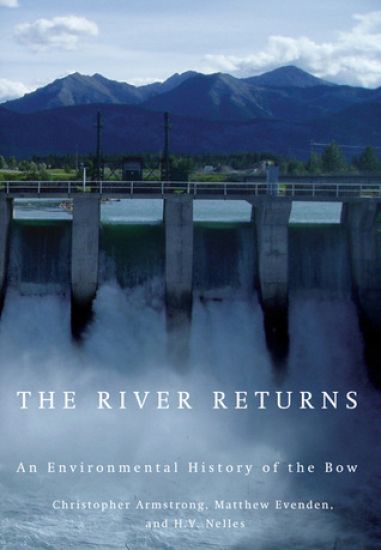
Alberta's iconic river has been dammed and plumbed, made to spin hydro-electric turbines, and used to cleanse Calgary. Artificial lakes in the mountains rearrange its flow; downstream weirs and ditches divert it to irrigate the parched prairie. Far from being wild, the Bow is now very much a human product: its fish are as manufactured as its altered flow, changed water quality, and newly stabilized and forested banks. The River Returns brings the story of the Bow River's transformation full circle through an exploration of the recent revolution in environmental thinking and regulation that has led to new limits on what might be done with and to the river. Rivers have been studied from many perspectives, but too often the relationship between nature and people, between rivers and the cultures that have grown up beside them, have been separated. The River Returns illuminates the ways in which humans, both inadvertently and consciously, have interacted with nature to make the Bow.
The River Returns
Christopher Armstrong; Matthew Evenden; H.V. Nelles
McGill-Queen's University Press
2009
sidottu
Alberta's iconic river has been dammed and plumbed, made to spin hydro-electric turbines, and used to cleanse Calgary. Artificial lakes in the mountains rearrange its flow; downstream weirs and ditches divert it to irrigate the parched prairie. Far from being wild, the Bow is now very much a human product: its fish are as manufactured as its altered flow, changed water quality, and newly stabilized and forested banks. The River Returns brings the story of the Bow River's transformation full circle through an exploration of the recent revolution in environmental thinking and regulation that has led to new limits on what might be done with and to the river. Rivers have been studied from many perspectives, but too often the relationship between nature and people, between rivers and the cultures that have grown up beside them, have been separated. The River Returns illuminates the ways in which humans, both inadvertently and consciously, have interacted with nature to make the Bow.
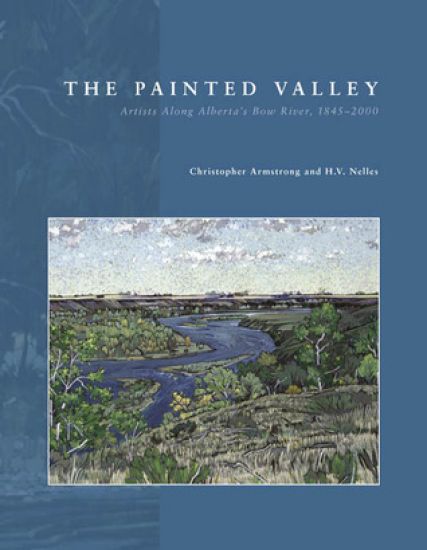
With its dramatic landscapes and rugged beauty, Alberta's Bow River valley has inspired generations of artists. The Painted Valley : Artists Along Alberta's Bow River, 1845-2000 brings together a collection of works by local and visiting artists from 1845 to 2000 that captures the many moods of the river and its valley from its source high in the Rocky Mountains down to the city of Calgary and eastward across the open prairie. Christopher Armstrong and H.V. Nelles have selected works from a number of Alberta museums and national collections, which depict the Bow River and its valley, representing a broad array of historical periods, artistic styles, and points of view. From European topographers and military artists to painters commissioned by the Canadian Pacific Railway, from the Group of Seven to modernism and abstraction, these pictures of the Bow valley tell us much about changing attitudes toward nature and the environment as well as the evolution of an artistic community in western Canada.