Kirjojen hintavertailu. Mukana 12 459 402 kirjaa ja 12 kauppaa.

Kirjailija

Christopher B. Barnett

Kirjat ja teokset yhdessä paikassa: 10 kirjaa, julkaisuja vuosilta 2011-2026, suosituimpien joukossa Kierkegaard, Statecraft and Political Theology. Vertaile teosten hintoja ja tarkista saatavuus suomalaisista kirjakaupoista.

Mukana myös kirjoitusasut: Christopher B Barnett

10 kirjaa

Kirjojen julkaisuhaarukka 2011-2026.

Kierkegaard, Statecraft and Political Theology

Kierkegaard, Statecraft and Political Theology

Christopher B. Barnett

BLOOMSBURY PUBLISHING PLC
2026
sidottu
Influenced by the backdrop of the contemporary issues facing Christianity and a trend toward ’political theology’, Christopher Barnett explores Kierkegaard’s relation to politics and the modern state. By tracing the birth and development of the modern secular state, he argues that Søren Kierkegaard’s repudiation of “politics” in the nineteenth century should be read as early resistance to the totalizing claims of the nation-state. For Kierkegaard, a modern preoccupation with politics is a symptom of the deification of the state: the more the state grows, the less God matters - a problem that would lead to the demoralization of Western culture. Barnett places Kierkegaard’s analysis in dialogue with authors such as Jacques Ellul, Eric Voeglin, René Girard, and Wendell Berry, to explore how politics in the modern state is not marked by liberation but by bureaucracy, propaganda, technocracy, and disenchantment. Kierkegaard's critiques of state power are startlingly relevant to contemporary debates in political theology. Kierkegaard, Statecraft and the Question of Political Theology allows Kierkegaard’s political thought to speak for itself, pulling out overlaps with twentieth-century thinkers who bear a “family resemblance” to his political philosophy. By applying his thought actively to the challenges facing Christianity today, this book explores the politization of theology in all its complexity.
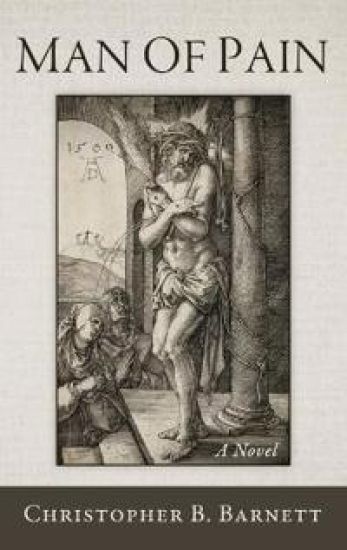
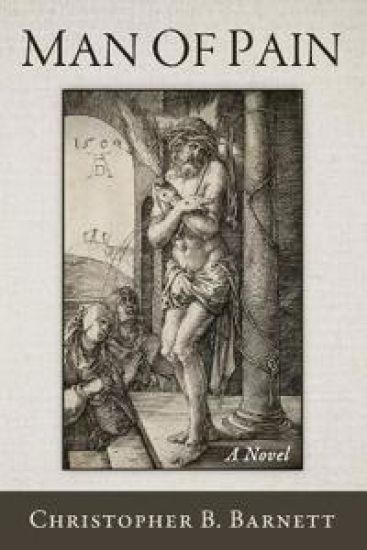
Man of Pain

Man of Pain

Christopher B Barnett

Resource Publications (CA)
2023
sidottu
Howard Lamb is a trial lawyer--bright and accomplished, with a home adjacent to one of Alabama's most prestigious country clubs. He also believes he is an apostle of Jesus Christ. Without telling anyone, Lamb takes to the streets of Birmingham, seeking to bring "good news" to everyone he meets. But he soon discovers that his message of love and forgiveness is misunderstood by friends and foes alike. With his efforts increasingly thwarted, and his whereabouts finally revealed, Lamb's leap of faith soon becomes a race against time.
Man of Pain

Man of Pain

Christopher B Barnett

Resource Publications (CA)
2023
pokkari
Howard Lamb is a trial lawyer--bright and accomplished, with a home adjacent to one of Alabama's most prestigious country clubs. He also believes he is an apostle of Jesus Christ. Without telling anyone, Lamb takes to the streets of Birmingham, seeking to bring ""good news"" to everyone he meets. But he soon discovers that his message of love and forgiveness is misunderstood by friends and foes alike. With his efforts increasingly thwarted, and his whereabouts finally revealed, Lamb's leap of faith soon becomes a race against time.
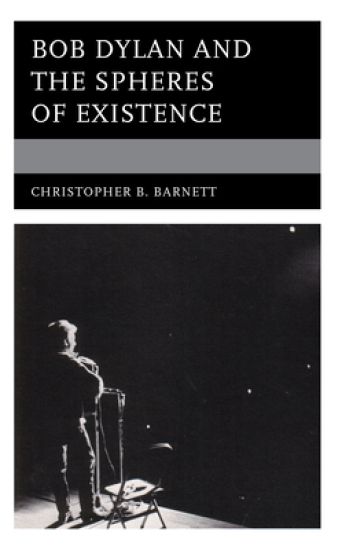
Bob Dylan and the Spheres of Existence

Bob Dylan and the Spheres of Existence

Christopher B. Barnett

BLOOMSBURY PUBLISHING PLC
2023
sidottu
Bob Dylan and the Spheres of Existence shows that existential questions lie at the heart of Bob Dylan’s songwriting—a point that will developed with the help of renowned Danish philosopher Søren Kierkegaard. One of the focal points of Kierkegaard’s authorship is the journey towards authentic selfhood. Famously, he thematizes this journey in terms of existential “spheres”—the aesthetic, the ethical, and the religious. Whereas the aesthetic involves a preference for immediacy, the ethical has to do with achieving a sense of personal identity by way of living for enduring commitments and values. Yet, higher than both of these stages is the religious, which initially concerns the immanent human quest for eternal life but, for Kierkegaard, ultimately comes to rest in God’s transcendent self-revelation in Jesus Christ. This book argues that Kierkegaard's theory can help us deepen our understanding of and relation to Dylan’s art. Just as Kierkegaard presupposes existential “movement” and transformation, so is Dylan celebrated for his shifting personae and philosophical variance. But this is not mere aesthetic dabbling on Dylan’s part. On the contrary, his diverse “masks” and voices encourage his audience to engage the worldview being presented, albeit in such a way that religious faith is identified as humanity’s source of ultimate meaning.
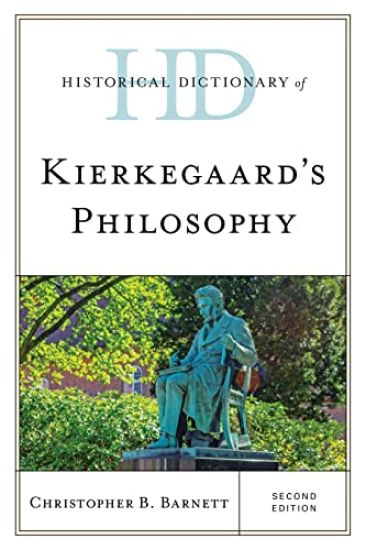
Historical Dictionary of Kierkegaard's Philosophy

Historical Dictionary of Kierkegaard's Philosophy

Christopher B. Barnett

BLOOMSBURY PUBLISHING PLC
2022
sidottu
Historical Dictionary of Kierkegaard's Philosophy, Second Edition chronicles the life and thoughts of the great Danish thinker Søren Kierkegaard (1813-55). What makes this volume essential is its extensive scope: it provides a glossary of concepts, persons, and places related to Kierkegaard’s authorship, from “Absolute” to “Hans Christian Ørsted.” This is done through a chronology, an introduction, and an extensive bibliography. The dictionary section has more than 200 cross-referenced entries oncepts, persons, and places related to the life and work of Søren Kierkegaard. This book is an excellent resource for students, researchers, and anyone wanting to know more about this subject.
Kierkegaard and the Question Concerning Technology

Kierkegaard and the Question Concerning Technology

Christopher B. Barnett

Bloomsbury Academic USA
2021
nidottu
Over the last several decades, technology has emerged as an important area of interest for both philosophers and theologians. Yet, despite his status as one of modernity’s seminal thinkers, Søren Kierkegaard is not often seen as one who contributed to the field. Kierkegaard and the Question Concerning Technology argues otherwise. Christopher B. Barnett shows that many of Kierkegaard’s criticisms of "the present age" relate to the increasing dominance of technology in the West, and he puts Kierkegaard’s thought in conversation with subsequent thinkers who grappled with technological issues, from Martin Heidegger to Thomas Merton.Barnett shows that Kierkegaard’s writing, with its marked emphases on personal "upbuilding," stands as a place where deeper, non-technical modes of thinking are both commended and nurtured. In doing so, Barnett presents a Kierkegaard who remains relevant--perhaps all too relevant--in today’s digital age.
Kierkegaard and the Question Concerning Technology

Kierkegaard and the Question Concerning Technology

Christopher B. Barnett

Bloomsbury Academic USA
2019
sidottu
Over the last several decades, technology has emerged as an important area of interest for both philosophers and theologians. Yet, despite his status as one of modernity’s seminal thinkers, Søren Kierkegaard is not often seen as one who contributed to the field. Kierkegaard and the Question Concerning Technology argues otherwise. Christopher B. Barnett shows that many of Kierkegaard’s criticisms of "the present age" relate to the increasing dominance of technology in the West, and he puts Kierkegaard’s thought in conversation with subsequent thinkers who grappled with technological issues, from Martin Heidegger to Thomas Merton.Barnett shows that Kierkegaard’s writing, with its marked emphases on personal "upbuilding," stands as a place where deeper, non-technical modes of thinking are both commended and nurtured. In doing so, Barnett presents a Kierkegaard who remains relevant--perhaps all too relevant--in today’s digital age.
Kierkegaard, Pietism and Holiness

Kierkegaard, Pietism and Holiness

Christopher B. Barnett

Routledge
2016
nidottu
Søren Kierkegaard wrote that Pietism is 'the one and only consequence of Christianity'. Praise of this sort - particularly when coupled with Kierkegaard's significant personal connections to the movement in Christian spirituality known as Pietism - would seem to demand thorough investigation. And yet, Kierkegaard's relation to Pietism has been largely neglected in the secondary literature. Kierkegaard, Pietism and Holiness fills this scholarly gap and, in doing so, provides the first full-length study of Kierkegaard's relation to the Pietist movement. First accounting for Pietism's role in Kierkegaard's social, ecclesial, and intellectual background, Barnett goes on to demonstrate Pietism's impact on Kierkegaard's published authorship, principally regarding the relationship between Christian holiness and secular culture. This book not only establishes Pietism as a formative influence on Kierkegaard's life and thinking, but also sheds fresh light on crucial Kierkegaardian concepts, from the importance of 'upbuilding' to the imitation of Christ.
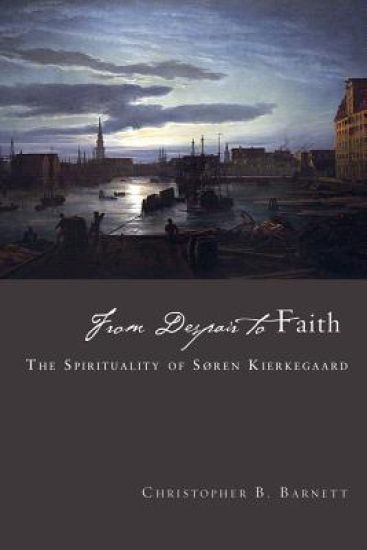
From Despair to Faith

From Despair to Faith

Christopher B. Barnett

Fortress Press,U.S.
2014
pokkari
Soren Kierkegaard has been called many things, from brooding genius and "melancholy Dane" to the father of existentialism. Yet, rather than clarify the nature of Kierkegaard's writings, such labels have often obscured other important aspects of his authorship. Such, indeed, is the case with Kierkegaard's standing as a spiritual author. In From Despair to Faith: The Spirituality of Soren Kierkegaard, Christopher B. Barnett endeavors to remedy this problem. He does so in two overarching ways. First, he orients the reader to Kierkegaard's grounding in the Christian spiritual tradition, as well as to the Dane's own authorial stress on themes such as upbuilding, spiritual journey, and faith. Second, Barnett maintains that Kierkegaard's spirituality is best understood through the various "pictures" that populate his authorship. These pictures are deemed "icons of faith," since Kierkegaard consistently recommends that the reader contemplate them. In this way they both represent and communicate what Kierkegaard sees as the fulfillment of Christian existence.
Kierkegaard, Pietism and Holiness

Kierkegaard, Pietism and Holiness

Christopher B. Barnett

Ashgate Publishing Limited
2011
sidottu
Søren Kierkegaard wrote that Pietism is 'the one and only consequence of Christianity'. Praise of this sort - particularly when coupled with Kierkegaard's significant personal connections to the movement in Christian spirituality known as Pietism - would seem to demand thorough investigation. And yet, Kierkegaard's relation to Pietism has been largely neglected in the secondary literature. Kierkegaard, Pietism and Holiness fills this scholarly gap and, in doing so, provides the first full-length study of Kierkegaard's relation to the Pietist movement. First accounting for Pietism's role in Kierkegaard's social, ecclesial, and intellectual background, Barnett goes on to demonstrate Pietism's impact on Kierkegaard's published authorship, principally regarding the relationship between Christian holiness and secular culture. This book not only establishes Pietism as a formative influence on Kierkegaard's life and thinking, but also sheds fresh light on crucial Kierkegaardian concepts, from the importance of 'upbuilding' to the imitation of Christ.