Kirjojen hintavertailu. Mukana 12 595 353 kirjaa ja 12 kauppaa.

Kirjailija

Christopher Bartley

Kirjat ja teokset yhdessä paikassa: 6 kirjaa, julkaisuja vuosilta 2005-2020, suosituimpien joukossa High Accuracy Partially Monotone Ordinal Classification. Vertaile teosten hintoja ja tarkista saatavuus suomalaisista kirjakaupoista.

6 kirjaa

Kirjojen julkaisuhaarukka 2005-2020.

High Accuracy Partially Monotone Ordinal Classification

High Accuracy Partially Monotone Ordinal Classification

Wei Liu; Mark Reynolds; Christopher Bartley

Eliva Press
2020
nidottu
The problem with many machine learning classification algorithms is that their high level of accuracy is achieved at the cost of model comprehensibility, and with a consequent loss of justifiability: their mechanism cannot be shown to be reasonable because it cannot be explained. This has hindered their acceptance in sensitive domains, leading to growing demand for 'explainable AI'. In addition, the EU's recent GDPR legislation has elevated the issue to a legal requirement. If domain knowledge regarding nondecreasing (monotone) relationships could be incorporated into high performance classification algorithms without compromising their performance, the resulting increase in comprehensibility may allow them to surpass 'black box' barriers to acceptance and unlock their high accuracy for wider use. This book aims for 'complete' monotone classification algorithms, that: (a) are partially monotone (allow nonmonotone features); (b) guarantee monotonicity globally; (c) retain high accuracy; and (d) are scalable to large data sets. To achieve these aims, the book contains: - Explanation of the principles of ordinal classification, monotonicity and partial orders.- Extensive review of the literature and available monotone algorithms.- Several techniques for monotone tree-based ensembles (and Random Forest in particular).- Novel constraint generation for monotone Support Vector Machines.- Extension of cone-based dominance relations to partial monotonicity, for classification and pairwise and partial-order based problems.A panel of seventeen partially monotone datasets is used throughout the book to allow comparative empirical accuracy and performance of the many approaches discussed. It is hoped this book encourages and enables practitioners to include knowledge of monotonicity in their models when appropriate, for the sake of accuracy, simplicity, and interpretability.
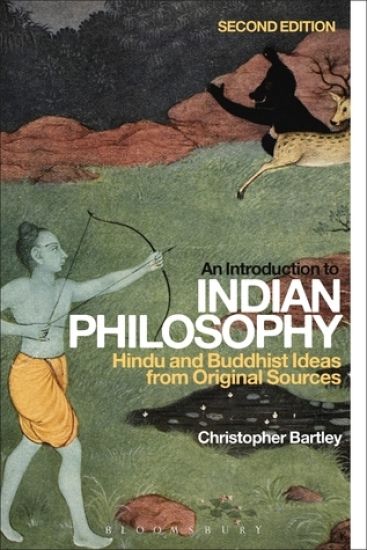
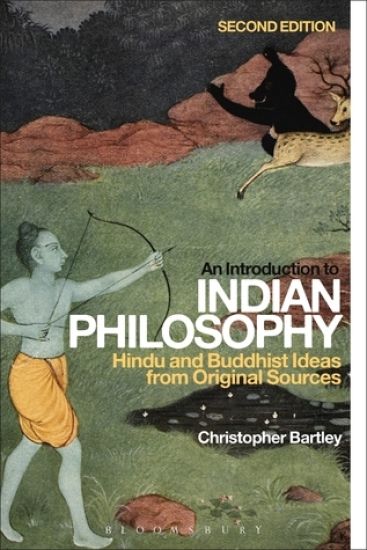
An Introduction to Indian Philosophy

An Introduction to Indian Philosophy

Christopher Bartley

Bloomsbury Academic
2015
sidottu
Introducing the topics, themes and arguments of the most influential Hindu and Buddhist Indian philosophers, An Introduction to Indian Philosophy leads the reader through the main schools of Indian thought from the origins of Buddhism to the Saiva Philosophies of Kashmir.By covering Buddhist philosophies before the Brahmanical schools, this engaging introduction shows how philosophers from the Brahmanical schools—including Samkhya, Yoga, Nyaya, Vaisheshika, and Mimamsa, as well as Vedanta—were to some extent responding to Buddhist viewpoints. Together with clear translations of primary texts, this fully-updated edition features:• A glossary of Sanskrit terms• A guide to pronunciation• Chronological list of philosophers & worksWith study tools and constant reference to original texts, An Introduction to Indian Philosophy provides students with deeper understanding of the foundations of Indian philosophy.
An Introduction to Indian Philosophy

An Introduction to Indian Philosophy

Christopher Bartley

Bloomsbury Academic
2015
nidottu
Introducing the topics, themes and arguments of the most influential Hindu and Buddhist Indian philosophers, An Introduction to Indian Philosophy leads the reader through the main schools of Indian thought from the origins of Buddhism to the Saiva Philosophies of Kashmir.By covering Buddhist philosophies before the Brahmanical schools, this engaging introduction shows how philosophers from the Brahmanical schools—including Samkhya, Yoga, Nyaya, Vaisheshika, and Mimamsa, as well as Vedanta—were to some extent responding to Buddhist viewpoints. Together with clear translations of primary texts, this fully-updated edition features:• A glossary of Sanskrit terms• A guide to pronunciation• Chronological list of philosophers & worksWith study tools and constant reference to original texts, An Introduction to Indian Philosophy provides students with deeper understanding of the foundations of Indian philosophy.
An Introduction to Indian Philosophy

An Introduction to Indian Philosophy

Christopher Bartley

Continuum International Publishing Group Ltd.
2010
nidottu
This textbook introduces students to the full range of Indian philosophical thought. "An Introduction to Indian Philosophy" is the definitive companion to the study of Indian philosophy. The book offers an accessible and comprehensive introduction to all the major philosophical concepts and issues in Indian thought. Ideal for undergraduate students, the book is written and structured to reflect as closely as possible the way the subject is taught and studied. The book offers lucid coverage of Indian philosophy and breaks new ground, considering the latest directions in this growing area of philosophical interest. The book describes the various relationships and disputes between Indian traditions of thought in a chronological framework. All the major philosophical schools are covered. Key topics and controversies are illustrated by annotated translations of primary sources that are otherwise difficult to access. Christopher Bartley's rigorous analysis is supplemented by useful study features, including key examples from philosophical writing, summaries of core concepts, study questions, and guides to further reading.
Indian Philosophy AZ

Indian Philosophy AZ

Christopher Bartley

Edinburgh University Press
2005
sidottu
This alphabetical handbook defines and explains key concepts in classical Indian philosophy, identifies controversial issues, describes major traditions of thought, and locates influential thinkers in their intellectual and religious contexts. Extensive cross-referencing provides users with an overview of systematic doctrines and disagreements. While many entries deal with fundamentals, others explain technicalities usually overlooked in Western writings about Indian thought, making Indian Philosophy A-Z a unique resource for both beginners and specialists in the fields of Indian religions and philosophies. Features * The only handbook of its kind * Written in non-technical language * Extensive cross-referencing
Indian Philosophy AZ

Indian Philosophy AZ

Christopher Bartley

Edinburgh University Press
2005
nidottu
This alphabetical handbook defines and explains key concepts in classical Indian philosophy, identifies controversial issues, describes major traditions of thought, and locates influential thinkers in their intellectual and religious contexts. Extensive cross-referencing provides users with an overview of systematic doctrines and disagreements. While many entries deal with fundamentals, others explain technicalities usually overlooked in Western writings about Indian thought, making Indian Philosophy A-Z a unique resource for both beginners and specialists in the fields of Indian religions and philosophies. Features * The only handbook of its kind * Written in non-technical language * Extensive cross-referencing