Kirjojen hintavertailu. Mukana 12 595 353 kirjaa ja 12 kauppaa.

Kirjailija

Christopher Bollas

Kirjat ja teokset yhdessä paikassa: 41 kirjaa, julkaisuja vuosilta 1991-2026, suosituimpien joukossa Pitching to the Dream Team. Vertaile teosten hintoja ja tarkista saatavuus suomalaisista kirjakaupoista.

41 kirjaa

Kirjojen julkaisuhaarukka 1991-2026.

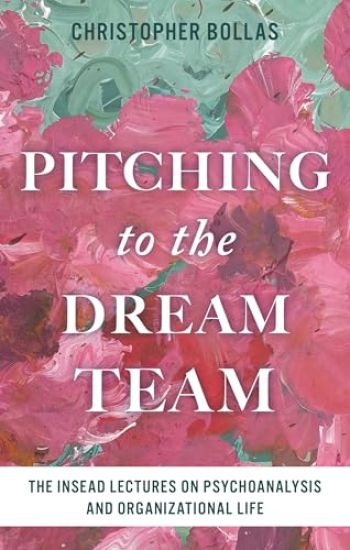
Pitching to the Dream Team

Pitching to the Dream Team

Christopher Bollas

BLOOMSBURY PUBLISHING PLC
2026
sidottu
The book offers a radical, refreshing, innovative, provocative, and generative perspective on conflict solution whether in an organization or government. It also offers an entirely new set of terms and concepts to access, utilize, and share unconscious creativity. Almost all the top-down organizational assumptions in government and business stifle creativity rather than facilitate it. The book offers a multitude of practical improvements that will alter our understanding of vision and creativity.
Streams of Consciousness

Streams of Consciousness

Christopher Bollas

KARNAC BOOKS
2024
pokkari
In Christopher Bollas’ Streams of Consciousness, a wide spectrum of theory and practice are explored, sometimes appearing in simple fragments, sometimes via complex lines of thinking that are developed in detail over time. As Bollas revisits the received truths and dogmas of his profession – including his own prejudices – he demonstrates the value of open, intelligent uncertainty. Interspersed with clinical preoccupations, which highlight the richness as well as the bewildering complexity of psychoanalysis, we find other ideas that reflect his early life as political activist, literature professor, and cultural critic. Throughout, the notebooks are enriched by references to the work of numerous writers in many fields who have influenced his thinking. This work is essential reading for all with an interest in psychoanalysis which will enrich both academic study and clinical practice.
Streams of Consciousness

Streams of Consciousness

Christopher Bollas

KARNAC BOOKS
2024
pokkari
In Christopher Bollas’ Streams of Consciousness, a wide spectrum of theory and practice are explored, sometimes appearing in simple fragments, sometimes via complex lines of thinking that are developed in detail over time. As Bollas revisits the received truths and dogmas of his profession – including his own prejudices – he demonstrates the value of open, intelligent uncertainty. Interspersed with clinical preoccupations, which highlight the richness as well as the bewildering complexity of psychoanalysis, we find other ideas that reflect his early life as political activist, literature professor, and cultural critic. Throughout, the notebooks are enriched by references to the work of numerous writers in many fields who have influenced his thinking. This work is essential reading for all with an interest in psychoanalysis which will enrich both academic study and clinical practice.
Conversations

Conversations

Christopher Bollas

KARNAC BOOKS
2023
pokkari
Christopher Bollas presents us with a new literary form in his Conversations: twenty-three unique dialogues to captivate, amuse, and inspire. The psychoanalyst Paula Heimann asked: ‘Who is speaking? To whom? About what? And why now?’ We speak with the voice and position of many others – mothers, fathers, siblings, teachers – and ordinary conversation therefore stages the history of our interpersonal engagements. Heimann’s questions also apply when we talk to ourselves, and our inner dialogues reveal the hidden genius of our private world in which we are both actor and audience, poet and reader, politician and electorate. It's quite a ride, and an art form all of its own.
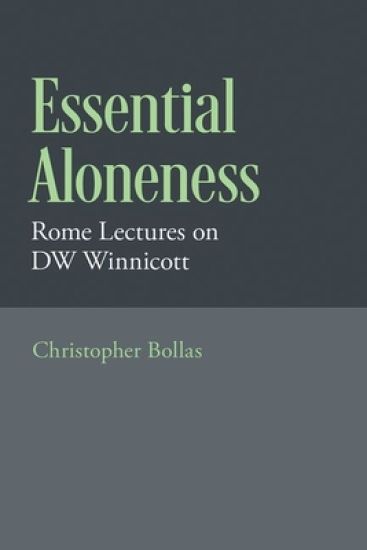
Essential Aloneness

Essential Aloneness

Christopher Bollas

OXFORD UNIVERSITY PRESS INC
2023
sidottu
Essential Aloneness presents a series of lectures on DW Winnicott delivered by Christopher Bollas in the 1980s to students and staff of the Institute of Child Neuropsychiatry at the University of Rome. Those attending were familiar with Winnicott's works; indeed, many were expert. But a question remained. How do you use Winnicott's concepts in the clinical space? Bollas not only addresses that question but also writes about his own clinical formulations at the time, such as 'the transformational object' or 'the unthought known.' Each chapter contains a unique and distinct talk, as delivered and suffused with the aliveness that is a hallmark of in-person lectures, with Bollas exhibiting a remarkable flexibility of scope and focus in order to meet the attendant group's clinical interests. The book teems with questions of Winnicottian psychoanalytic theory and practice no less relevant today than when the lectures were first delivered. These questions identify the subtle and complex positions taken by Winnicott, as understood by Bollas and other analysts in the United Kingdom and in Italy, who worked with him and knew how to make use of the Winnicott object. One of Winnicott's literary editors, Bollas brings a unique perspective in real time to the challenges Winnicott's thinking posed to the psychoanalytical, literary, and intellectual culture in the United Kingdom and abroad in the decade after Winnicott's death.
Three Characters

Three Characters

Christopher Bollas

Phoenix Publishing House
2021
pokkari
It is important to point out that these essays are about character types; it is not to suggest that all borderlines, narcissists or manic depressives are the same. Everyone is an individual and are who they are for many different reasons. What they have in common is a typical relation between their subjectivity and the world they inhabit. In other words, Christopher Bollas has identified the axioms that these individuals share. Following a discussion of the features of each type, the axioms are delivered in the character’s own voice. By placing ourselves within their own logic, we can begin to identify and empathise with them. At the root of all character disorders there is mental pain and each disorder is an intelligent attempt to solve an existential problem. If the clinician can grasp their specific intelligence and help the analysand to understand this, then a natural process of healing can begin. Three Characters is a masterclass based on decades of lectures presented to psychoanalysts, analytical psychologists, and psychotherapists, and is a must-read for all psychoanalytic enthusiasts.
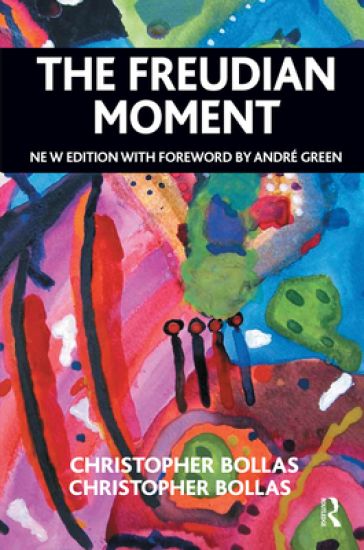
The Freudian Moment

The Freudian Moment

Christopher Bollas

Routledge
2019
sidottu
The author eloquently argues for a return to our understanding of how Freudian psychoanalysis works unconscious to unconscious. Failure to follow Freud's basic assumptions about psychoanalytical listening has resulted in the abandonment of searching for the 'the logic of sequence' which Freud regarded as the primary way we express unconscious thinking. In two extensive interviews and follow-up essays, all occurring in 2006, we follow the author exploring his most recent and radical challenge to contemporary psychoanalysis. The Freudian Moment, the author argues, realizes a phylogenetic preconception that has existed for tens of thousands of years. The invention of psychoanalysis realizes this preconception and institutes a profound step forward in human relations. The author's proposal that we use the image of the symphonic score to better imagine unconscious articulation opens up a new conceptual way for grasping the complexity of unconscious thought.
Forces of Destiny

Forces of Destiny

Christopher Bollas

Routledge
2018
sidottu
Christopher Bollas is one of the most expressive and eloquent exponents of the ideas, meanings and experience of psychoanalysis currently writing. He has a real gift for taking the reader into the fine texture of the psychoanalytic process. Forces of Destiny examines and reflects on one of the most fundamental questions – what is it that is unique about us as individuals? How does it manifest itself in our personalities, our lives, relationships and in the psychoanalytic process?Drawing on classical notions of ‘fate’ and ‘destiny’ and Winnicott’s idea of the true self, Bollas develops the concept of ‘the human idiom’ to explore and show how we work out – both creatively and in the process of analysis – the ‘dialectics of difference’. In particular he reflects on how the patients may use particular parts of the psychoanalyst’s personality to express their own idiom and destiny drive.Forces of Destiny was Bollas’ second book. His first, The Shadow of the Object (1987), was described by the reviewer in the International Journal of Psycho-Analysis as a ‘unique and remarkable book. I think of it as one of the most interesting and important new books on psychoanalysis which I have read in the last decade.’ Forces of Destiny confirmed his position as one of the most important, thoughtful and engaging psychoanalytic writers. With a new preface from Christopher Bollas, Forces of Destiny remains a classic of psychoanalytic literature, appealing to psychoanalysts as well as readers in art history, literature, philosophy, and cultural studies.
Forces of Destiny

Forces of Destiny

Christopher Bollas

Routledge
2018
nidottu
Christopher Bollas is one of the most expressive and eloquent exponents of the ideas, meanings and experience of psychoanalysis currently writing. He has a real gift for taking the reader into the fine texture of the psychoanalytic process. Forces of Destiny examines and reflects on one of the most fundamental questions – what is it that is unique about us as individuals? How does it manifest itself in our personalities, our lives, relationships and in the psychoanalytic process?Drawing on classical notions of ‘fate’ and ‘destiny’ and Winnicott’s idea of the true self, Bollas develops the concept of ‘the human idiom’ to explore and show how we work out – both creatively and in the process of analysis – the ‘dialectics of difference’. In particular he reflects on how the patients may use particular parts of the psychoanalyst’s personality to express their own idiom and destiny drive.Forces of Destiny was Bollas’ second book. His first, The Shadow of the Object (1987), was described by the reviewer in the International Journal of Psycho-Analysis as a ‘unique and remarkable book. I think of it as one of the most interesting and important new books on psychoanalysis which I have read in the last decade.’ Forces of Destiny confirmed his position as one of the most important, thoughtful and engaging psychoanalytic writers. With a new preface from Christopher Bollas, Forces of Destiny remains a classic of psychoanalytic literature, appealing to psychoanalysts as well as readers in art history, literature, philosophy, and cultural studies.
Meaning and Melancholia

Meaning and Melancholia

Christopher Bollas

Routledge
2018
sidottu
Meaning and Melancholia: Life in the Age of Bewilderment sees Christopher Bollas apply his creative and innovative psychoanalytic thinking to various contemporary social, cultural and political themes.This book offers an incisive exploration of powerful trends within, and between, nations in the West over the past two hundred years. The author traces shifts in psychological forces and ‘frames of mind’, that have resulted in a crucial ‘intellectual climate change’. He contends that recent decades have seen rapid and significant transformations in how we define our ‘selves’, as a new emphasis on instant connectedness has come to replace reflectiveness and introspection.Bollas argues that this trend has culminated in the current rise of psychophobia; a fear of the mind and a rejection of depth psychologies that has paved the way for what he sees as hate based solutions to world problems, such as the victory of Trump in America and Brexit in the United Kingdom. He maintains that, if we are to counter the threat to democracy posed by these changes and refind a more balanced concept of the self within society, we must put psychological insight at the heart of a new kind of analysis of culture and society. This remarkable, thought-provoking book will appeal to anyone interested in politics, social policy and cultural studies, and in the gaining of insight into the ongoing challenges faced by the Western democracies and the global community.
Meaning and Melancholia

Meaning and Melancholia

Christopher Bollas

Routledge
2018
nidottu
Meaning and Melancholia: Life in the Age of Bewilderment sees Christopher Bollas apply his creative and innovative psychoanalytic thinking to various contemporary social, cultural and political themes.This book offers an incisive exploration of powerful trends within, and between, nations in the West over the past two hundred years. The author traces shifts in psychological forces and ‘frames of mind’, that have resulted in a crucial ‘intellectual climate change’. He contends that recent decades have seen rapid and significant transformations in how we define our ‘selves’, as a new emphasis on instant connectedness has come to replace reflectiveness and introspection.Bollas argues that this trend has culminated in the current rise of psychophobia; a fear of the mind and a rejection of depth psychologies that has paved the way for what he sees as hate based solutions to world problems, such as the victory of Trump in America and Brexit in the United Kingdom. He maintains that, if we are to counter the threat to democracy posed by these changes and refind a more balanced concept of the self within society, we must put psychological insight at the heart of a new kind of analysis of culture and society. This remarkable, thought-provoking book will appeal to anyone interested in politics, social policy and cultural studies, and in the gaining of insight into the ongoing challenges faced by the Western democracies and the global community.
The Shadow of the Object

The Shadow of the Object

Christopher Bollas

Columbia University Press
2017
pokkari
During our formative years, we are continually "impressed" by the object world. Most of this experience will never be consciously thought, but it resides within us as assumed knowledge. In this influential work, Christopher Bollas terms this "the unthought known," offering radical new visions of the scope of psychoanalysis that expand our understanding of the creativity of the unconscious mind and the aesthetics of human character.The Shadow of the Object integrates aspects of Freud's theory of unconscious thinking with elements from the British Object Relations School. Aspects of the unthought known-the primary repressed unconscious-emerge during psychoanalysis as a mood, the aesthetic of a dream, or in our relation to the self as other. Within the unique analytic relationship, it becomes possible, at least in part, to think the unthought-an experience that has enormous transformative potential.First published in 1987, The Shadow of the Object remains a classic of the psychoanalytic literature written by a truly original thinker. The concept of the unthought known has influenced many areas of study, including literature, psychology, and the arts. This anniversary edition includes a new preface by Christopher Bollas.
The Shadow of the Object

The Shadow of the Object

Christopher Bollas

Routledge
2017
nidottu
In The Shadow of the Object, Christopher Bollas integrates aspects of Freud’s theory of unconscious thinking with elements from the British Object Relations School. In doing so, he offers radical new visions of the scope of psychoanalysis and expands our understanding of the creativity of the unconscious mind and the aesthetics of human character. During our formative years, we are continually "impressed" by the object world. Most of this experience will never be consciously thought, and but it resides within us as assumed knowledge. Bollas has termed this "the unthought known", a phrase that has ramified through many realms of human exploration, including the worlds of letters, psychology and the arts. Aspects of the unthought known --the primary repressed unconscious --will emerge during a psychoanalysis, as a mood, the aesthetic of a dream, or in our relation to the self as other. Within the unique analytic relationship, it becomes possible, at least in part, to think the unthought -- an experience that has enormous transformative potential. Published here with a new preface by Christopher Bollas, The Shadow of the Object remains a classic of the psychoanalytic literature, written by a truly original thinker.
The Shadow of the Object

The Shadow of the Object

Christopher Bollas

Routledge
2017
sidottu
In The Shadow of the Object, Christopher Bollas integrates aspects of Freud’s theory of unconscious thinking with elements from the British Object Relations School. In doing so, he offers radical new visions of the scope of psychoanalysis and expands our understanding of the creativity of the unconscious mind and the aesthetics of human character. During our formative years, we are continually "impressed" by the object world. Most of this experience will never be consciously thought, and but it resides within us as assumed knowledge. Bollas has termed this "the unthought known", a phrase that has ramified through many realms of human exploration, including the worlds of letters, psychology and the arts. Aspects of the unthought known --the primary repressed unconscious --will emerge during a psychoanalysis, as a mood, the aesthetic of a dream, or in our relation to the self as other. Within the unique analytic relationship, it becomes possible, at least in part, to think the unthought -- an experience that has enormous transformative potential. Published here with a new preface by Christopher Bollas, The Shadow of the Object remains a classic of the psychoanalytic literature, written by a truly original thinker.
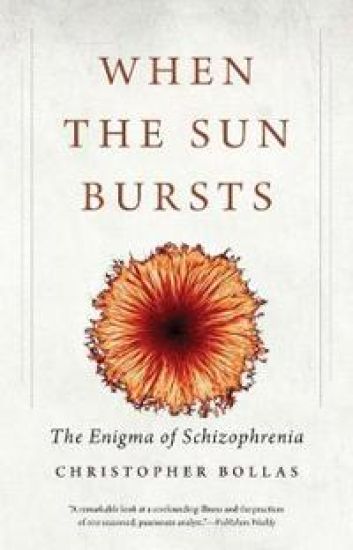
When the Sun Bursts

When the Sun Bursts

Christopher Bollas

Yale University Press
2017
pokkari
A leading psychoanalyst shares his experiences working with schizophrenic patients to show how effective talk therapy can be as a treatment Many schizophrenics experience their condition as one of radical incarceration, mind-altering medications, isolation, and dehumanization. At a time when the treatment of choice is anti-psychotic medication, world-renowned psychoanalyst Christopher Bollas asserts that schizophrenics can be helped by much more humane treatments, and that they have a chance to survive and even reverse the process if they have someone to talk to them regularly and for a sustained period, soon after their first breakdown. In this sensitive and evocative narrative, he draws on his personal experiences working with schizophrenics since the 1960’s. He offers his interpretation of how schizophrenia develops, typically in the teens, as an adaptation in the difficult transition to adulthood. With tenderness, Bollas depicts schizophrenia as an understandable way of responding to our precariousness in a highly unpredictable world. He celebrates the courage of the children he has worked with and reminds us that the wisdom inherent in human beings—to turn to conversation with others when in distress—is the fundamental foundation of any cure for human conflict.
Being a Character

Being a Character

Christopher Bollas

Routledge
2015
sidottu
Each person invests many of the objects in his life with his or her own unconscious meaning, each person subsequently voyages through an environment that constantly evokes the self's psychic history. Taking Freud's model of dreamwork as a model for all unconscious thinking, Christopher Bollas argues that we dreamwork ourselves into becoming who we are, and illustrates how the analyst and the patient use such unconscious processes to develop new psychic structures that the patient can use to alter his or her self experience. Building on this foundation, he goes on to describe some very special forms of self experience, including the tragic madness of women cutting themselves, the experience of a cruising homosexual in bars and bathes and the demented ferocity of the facist state of mind. An original interpreter of classical theory and clinical issues, in Being a Character Christopher Bollas takes the reader into the very texture of the psychoanalytic process.
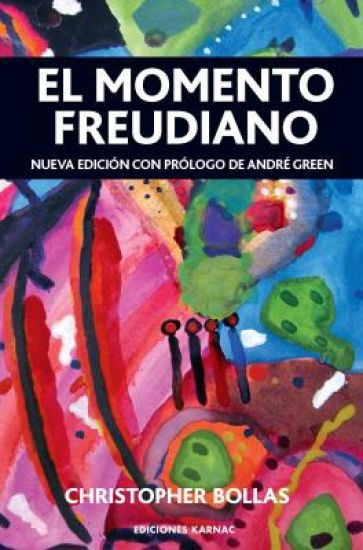
El Momento Freudiano

El Momento Freudiano

Christopher Bollas

Ediciones Karnac
2015
nidottu
Bollas aboga elocuentemente por el retorno a nuestra comprension de como funciona el psicoanalisis freudiano de inconsciente a inconsciente. El incumplimiento de los supuestos basicos de Freud acerca de la escucha psicoanalitica se ha traducido en el abandono de la busqueda de la la logica de la secuencia, que Freud consideraba la forma principal en la que expresamos el pensamiento inconsciente. En dos extensas entrevistas y en ensayos posteriores, todos ellos realizados durante el ano 2006, seguimos la forma en que Christopher Bollas explora su desafio mas reciente y radical al psicoanalisis contemporaneo. El momento freudiano, Bollas argumenta, responde a una idea filogenetica preconcebida que ha existido desde hace miles de anos. La invencion del psicoanalisis concreta esta preconcepcion e instituye un profundo avance en las relaciones humanas.La propuesta de Bollas de que usemos la imagen de la partitura sinfonica para imaginar mejor la articulacion inconsciente abre un nuevo camino conceptual en la comprension de la complejidad del pensamiento inconsciente. Su critica acida de la interpretacion de la transferencia aqui y ahora pondra a prueba una praxis que esta muy extendida actualmente en todo el mundo analitico. Es dificil tener acceso literario a dicho tipo de trabajo en progreso, pero aporta una vision estimulante sobre el funcionamiento deuna de las mentes mas brillantes de la historia del psicoanalisis. Esta nueva edicion contiene el emotivo Prefacio de Andre Green, con su tributo personal a la obra de Bollas y a su duradera amistad con el autor. Como Green comenta en el Prefacio, este ensayo es de enorme importancia para el presente y el futuro del psicoanalisis. Es la obra de un artesano fabulosamente entrenado en el trabajo del psicoanalisis ."