Kirjojen hintavertailu. Mukana 12 595 353 kirjaa ja 12 kauppaa.

Kirjailija

Christopher Braider

Kirjat ja teokset yhdessä paikassa: 6 kirjaa, julkaisuja vuosilta 2004-2019, suosituimpien joukossa The Matter of Mind. Vertaile teosten hintoja ja tarkista saatavuus suomalaisista kirjakaupoista.

6 kirjaa

Kirjojen julkaisuhaarukka 2004-2019.

Baroque Self-Invention and Historical Truth

Baroque Self-Invention and Historical Truth

Christopher Braider

Routledge
2019
nidottu
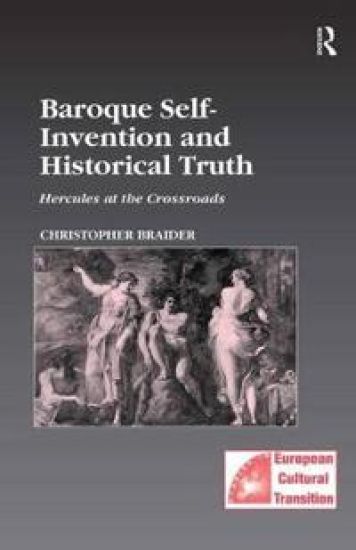
In his monumental study, Christopher Braider explores the dialectical contest between history and truth that defines the period of cultural transition called the 'baroque'. For example, Annibale Carracci's portrayal of the Stoic legend of Hercules at the Crossroads departs from earlier, more static representations that depict an emblematic demigod who has already rejected the fallen path of worldly Pleasure for the upward road of heroic Virtue. Braider argues that, in breaking with tradition in order to portray a tragic soliloquist whose dominant trait is agonized indecision, Carracci joins other baroque artists, poets and philosophers in rehearsing the historical dilemma of choice itself. Carracci's picture thus becomes a framing device that illuminates phenomena as diverse as the construction of gender in baroque painting and science, the Pauline ontology of art in Caravaggio and Rembrandt, the metaphysics of baroque soliloquy and the dismantling of Cartesian dualism in Cyrano de Bergerac and Pascal.
Experimental Selves

Experimental Selves

Christopher Braider

University of Toronto Press
2018
sidottu
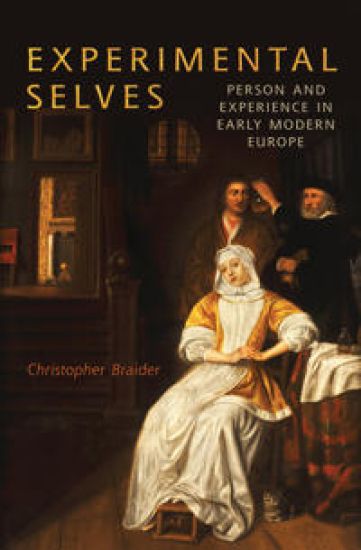
Drawing on the generous semantic range the term enjoyed in early modern usage, Experimental Selves argues that ‘person,’ as early moderns understood this concept, was an ‘experimental’ phenomenon—at once a given of experience and the self-conscious arena of that experience. Person so conceived was discovered to be a four-dimensional creature: a composite of mind or 'inner' personality; of the body and outward appearance; of social relationship; and of time. Through a series of case studies keyed to a wide variety of social and cultural contexts, including theatre, the early novel, the art of portraiture, pictorial experiments in vision and perception, theory of knowledge, and the new experimental science of the late-seventeenth and eighteenth centuries, the book examines the manifold shapes person assumed as an expression of the social, natural, and aesthetic ‘experiments’ or experiences to which it found itself subjected as a function of the mere contingent fact of just having them.
Refiguring the Real

Refiguring the Real

Christopher Braider

Princeton University Press
2016
sidottu
In a major analysis of pictorial forms from the late Middle Ages to the Enlightenment, Christopher Braider argues that the painted image provides a metaphor and model for all other modes of expression in Western culture--particularly literature, philosophy, religion, and science. Because critics have conventionally explained visual images in terms of verbal texts (Scripture, heroic poetry, and myth), they have undervalued the impact of the pictorial naturalism practiced by painters from the fifteenth century onward and the fundamentally new conception of reality it conveys. By reinterpreting modern Western experience in light of northern "descriptive art," the author enriches our understanding of how both painted and written cultural texts shape our perceptions of the world at large. Throughout Braider draws on works by such painters as van der Weyden, Bruegel the Elder, Steen, Vermeer, Rembrandt, and Poussin, and addresses such topics as the Incarnation of the Word in Christ, the elegiac foundations of Enlightenment aesthetics, and the rivalry between northern and southern art. His goal is not only to reexamine important aesthetic issues but also to offer a new perspective on the general intellectual and cultural history of the modern West. Originally published in 1993. The Princeton Legacy Library uses the latest print-on-demand technology to again make available previously out-of-print books from the distinguished backlist of Princeton University Press. These editions preserve the original texts of these important books while presenting them in durable paperback and hardcover editions. The goal of the Princeton Legacy Library is to vastly increase access to the rich scholarly heritage found in the thousands of books published by Princeton University Press since its founding in 1905.
Refiguring the Real

Refiguring the Real

Christopher Braider

Princeton University Press
2015
pokkari
In a major analysis of pictorial forms from the late Middle Ages to the Enlightenment, Christopher Braider argues that the painted image provides a metaphor and model for all other modes of expression in Western culture--particularly literature, philosophy, religion, and science. Because critics have conventionally explained visual images in terms of verbal texts (Scripture, heroic poetry, and myth), they have undervalued the impact of the pictorial naturalism practiced by painters from the fifteenth century onward and the fundamentally new conception of reality it conveys. By reinterpreting modern Western experience in light of northern "descriptive art," the author enriches our understanding of how both painted and written cultural texts shape our perceptions of the world at large. Throughout Braider draws on works by such painters as van der Weyden, Bruegel the Elder, Steen, Vermeer, Rembrandt, and Poussin, and addresses such topics as the Incarnation of the Word in Christ, the elegiac foundations of Enlightenment aesthetics, and the rivalry between northern and southern art. His goal is not only to reexamine important aesthetic issues but also to offer a new perspective on the general intellectual and cultural history of the modern West. Originally published in 1993. The Princeton Legacy Library uses the latest print-on-demand technology to again make available previously out-of-print books from the distinguished backlist of Princeton University Press. These editions preserve the original texts of these important books while presenting them in durable paperback and hardcover editions. The goal of the Princeton Legacy Library is to vastly increase access to the rich scholarly heritage found in the thousands of books published by Princeton University Press since its founding in 1905.
The Matter of Mind

The Matter of Mind

Christopher Braider

University of Toronto Press
2012
sidottu
What influence did René Descartes' concept of mind-body dualism have on early modern conceptions of the self? In The Matter of Mind, Christopher Braider challenges the presumed centrality of Descartes' groundbreaking theory to seventeenth-century French culture. He details the broad opposition to rational self-government among Descartes' contemporaries, and attributes conventional links between Descartes and the myth of the ‘modern subject’ to post-structuralist assessments. The Matter of Mind presents studies drawn from a range of disciplines and examines the paintings of Nicolas Poussin, the drama of Pierre Corneille, and the theology of Blaise Pascal. Braider argues that if early modern thought converged on a single model, then it was the experimental picture based on everyday experience proposed by Descartes' sceptical adversary, Michel de Montaigne. Forceful and provocative, The Matter of Mind will encourage lively debate on the norms and discourses of seventeenth-century philosophy.
Baroque Self-Invention and Historical Truth

Baroque Self-Invention and Historical Truth

Christopher Braider

Ashgate Publishing Limited
2004
sidottu
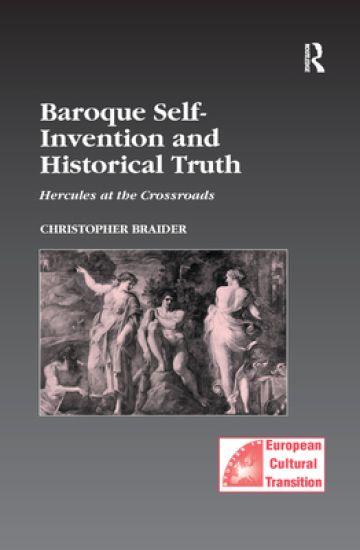
In his monumental study, Christopher Braider explores the dialectical contest between history and truth that defines the period of cultural transition called the 'baroque'. For example, Annibale Carracci's portrayal of the Stoic legend of Hercules at the Crossroads departs from earlier, more static representations that depict an emblematic demigod who has already rejected the fallen path of worldly Pleasure for the upward road of heroic Virtue. Braider argues that, in breaking with tradition in order to portray a tragic soliloquist whose dominant trait is agonized indecision, Carracci joins other baroque artists, poets and philosophers in rehearsing the historical dilemma of choice itself. Carracci's picture thus becomes a framing device that illuminates phenomena as diverse as the construction of gender in baroque painting and science, the Pauline ontology of art in Caravaggio and Rembrandt, the metaphysics of baroque soliloquy and the dismantling of Cartesian dualism in Cyrano de Bergerac and Pascal.