Kirjailija
Christopher Chapman
Kirjat ja teokset yhdessä paikassa: 22 kirjaa, julkaisuja vuosilta 2002-2026, suosituimpien joukossa Leading School-based Networks. Vertaile teosten hintoja ja tarkista saatavuus suomalaisista kirjakaupoista.
22 kirjaa
Kirjojen julkaisuhaarukka 2002-2026.
Improving educational systems around the world remains at the core of governments’ agendas. However, despite vast investment of resources and sustained periods of interventions many systems have seen their rates of improvement plateau and in some systems the gap between different groups of learners continues to widen. This is nowhere more apparent than in our socio-economically deprived areas of major urban conurbations.Systems must continue to evolve in order to meet the needs of students and particularly those in the most challenging circumstances. In this book, Chris Chapman reflects on a range of Emerging Structural Arrangements (ESAs) that have begun to appear across a number of systems. The features of ESAs include:increased involvement of the private sector and other interested parties (including charities and faith groups)radical redesign of buildingsthe blurring and erosion of organisational boundariesredefinition of ‘teachers’ and ‘teaching’the involvement of an extended range of services stakeholders within the schooling process.Drawing on contemporary evidence to consider the potential of ESAs to promote improved outcomes for the most disadvantaged students and reflecting on the implications for leadership, management and governance in such a diverse and dynamic environment, Rethinking Schools represents a unique addition to the literature presenting new research in this emerging area of international importance. It will be of interest to all those with an interest in leadership, policy, school improvement and educational change.


When so much seems to be falling apart, it is a struggle to find ground for hope. In forty daily reflections, Christopher Chapman explores the nature of hope and offers ways of cultivating and practicing it. Avoiding wishful thinking or 'looking on the bright side', he offers a hope rooted in a God whose dynamic, creative breath is always bringing the new into being. This hope is incarnate and redemptive, forever coming along side us to renew what is broken. It is relational, drawing all into a life of giving and receiving. The door of hope is open and God steps through it with purpose and compassion. Here is a spirituality of hope that engages with what is real and brings about change. Doorways to Hope invites us to join in the flow of hope and step out in God into all that needs healing. This is a liberating, encouraging book for all who feel powerless in the face of the pain of the world or hemmed in by personal circumstance.
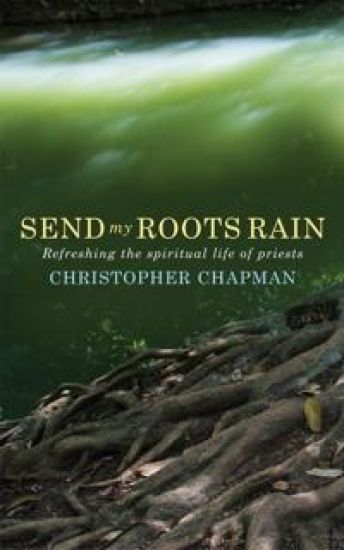
Send my Roots Rain explores ways in which the life-giving water of the Spirit can soak down to the roots of a priest’s life and work. Many priests know what it is to be thirsty: to be overwhelmed by the pressures inherent within their ministry and have little time for themselves or for God. Yet, each priest is also a disciple, whose spiritual, physical and emotional health matters to God, who calls each one by name. Send My Roots Rain explores attitudes, practices and ways of prayer capable of refreshing and sustaining priests and pastors amidst the challenges and stresses of their way of life. Christopher Chapman draws on more than thirty years’ experience of spiritual direction, formational training and leading retreats for priests and ordinands to offer a book full of wisdom that new and experienced priests will turn to again and again.
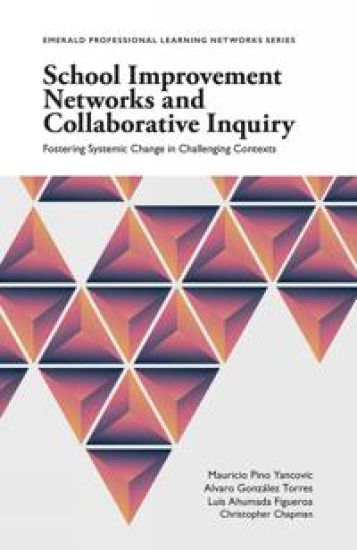
School Improvement Networks and Collaborative Inquiry
Mauricio Pino Yancovic; Alvaro González Torres; Luis Ahumada Figueroa; Christopher Chapman
Emerald Publishing Limited
2019
nidottu
Existing research on Professional Learning Networks looks at experiences in Europe and North America, with very little attention focused on education systems in the Global South, such as Chile. In 2015 more than 500 School Improvement Networks were created to support state-funded schools across the country with the idea of promoting a culture of collaboration. Although schools are expected to work in networks, they are held to account individually through high-stakes standardized testing and external inspections.This book employs the theoretical framework of collaborative inquiry to guide a mixed method study of fifteen in-depth multi-site case studies and descriptive statistical analysis of a questionnaire answered by 400 networks. The analysis provides evidence of the depth and spread of the knowledge and collaborative practices of these networks. Linking with the literature on Professional Learning Networks, this study highlights how school improvement networks can support the professional capital of principals and curriculum coordinators. The findings of this study are discussed around the issue of network sustainability, stressing the importance of network leadership and conditions of system infrastructure to mobilize network knowledge to schools, increasing the potential impact of school networks to transform schools' practices. By providing a unique inquiry, into an under researched part of the globe in regards to school networks, this book will prove invaluable for academics and practitioners in the areas of mixed method research, educational leadership and comparative education.
As countries seek to develop their education systems, achieving sustainable improvements amongst students from disadvantaged backgrounds remains a major challenge. This has considerable implications for those in the research community as they seek to influence developments in the field. Drawing on the authors’ extensive experiences as researchers, policy advisers and influencers, Changing Education Systems offers key insights on how to promote equity within education systems. Exploring three large-scale national reform programmes, the book: Presents a series of propositions that are the basis of a research-based approach to system change Explains the creation of relationships in which academic researchers collaborate in the process of development Considers smaller place-based projects that are set within policy contexts dominated by the idea of market forces as a strategy for improvement Explores the steps needed to overcome locally specific barriersChanging Education Systems is a must-read for policy-makers and practitioners involved in educational reforms, as well as researchers wishing to contribute to and learn from such developments.
Strategy, risk management and project management are often considered separately by those applying their principles—but at their most effective, all are dependent upon each other for success. Enlightened Planning teaches this holistic perspective and demonstrates how a synthesis of these approaches yields far greater opportunities. A strategic, calculated risk, for example, can be less inherently risky than chronic risk aversion over time. Here, a respected specialist and teacher demonstrates how to become an 'enlightened planner', one that is aware of project, strategy and risk concerns, and their potential interplay. Following the core principle of Keep It Simple Systematically, he shows how organised, systematic thought processes can demystify the complexities of decision-making when considering a huge variety of concerns at once. Supported throughout with real-life cases from the author’s considerable experiences with commercial organisations, it is also supported by a website containing even more cases, learning and teaching materials. This book is essential reading for any practitioner specialising in risk management, project management or strategy; as well as those teachers or participants in executive programmes.
Drawing on his extensive experience in pastoral ministry and spiritual direction, Christopher Chapman explores the parallels between personal growth and nurturing a garden. In human life as in the natural world, growth can often be a struggle. God, like a patient gardener, chooses to grapple with what stands in the way of our fruitfulness, but requires our cooperation if we are to come into fullness of life. Earthed in God digs deeply into the riches of scripture and the Christian spiritual tradition to find resources for our growth, flourishing and abundance.
It happened. He's met her, and she is it. She's not merely the one he tells all his buddies about, or the one where he wants to call his mother and entire family. She is...the one.She's the one. The one that he dreams about, the one he can't stop talking and thinking about. The one that makes his face warm, the one that makes him hear his racing pulse, pounding heart, and brain overloading from all the processing power it's devoting merely to thoughts of her. She's the one he'd actually, and literally, do anything for. She is his soul mate, and the cosmos has been telling him this since the day he first saw her.The problem is...he doesn't realize it until she's gone.Kyle comes from a middle-upper class family in the United States, while she is a product of the Soviet Union. He hates high school, but she's a brilliant astronomy student. He leads the typical life of an eighteen year old, but she has a troubled and mysterious past. They meet in 1990, in the Florida Keys. He is getting lifeguard certified, while she is a new counselor at a summer camp.The world, the universe, and fate were trying to tell him, but he didn't listen. He let her go, and now, he can't go on. They met in the Keys, but maybe they've met before.
Life is joyful, beautiful and a rich blessing, but also difficult, painful and mysterious. This profound and practical book looks at how the Christian spiritual tradition has tried to understand the part suffering plays within human growth and our experience of God. Suffering can ask questions of us and impel us to live for what is really important – it can also diminish us and stunt our growth. What makes the difference? This book helps all engaged in pastoral care or spiritual direction explore that question for themselves and with others. From Julian of Norwich gazing at Christ entering the depths of our difficulty, to the terrors of the ‘dark night of the soul’ experienced by St John of the Cross, to the poets George Herbert and Gerard Manley Hopkins who, like Jacob, wrestled with God, this rich book helps us see that even in a desolate and trackless wasteland, we are in the company of pilgrims across time and can glimpse a hidden Promised Land. Through these different windows we are encouraged not to cling to suffering, nor to flee from its threat, but to discover within it the work of a resourceful, creative and compassionate God.
Globalisation of world trade, international media, technological innovation and social change are creating opportunities and challenges that today’s pupils will inherit and build on. A pupil’s academic, technical and social capacity will define their success or failure. Therefore, educational outcomes and well-being for young people across emerging and developed economies and the crucial role of education and leaders of education has never been more important. Schools are under pressure to think more clearly about their place in children’s lives beyond the passage of learning in classrooms. The processes inside schools, the organisation of school systems and the relationship between communities’ educators are critical elements in a complex mix that must balance correctly if it is to benefit school children properly.Using the term ’high leverage leadership‘ to describe leadership that is associated with higher outcomes than would normally be found in similar contexts, this timely book: Provides an overview of the development of educational leadership research Demonstrates how successful educational leaders apply contextual, social and professional expertise to the three distinctive leadership tasks of navigation, management and partnership Offers an insight into the complexity of the educational leadership and practices of school leaders who, against the odds, produce high outcomes for young people Validates the idea that a renovation of educational leadership is necessary to maximise educational outcomes. High Leverage Leadership will be an indispensible text for school leaders, public sector officers, post-graduate students and researchers in leadership, policy, school improvement and educational change.
The persistent challenge of achieving excellence and equity within education systems has renewed interest in generating context-specific solutions through localised school networks. But how can successful school networks be developed? Based around the lifecycle of a network, this book traces the development of a network from its initial inception, exploring the ways in which it can be sustained and remain capable of meeting the future challenges faced by schools and their communities. The book explores a series of important issues facing school leaders, including: the benefits of investing time and energy in networks with other schools and communities the particular problems faced by schools and the education system which are best tackled by network-based solutions the advantages for schools and communities of engaging with collaborative reform agenda the ways in which networks can be managed, and the differences between leading a school or a team and a network the elements which make an effective network.The book draws on UK and international research to discuss the development and leadership of networks and to outline a number of tried-and-tested leadership approaches. In addition, the authors draw on their own experience and research to provide accounts of real networks to expose the realities of networking. Each chapter tackles a key leadership issue and ends with a series of tools to support those leading and facilitating networks tackle these in practice.This book will be of interest to practising school leaders, network co-ordinators, postgraduate students and those researching educational leadership and school improvement.
Must psychoanalysis be hostile to religion? Freud was a staunch critic of religion and grounded his views in psychoanalytic theory. This work details the philosophical bases of Freud's attack on religion and shows how he used multiple arguments drawn from epistemology, pragmatic concerns, and psychology. Although Freud's psychoanalytic theories changed significantly over the course of his work, his criticism of religion remained tied to his early theories of anxiety and wish fulfillment. Chapman shows that Freud's later revision of the anxiety theory provides grounds for a different, less critical view of religious behavior. Such a revised psychoanalytic view of religion overcomes many of Freud's criticisms and is compatible with modern theology. Chapman examines the potential convergence of psychoanalytic theory and the theology of Paul Tillich. This is a reprint version of a 1989 work, with a new preface by the author (2007).
Improving Schools Through External Intervention
Christopher Chapman
Continuum International Publishing Group Ltd.
2006
nidottu
Explores the extent to which external interventions have contributed to successful and sustainable school improvement. This book explores the extent to which external intervention has contributed to successful and sustainable school improvement. By drawing on international research and contemporary empirical evidence, Chris Chapman highlights the possibilities and limitations of external intervention in the context of the schooling system in England. The book concludes by outlining a radical framework that could potentially secure sustainable development for all schools.
Improving Schools Through External Intervention
Christopher Chapman
Continuum International Publishing Group Ltd.
2006
sidottu
Explores the extent to which external interventions have contributed to successful and sustainable school improvement. This book explores the extent to which external intervention has contributed to successful and sustainable school improvement. By drawing on international research and contemporary empirical evidence, Chris Chapman highlights the possibilities and limitations of external intervention in the context of the schooling system in England. The book concludes by outlining a radical framework that could potentially secure sustainable development for all schools.