Kirjojen hintavertailu. Mukana 12 390 323 kirjaa ja 12 kauppaa.

Kirjailija

Christopher D. Wickens

Kirjat ja teokset yhdessä paikassa: 5 kirjaa, julkaisuja vuosilta 2012-2024, suosituimpien joukossa Designing for People: An Introduction to Human Factors Engineering. Vertaile teosten hintoja ja tarkista saatavuus suomalaisista kirjakaupoista.

5 kirjaa

Kirjojen julkaisuhaarukka 2012-2024.

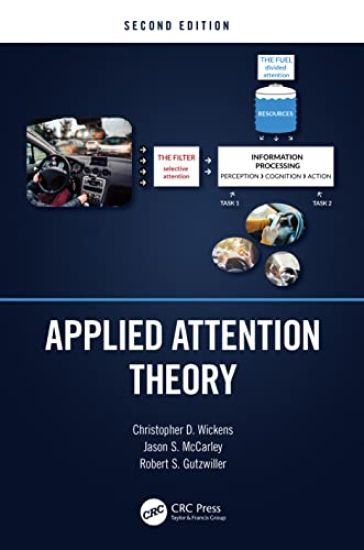
Applied Attention Theory

Applied Attention Theory

Christopher D. Wickens; Jason S. McCarley; Robert S. Gutzwiller

TAYLOR FRANCIS LTD
2024
nidottu
Applied Attention Theory, Second Edition provides details concerning the relevance of all aspects of attention to the world beyond the laboratory. Topic application areas include the design of warning systems to capture attention; attention distractions in the workplace; failures of dividing attention while driving; and the measurement of mental workload while flying.This new edition discusses the implications of VR and AR for human attention. It also covers the treatment of attention-based pedagogical methods used to enhance learning and presents attentional issues in interacting with automation and AI. New chapters include applications of attention to healthcare, education pedagogy, highway safety, and human interaction with autonomous vehicles and other AI systems.The readership for this book is the professional, the researcher, and the student.
Applied Attention Theory

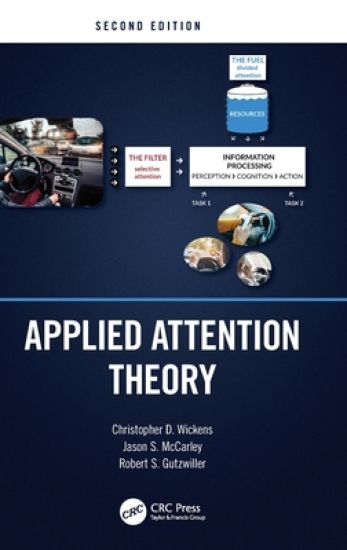
Applied Attention Theory

Christopher D. Wickens; Jason S. McCarley; Robert S. Gutzwiller

TAYLOR FRANCIS LTD
2022
sidottu
Applied Attention Theory, Second Edition provides details concerning the relevance of all aspects of attention to the world beyond the laboratory. Topic application areas include the design of warning systems to capture attention; attention distractions in the workplace; failures of dividing attention while driving; and the measurement of mental workload while flying.This new edition discusses the implications of VR and AR for human attention. It also covers the treatment of attention-based pedagogical methods used to enhance learning and presents attentional issues in interacting with automation and AI. New chapters include applications of attention to healthcare, education pedagogy, highway safety, and human interaction with autonomous vehicles and other AI systems.The readership for this book is the professional, the researcher, and the student.
Engineering Psychology and Human Performance

Engineering Psychology and Human Performance

Christopher D. Wickens; William S. Helton; Justin G. Hollands; Simon Banbury

Taylor Francis Ltd
2021
sidottu
Forming connections between human performance and design, this new edition of Engineering Psychology and Human Performance examines human–machine interaction. The book is organized directly from a psychological perspective of human information processing, and chapters correspond to the flow of information as it is processed by a human being—from the senses, through the brain, to action—rather than from the perspective of system components or engineering design concepts. Upon completing this book, readers will be able to identify how human ability contributes to the design of technology; understand the connections within human information processing and human performance; challenge the way they think about technology’s influence on human performance; and show how theoretical advances have been, or might be, applied to improving human–machine interactions.This new edition includes the following key features: A new chapter on research methods Sections on interruption management and distracted driving as cogent examples of applications of engineering psychology theory to societal problems A greatly increased number of references to pandemics, technostress, and misinformation New applications Amplified emphasis on readability and commonsense examples Updated and new references throughout the text This book is ideal for psychology and engineering students, as well as practitioners in engineering psychology, human performance, and human factors. The text is also supplemented by online resources for students and instructors.
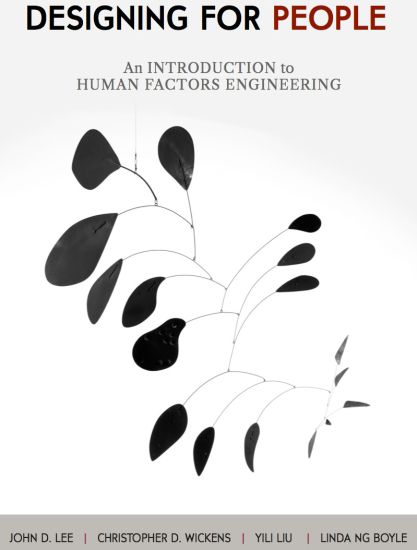
Designing for People: An Introduction to Human Factors Engineering

Designing for People: An Introduction to Human Factors Engineering

Christopher D. Wickens; Yili Liu; Linda Ng Boyle

Createspace Independent Publishing Platform
2017
nidottu
Whether it is the car you drive or the app on your smartphone, technology has an increasingly powerful influence on you. When designed with people in mind, this influence can improve lives and productivity. This book provides a broad introduction on how to attend to the needs, capabilities, and preferences of people in the design process. We combine methods of design thinking and systems thinking to understand people's needs and evaluate whether those needs are met. This book also provides a detailed description of the capabilities and limits of people-both mental and physical-and how these can guide the design of everything from typography to teams and from data visualization to habits. The book includes: - Over 70 design principles for displays, controls, human-computer interaction, automation, and workspace layout- Integrative discussion of the research and theory underlying these guidelines, supported by over 1,000 references- Examples of successful and unsuccessful designs and exercises that link principles and theory to applications in consumer products, the workplace, and high risk-systems We hope this book will give a useful introduction to students entering the field and will also serve as a reference for researchers, engineers, and designers.
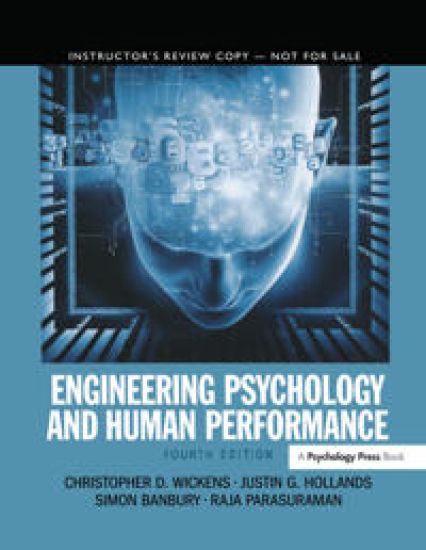
Engineering Psychology and Human Performance

Engineering Psychology and Human Performance

Christopher D. Wickens

Psychology Press Ltd
2012
sidottu
Forming connections between human performance and design Engineering Psychology and Human Performance, 4e examines human-machine interaction. The book is organized directly from the psychological perspective of human information processing. The chapters generally correspond to the flow of information as it is processed by a human being--from the senses, through the brain, to action--rather than from the perspective of system components or engineering design concepts. This book is ideal for a psychology student, engineering student, or actual practitioner in engineering psychology, human performance, and human factors Learning Goals Upon completing this book, readers should be able to: * Identify how human ability contributes to the design of technology. * Understand the connections within human information processing and human performance. * Challenge the way they think about technology's influence on human performance. * show how theoretical advances have been, or might be, applied to improving human-machine interaction