Kirjojen hintavertailu. Mukana 12 533 801 kirjaa ja 12 kauppaa.

Kirjailija

Christopher G. Faricy

Kirjat ja teokset yhdessä paikassa: 2 kirjaa, julkaisuja vuosilta 2015-2016, suosituimpien joukossa Welfare for the Wealthy. Vertaile teosten hintoja ja tarkista saatavuus suomalaisista kirjakaupoista.

2 kirjaa

Kirjojen julkaisuhaarukka 2015-2016.

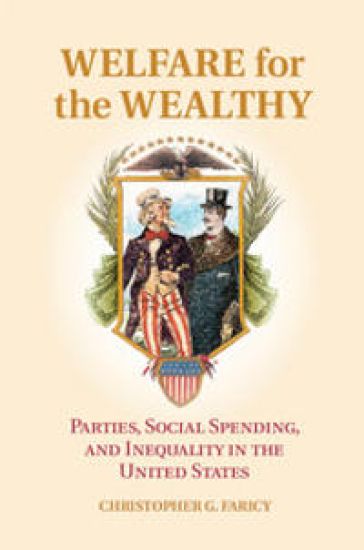
Welfare for the Wealthy

Welfare for the Wealthy

Christopher G. Faricy

Cambridge University Press
2016
pokkari
How does political party control determine changes to social policy, and by extension, influence inequality in America? Conventional theories show that Democratic control of the federal government produces more social expenditures and less inequality. Welfare for the Wealthy re-examines this relationship by evaluating how political party power results in changes to both public social spending and subsidies for private welfare - and how a trade-off between the two, in turn, affects income inequality. Christopher Faricy finds that both Democrats and Republicans have increased social spending over the last forty-two years. And while both political parties increase federal social spending, Democrats and Republicans differ in how they spend federal money, which socioeconomic groups benefit, and the resulting consequences for income inequality.
Welfare for the Wealthy

Welfare for the Wealthy

Christopher G. Faricy

Cambridge University Press
2015
sidottu
How does political party control determine changes to social policy, and by extension, influence inequality in America? Conventional theories show that Democratic control of the federal government produces more social expenditures and less inequality. Welfare for the Wealthy re-examines this relationship by evaluating how political party power results in changes to both public social spending and subsidies for private welfare - and how a trade-off between the two, in turn, affects income inequality. Christopher Faricy finds that both Democrats and Republicans have increased social spending over the last forty-two years. And while both political parties increase federal social spending, Democrats and Republicans differ in how they spend federal money, which socioeconomic groups benefit, and the resulting consequences for income inequality.