Kirjojen hintavertailu. Mukana 12 595 353 kirjaa ja 12 kauppaa.

Kirjailija

Christopher H. Owen

Kirjat ja teokset yhdessä paikassa: 3 kirjaa, julkaisuja vuosilta 1998-2023, suosituimpien joukossa Heaven Can Indeed Fall. Vertaile teosten hintoja ja tarkista saatavuus suomalaisista kirjakaupoista.

3 kirjaa

Kirjojen julkaisuhaarukka 1998-2023.

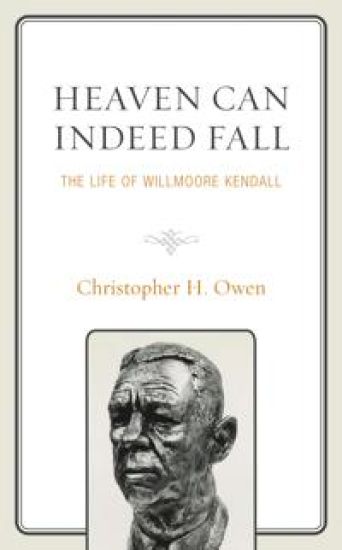
Heaven Can Indeed Fall

Heaven Can Indeed Fall

Christopher H. Owen

BLOOMSBURY PUBLISHING PLC
2023
nidottu
Willmoore Kendall was a man against the world, a "maverick," an "iconoclast." His thoughts were profound, his countless enemies powerful, his personal life full of drama. Heaven Can Indeed Fall is the first full-length biography of Kendall and integrates the man with the teacher, thinker, and cold warrior. Once a Marxist, Kendall became a fearsome foe of global communism. He never apologized for supporting Joseph McCarthy. As the co-founder of National Review he helped turn the word liberal into an insult. A "stormy petrel," Kendall was a man “who never lost an argument or kept a friend.” Yet he was one of the most effective and sensitive teachers of his age. His ideas shaped Cold War practices of intelligence analysis and psychological warfare. As an academic he became the premier American theorist for conservative populism. The recent reemergence of populist ideas among American conservatives makes understanding Kendall ever more imperative. This book shows how a child prodigy and bucolic boy scout became an ambitious intelligence analyst, razor-tongued polemicist and profound student of American politics. By knowing Kendall one can better understand Cold War America, and contemporary America as well.
Heaven Can Indeed Fall

Heaven Can Indeed Fall

Christopher H. Owen

BLOOMSBURY PUBLISHING PLC
2021
sidottu
Willmoore Kendall was a man against the world, a "maverick," an "iconoclast." His thoughts were profound, his countless enemies powerful, his personal life full of drama. Heaven Can Indeed Fall is the first full-length biography of Kendall and integrates the man with the teacher, thinker, and cold warrior. Once a Marxist, Kendall became a fearsome foe of global communism. He never apologized for supporting Joseph McCarthy. As the co-founder of National Review he helped turn the word liberal into an insult. A "stormy petrel," Kendall was a man “who never lost an argument or kept a friend.” Yet he was one of the most effective and sensitive teachers of his age. His ideas shaped Cold War practices of intelligence analysis and psychological warfare. As an academic he became the premier American theorist for conservative populism. The recent reemergence of populist ideas among American conservatives makes understanding Kendall ever more imperative. This book shows how a child prodigy and bucolic boy scout became an ambitious intelligence analyst, razor-tongued polemicist and profound student of American politics. By knowing Kendall one can better understand Cold War America, and contemporary America as well.
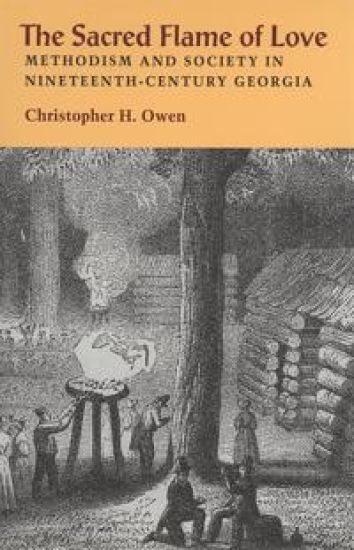
The Sacred Flame of Love

The Sacred Flame of Love

Christopher H. Owen

University of Georgia Press
1998
sidottu
Attempting to restore subtlety and nuance to the study of southern religion, The Sacred Flame of Love ranges across the entire nineteenth century to chronicle the evolution of the institutions, theology, and social attitudes of Georgia Methodists in light of such phenomena, trends, and events as slavery, class prejudice, republicanism, population growth, economic development, sectional politics, war, emancipation, and urban growth.In connecting Methodist history with the larger social transformation of nineteenth-century Georgia, Christopher H. Owen uncovers a story of considerable complexity and variety. Because Georgia Methodists included people from every social class, few generalizations apply properly to all of them. For many years they were loosely united by common adherence to the ideals of Wesleyan evangelicalism, but economic and political developments would gradually accentuate Methodist social divisions and weaken even this bond. Indeed, deviating far from the conception of unchanging and asocial southern religion often held by scholars, Owen sees both church and society undergoing enormous change in the nineteenth century.